Petrochemical refineries operate under some of the most demanding conditions in any industry. Temperatures above 1000 degrees Celsius, highly corrosive chemicals, and extreme mechanical pressure are everyday realities. High Alumina Ceramic Balls in India have become the go-to solution for catalyst support media in refinery reactors because they survive these conditions better than almost any other material. According to industry data, the global inert ceramic balls market crossed USD 380 million in 2023, with petrochemical applications driving over 40% of that demand.
High alumina ceramic balls manufacturers in industrial cities like Mandsaur are supplying these critical components to refineries across Asia, the Middle East, and Europe. This blog explains exactly why refineries prefer them, how they work, and what to look for when sourcing from a trusted high alumina ceramic balls supplier.
What Are High Alumina Ceramic Balls and Why Do Refineries Need Them?
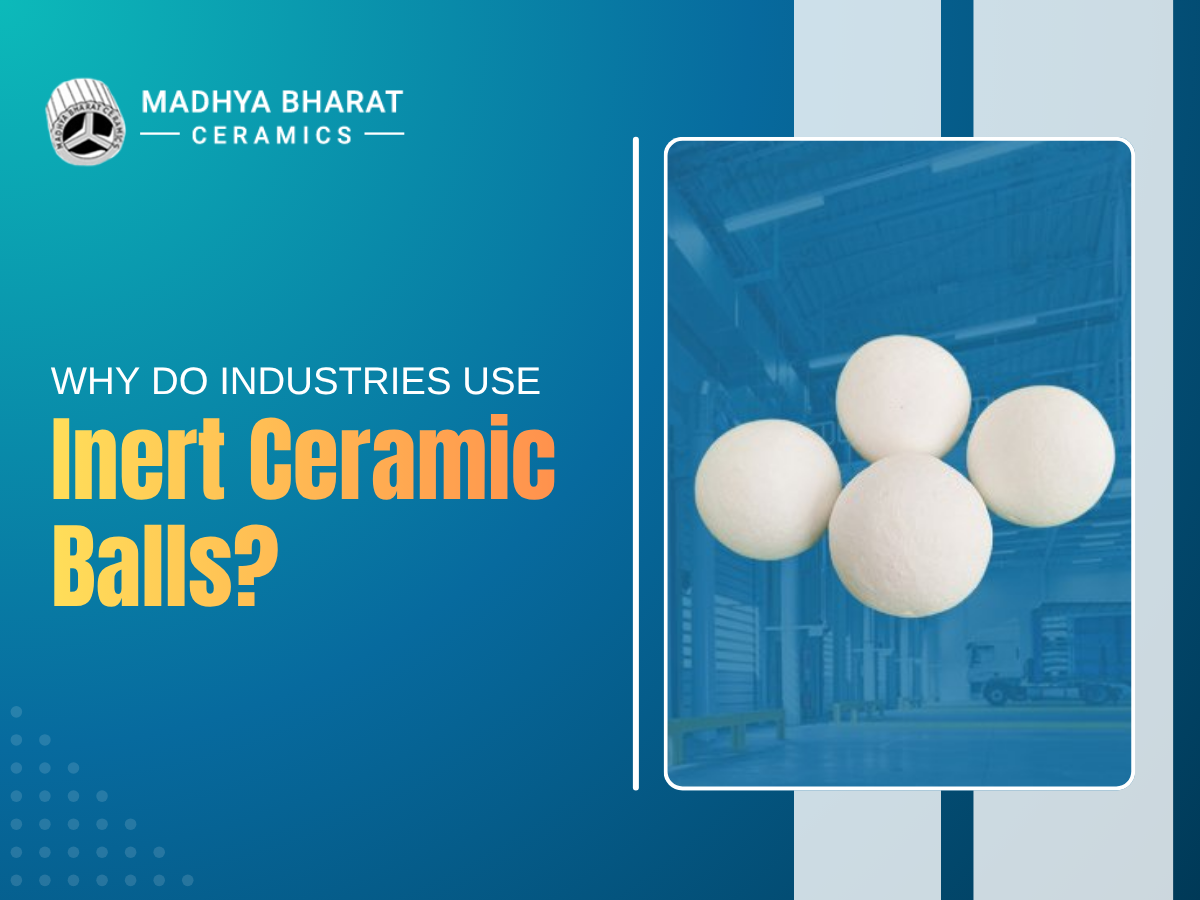
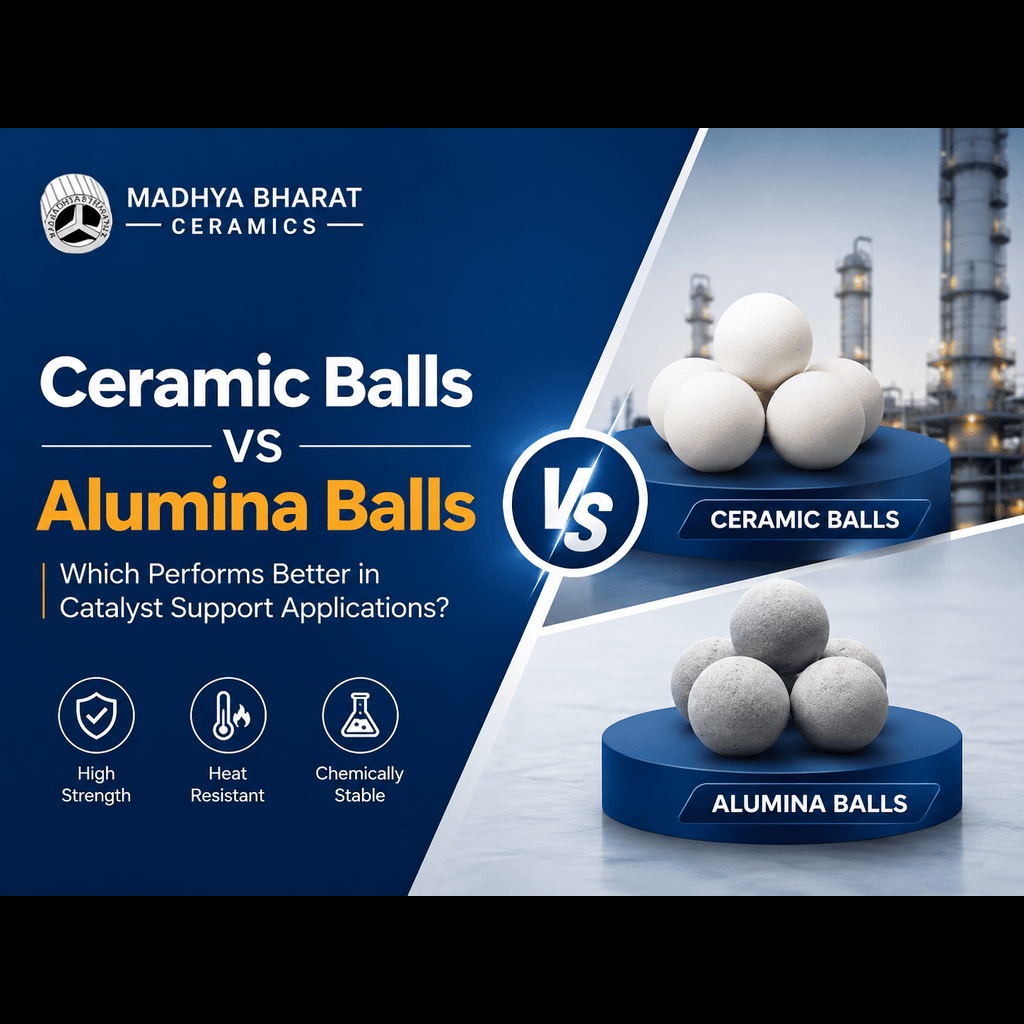
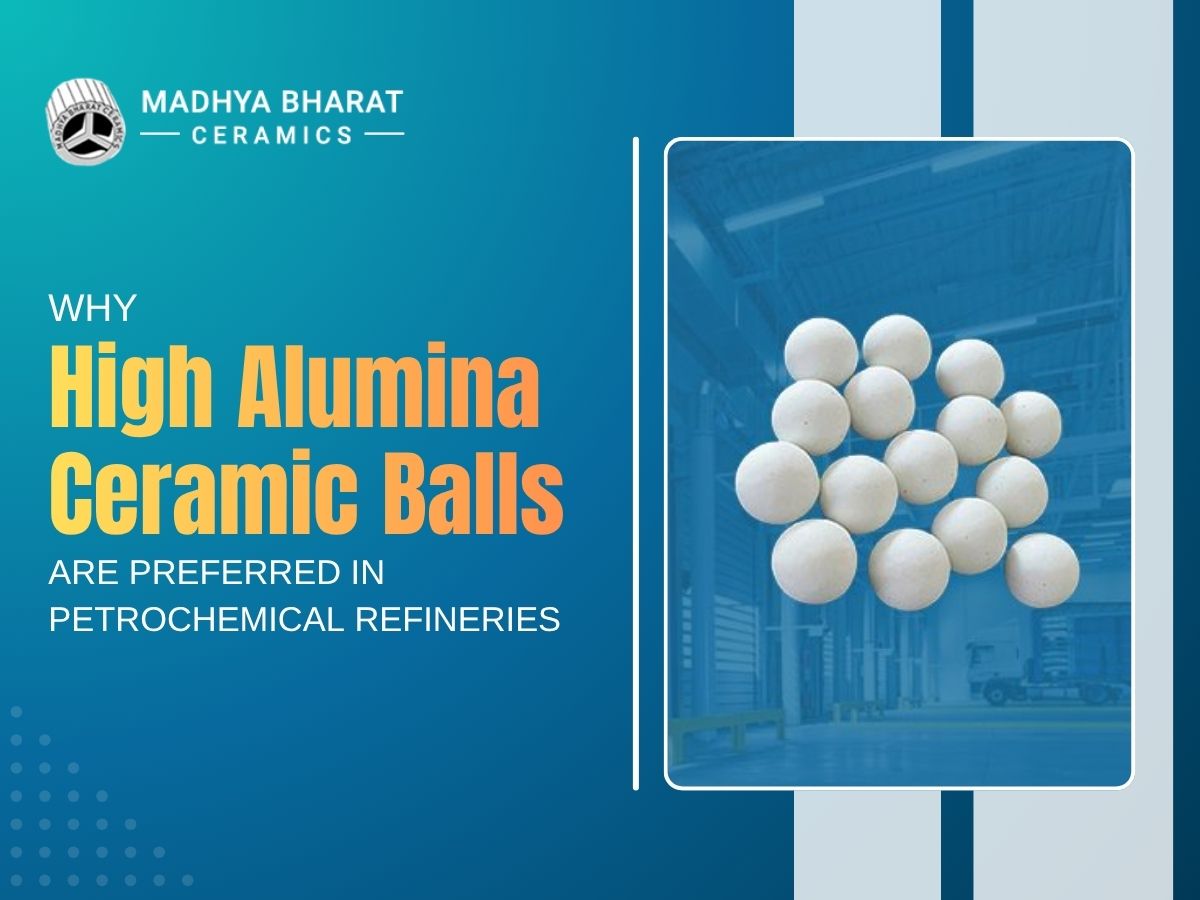
High Alumina Ceramic Balls are dense, spherical ceramic components made primarily from aluminum oxide (Al2O3). The alumina content typically ranges from 75% to 99% depending on the grade. Higher alumina content means better resistance to heat, chemicals, and mechanical stress.
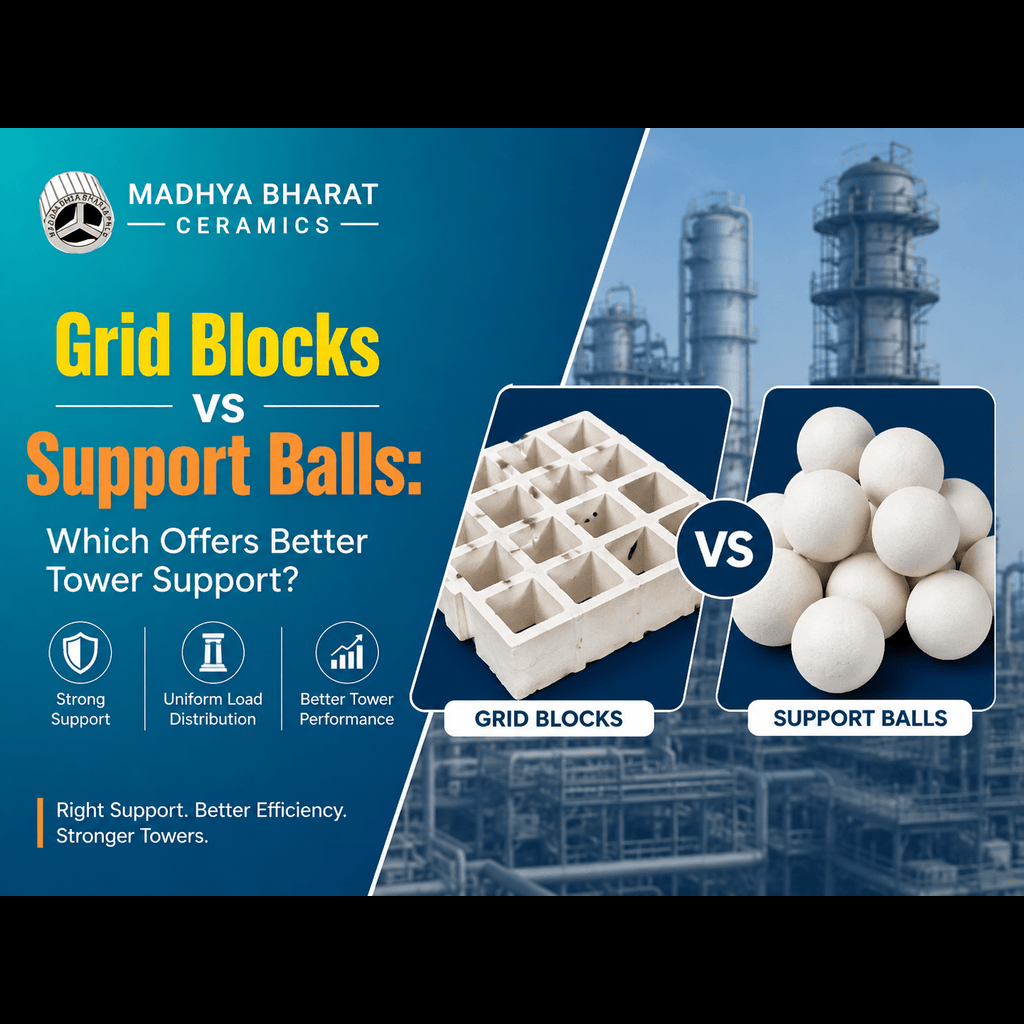
In petrochemical refineries, these balls are placed at the bottom and top of reactor beds. They hold the catalyst in position, distribute incoming gas or liquid evenly across the bed, and protect the catalyst from being crushed by its own weight or from being flushed out.
Without proper catalyst support media, the catalyst inside the reactor would pack unevenly, create hot spots, and degrade much faster. This leads to poor product quality and costly shutdowns.
Key roles of high alumina ceramic balls in refineries:
- Support and hold catalyst pellets in fixed-bed reactors
- Distribute feed gas or liquid uniformly across the reactor cross-section
- Prevent catalyst fines from entering downstream equipment
- Act as a buffer between the catalyst and the reactor grid or screen
- Protect catalyst during loading and unloading operations
How High Alumina Ceramic Balls Improve Petrochemical Plant Performance
The performance of a petrochemical reactor depends heavily on the quality and consistency of its packing. High alumina ceramic balls contribute to plant performance in several measurable ways.
1. Uniform Flow Distribution
When feed enters a reactor, it must spread evenly across the entire cross-section before reaching the catalyst. If flow is uneven, some catalyst zones get too much feed while others get too little. This causes poor conversion rates and reduces yield. Inert ceramic balls for refineries with precise spherical geometry ensure even distribution from the first pass.
2. Thermal Stability at High Temperatures
Refinery reactors in processes like hydrotreating, hydrocracking, and catalytic reforming operate at temperatures ranging from 300 to over 600 degrees Celsius. Standard materials like steel wool or low-grade ceramics fail under these conditions. High-temperature resistant ceramics like 90% or 99% alumina balls maintain their structure and strength without cracking or softening.
3. Chemical Resistance
Refineries process sulfur compounds, hydrogen, hydrocarbons, and strong acids. High alumina ceramic balls are chemically inert to all of these. They do not react, dissolve, or contaminate the process stream, which is critical for product purity and regulatory compliance.
4. Extended Reactor Run Lengths
When support media stays intact and functional for longer, reactors run longer between shutdowns. This directly increases plant uptime and revenue. Many refineries using quality petrochemical refinery ceramic balls from reputable Indian manufacturers report reactor run lengths of 3 to 5 years without media replacement.
High Alumina Ceramic Ball Grades for Refinery Use
| Alumina Content | Density (g/cm³) | Max Temp (°C) | Chemical Resistance | Best Application |
| 75% Al2O3 | 2.8 | 1400 | Good | General catalyst support |
| 90% Al2O3 | 3.2 | 1600 | Very Good | Hydrotreating reactors |
| 92% Al2O3 | 3.4 | 1650 | Excellent | Hydrocracking units |
| 99% Al2O3 | 3.9 | 1700 | Superior | High-purity chemical processes |
This table helps refinery engineers select the right grade based on their process temperature and chemical environment. A qualified alumina ceramic balls manufacturer will recommend the best grade after reviewing your reactor specifications.
Why High Alumina Ceramic Balls in India Are a Global Preference
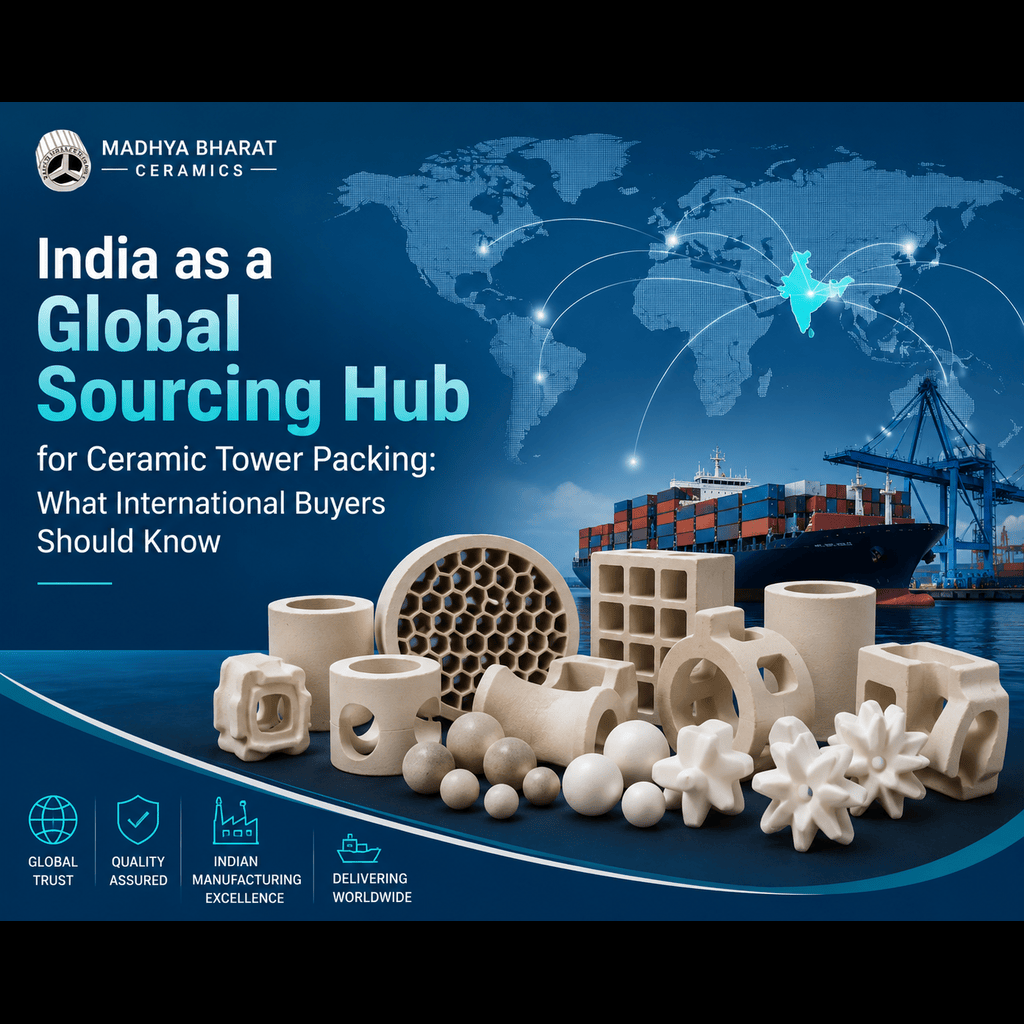
India has established itself as a leading source of high alumina ceramic balls for the global petrochemical and chemical process industry. Manufacturers based in Mandsaur, Morbi, and other industrial zones produce balls that meet international standards including ASTM, ISO 9001, and API guidelines.
Reasons why global refineries source high alumina ceramic balls in India:
- Alumina-rich raw material deposits in India reduce production costs
- State-of-the-art kilns and sintering technology ensure consistent density and roundness
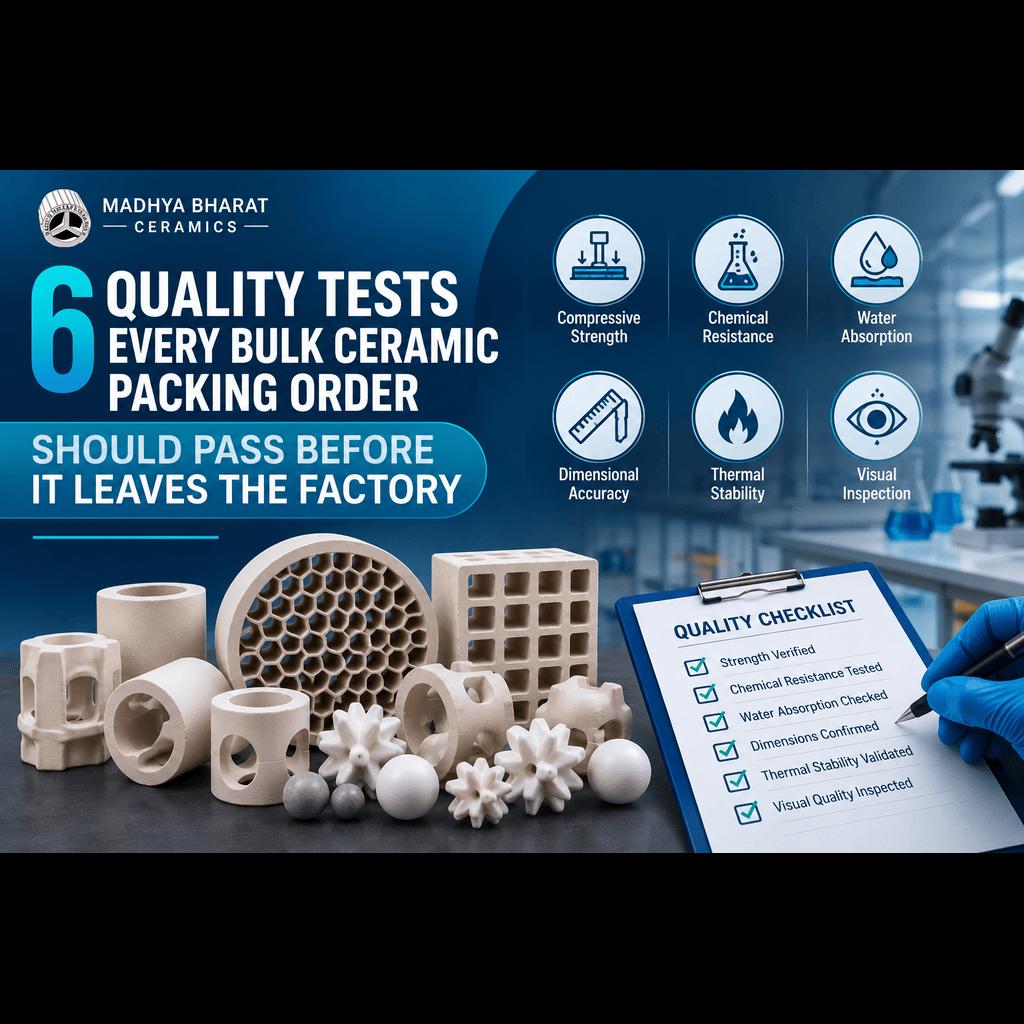
- Strict quality control including crush strength, water absorption, and dimensional testing
- Competitive pricing, often 25 to 40% lower than European alternatives
- Reliable export infrastructure with experience shipping to refineries in 50-plus countries
High Alumina Ceramic Balls exporters in Mandsaur have built long-term relationships with buyers in Saudi Arabia, UAE, Indonesia, Malaysia, Germany, and the United States. These relationships are built on consistent quality, proper documentation, and on-time delivery.
Benefits of High Alumina Ceramic Balls in Catalyst Support Beds
Using the right inert ceramic balls for refineries in catalyst support beds delivers the following direct benefits:
- Longer catalyst life: Even flow distribution prevents localized overheating that degrades catalysts prematurely
- Higher product yield: Better gas-solid contact improves conversion efficiency
- Reduced pressure drop: Smooth, spherical balls allow fluid to pass through with less resistance
- Lower shutdown frequency: Stable support media means fewer unplanned inspections and replacements
- Contamination-free operation: Inert ceramic does not shed particles or react with process chemicals
These benefits translate into real financial savings for refinery operators. A single unplanned shutdown in a petrochemical refinery can cost hundreds of thousands of dollars per day. Reliable catalyst support media helps avoid these events.
How to Select the Best High Alumina Ceramic Balls Manufacturer in India
Not all suppliers deliver the same quality. Here is what to check when selecting a high alumina ceramic balls manufacturer in India:
- Alumina content certification: Ask for an independent lab report confirming the Al2O3 percentage
- Crush strength data: Balls should withstand at least 2000 to 3000 Newtons for standard refinery use
- Water absorption rate: Should be below 0.5% for high-density grades
- Dimensional tolerance: Diameter variation should be within plus or minus 0.5mm
- Available sizes: Reputable suppliers offer sizes from 3mm to 100mm
- Export documentation: ISO certificate, MSDS, and third-party inspection reports
Working with a verified high alumina ceramic balls supplier who provides full technical documentation protects your procurement process and ensures the product performs as expected inside your reactor.
High Alumina Ceramic Balls for Catalyst Bed Support Applications Beyond Refineries
While petrochemical refineries are the largest users, high alumina ceramic balls are also used in:
- Fertilizer plants: Ammonia synthesis reactors use ceramic balls to support iron-based catalysts
- Natural gas processing: Desulfurization units use alumina balls to protect adsorbents
- Power generation: Coal gasification reactors use high-temperature ceramic support
- Specialty chemicals: Oxidation and hydrogenation reactors in fine chemical plants
- Air separation units: Molecular sieve support in oxygen and nitrogen production
This wide application range shows why demand for high alumina ceramic balls in India continues to grow steadily year after year.
Case Study: Catalyst Support Upgrade at a Hydrocracking Unit, Rajasthan
A mid-size refinery in Rajasthan was running a hydrocracking reactor that was experiencing premature catalyst deactivation. The plant was spending heavily on catalyst replacement every 18 months instead of the expected 36-month cycle.
Investigation revealed that the 75% alumina balls used as support media were cracking under thermal cycling. Fragments were migrating into the catalyst bed, causing uneven flow and localized hotspots that accelerated catalyst degradation.
The refinery sourced replacement high alumina ceramic balls from a high alumina ceramic balls manufacturer in Mandsaur, upgrading to 92% alumina grade balls across three reactor beds.
Results after 24 months of continuous operation:
- Catalyst replacement extended from 18 months to 38 months
- Reactor pressure drop remained stable throughout the entire run
- No ceramic ball cracking or fragmentation observed during inspection
- Annual catalyst savings exceeded INR 45 lakhs
- Overall reactor uptime improved by 14%
The refinery’s process engineer confirmed that switching to a higher alumina grade from a quality Indian manufacturer was the single most impactful change made during that maintenance cycle. This case directly supports the claim that high alumina ceramic balls in India deliver world-class performance at a fraction of the cost of imported alternatives.
FAQs About High Alumina Ceramic Balls
Q1. What are high alumina ceramic balls used for?
High alumina ceramic balls are used as catalyst support media in fixed-bed reactors in refineries, fertilizer plants, and chemical processing units to distribute flow and protect catalysts from damage.
Q2. What is the alumina content in high alumina ceramic balls?
Alumina content ranges from 75% to 99%. Higher alumina grades offer greater thermal resistance, crush strength, and chemical inertness, making them suitable for the most demanding refinery reactor environments.
Q3. Where are the best high alumina ceramic balls manufacturers in India?
Top high alumina ceramic balls manufacturers in India are located in Mandsaur, Morbi, and Ahmedabad. These manufacturers supply to domestic industries and export to refineries in the Middle East, Southeast Asia, and Europe.
Q4. How long do high alumina ceramic balls last in a reactor?
With proper grade selection and installation, high alumina ceramic balls last between 3 and 7 years in refinery reactors. Higher alumina grades and stable operating conditions extend service life significantly
Q5. What sizes are available for high alumina ceramic balls?
Sizes range from 3mm to 100mm diameter. Refinery catalyst beds commonly use 13mm, 19mm, 25mm, and 38mm sizes. Multiple layers of different sizes are often used to optimize flow distribution.
Q6. Are high alumina ceramic balls chemically inert?
Yes. High alumina ceramic balls are inert to most acids, alkalis, hydrocarbons, and sulfur compounds encountered in petrochemical processes. They do not contaminate the process stream or react with catalyst materials.
Q7. What is the crush strength of high alumina ceramic balls?
Crush strength varies by size and alumina grade. Standard 25mm balls with 90% alumina typically withstand 3000 to 5000 Newtons. Higher alumina grades achieve even greater crush strength for deep reactor beds with high overburden pressure.
Q8. How do I verify quality when buying from a high alumina ceramic balls supplier?
Request an independent lab certificate for alumina content, crush strength, water absorption, and bulk density. A reliable high alumina ceramic balls supplier will provide full technical documentation and third-party inspection reports on request.
Conclusion
High Alumina Ceramic Balls in India have earned their place as the preferred catalyst support media in petrochemical refineries worldwide. Their ability to withstand extreme heat, resist aggressive chemicals, and maintain structural integrity over long reactor runs makes them genuinely difficult to replace with any other material.
The case study from Rajasthan shows what happens in real operations when the right grade is selected. Catalyst life doubled, pressure drop stayed stable, and the plant saved over INR 45 lakhs in a single year. These are not theoretical benefits. They are outcomes that refinery engineers and procurement teams can plan around.
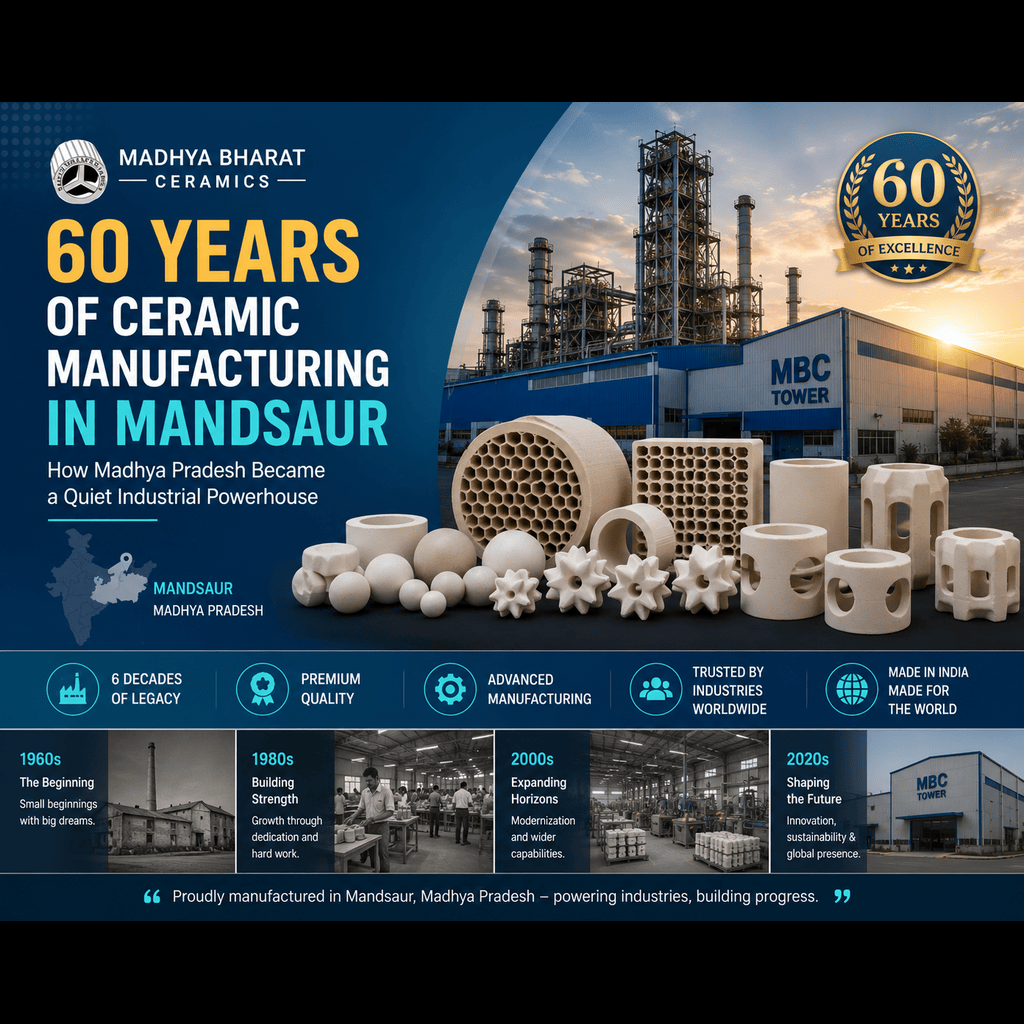
High alumina ceramic balls manufacturers in India, especially those based in Mandsaur, have the technical capability, raw material access, and export experience to serve both domestic and international refinery customers. They offer internationally certified products at competitive prices, backed by proper documentation that meets the requirements of regulated industries.
If you are a refinery engineer evaluating your next catalyst bed loading, a procurement manager comparing suppliers, or a plant operator looking to extend reactor run lengths, the answer consistently points to quality high alumina ceramic balls in India from a verified manufacturer.