Pressure drop is one of the biggest operating cost drivers in any packed tower system. Every extra unit of pressure drop means more energy consumed by fans, blowers, and compressors. According to chemical engineering studies, reducing pressure drop across a packed column by just 20% can cut blower energy costs by 15 to 30% depending on the column size and operating conditions. Ceramic Ring Partitioned in Mandsaur packing media has emerged as one of the most effective solutions for achieving this pressure drop reduction without sacrificing mass transfer efficiency. Plants across India and internationally are switching to Ceramic Ring Partitioned packing to lower energy bills, improve column throughput, and extend equipment life.
What Is Ceramic Ring Partitioned Packing and How Does It Work?
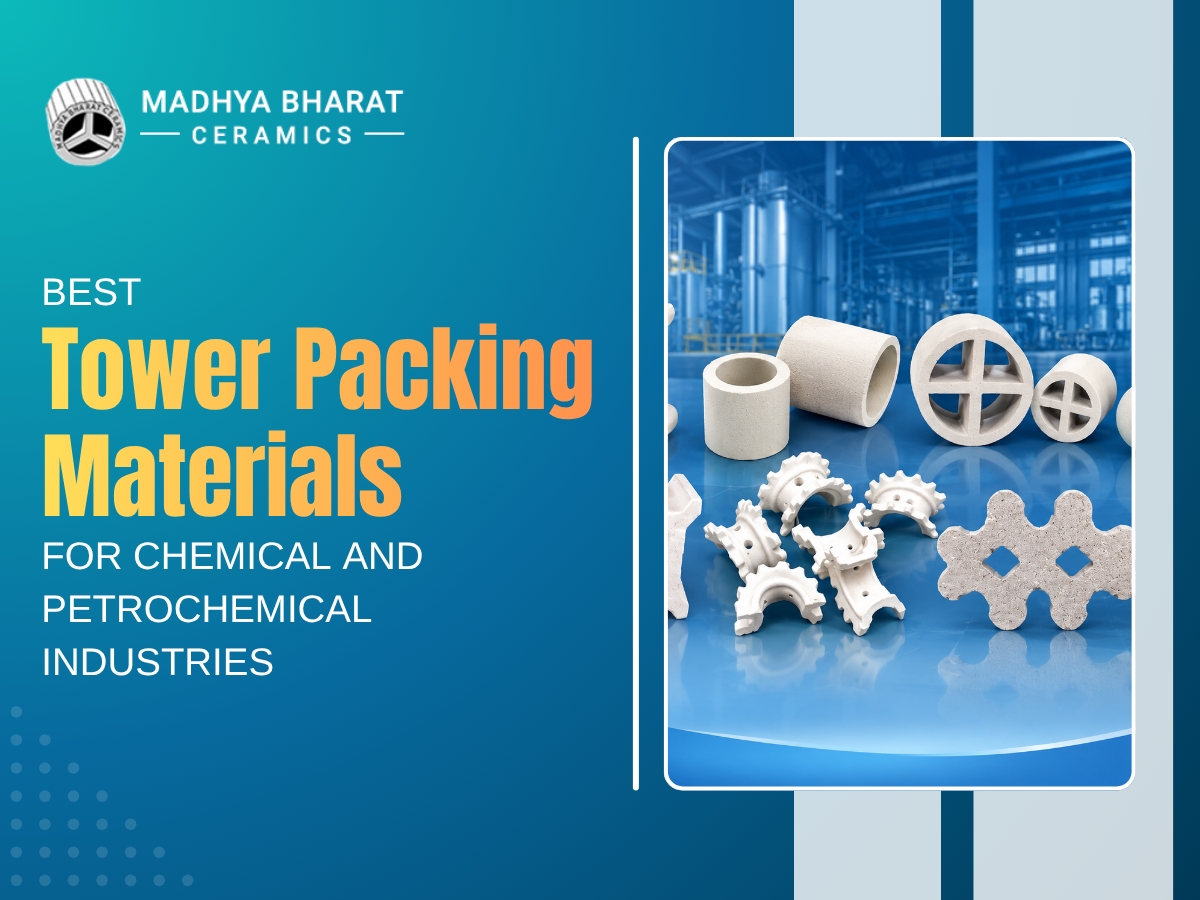
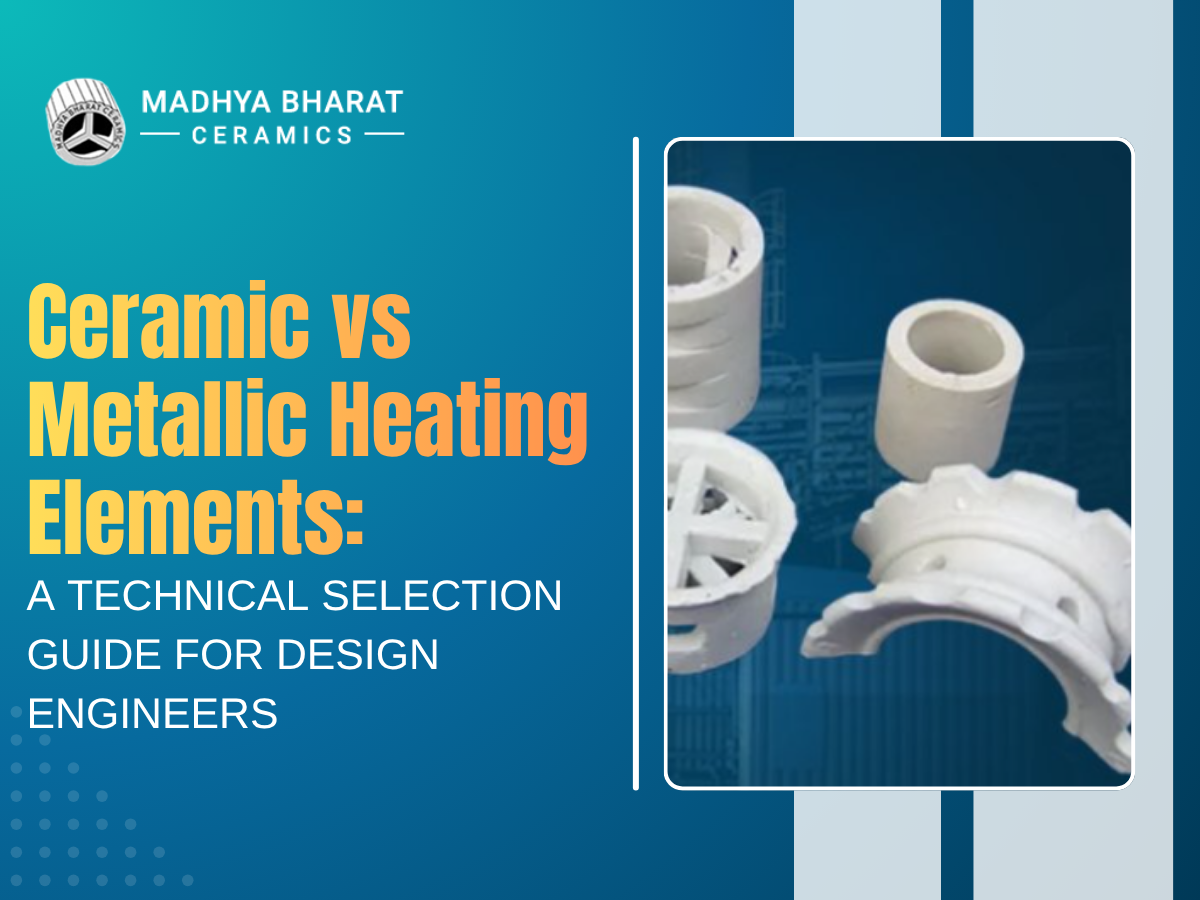
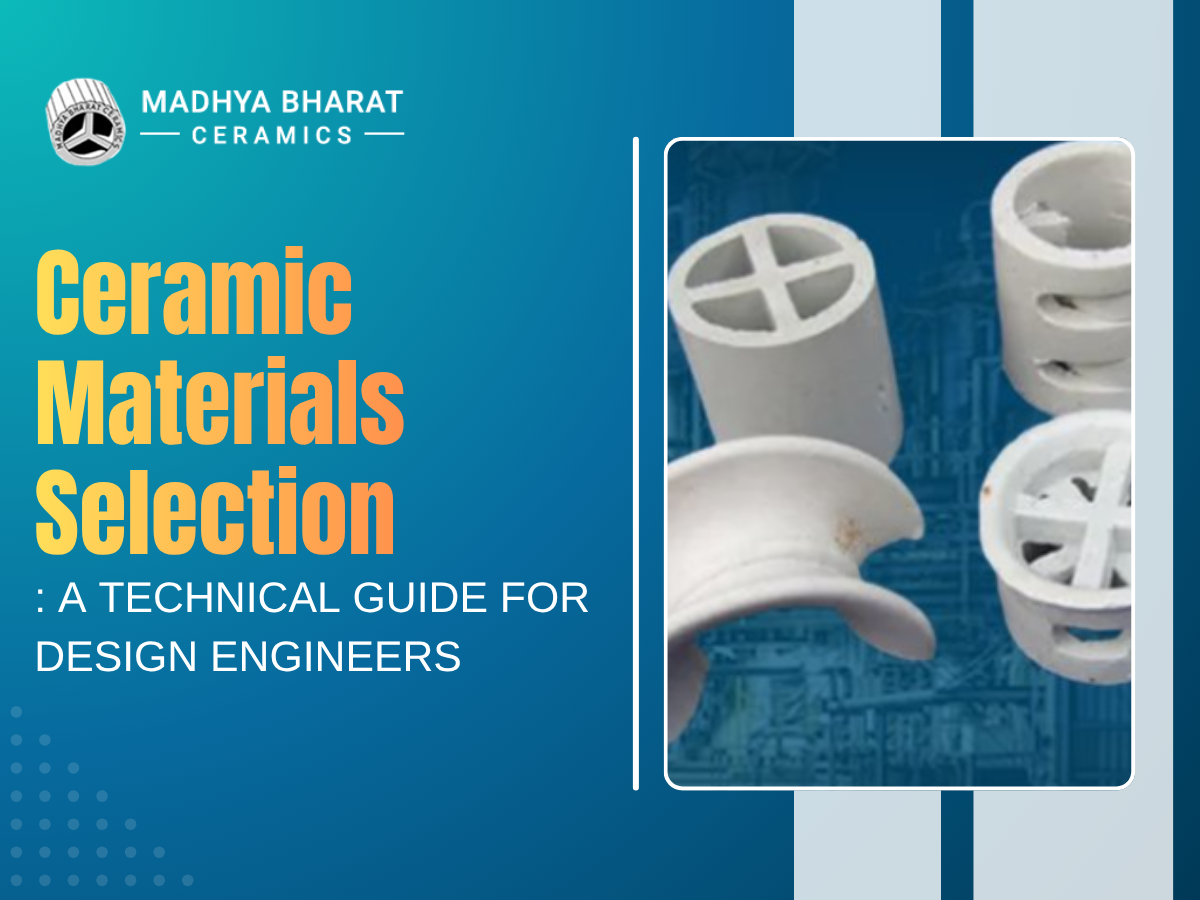
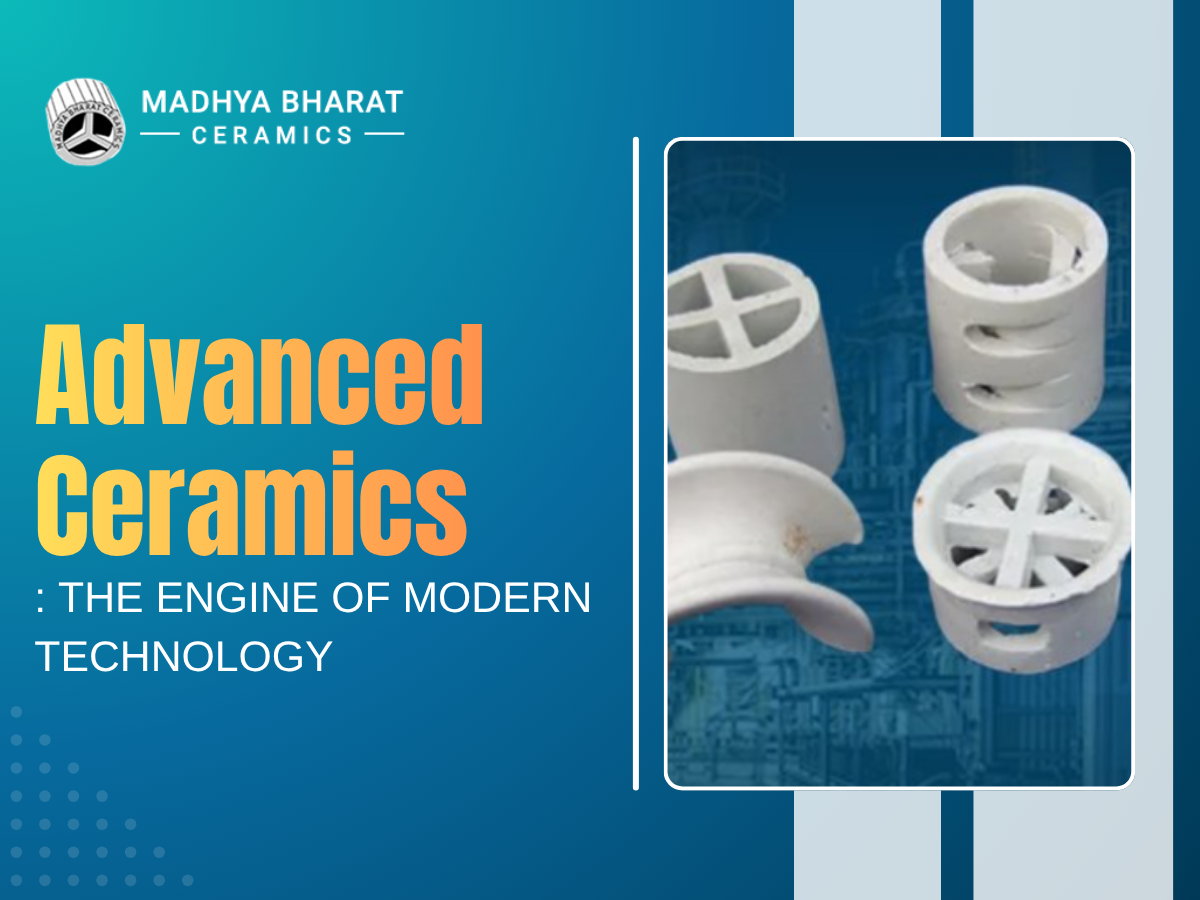
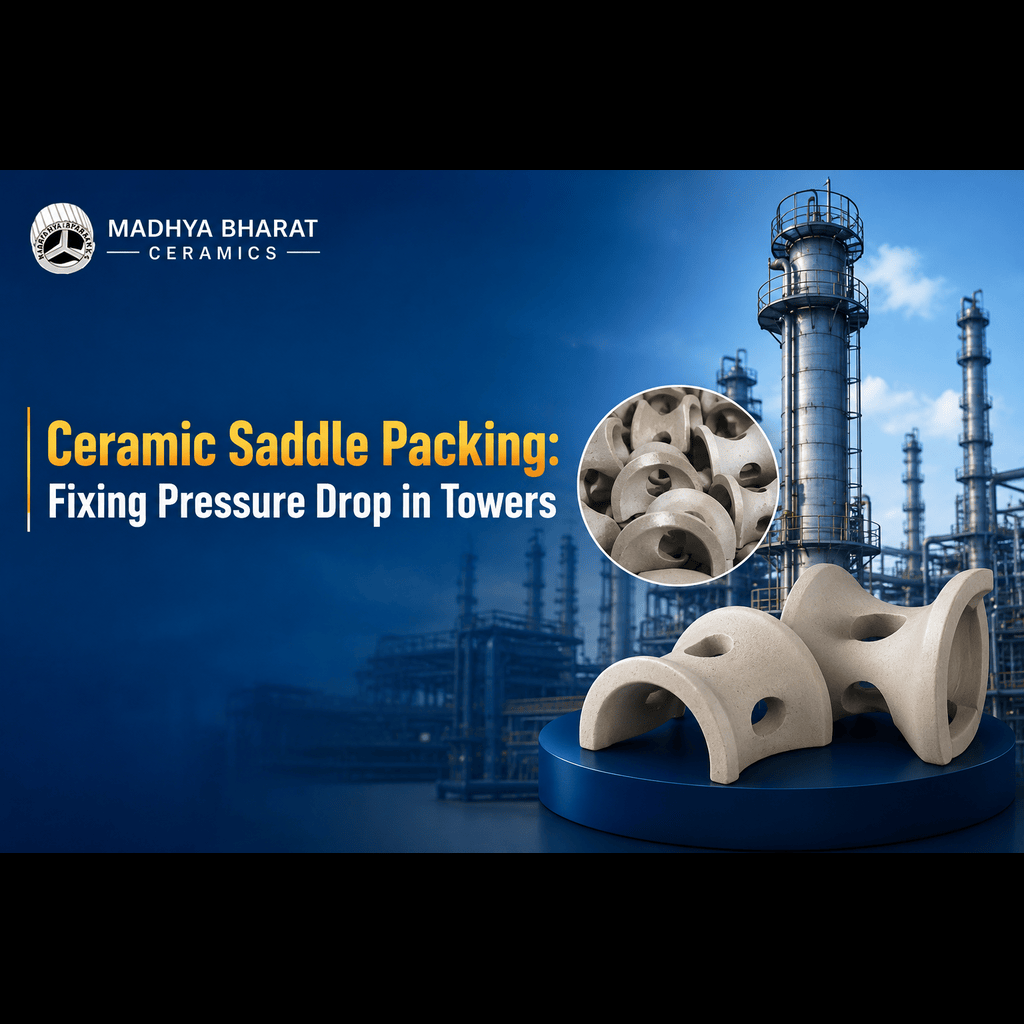
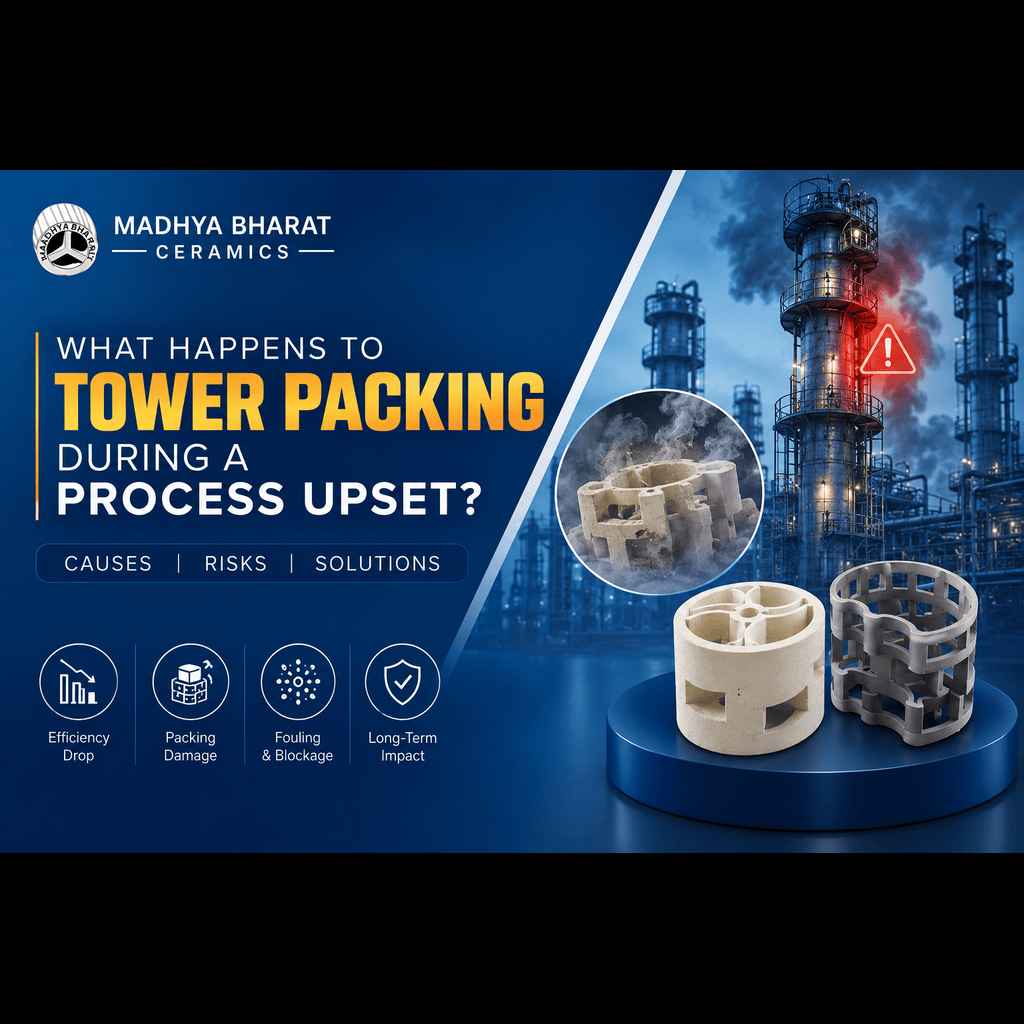
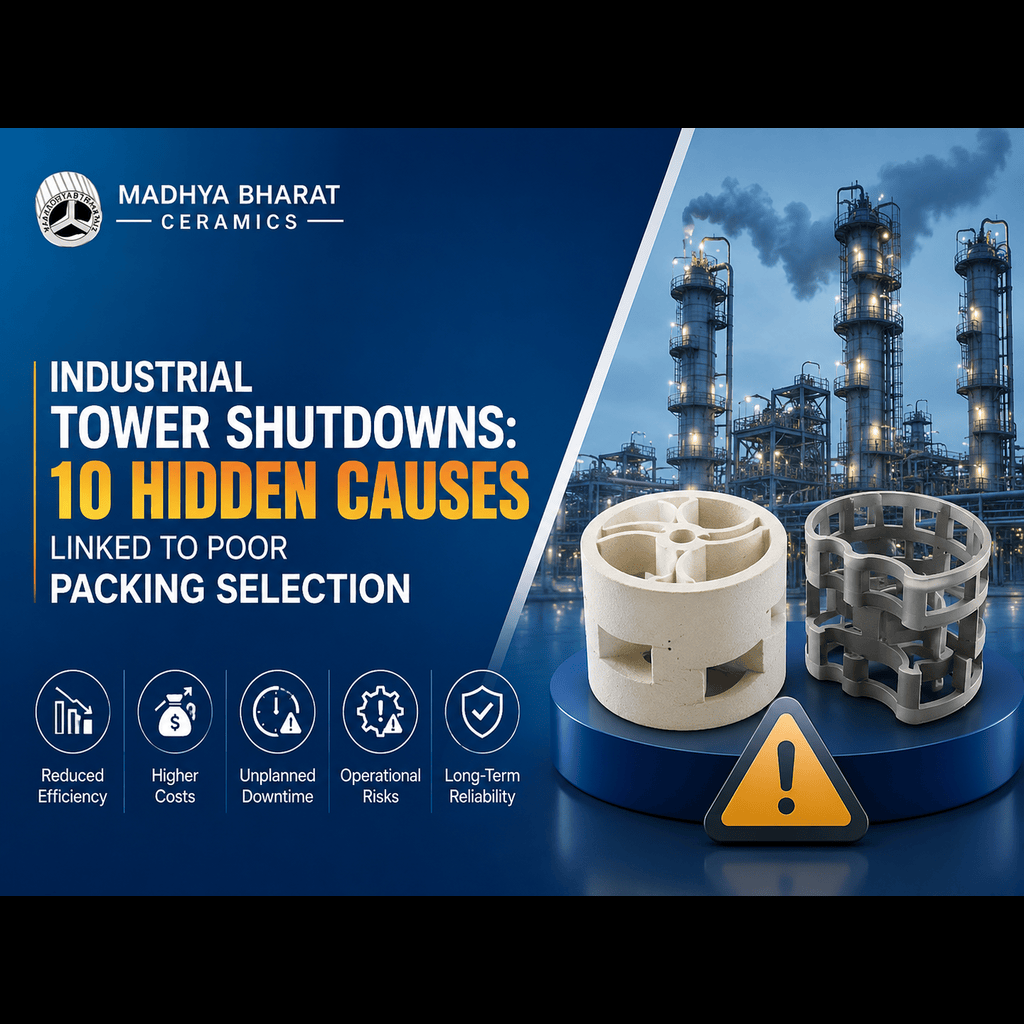
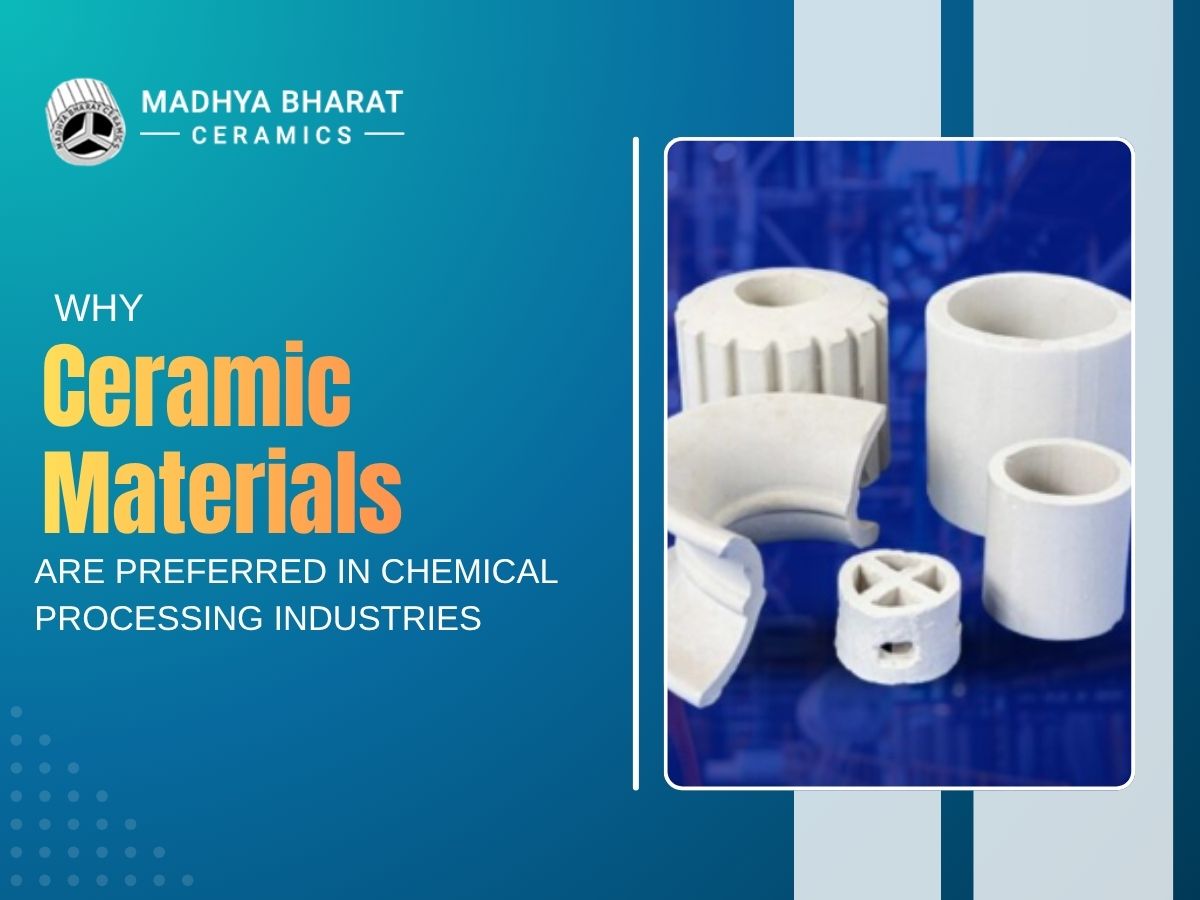
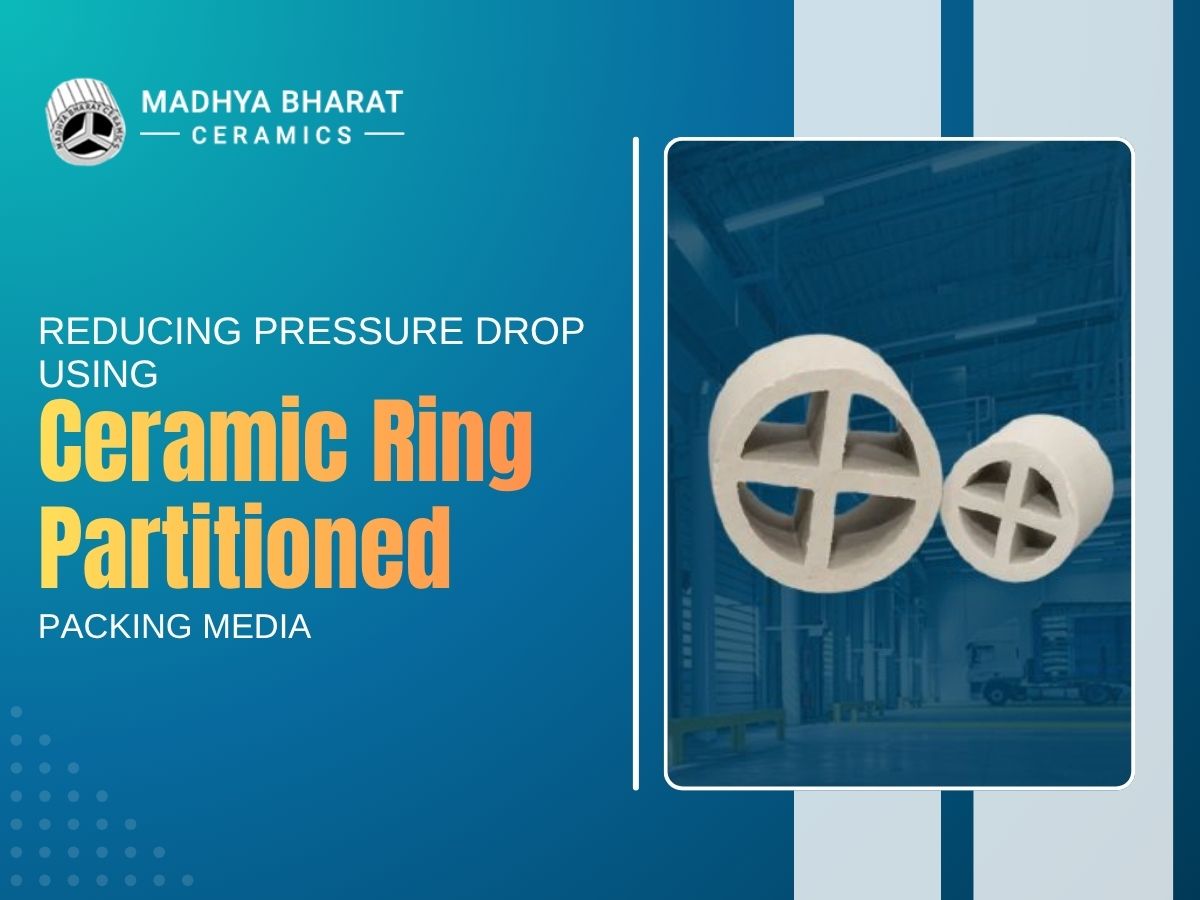
Ceramic Ring Partitioned packing is a type of random ceramic tower packing that looks similar to a standard cylindrical ring but with one key difference. It has internal cross-shaped partitions running across the inside of the cylinder. These partitions divide the interior of the ring into four separate cells, significantly increasing the total available surface area per unit volume.
When liquid flows over the ring, it does not just contact the outer surface. It also contacts the inner partition walls, spreading into a thin film across a much larger area. At the same time, gas rising through the bed encounters less resistance because the ring’s open outer structure allows flow to pass around and through without creating pockets of stagnant fluid.
This combination of high surface area and open flow geometry is why Ceramic Ring Partitioned packing consistently delivers better performance than simple rings in pressure-sensitive applications.
Key design features of Ceramic Ring Partitioned packing:
- Internal cross partitions create four-cell inner surface area
- Open outer cylinder maintains high void fraction in the packed bed
- Saddle-like contact points prevent flat stacking between pieces
- Available in 25mm, 38mm, 50mm, and 75mm sizes for different tower diameters
- High-fired ceramic construction for chemical and thermal durability
How Ceramic Ring Partitioned Packing Reduces Pressure Drop in Packed Towers
Understanding how Ceramic Ring Partitioned Packing Media reduces pressure drop requires looking at what causes pressure drop in the first place. In a packed bed, pressure drop happens when gas flowing upward must push through narrow gaps between packing pieces. The more blocked the flow path, the higher the resistance and the more energy the blower must use.
Ceramic Ring Partitioned packing reduces this resistance in three ways:
1. Higher Void Fraction
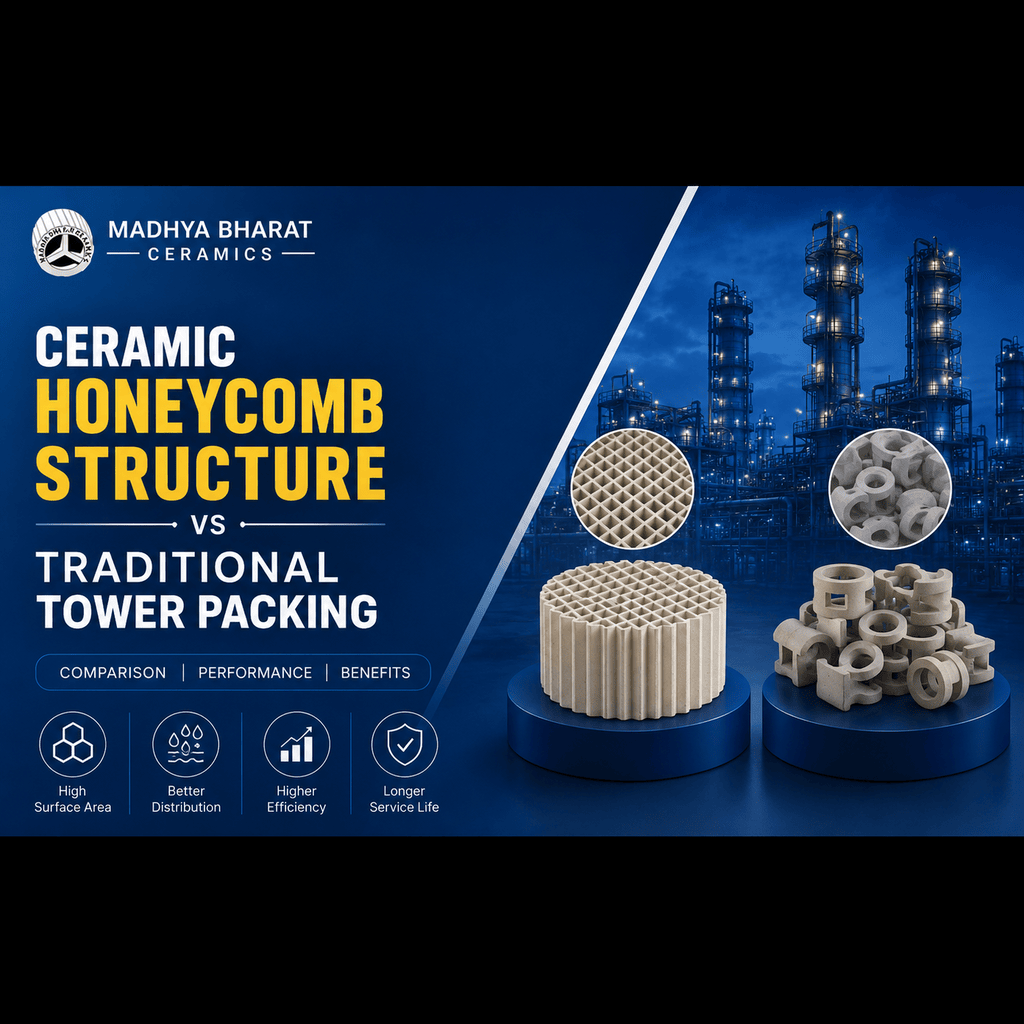
The open outer cylinder of the ring creates more empty space in the packed bed compared to solid ring shapes. A typical Ceramic Ring Partitioned packing bed achieves void fractions of 72 to 78%, compared to 65 to 68% for plain Raschig Rings of the same size. More void space means wider gas flow channels and lower resistance.
2. Prevention of Flat Stacking
Plain cylindrical rings often lie flat against each other when loaded into a tower, blocking gas flow paths and creating localized high-resistance zones. The internal partitions in Ceramic Ring Partitioned packing cause pieces to rest at angles to each other, keeping flow channels open throughout the bed.
3. Improved Liquid Drainage
When liquid drains quickly and evenly from the packing, gas flow is not blocked by liquid holdups. The partition design helps liquid spread and drain efficiently rather than pooling inside the ring. Better drainage means more open space for gas and lower overall pressure drop.
These three factors together explain why plants switching from Raschig Rings to Ceramic Ring Partitioned packing consistently measure significant pressure drop reductions across their towers.
Benefits of Ceramic Ring Partitioned Packing in Distillation Columns
Distillation columns are particularly sensitive to pressure drop because many operate under vacuum or near-vacuum conditions. Any unnecessary pressure drop reduces the effective vacuum and forces the column to operate at higher temperatures, which can degrade heat-sensitive products.
Benefits of Ceramic Ring Partitioned Packing in distillation columns include:
- Vacuum columns maintain lower bottom temperatures, protecting product quality
- Higher throughput is achievable without hitting the flooding point of the column
- More theoretical plates per meter of packed height in some applications
- Consistent separation performance over long operating periods
- Lower reboiler energy demand due to reduced column temperature requirements
For chemical plants running distillation under vacuum conditions, the switch to Ceramic Ring Partitioned packing from standard rings can make the difference between a column that meets product specifications and one that does not.
Ceramic Ring Partitioned vs Other Ceramic Packing Types
| Packing Type | Surface Area (m²/m³) | Void Fraction | Pressure Drop | Mass Transfer | Best Application |
| Raschig Ring (25mm) | 190 | 68% | High | Moderate | General absorption, older plants |
| Pall Ring (25mm) | 220 | 78% | Medium | Good | Scrubbers, distillation |
| Intalox Saddle (25mm) | 255 | 77% | Low-Medium | Very Good | Acid plants, absorption |
| Ring Partitioned (25mm) | 270 | 76% | Low | Excellent | Vacuum distillation, low-drop columns |
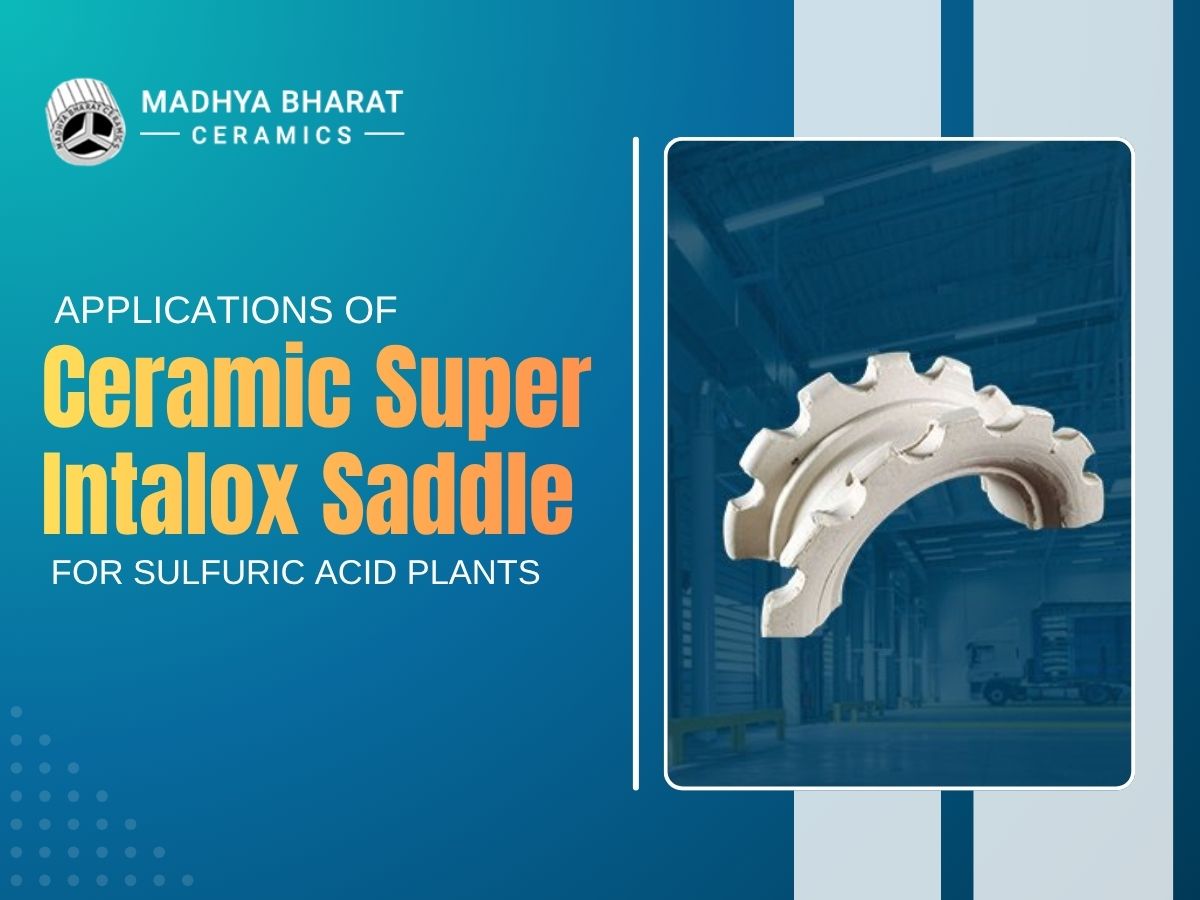
| Super Intalox (25mm) | 280 | 79% | Low | Excellent | High-performance absorption |
This table clearly shows that Ceramic Ring Partitioned packing offers a strong combination of high surface area and low pressure drop that places it among the top performers for chemical process optimization in pressure-sensitive column applications.
Why Ceramic Ring Partitioned in Mandsaur Is a Trusted Global Source
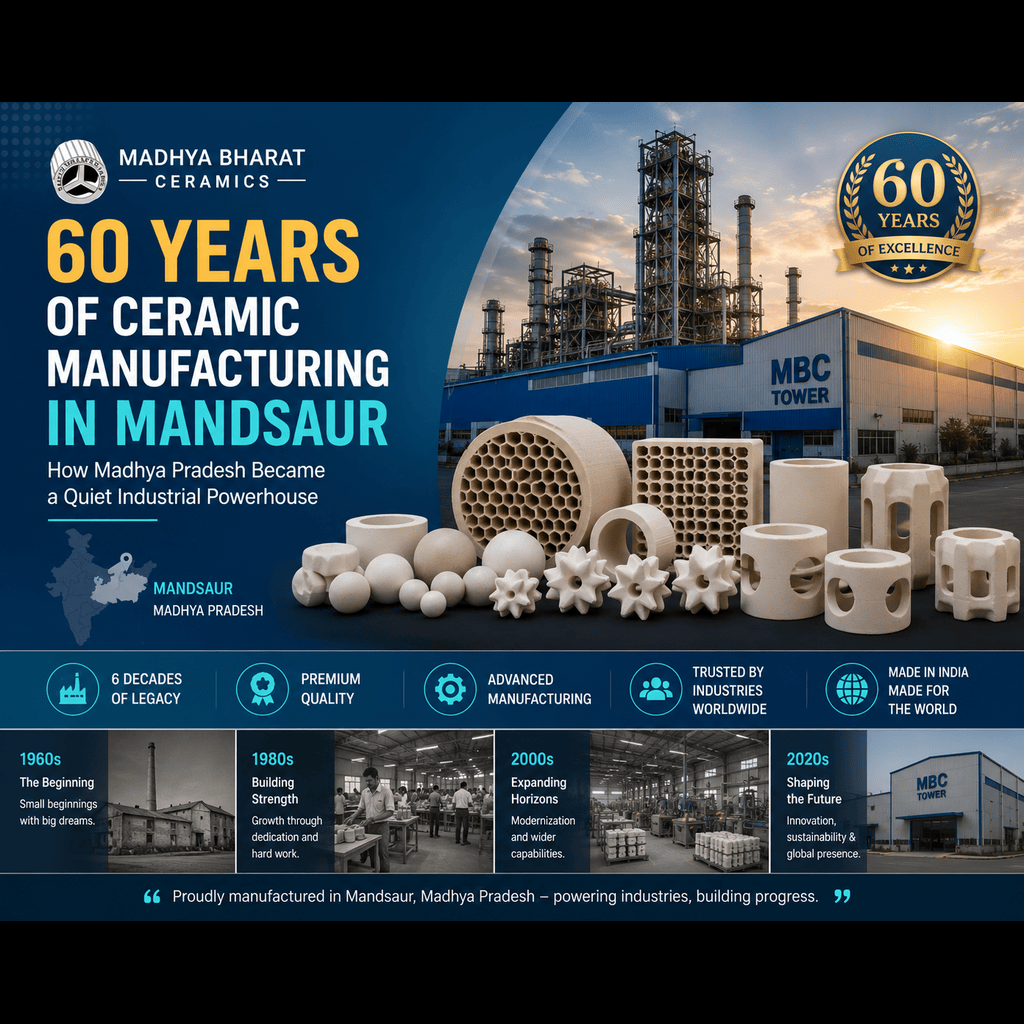
Mandsaur in Madhya Pradesh has built a strong reputation as a production center for high-quality industrial ceramic tower packing. Ceramic ring partitioned in Mandsaur is manufactured using locally sourced high-grade ceramic raw materials, high-temperature tunnel kiln firing, and rigorous quality testing before dispatch.
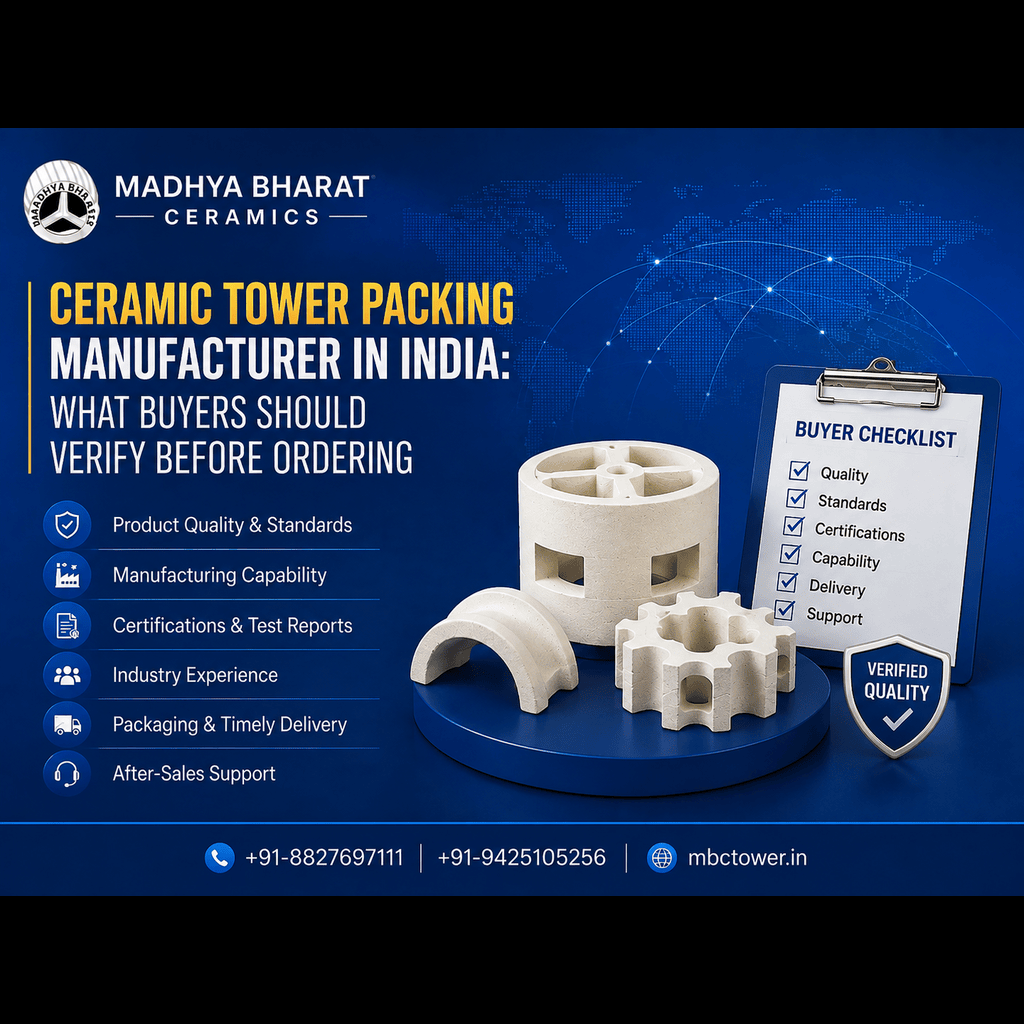
What buyers receive when sourcing Ceramic ring partitioned in India from Mandsaur manufacturers:
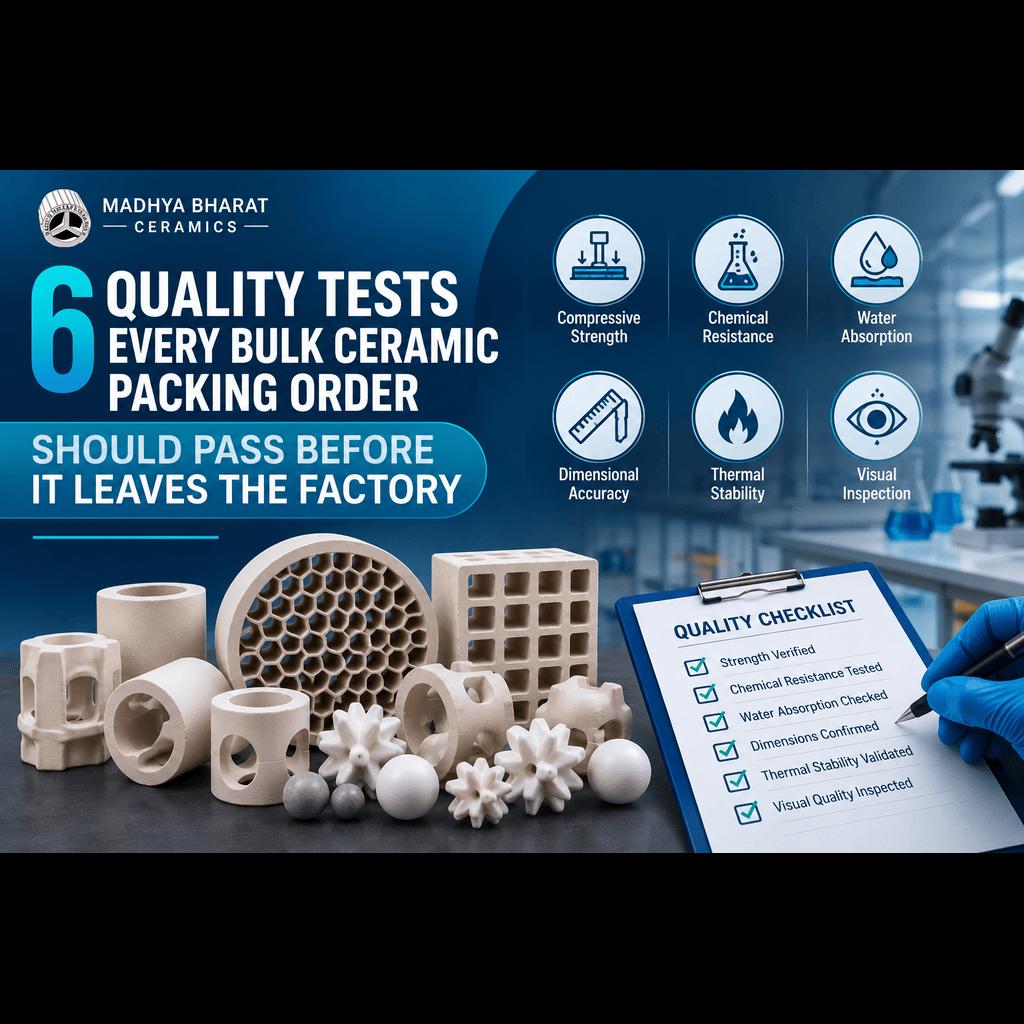
- Consistent ceramic composition verified by lab testing
- Dimensional tolerances within plus or minus 1mm for predictable bed behavior
- Crush strength data and bulk density reports provided with each batch
- Water absorption below 0.5% confirming high-density firing
- Batch traceability for quality audit requirements
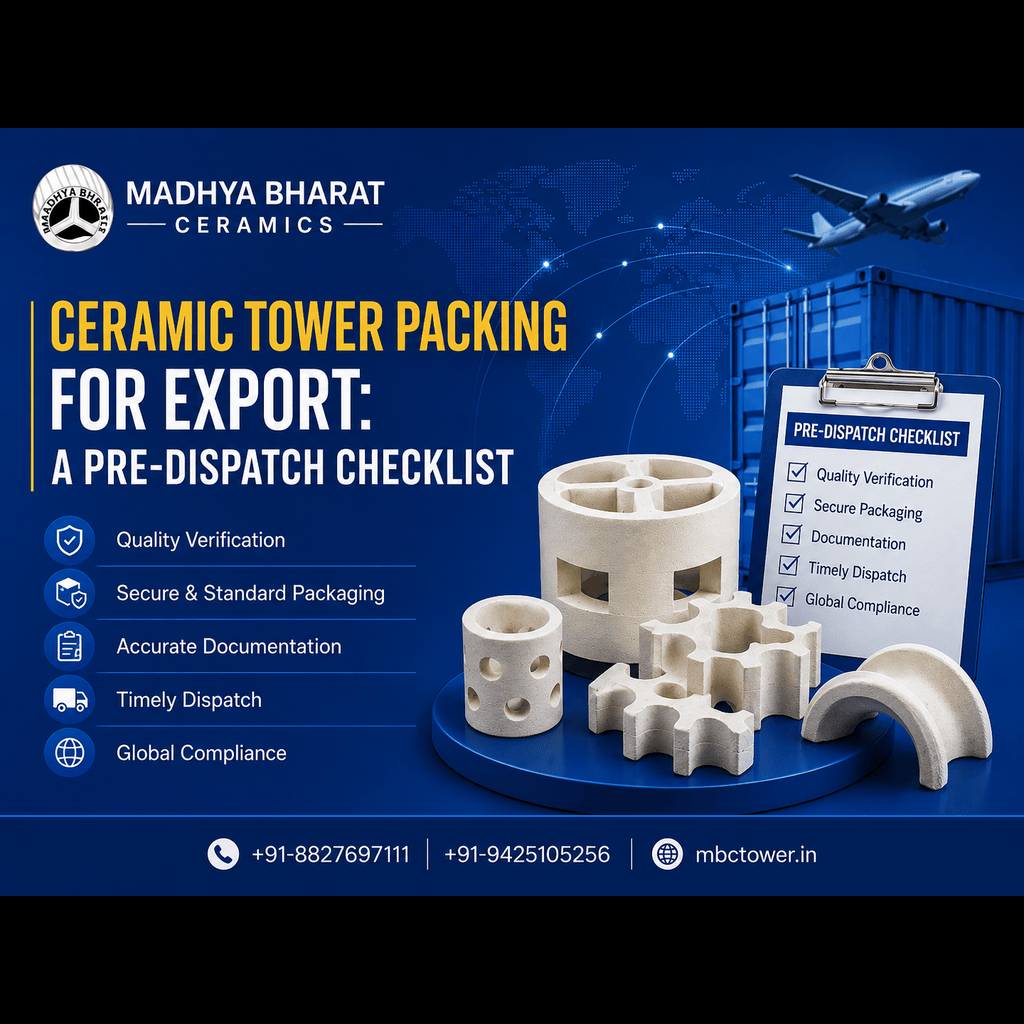
- Export packaging designed for sea freight to prevent transit damage
Ceramic ring partitioned exporters from Mandsaur supply to distillation and absorption columns in chemical plants across the UAE, Saudi Arabia, Malaysia, Indonesia, Egypt, and several European markets. Buyers consistently report that Indian-manufactured Ceramic Ring Partitioned packing performs equivalently to European products at 30 to 40% lower procurement cost.
Gas-Liquid Distribution Improvements with Ceramic Ring Partitioned Packing
One of the less-discussed but equally important benefits of Ceramic Ring Partitioned packing is its effect on gas-liquid distribution inside the packed bed. Poor distribution is one of the most common causes of underperforming columns. When gas and liquid do not spread evenly across the full cross-section of the tower, portions of the packing are underutilized and the column fails to deliver its design performance.
The partition geometry of this packing promotes better distribution in two ways:
- Gas rising through the bed is deflected by partition walls, spreading horizontally as it rises
- Liquid flowing downward is redirected by the inner cells, preventing it from channeling along the column wall
This improved distribution means that more of the packing bed participates actively in mass transfer at any given moment. The result is better separation performance from the same column volume, which in practical terms means either higher product purity or the ability to increase feed rate without sacrificing quality.
Industries That Benefit from High Performance Ceramic Packing Solutions
Ceramic Ring Partitioned packing is used across a wide range of industries where pressure drop management and mass transfer efficiency both matter:
- Petrochemicals: Vacuum distillation of heavy fractions where low pressure drop is critical
- Pharmaceuticals: Solvent recovery columns where product purity is non-negotiable
- Fertilizers: Ammonia absorption towers where efficient gas-liquid contact reduces energy costs
- Specialty chemicals: Fine chemical distillation columns with heat-sensitive products
- Sulfuric acid plants: Intermediate absorption towers where pressure drop affects overall plant efficiency
- Natural gas processing: Gas sweetening and dehydration columns in upstream oil and gas facilities
The breadth of these applications confirms that high performance ceramic packing solutions based on the partitioned ring design are relevant across the full spectrum of chemical and process industries.
How to Choose the Right Size Ceramic Ring Partitioned Packing
Selecting the correct size ensures maximum benefit from the partitioned ring design. General sizing guidelines:
- Towers below 300mm diameter: Use 25mm packing to maintain at least 8 to 10 packing diameters across the tower width
- Towers from 300mm to 750mm diameter: Use 25mm or 38mm depending on flow rate requirements
- Towers above 750mm diameter: Use 38mm or 50mm for optimum pressure drop and throughput balance
- Vacuum distillation columns: Larger sizes are generally preferred to minimize pressure drop contribution
- High liquid rate absorbers: Larger sizes reduce liquid flooding risk at high flow rates
A trusted ceramic ring partitioned supplier will ask for your tower diameter, operating pressure, gas and liquid flow rates, and required separation before recommending a size. This pre-order consultation prevents the common mistake of under-sizing packing in large towers.
Reducing Pressure Drop in Packed Towers: Real Plant Experience with Ceramic Ring Partitioned Media
Plant engineers who have made the switch from standard ceramic rings to Ceramic Ring Partitioned packing typically report the following improvements within the first operating cycle:
- Pressure drop across the packed bed reduced by 18 to 30%
- Blower or compressor energy consumption reduced by 15 to 25%
- Column throughput increased by 10 to 20% without flooding
- Product purity maintained or improved at higher feed rates
- No packing replacement required for at least 8 to 12 years
These are not theoretical predictions. They are outcomes reported by plant operators in distillation, absorption, and scrubbing applications across chemical processing industries in India and internationally.
Case Study: Vacuum Distillation Column Upgrade at a Specialty Chemical Plant, Gujarat
A specialty chemical manufacturer in Gujarat was running a vacuum distillation column to separate two heat-sensitive organic compounds. The column was packed with 38mm ceramic Raschig Rings installed during the plant’s original construction 14 years ago.
Problems the plant was experiencing:
- Higher than designed pressure drop forcing the column to operate at elevated bottom temperatures
- Thermal degradation of one of the two product compounds at the higher temperatures
- Product purity falling below the required 99.5% specification
- Customers beginning to raise quality complaints on a recurring basis
The plant process engineering team evaluated multiple packing options and selected 38mm Ceramic Ring Partitioned packing from a ceramic ring partitioned manufacturer in Mandsaur based on published pressure drop data and surface area specifications.
The column was repacked during a scheduled 7-day maintenance shutdown. No modifications to the column shell, support grid, or liquid distributor were required.
Results after 6 months of continuous operation following repacking:
- Column pressure drop reduced by 26%
- Bottom temperature dropped by 11 degrees Celsius, eliminating thermal degradation
- Product purity improved to 99.7%, exceeding the customer specification
- Column throughput increased by 14% at the same pressure drop as the previous Raschig Ring installation
- Blower energy consumption reduced by 21%
- Zero customer quality complaints in the six months following repacking
The plant’s chief process engineer confirmed that the Ceramic Ring Partitioned packing from the Mandsaur manufacturer delivered exactly the pressure drop reduction needed to solve the thermal degradation problem. The payback on the full repacking project was achieved in less than 6 months through energy savings and elimination of off-spec product losses.
FAQs About Ceramic Ring Partitioned packing
Q1. What is Ceramic Ring Partitioned packing used for?
Ceramic Ring Partitioned packing is used in distillation, absorption, and scrubbing columns to reduce pressure drop, improve gas-liquid contact, and enhance mass transfer efficiency in chemical and petrochemical processing plants.
Q2. How is Ceramic Ring Partitioned packing different from Raschig Rings?
Ceramic Ring Partitioned packing has internal cross partitions that increase surface area and prevent flat stacking. This delivers lower pressure drop, better liquid distribution, and higher mass transfer efficiency compared to plain Raschig Rings of the same outer dimensions.
Q3. Where can I buy Ceramic Ring Partitioned packing in India?
Ceramic ring partitioned in India is available from manufacturers and exporters based in Mandsaur in Madhya Pradesh and in industrial zones in Gujarat. These manufacturers supply to domestic chemical plants and export to buyers in the Middle East, Southeast Asia, and Europe.
Q4. What sizes are available for Ceramic Ring Partitioned packing?
Standard sizes are 25mm, 38mm, 50mm, and 75mm. The correct size depends on your tower diameter and operating conditions. A qualified ceramic ring partitioned supplier will recommend the best size after reviewing your column specifications.
Q5. How long does Ceramic Ring Partitioned packing last?
With proper installation and compatible chemical service, Ceramic Ring Partitioned packing lasts 8 to 15 years in typical chemical plant applications. High-fired ceramic does not degrade, swell, or corrode under normal operating conditions.
Q6. Is Ceramic Ring Partitioned packing suitable for vacuum distillation?
Yes. Its low pressure drop characteristics make Ceramic Ring Partitioned packing particularly well-suited for vacuum distillation columns where minimizing column pressure drop is critical for maintaining low bottom temperatures and protecting product quality.
Q7. What is the void fraction of Ceramic Ring Partitioned packing?
Ceramic Ring Partitioned packing typically achieves void fractions of 72 to 78% depending on size. Higher void fraction means more open space for gas flow and lower pressure drop compared to denser packing types like Raschig Rings.
Q8. Can Ceramic Ring Partitioned packing be exported from India?
Yes. Ceramic ring partitioned exporters in Mandsaur and other Indian manufacturing centers regularly export to chemical plants, refineries, and processing facilities in over 40 countries with full quality certification and export documentation.
Conclusion
Ceramic Ring Partitioned packing solves one of the most persistent problems in packed tower operations. High pressure drop wastes energy, forces columns to operate at non-ideal temperatures, limits throughput, and contributes to product quality problems. None of these issues are acceptable in a competitive chemical manufacturing environment.
The case study from Gujarat demonstrates exactly what this packing delivers in practice. A vacuum distillation column that was thermally degrading a product and failing to meet purity specifications was completely turned around by replacing Raschig Rings with Ceramic Ring Partitioned packing from a manufacturer in Mandsaur. Pressure drop fell by 26%, bottom temperature dropped by 11 degrees, purity exceeded the customer target, and throughput increased by 14%. The entire investment was recovered in under 6 months.
Ceramic ring partitioned in Mandsaur is produced by manufacturers who combine quality raw materials, precise kiln firing, and rigorous dimensional testing to deliver a product that performs consistently across demanding chemical service conditions. Buyers sourcing from Indian manufacturers get internationally competitive quality at 30 to 40% lower cost than European alternatives, with full technical documentation and sizing support provided as standard.