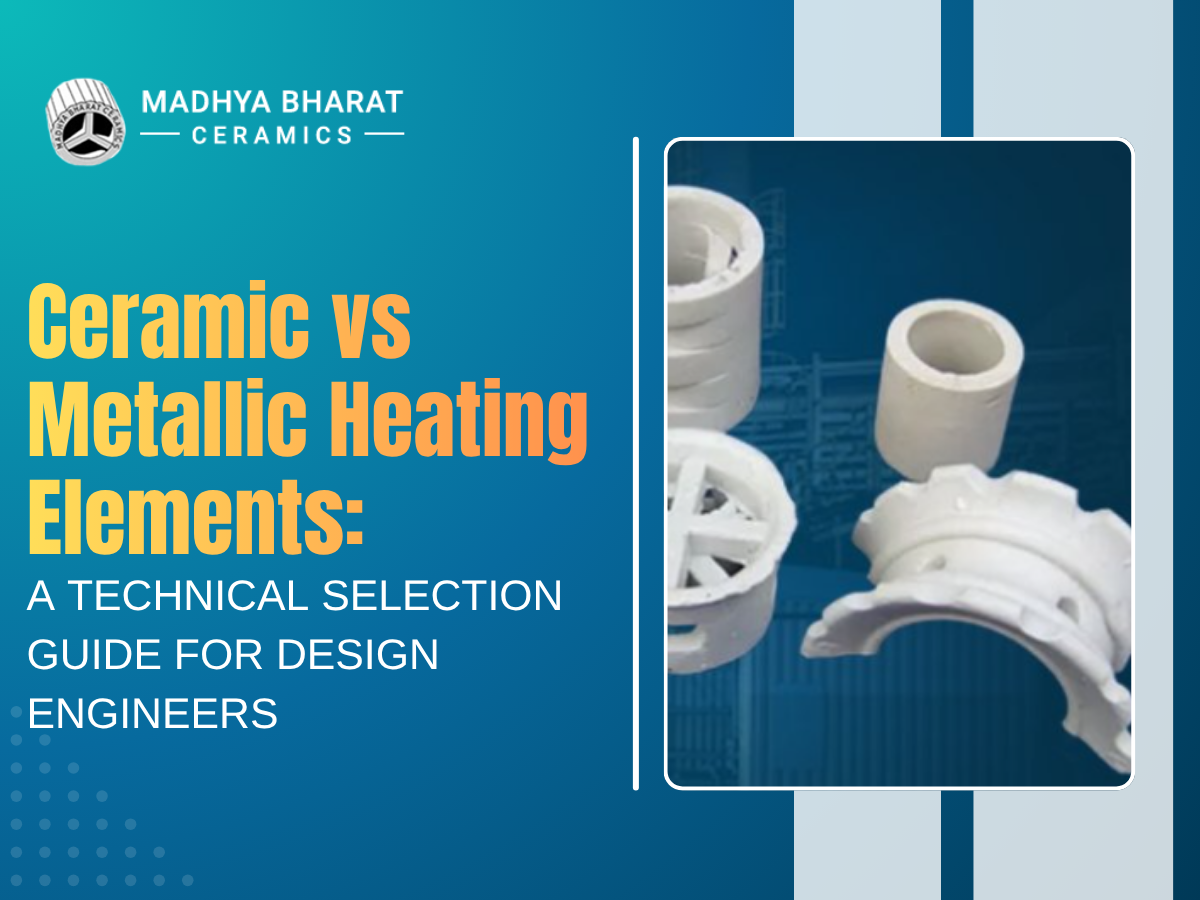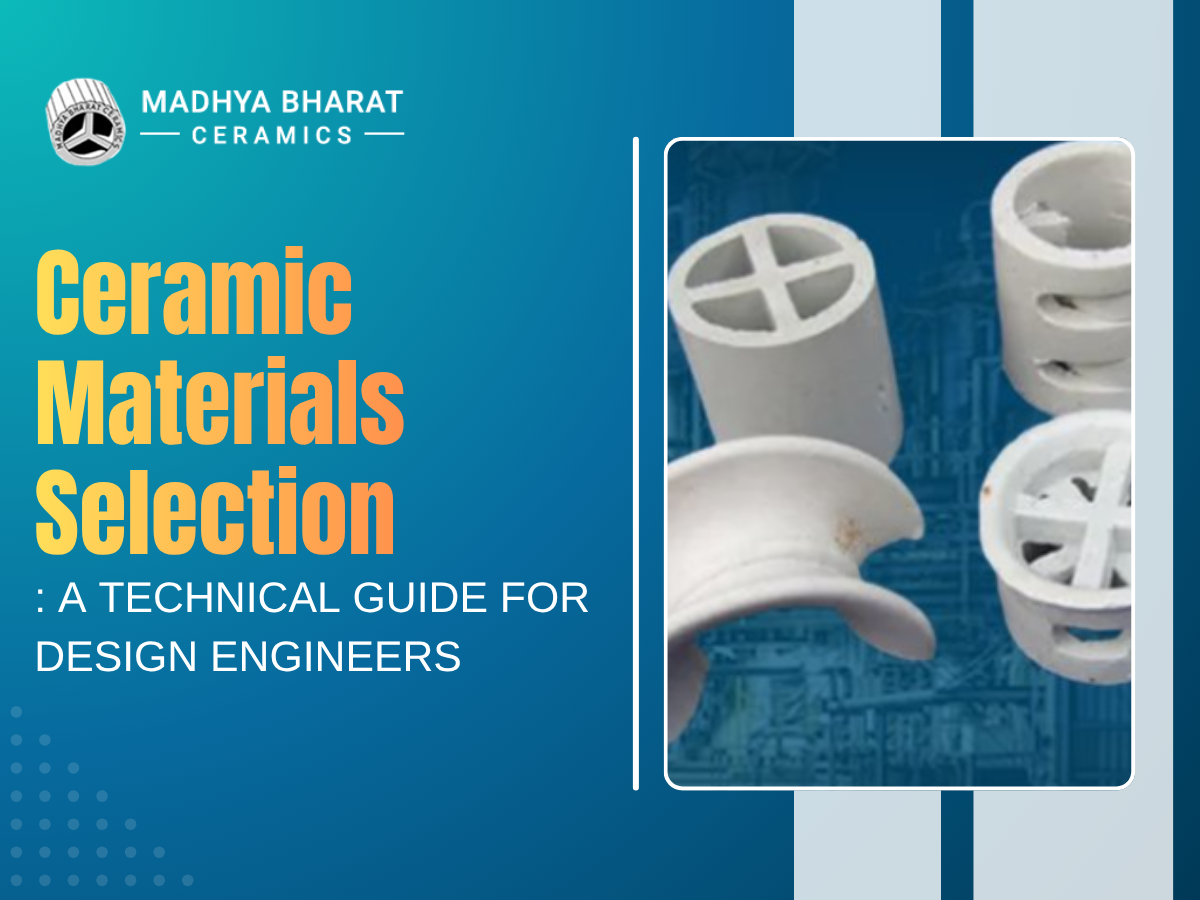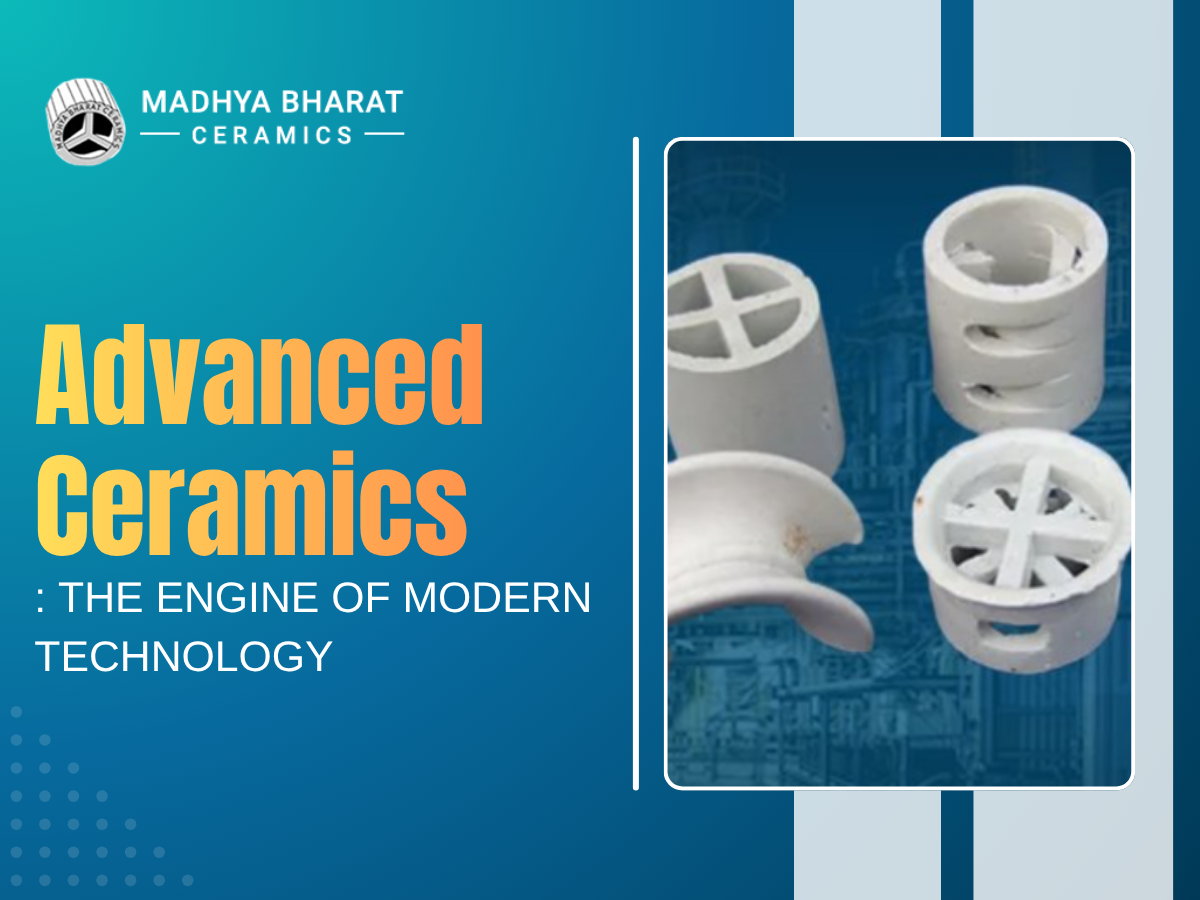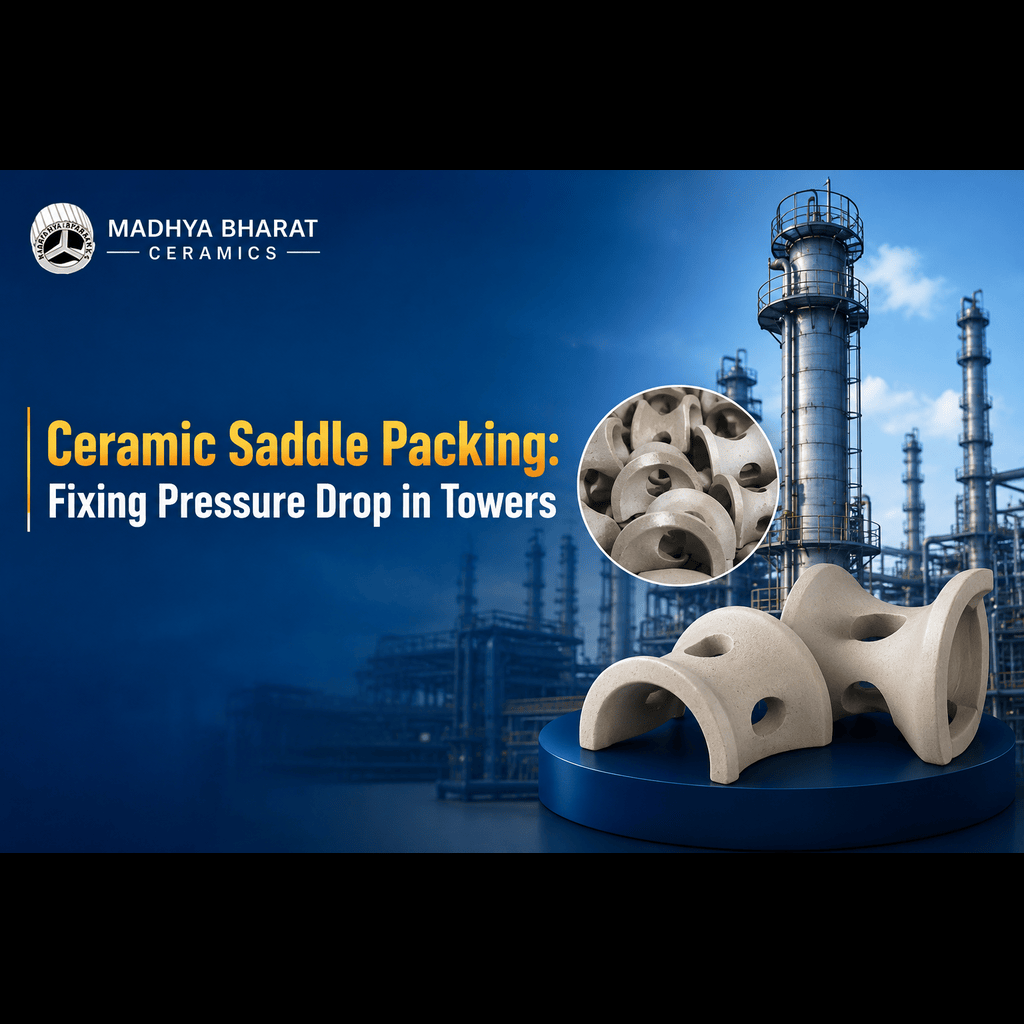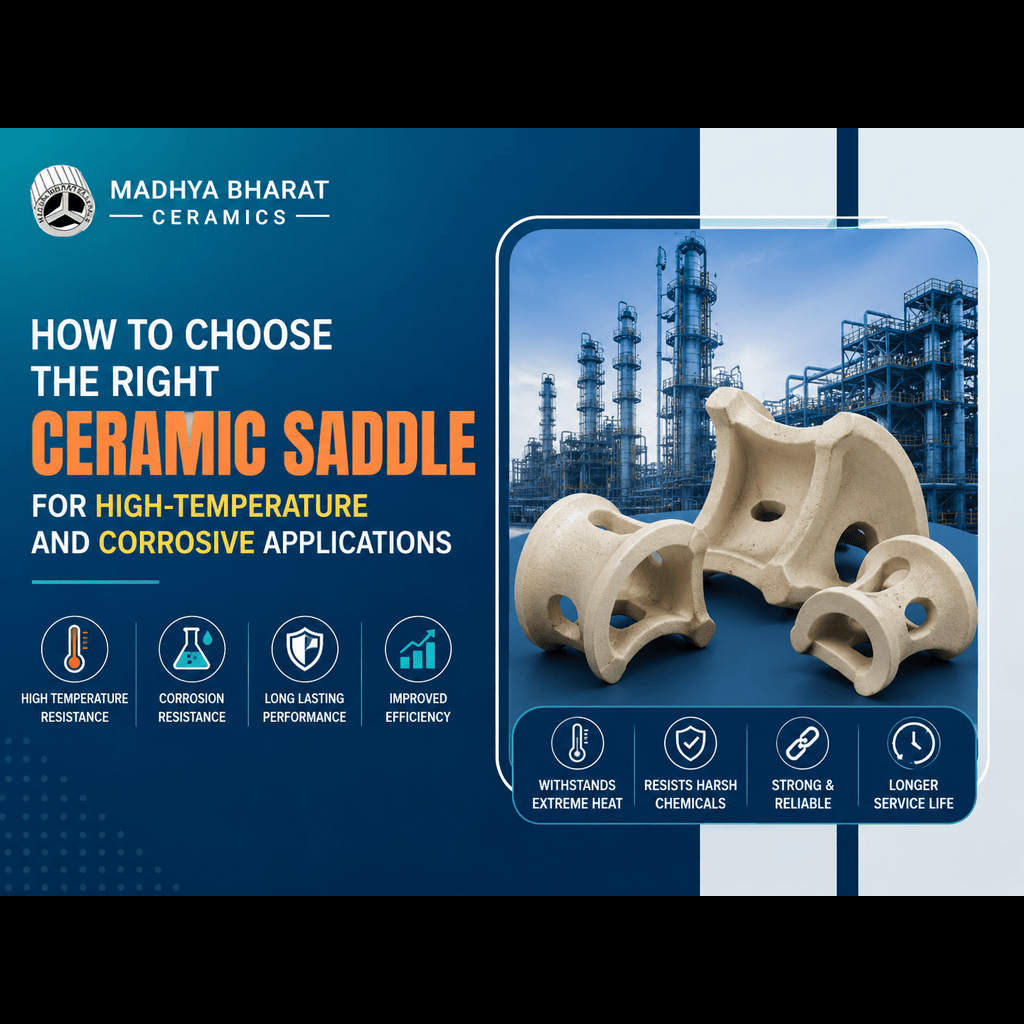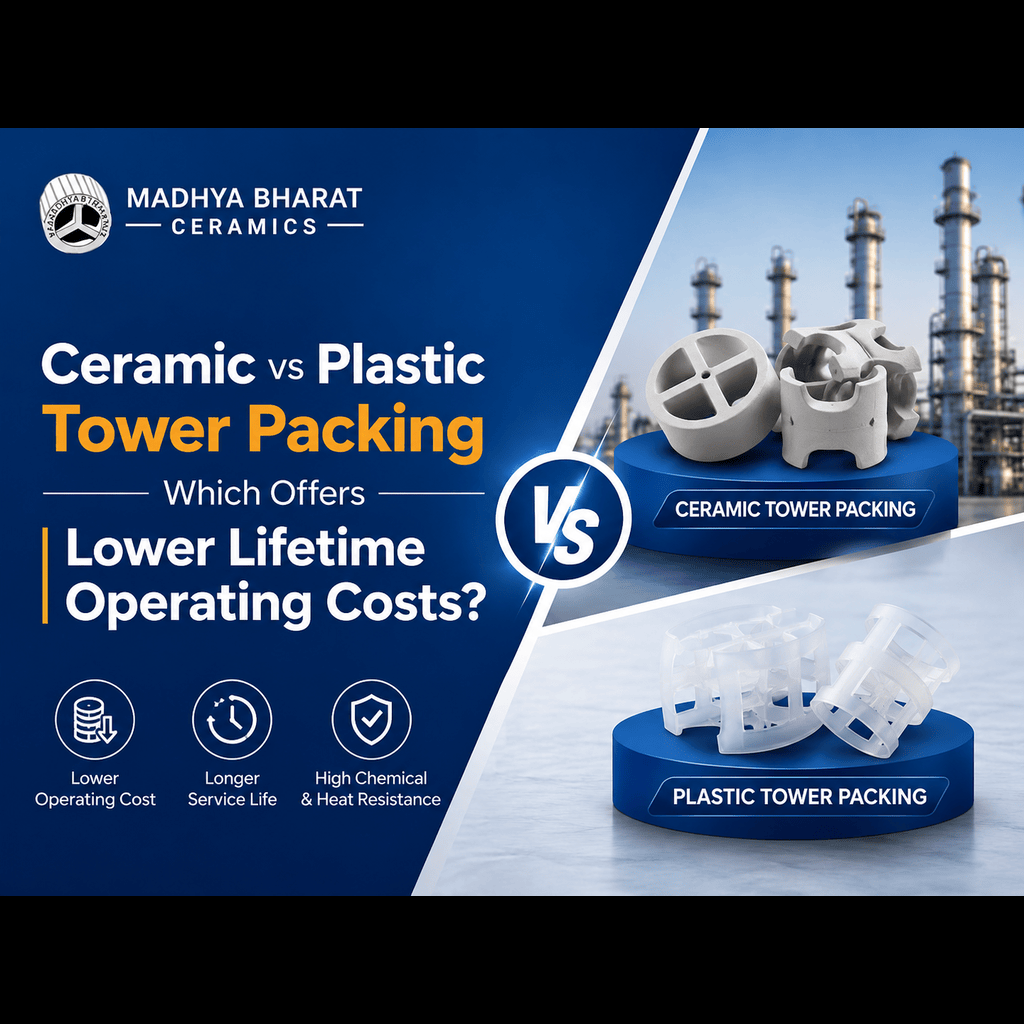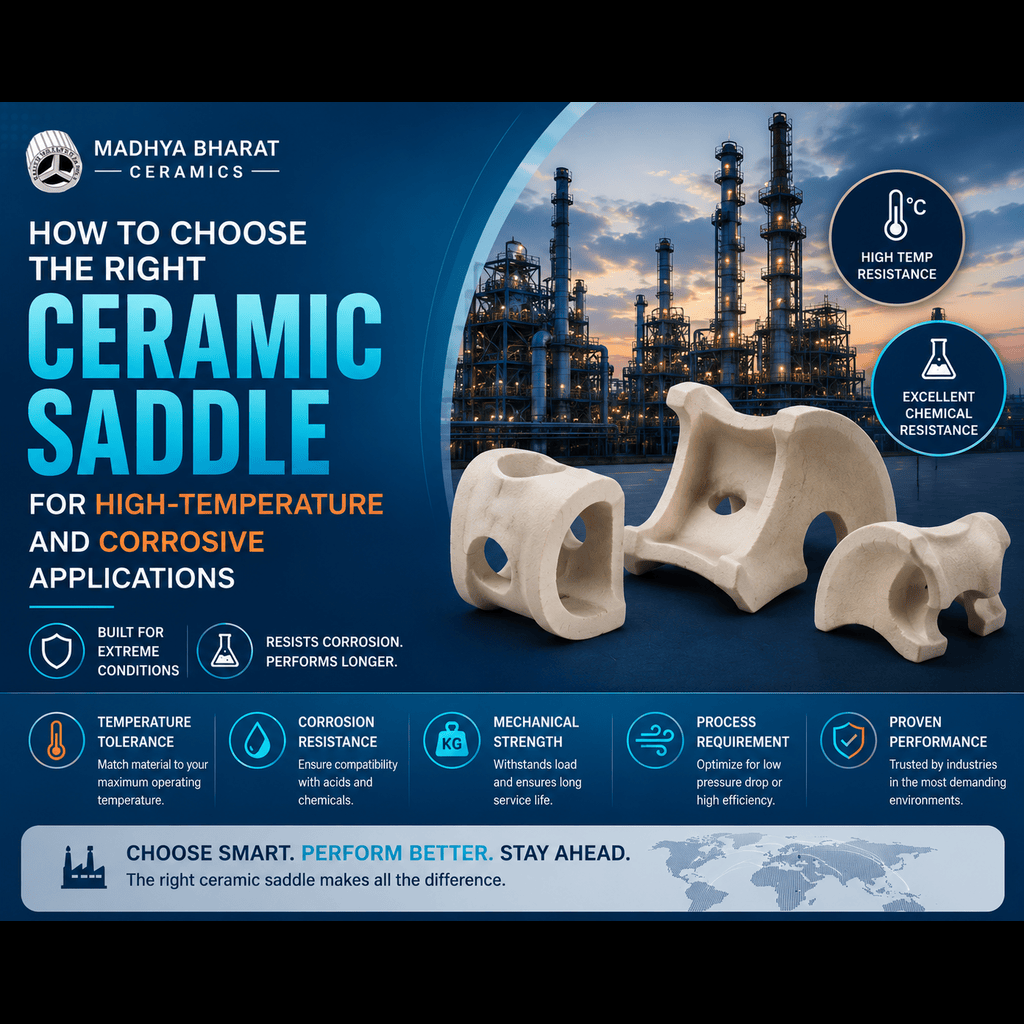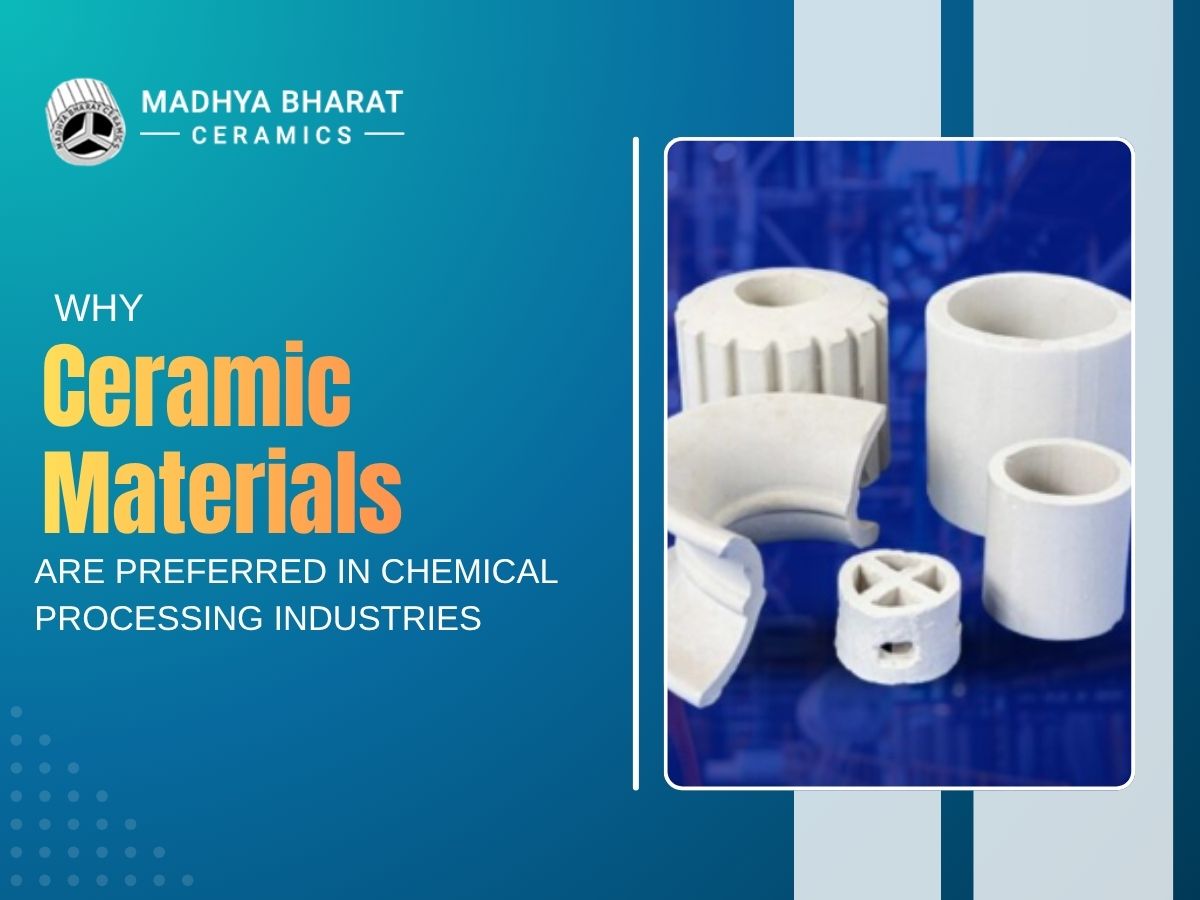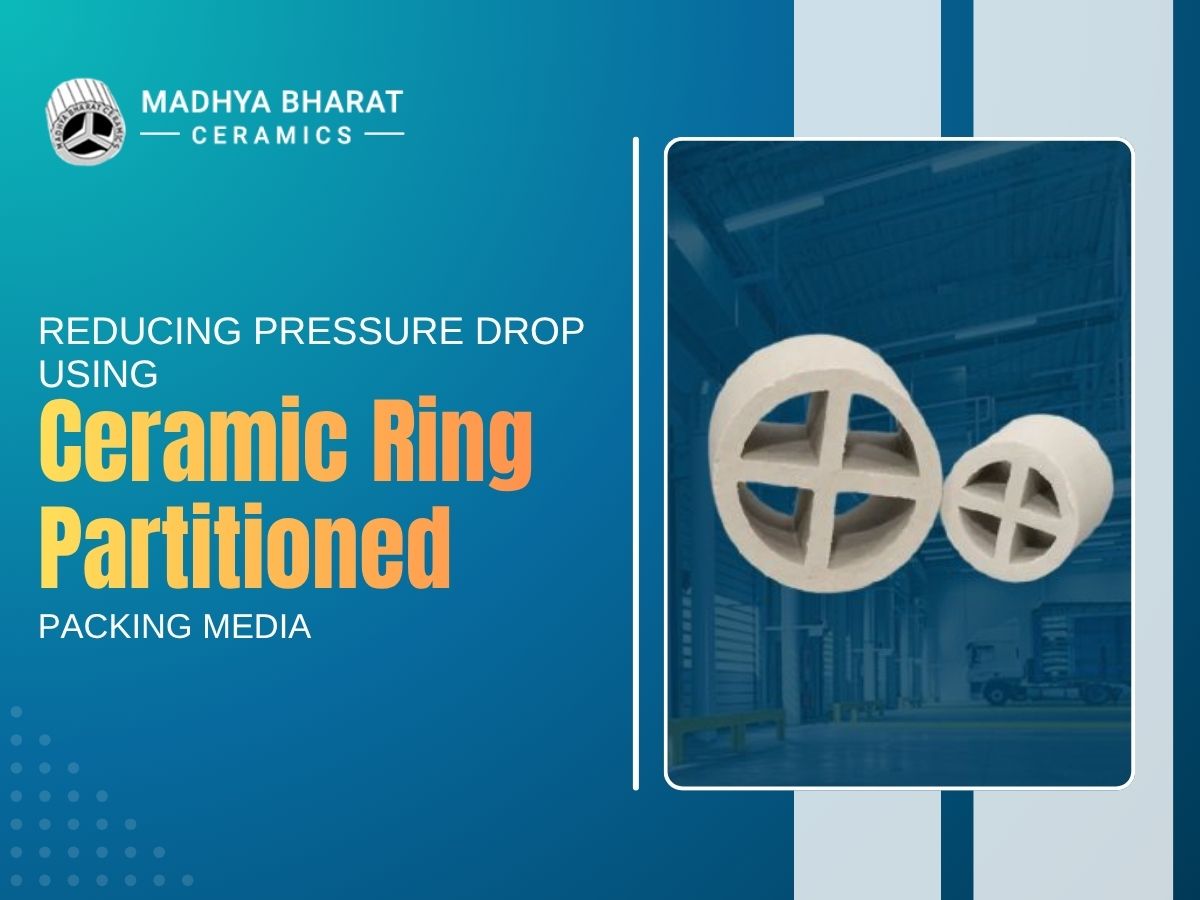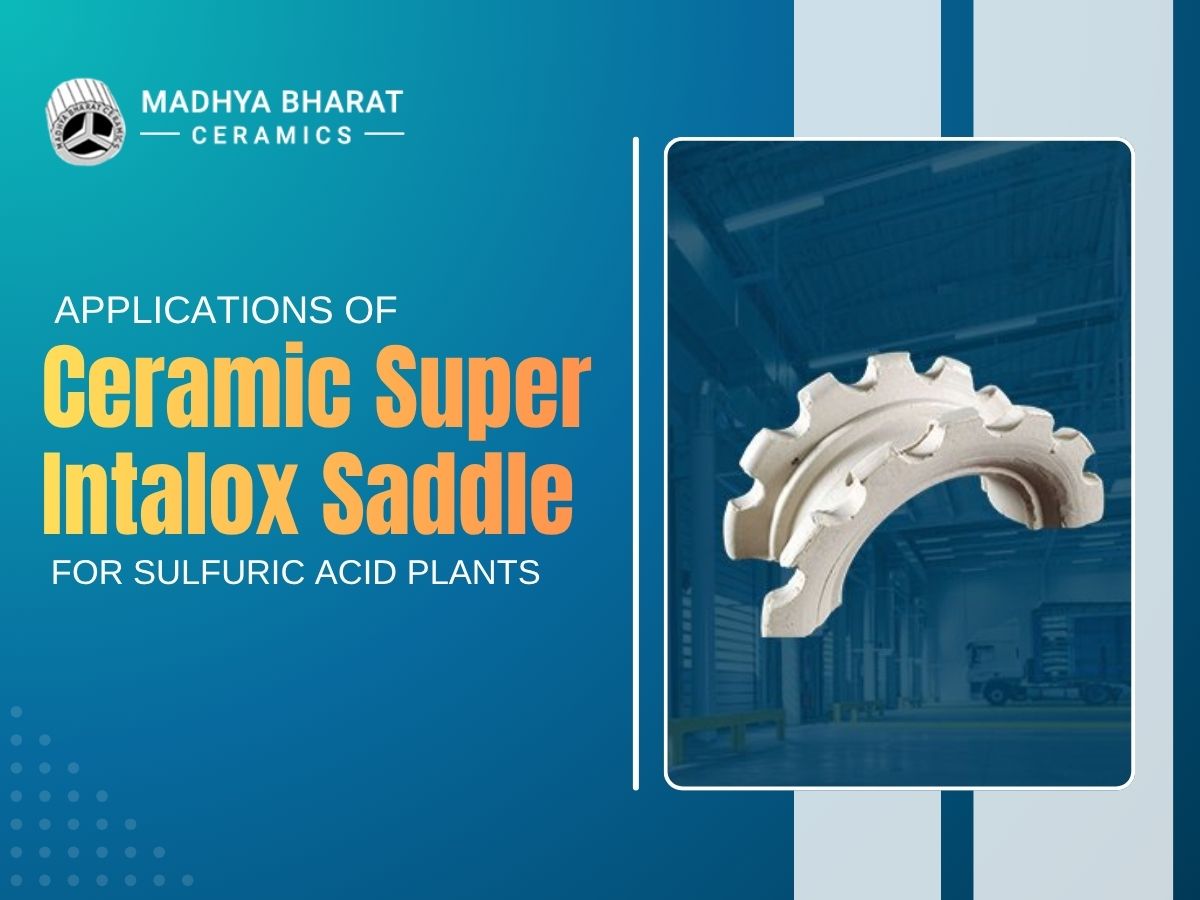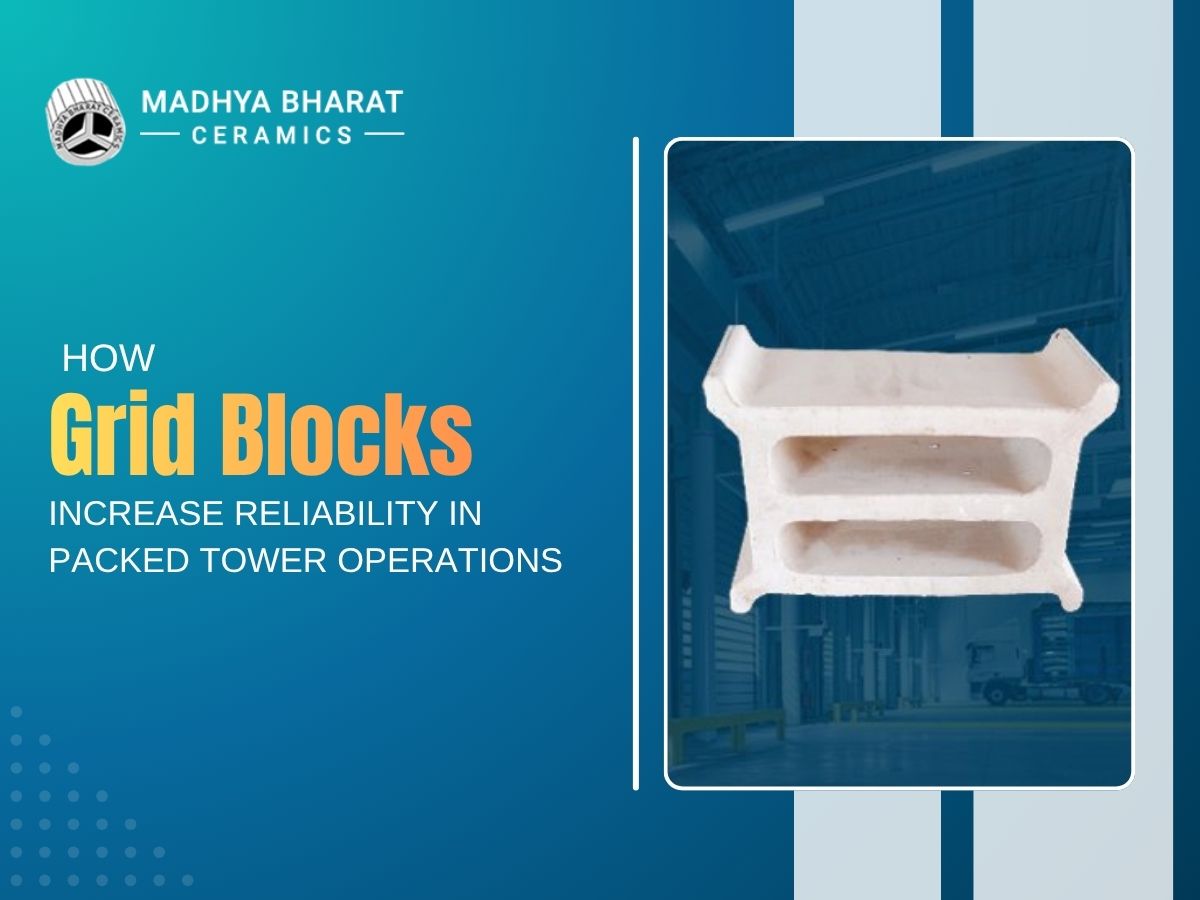
Ceramic saddles are a type of random packing used inside industrial process columns to bring gas and liquid into close, repeated contact. Their curved saddle geometry, fired ceramic construction, and chemically inert surface make them one of the most effective and durable tower packing materials available for packed column operations.
Ceramic saddles in India are in active service across thousands of industrial process columns. India operates over 1,500 registered chemical and petrochemical units that rely on packed column technology for absorption, distillation, and stripping operations. Research published in chemical engineering literature confirms that ceramic saddle tower packing improves surface area for mass transfer by 20 to 40% compared to basic cylindrical packing types. This improvement directly translates to higher column efficiency and lower operating costs.
A sulphuric acid plant in Andhra Pradesh replaced its old ceramic Raschig ring packing with ceramic Intalox saddles from MBC in its SO3 absorption tower. After one full production cycle, the plant recorded a 28% improvement in absorption efficiency and a 31% reduction in pressure drop across the bed. The payback period on the repacking investment was under five months. This case shows clearly why ceramic saddles in India remain the default choice for packed column packing in demanding acid and gas absorption duties.
What Are Ceramic Saddles? Defining the Packing for Packed Columns
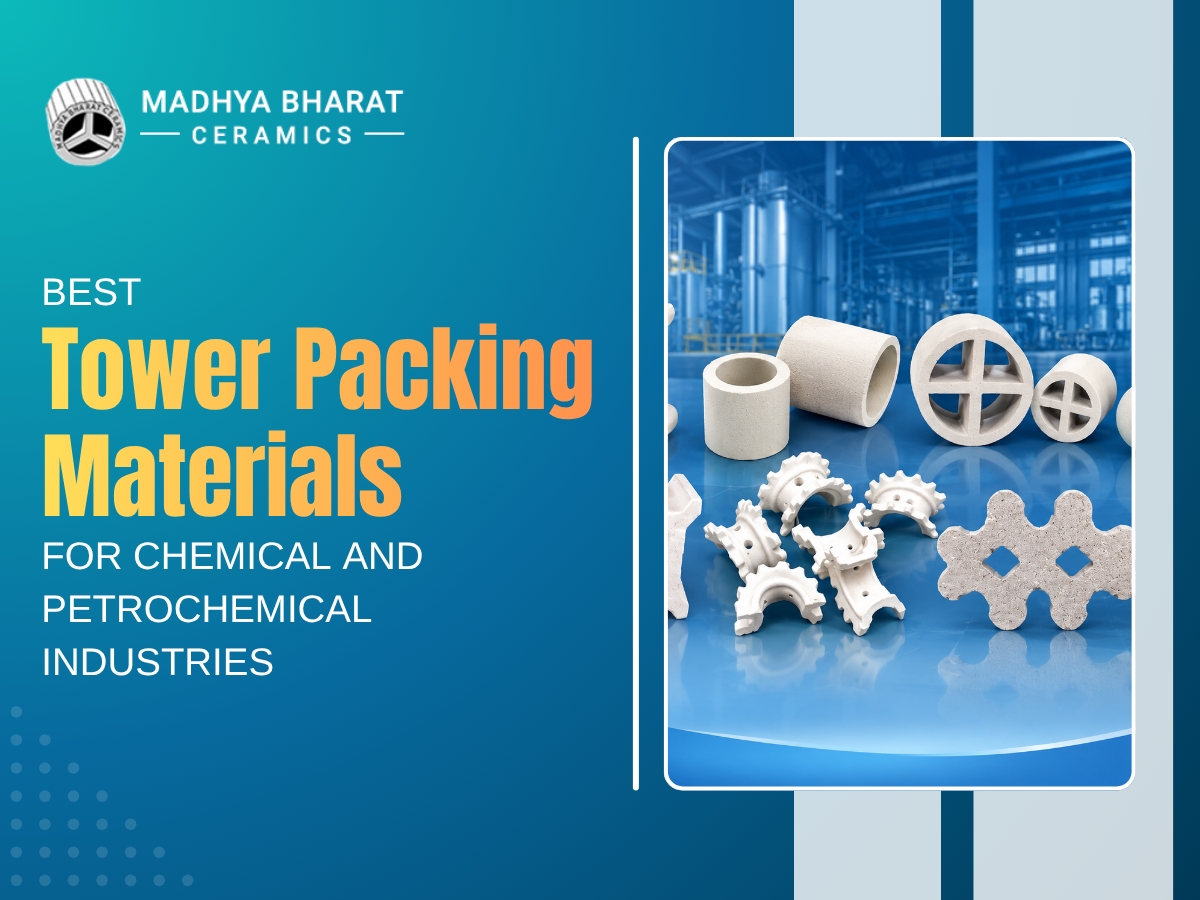
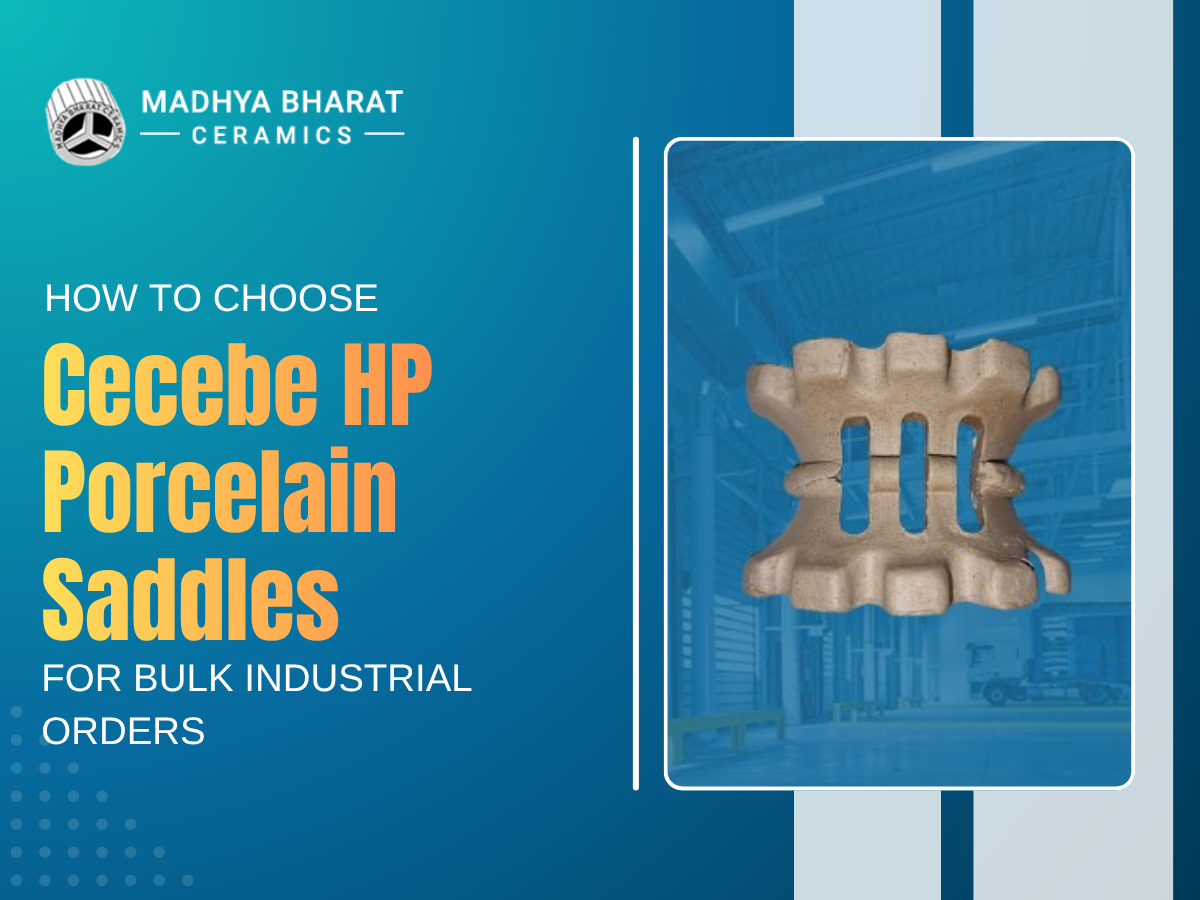
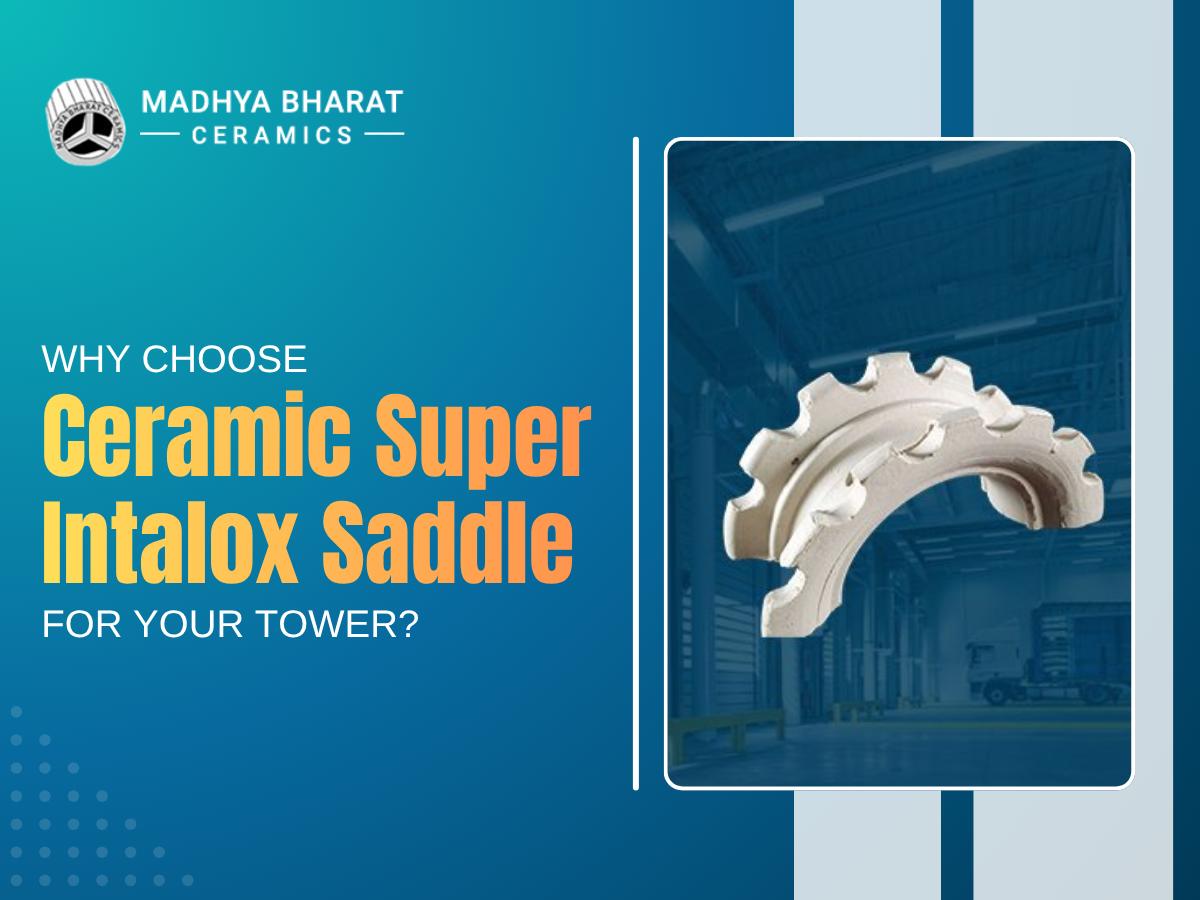
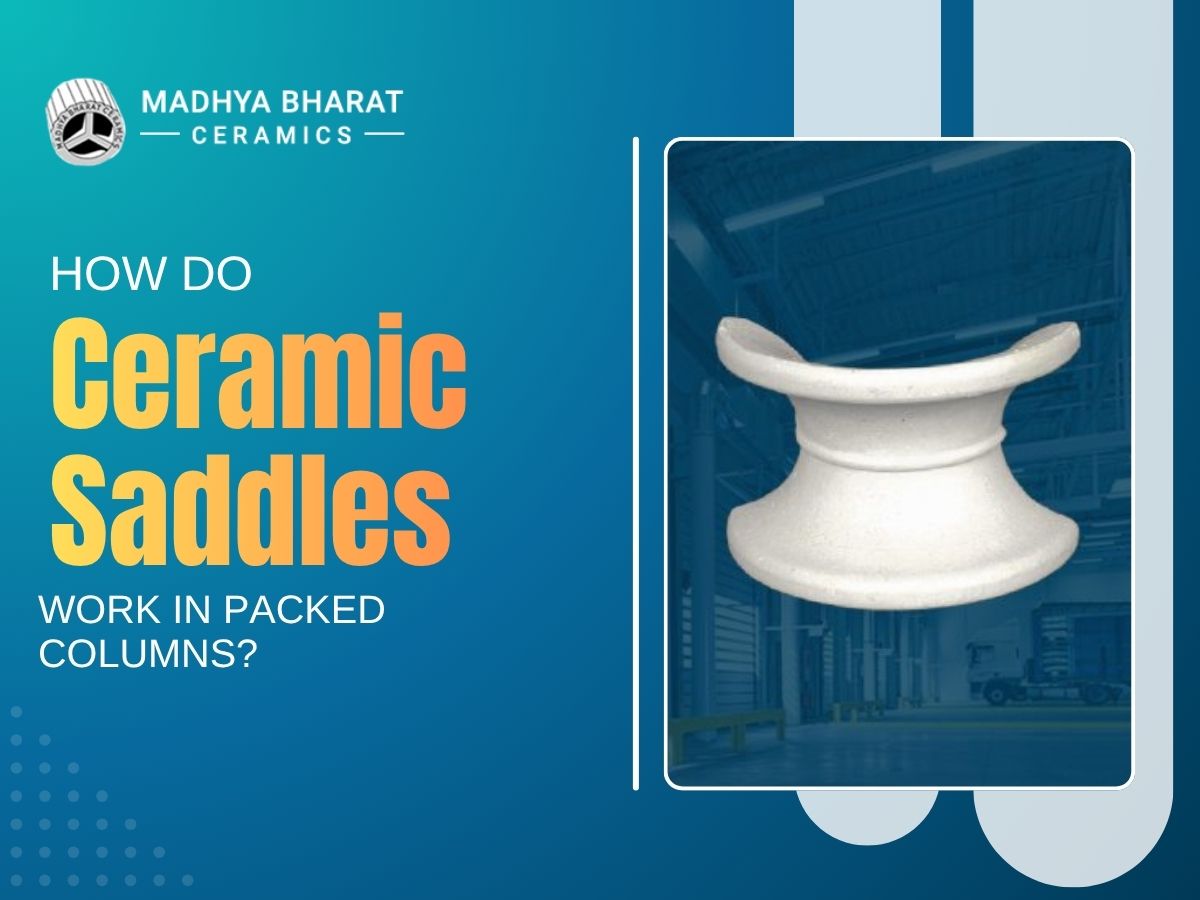
A ceramic saddle is a small piece of high-fired industrial ceramic shaped with a double curve that resembles a riding saddle. This shape is not decorative. It is the result of decades of chemical engineering development aimed at creating the most effective possible packed column internals for gas-liquid contact and mass transfer.
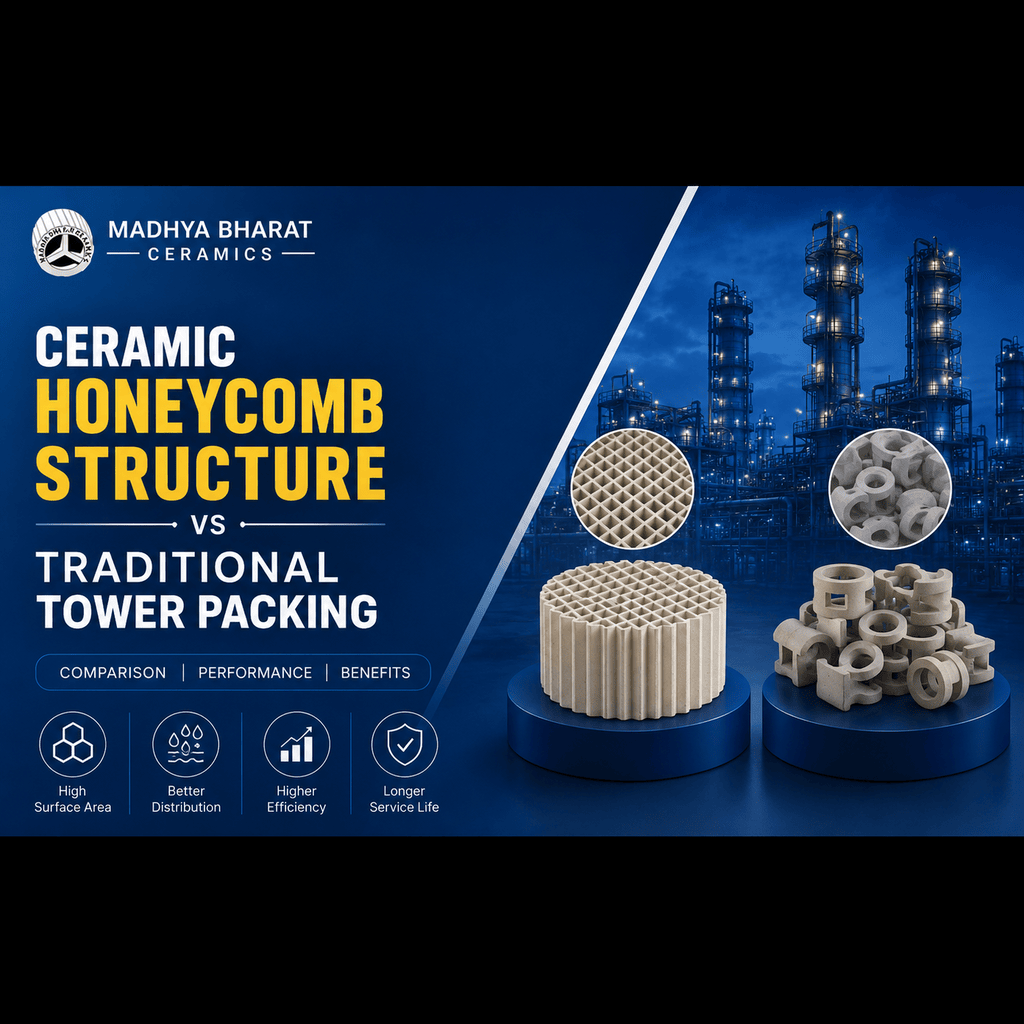
Ceramic saddles differ from cylindrical packing like Raschig rings in two important ways. First, the saddle shape prevents pieces from stacking neatly on top of each other. Second, the curved surfaces redirect both gas and liquid in multiple directions as they pass through the bed. Both of these properties improve gas-liquid contact efficiency and reduce pressure drop compared to cylindrical packing.
Industrial mass transfer equipment of this type is manufactured from alumina-silica ceramic. The raw material is shaped using precision moulds and then fired in a kiln at temperatures that produce a hard, dense, chemically resistant ceramic body. The finished saddle piece is dimensionally stable, mechanically strong, and fully resistant to most industrial acids and alkalis.
MBC manufactures two designs of ceramic saddle tower packing for packed column applications:
- Berl Saddles: The original saddle design with a smooth, symmetrical double curve. Suitable for general column packing duties in absorption, stripping, and distillation.
- Intalox Saddles: An improved design with a modified asymmetric curve. Intalox saddles reduce inter-piece nesting, keep the bed more open, and deliver higher gas-liquid contact efficiency than Berl saddles in the same column volume.
How Do Ceramic Saddles Work in Packed Columns? Working Principle Explained
The working principle of ceramic saddle packing in distillation columns and absorption towers is based on creating the maximum possible number of gas-liquid contact events per unit height of the packing bed. Each contact event allows components to transfer between the gas and liquid phases, which drives the separation or absorption process forward.
Here is the step-by-step working principle of ceramic saddles inside a packed column:
- Step 1 – Liquid Entry and Distribution: Liquid enters at the top of the packed bed through a distributor. The distributor spreads the liquid evenly across the full cross-section of the column before it contacts the packing.
- Step 2 – Thin Film Formation: As liquid flows downward over the curved ceramic surfaces, it spreads into a thin continuous film. This thin film has a very large exposed surface area relative to its volume, which is the key driver of surface area for mass transfer inside the column.
- Step 3 – Gas Flow and Turbulence: Gas enters from the bottom of the packed bed and rises upward through the open spaces between the saddle pieces. The irregular curved surfaces deflect the gas repeatedly, creating turbulence that keeps gas in constant contact with fresh liquid film rather than flowing straight through the bed.
- Step 4 – Counter-Current Contact: Liquid flows down while gas rises up. This counter-current arrangement means every unit of liquid is contacted by rising gas multiple times as it descends through the bed. Counter-current contact is the most efficient configuration for both chemical absorption and distillation operations.
- Step 5 – Mass Transfer Across the Interface: At each gas-liquid interface created by the thin film on the saddle surfaces, components transfer from the gas phase into the liquid phase (absorption) or from the liquid phase into the gas phase (stripping and distillation). The rate of transfer depends on the total interfacial area, which ceramic saddles maximize through their curved geometry.
- Step 6 – Pressure Drop Management: The void spaces between saddle pieces in a random packed bed are larger and more uniformly distributed than in a bed of cylinders. This keeps pressure drop in packed columns low, which reduces blower or reboiler energy costs across the full column height.
This six-step mechanism is the reason why ceramic saddles in India are consistently specified for packed column duties where separation efficiency and operating cost both matter.
Ceramic Saddles vs Other Packed Column Internals: Performance Comparison Table
The table below compares ceramic saddles against other common packed column internals and tower packing materials used in industrial process columns across India:
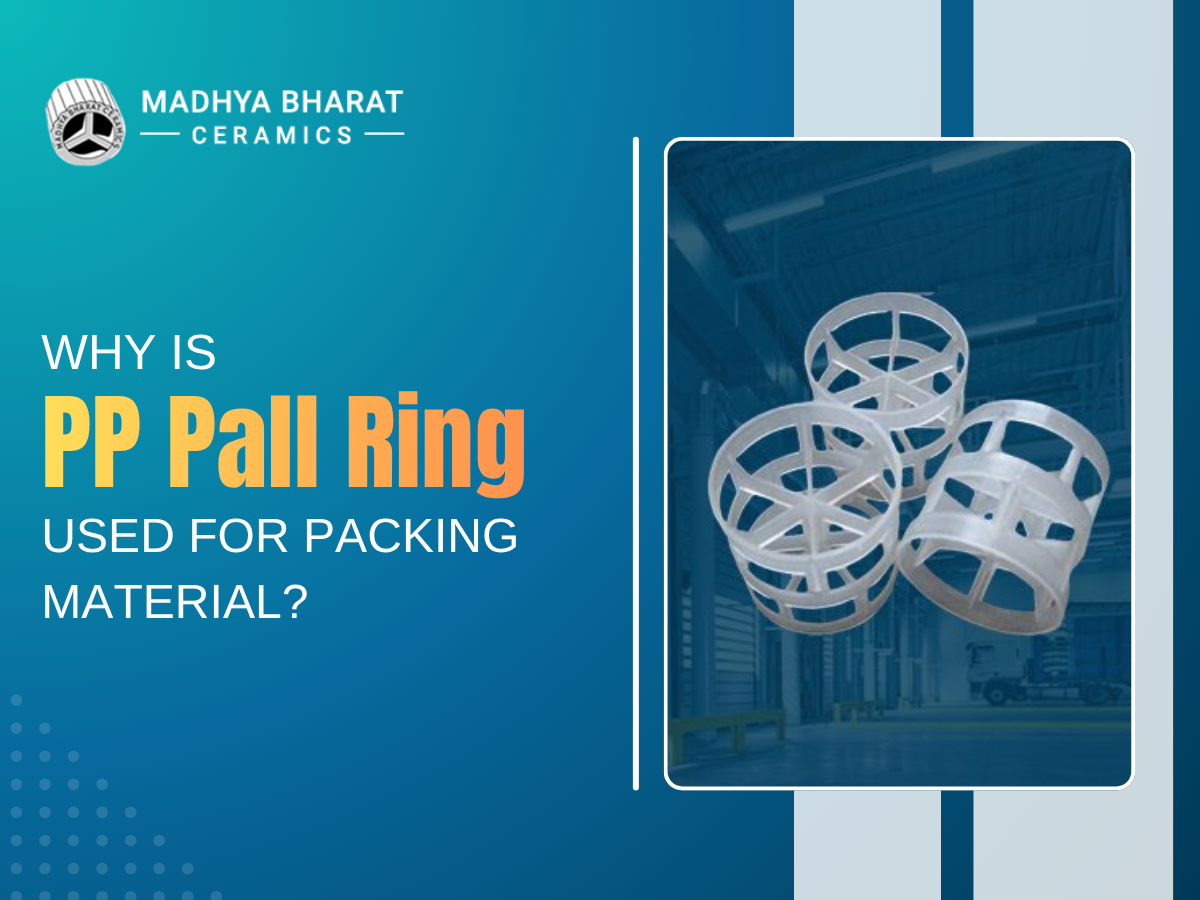
| Parameter | Ceramic Saddles | Ceramic Raschig Rings | PP Pall Rings | Metal Pall Rings | Structured Packing |
| Packing Type | Random | Random | Random | Random | Structured |
| Max Temperature | 1,200 C | 1,000 C | 80 C | 500 C | 300 C |
| Acid Resistance | Excellent | Good | Good | Moderate | Moderate |
| Surface Area | High | Moderate | High | High | Very High |
| Mass Transfer | High | Moderate | High | High | Very High |
| Pressure Drop | Low | High | Very Low | Low | Very Low |
| Mechanical Strength | High | Moderate | Low | High | High |
| Typical Cost | Moderate | Low | Low | High | Very High |
| Typical Column Duty | Acid and Gas Absorption | General Use | Gas Scrubbing | High Load Columns | High Purity Distillation |
| Typical Lifespan | 10 to 15 Years | 5 to 8 Years | 5 to 10 Years | 10 to 15 Years | 15 to 20 Years |
The comparison confirms that ceramic saddles offer the strongest performance-to-cost ratio for acid absorption and gas scrubbing column duties. PP Pall Rings are suitable for lower-temperature scrubbing. Structured packing gives the highest efficiency but at a cost that is rarely justified outside of high-purity distillation applications.
Benefits of Using Ceramic Saddles in Chemical Processing Towers
The benefits of using ceramic saddles in chemical processing towers are well documented in both published engineering literature and the field experience of plant engineers across India. MBC supplies ceramic saddle tower packing to plants that depend on these benefits for daily production performance.
- High Gas-Liquid Contact Efficiency: The curved saddle shape creates more liquid film surface area per cubic metre of packed volume than cylindrical packing, which directly raises column efficiency and throughput.
- Low Pressure Drop in Packed Columns: The open void structure of a saddle bed reduces gas flow resistance, which lowers energy consumption at the blower, compressor, or column reboiler.
- Full Chemical Resistance: Ceramic is inert to sulphuric acid, hydrochloric acid, nitric acid, phosphoric acid, caustic soda, and chlorine. Chemical column packing made from ceramic can handle virtually any industrial process chemical without degrading.
- Stable High-Temperature Performance: Fired ceramic retains its shape, strength, and surface properties at temperatures up to 1,200 degrees Celsius. This makes ceramic saddles the only viable tower packing material for hot acid absorption and high-temperature gas processing duties.
- Long Service Life: A correctly installed bed of ceramic saddles in India from MBC typically remains in service for 10 to 15 years. This long life reduces the frequency and cost of maintenance shutdowns for bed replacement.
- No Product Contamination: Ceramic does not leach compounds into the process stream, which is a critical requirement in pharmaceutical, food-grade chemical, and high-purity industrial applications.
- Predictable Engineering Data: Published and well-validated mass transfer and pressure drop correlations exist for ceramic saddle tower packing in both Berl and Intalox designs, allowing engineers to design columns with high confidence in the predicted performance.
Why Ceramic Saddles in India Are Used in Gas Absorption Columns
The role of ceramic saddle packing in industrial mass transfer operations is particularly important in gas absorption columns. Gas absorption is the process of transferring a component from a gas stream into a liquid solvent. The efficiency of this process depends almost entirely on the quality of gas-liquid contact created by the packed column internals.
Ceramic saddles are preferred for gas absorption columns because of the following specific properties:
- The saddle shape creates a high density of thin liquid films that expose a large surface to the rising gas stream at every point in the bed.
- The turbulent gas flow generated by the irregular surfaces ensures that fresh, unsaturated liquid is constantly exposed to the gas, maintaining a high driving force for mass transfer throughout the column height.
- The full chemical resistance of ceramic means the packing does not react with either the process gas or the absorption solvent, even at high temperatures and concentrations.
- The low pressure drop in packed columns filled with ceramic saddles reduces the load on the gas blower or compressor, lowering the energy cost of running the absorption system continuously.
These properties are why ceramic saddles in India are the standard packing choice for HCl absorption towers, SO3 absorption towers, NOx absorption towers, and ammonia scrubbers across the country.
MBC: Your Trusted Ceramic Saddles Manufacturer and Exporter in Mandsaur
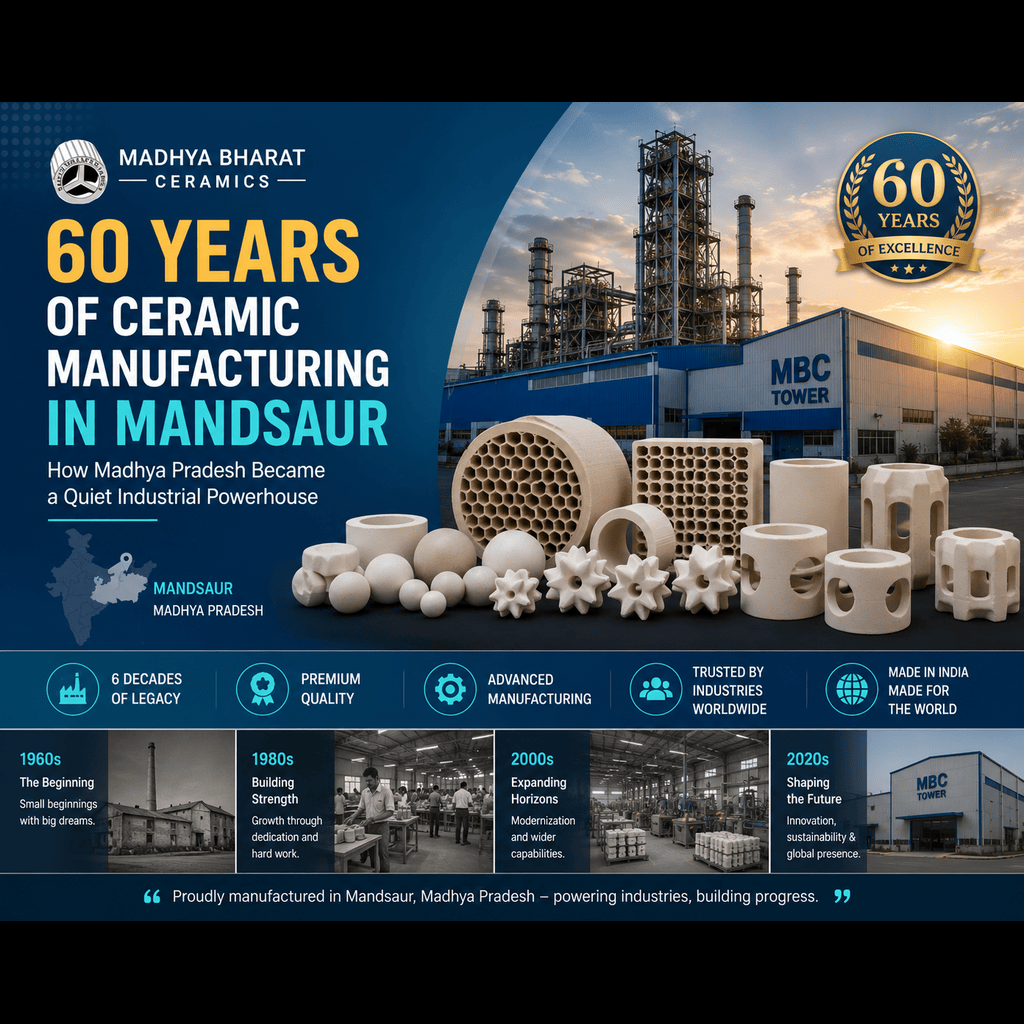
MBC is an established ceramic saddles manufacturer in Mandsaur with a proven track record of supplying high-quality ceramic saddle tower packing to industrial clients across India and internationally. MBC produces ceramic saddles using carefully selected alumina-silica raw materials and controlled kiln firing to ensure consistent density, hardness, and chemical resistance in every production batch.
Choosing MBC as your ceramic saddles supplier delivers the following advantages for your plant or project:
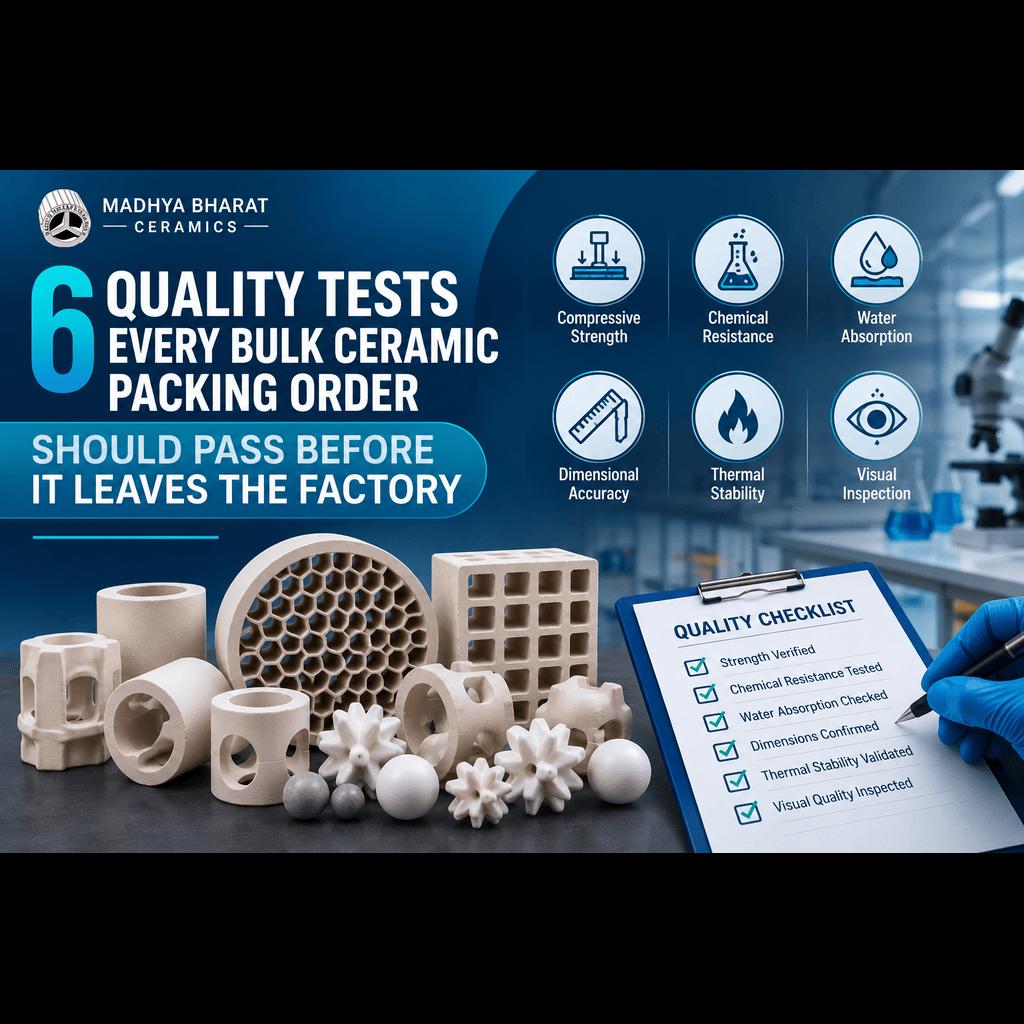
- Consistent Product Quality: Every MBC ceramic saddle batch is checked for dimensional accuracy, surface finish, and compressive strength before dispatch to ensure it meets performance requirements.
- Full Size Range: MBC supplies ceramic saddles in standard sizes from 13 mm to 76 mm in both Berl and Intalox designs to cover all column diameters and process throughput specifications.
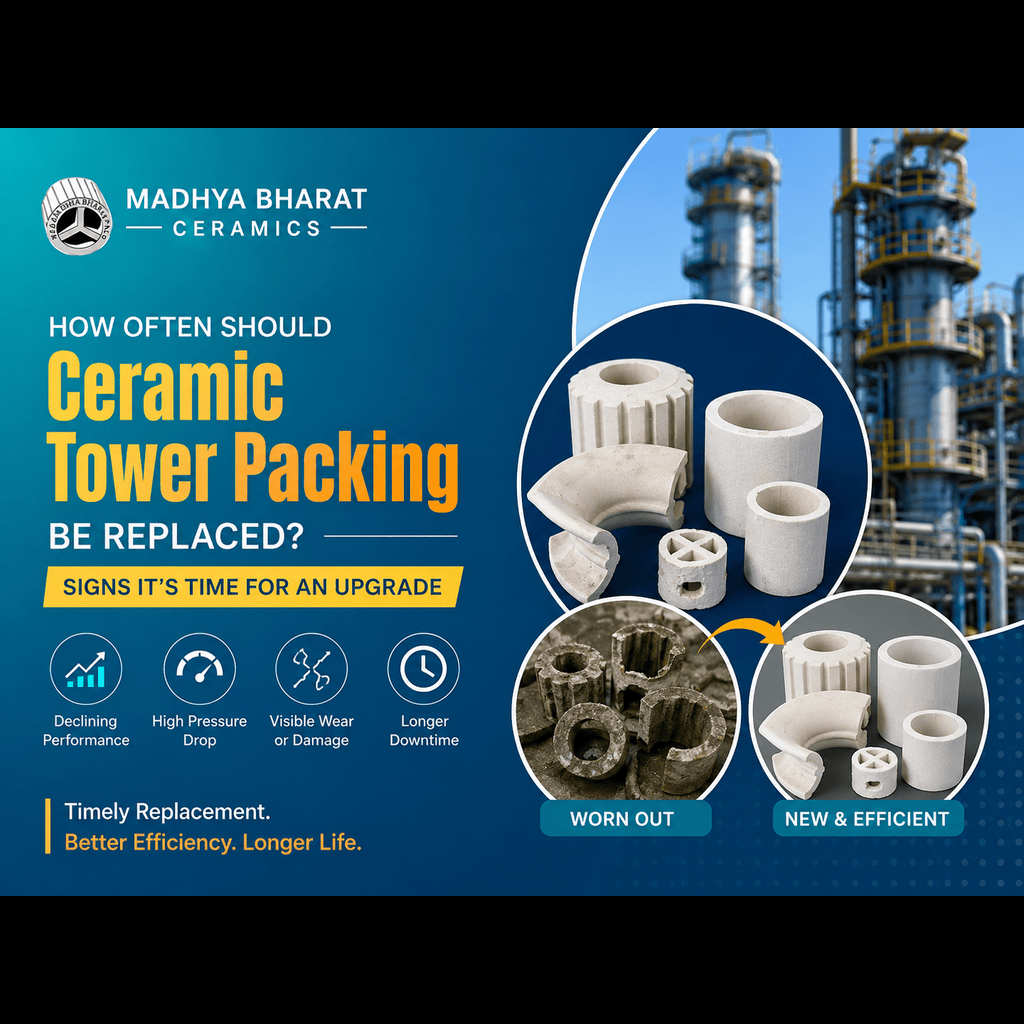
- Ready Inventory for Fast Dispatch: MBC maintains stock inventory for rapid supply to plants across India, minimising downtime during planned packing replacement shutdowns.
- Certified Export Capability: As a qualified ceramic saddles exporter, MBC ships to international clients with complete commercial documentation, test certificates, and packing compliance support.
- Technical Engineering Support: MBC process engineers advise clients on packing size selection, bed depth calculation, and column performance optimization for specific chemical column packing duties.
- Competitive Bulk Pricing: MBC offers transparent pricing for large-volume orders, making it the most cost-effective ceramic saddles supplier choice for both new projects and replacement packing programs.

Case Study
Client: A petrochemical processing facility in Gujarat, India.
Challenge: The facility operated a hydrocarbon distillation column using metal Pall ring packing. Over time, the metal packing had developed surface corrosion from trace acidic components in the feed stream. The corroded packing was breaking down into small fragments that contaminated the product stream and increased pressure drop across the column. The plant needed a replacement packing that could resist the trace acidic environment without generating contamination.
Solution: MBC recommended replacing the corroded metal Pall rings with 50 mm ceramic Intalox saddles from its standard ceramic packing solutions range. The ceramic material was selected specifically for its chemical resistance to the acidic trace components in the hydrocarbon feed. The column was repacked during a scheduled 10-day maintenance shutdown. MBC supplied the full packing volume with two days lead time from the plant order date.
Results recorded over the following six-month production cycle:
- Product stream contamination from packing fragments dropped to zero immediately after the repacking, resolving the quality complaint that had triggered the project.
- Column distillation efficiency improved by 19% compared to the corroded metal packing bed, as measured by the separation factor achieved at the same reflux ratio.
- Pressure drop across the column reduced by 24%, lowering reboiler energy consumption and reducing column flooding risk at higher throughput rates.
- No packing degradation was observed during the end-of-cycle inspection. The ceramic saddles showed no surface attack from the acidic trace components in the feed.
- Return on investment was achieved within four months through reduced energy costs, elimination of product quality rejections, and avoided downtime for emergency packing replacement.
Conclusion: This case confirms that ceramic saddle tower packing from MBC is an effective solution for distillation column repacking projects where metal packing has been compromised by corrosion. The combination of full chemical resistance, high gas-liquid contact efficiency, and long service life makes ceramic saddles in India from MBC the right choice for both new column builds and replacement packing projects across the petrochemical and chemical processing sectors.
FAQ’s About Ceramic Saddles in Packed
Q1: How do ceramic saddles work in packed columns?
Ceramic saddles create thin liquid films and turbulent gas flow, maximising gas-liquid contact area and driving mass transfer throughout the packed column bed.
Q2: Why are ceramic saddles used in gas absorption columns?
Their curved shape, chemical inertness, and high surface area make ceramic saddles the most reliable packing for acid gas absorption at high temperatures.
Q3: What is the difference between random packing and structured packing?
Random packing like ceramic saddles is poured into the column randomly. Structured packing is arranged in fixed patterns and gives higher efficiency at greater cost.
Q4: How do ceramic saddles reduce pressure drop in packed columns?
The open void structure between saddle pieces allows gas to flow with less resistance than cylinder beds, reducing pressure drop and lowering blower energy costs.
Q5: What size of ceramic saddle should I use in my packed column?
Use a saddle size no larger than one-eighth of the column diameter. For a 600 mm column, 50 mm to 75 mm ceramic saddles are the correct specification.
Q6: Who supplies ceramic saddles for packed columns in Mandsaur?
MBC is a leading ceramic saddles manufacturer in Mandsaur supplying Berl and Intalox saddles from 13 mm to 76 mm to packed column operators across India.
Q7: Can ceramic saddles handle temperatures above 500 degrees Celsius?
Yes. Fired ceramic saddles withstand temperatures up to 1,200 degrees Celsius, making them suitable for high-temperature gas absorption and distillation column duties.
Q8: How long do ceramic saddles last in a distillation or absorption column?
With correct installation and normal operating conditions, ceramic saddles last 10 to 15 years before accumulated physical breakage requires bed replacement or top-up.
Conclusion
Ceramic saddles work in packed columns by creating large, active gas-liquid contact surfaces through thin film formation, turbulent gas flow, and anti-channelling bed structure. Their chemical resistance, high-temperature tolerance, and long service life make them the most practical tower packing material for acid, gas, and distillation column duties across India. Ceramic saddles in India from MBC deliver proven packed column performance backed by consistent manufacturing quality and direct technical support from an experienced ceramic saddles manufacturer in Mandsaur. Contact MBC today to select the right packing for your next column project.