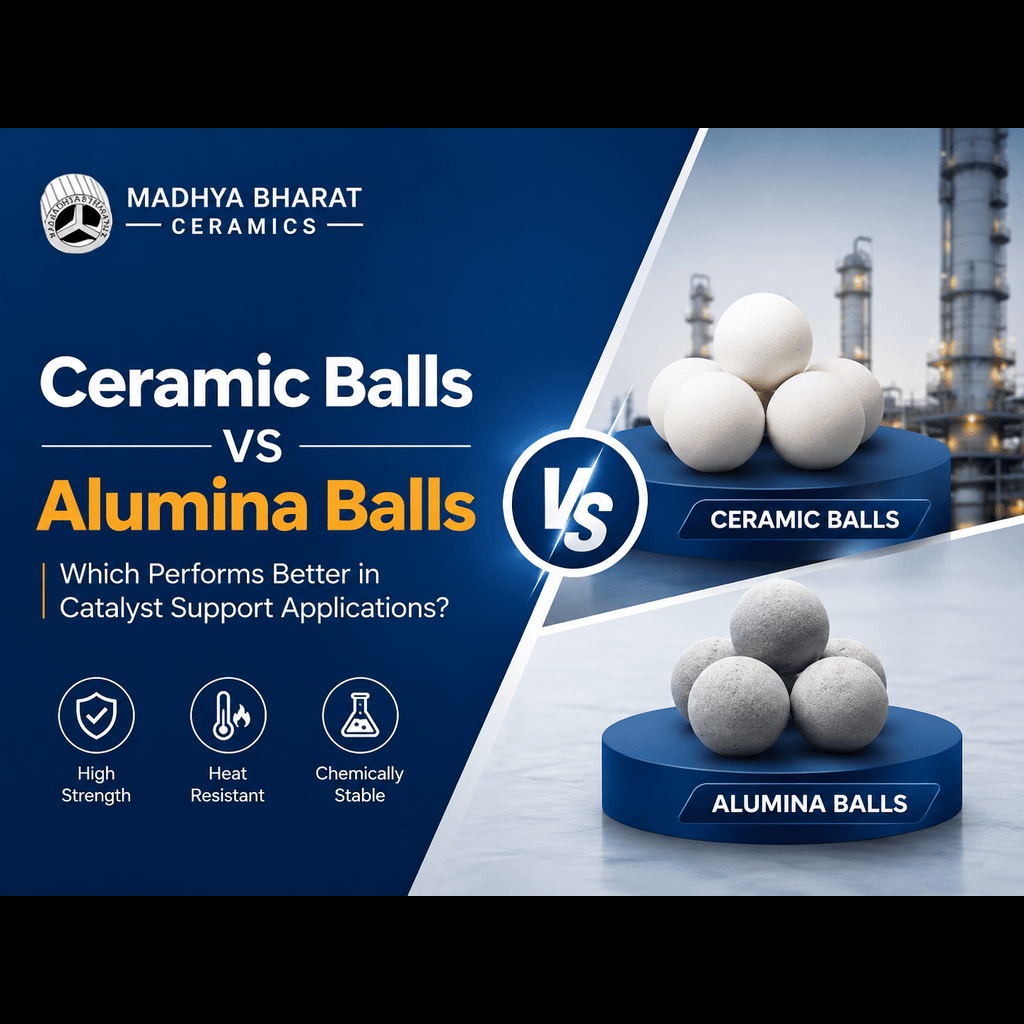
If you have ever sourced support media for a catalyst bed, you have probably run into this exact question: should you go with standard ceramic balls or alumina balls. The two get mentioned almost interchangeably online, but they are not the same product, and picking the wrong one can affect how well your catalyst bed performs over time.
At Madhya Bharat Ceramics, this is one of the most common questions we get from plant engineers sourcing support media for the first time. So here is a clear, practical comparison to help you understand which option actually suits your process.
What Are Standard Ceramic Balls Used For
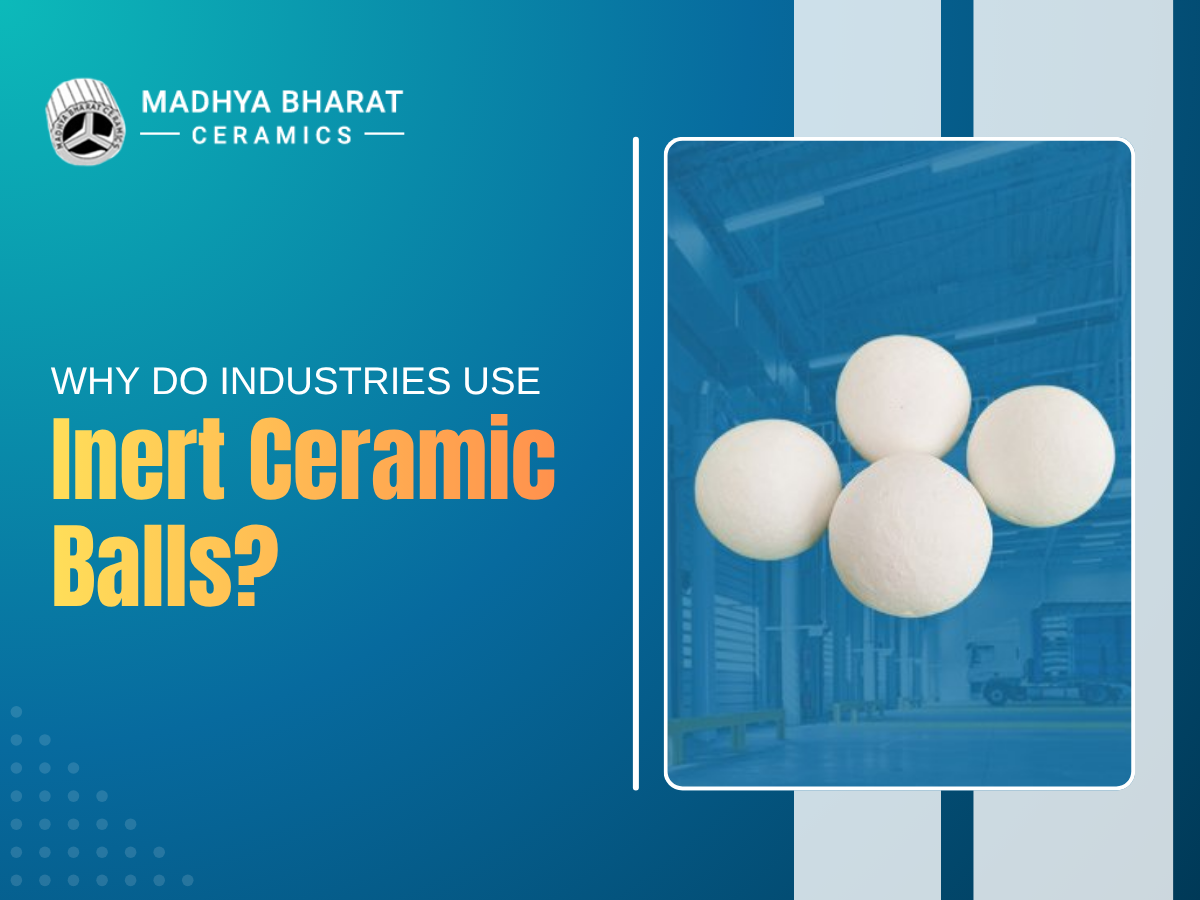
Standard inert ceramic balls are typically made from porcelain or lower alumina content clay. They are widely used as bed support media because they do not react with process chemicals and can handle a fair amount of heat and mechanical stress.
- They act as a stable base beneath the catalyst layer
- They help distribute gas and liquid flow evenly through the reactor
- They protect the catalyst from sudden pressure surges and physical damage
- They are a cost-effective option for processes that do not need extreme alumina content
For general catalyst bed support in moderate operating conditions, these balls usually get the job done without needing a higher-grade material. Our own inert ceramic balls range is built exactly for this kind of everyday industrial use.
What Makes Alumina Balls Different
Alumina balls are made with a higher concentration of aluminum oxide, which changes their performance profile significantly compared to standard ceramic balls. The higher the alumina content, the better the ball performs under demanding conditions.
- Higher alumina content improves resistance to abrasion and wear
- These balls handle higher compressive loads without breaking down
- They offer better chemical inertness, which matters in sensitive catalytic processes
- They tend to have a longer service life in high-stress reactor environments
This is why alumina balls are often the preferred choice when a process cannot afford frequent bed replacement or when contamination risk needs to stay as low as possible.
Where High Alumina Ceramic Balls Take the Lead
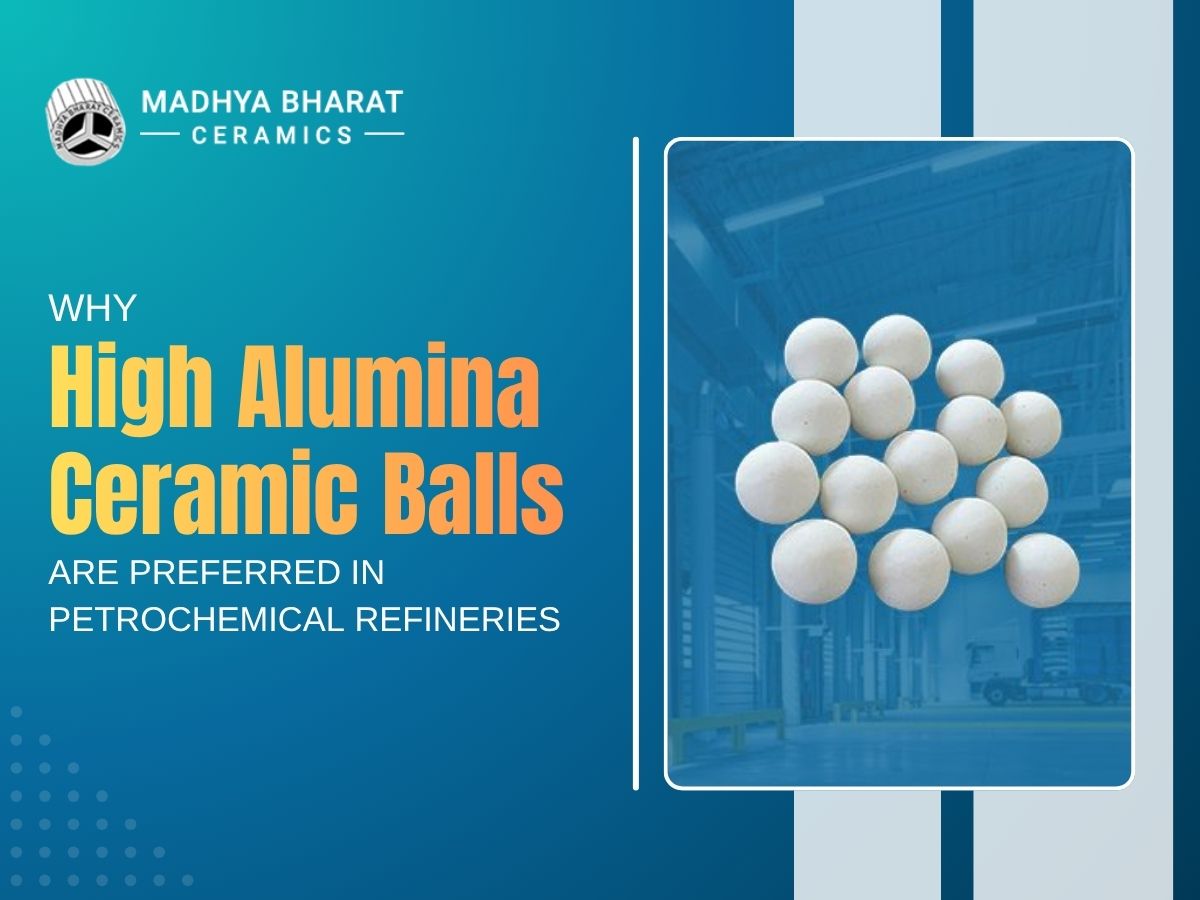
For the most demanding applications, high alumina ceramic balls are usually the better performer. These are manufactured with alumina content that can go well above 90 percent, depending on the grade required.
Here is where this really matters:
- Reactors running at very high temperatures need the added thermal stability these balls provide
- Processes with aggressive chemical exposure benefit from their superior chemical resistance
- Applications where catalyst poisoning is a concern need the ultra-low impurity levels found in higher alumina grades
- Heavy bed depths require the extra compressive strength these balls offer
Our high alumina ceramic balls are available in different grades specifically because not every process needs the highest alumina content, and matching the grade to your actual operating conditions makes a real difference in cost efficiency.
Ceramic Balls vs Alumina Balls: A Quick Comparison
| Factor | Standard Ceramic Balls | Alumina Balls |
| Alumina content | Lower | Higher (up to 99 percent in premium grades) |
| Compressive strength | Moderate | High |
| Thermal shock resistance | Good | Better |
| Chemical inertness | Good | Superior |
| Typical use case | General catalyst support | High-stress, high-purity applications |
| Cost | Lower | Higher, but longer service life |
This comparison is a general guide, not a fixed rule. The right choice always depends on your specific reactor conditions, temperature range, and how critical contamination control is for your process.
How to Decide Between the Two
A few practical questions can help narrow this down before you place an order:
- What is the operating temperature inside your reactor
- How sensitive is your catalyst to contamination or impurities
- What is the expected bed depth and mechanical load
- How often can you realistically afford to replace support media
If your process runs cooler and your catalyst is fairly tolerant of minor impurities, standard ceramic balls are usually sufficient. If you are dealing with high heat, aggressive chemicals, or a catalyst that cannot tolerate contamination, alumina balls are the safer long-term choice.
Reliable ceramic ball manufacturers in India focus on matching the support media to your process conditions rather than simply recommending a higher-priced product. Understanding how these materials interact with catalysts and influence reactor performance is equally important. To explore this further, read our detailed guide on how inert ceramic balls protect catalyst beds and contribute to long-term process efficiency.
Why the Manufacturer You Choose Matters
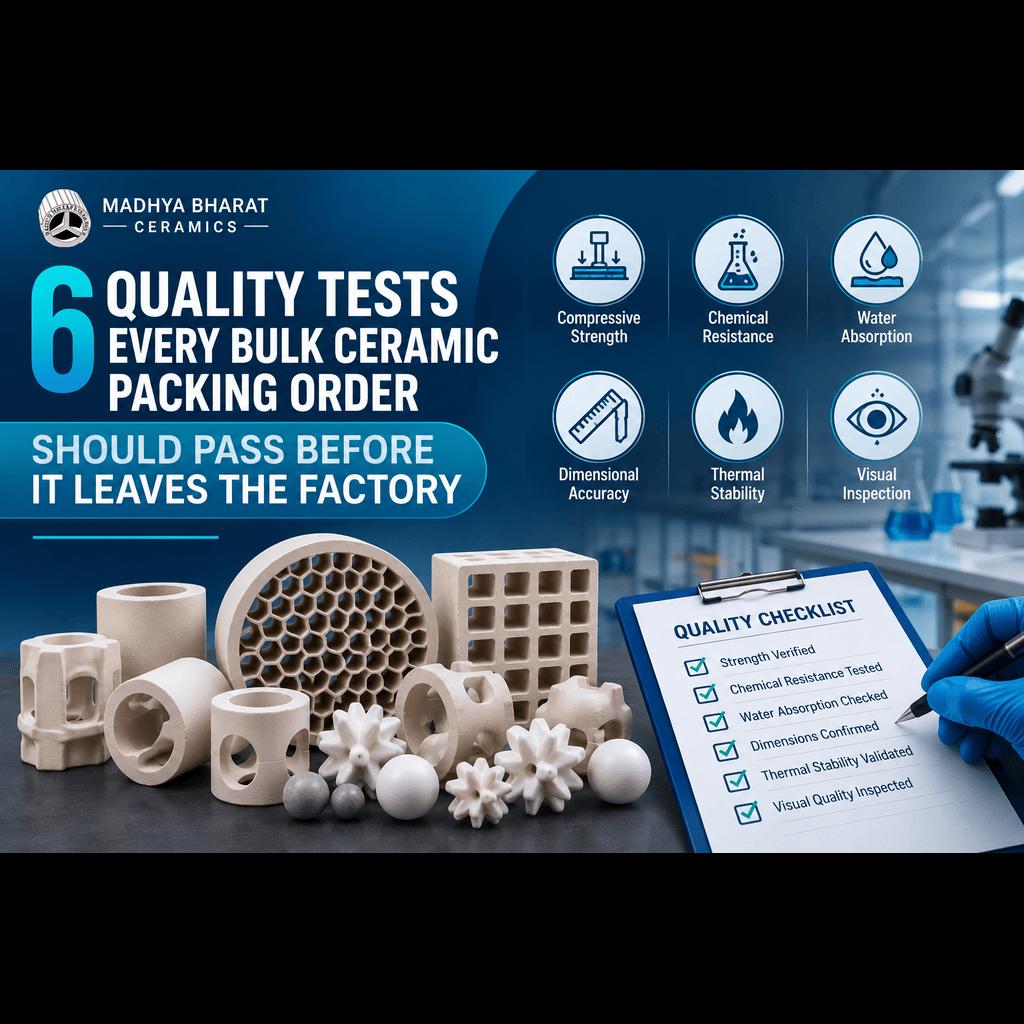
Even within the same product category, quality can vary significantly between suppliers. Established alumina ball manufacturers carefully control raw materials, firing conditions, and strength testing, as overlooking these factors often leads to premature bed failure. Learn more about our testing procedures on our Quality Control page.
Frequently Asked Questions
1. Are alumina balls always better than standard ceramic balls?
Not necessarily. Alumina balls perform better under high heat and heavy chemical exposure, but standard ceramic balls are often sufficient and more cost-effective for general applications.
2. What alumina content is considered high alumina ceramic balls?
Grades typically range from around 60 percent up to 99 percent alumina content, with higher grades used for the most demanding conditions.
3. Do alumina balls last longer than standard ceramic balls?
Generally yes, especially in high-stress environments, due to their higher compressive strength and better resistance to chemical attack.
4. Can I mix ceramic balls and alumina balls in the same bed?
Yes, many reactor designs layer different grades, using higher strength alumina balls near the catalyst and standard balls in lower stress zones.
5. How do I know which grade of alumina ball I need?
Match the grade to your operating temperature, chemical exposure, and contamination sensitivity, or consult your supplier with your specific reactor data.
6. Does a higher alumina content always mean a higher price?
Yes, higher alumina grades cost more upfront, but they often reduce replacement frequency, which can lower overall cost over the life of the reactor.
Ready to Choose the Right Support Media for Your Reactor?
Choosing between ceramic balls and alumina balls comes down to matching the product to your actual operating conditions, not just picking the higher-rated option by default. Get in touch with our team and we will help you select the right grade for your catalyst bed.