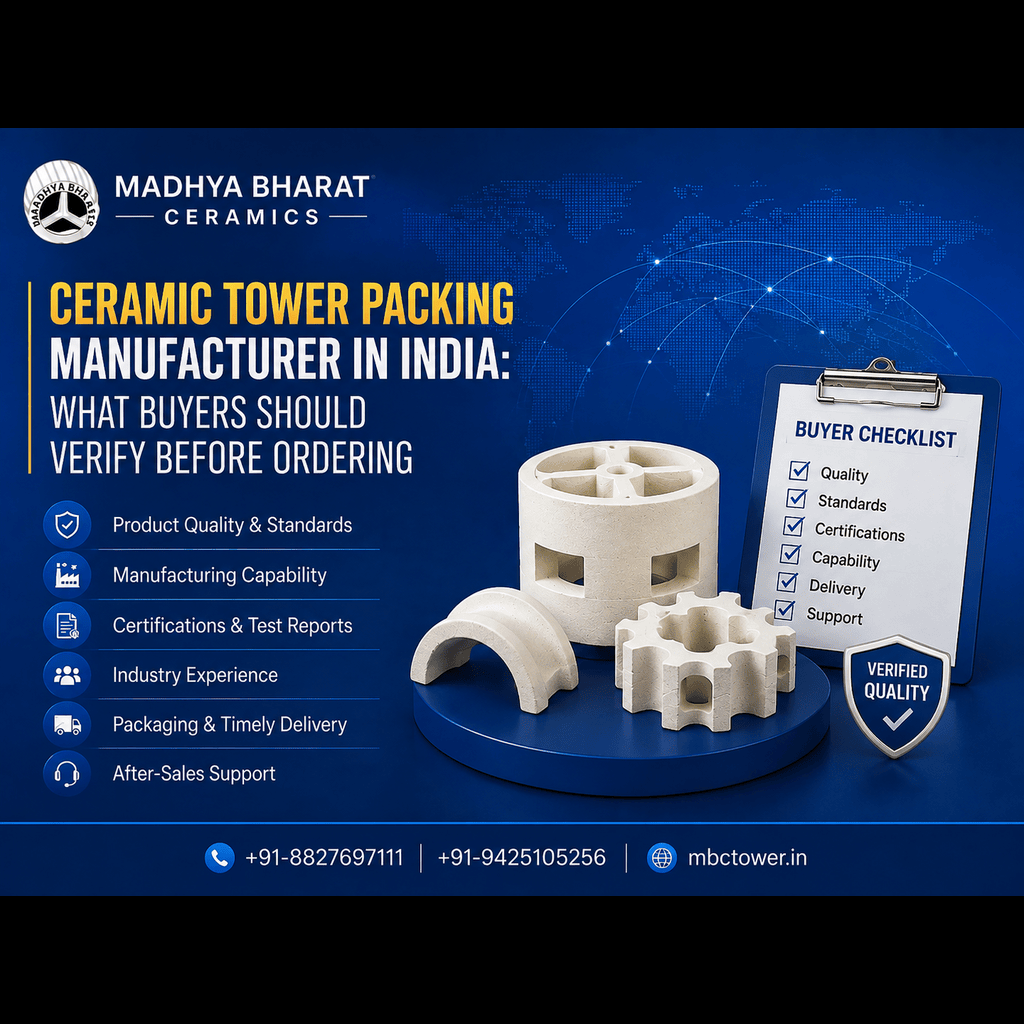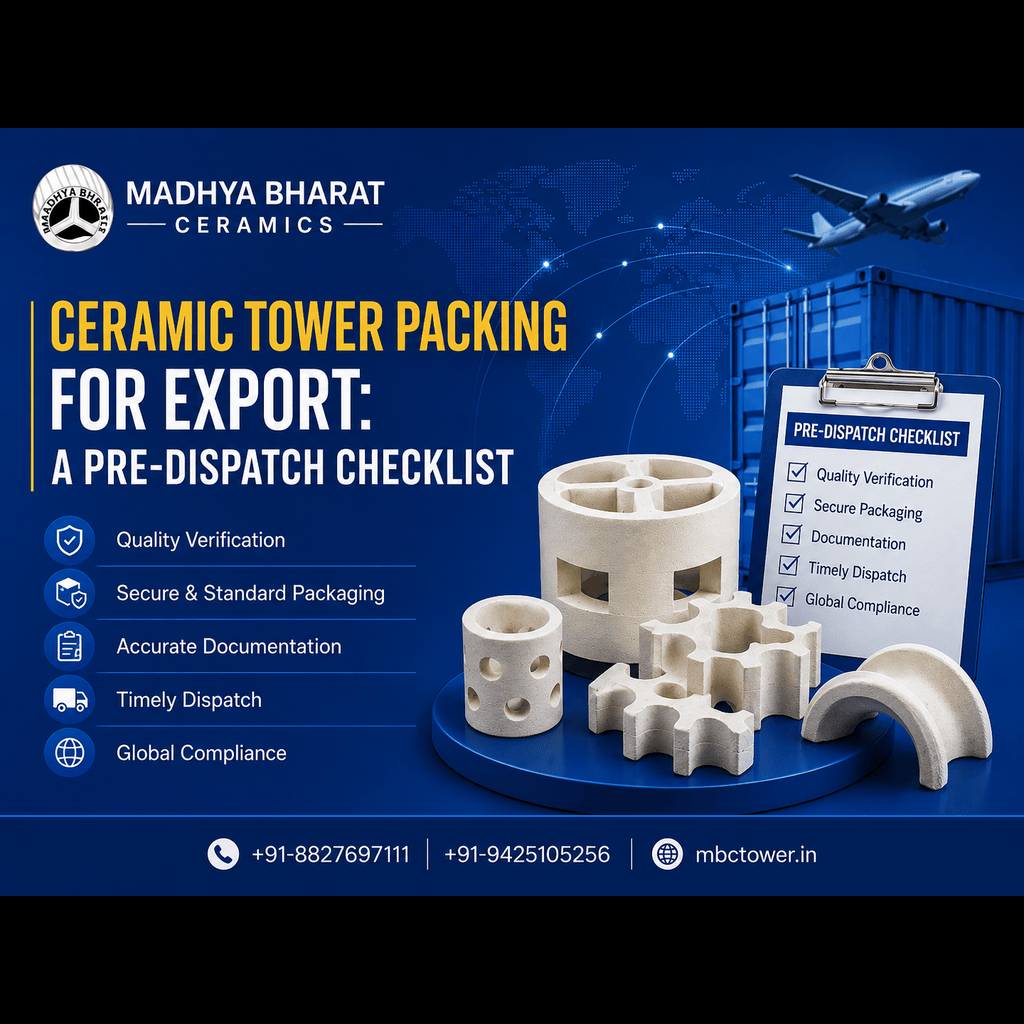
Before any shipment of ceramic tower packing leaves our factory, we ask international buyers to confirm five things: the quality test reports, packaging suited for sea freight, correct HS code and export documentation, agreed Incoterms, and a pre-dispatch inspection sign-off. Skip any one of these, and the risk shifts from “slightly inconvenient” to a container held at customs while your plant waits on packing it already paid for.
Most disputes between international buyers and Indian exporters do not happen because the product was wrong. They happen because something got confirmed verbally, assumed rather than checked, and only surfaces once the shipment is already at sea.
Why Dispatch Day Is Where Most Problems Actually Start
A supplier can have excellent manufacturing and still cause a buyer real trouble at the export stage. Firing quality and packing performance are one conversation. Export readiness is a completely different one, and it involves people outside the factory floor, freight forwarders, customs brokers, and port handlers, none of whom know your specification unless it is written down clearly beforehand.
This is exactly why we treat the confirmation step before dispatch with the same seriousness as the manufacturing itself. A perfectly made batch of packing can still arrive damaged, delayed, or rejected at customs if the paperwork and packaging were not handled with the same care as the product.
1. Confirm the Quality Test Reports Before, Not After, Dispatch
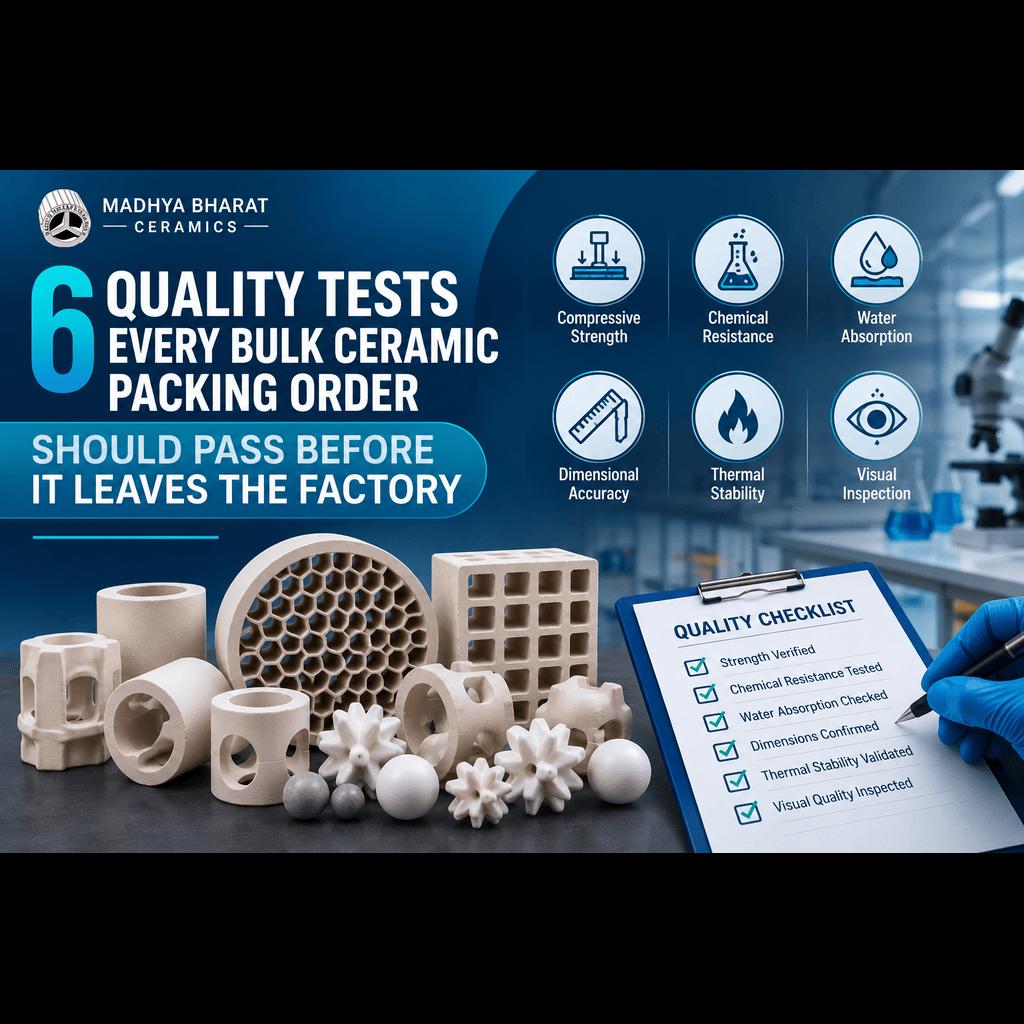
Every batch leaving the factory should come with documented test results, not a verbal assurance that “it’s good quality.” Ask your ceramic saddles exporter for the actual figures, not just a pass or fail statement.
What to request specifically:
- Crushing strength results for the exact batch being shipped
- Water absorption percentage
- Dimensional tolerance report
- Acid resistance test data if your application involves corrosive service
If a supplier hesitates to share batch-specific numbers and instead points you to a general product brochure, that is worth treating as a signal, not a technicality to sort out later.
2. Packaging Built for Sea Freight, Not Just Domestic Transport
Ceramic is brittle by nature, and packaging that works fine for a truck delivery within India often is not enough for a multi-week ocean voyage involving multiple handling points.
What proper export packaging usually includes:
- Reinforced wooden crates or pallets rated for stacking during container loading
- Internal cushioning to prevent piece-to-piece contact and chipping
- Moisture protection appropriate for the transit climate and route
- Clear labeling with product type, size, and batch number on every unit
A supplier working with high quality ceramics but generic packaging is still a risk. The packaging decision should match the actual shipping method, not a one-size-fits-all default used for every order regardless of destination.
3. Get the HS Code and Export Documentation Right the First Time
Incorrect or mismatched documentation is one of the most common reasons shipments get held at customs, and it has nothing to do with the product quality itself.
Confirm these documents before dispatch:
- Commercial invoice with matching quantities and values
- Packing list detailing exactly what is in each crate or pallet
- Certificate of origin, if required by your country’s import regulations
- Correct HS code for ceramic tower packing, since a wrong code can trigger delays or incorrect duty calculations
A reliable ceramic ring exporter will have this documentation process standardized, not assembled last minute once the shipment is already scheduled to leave.
4. Agree on Incoterms Before the Order Is Finalized, Not After
FOB, CIF, and EXW all shift responsibility and cost at different points in the journey, and confusion here is one of the most common sources of disputes between buyers and suppliers.
| Incoterm | Who Handles Freight | Who Bears Risk After Loading |
| EXW | Buyer arranges everything from factory | Buyer, from the factory gate onward |
| FOB | Buyer arranges freight from the port | Buyer, once goods are loaded on vessel |
| CIF | Supplier arranges freight and insurance | Supplier, until goods reach destination port |
Confirming this upfront avoids the awkward conversation that happens when a buyer assumes freight is included and the supplier assumes otherwise.
5. Request a Pre-Dispatch Inspection Sign-Off
For larger orders, a final inspection before the container is sealed is worth insisting on, not treating as optional. This can be done by your own representative, a third-party inspection agency, or through photo and video documentation we share directly before loading.
A quick pointer on what a proper pre-dispatch check should confirm:
- Correct product type and size matches the purchase order exactly
- Quantity loaded matches the packing list
- No visible damage or cracking in a reasonable sample of the batch
- Crates are sealed and labeled correctly before container loading
Skipping this step to save a few days rarely saves money once a discrepancy surfaces after the container has already sailed.
What a Reliable Ceramic Packing Exporter in Mandsaur Actually Does Differently
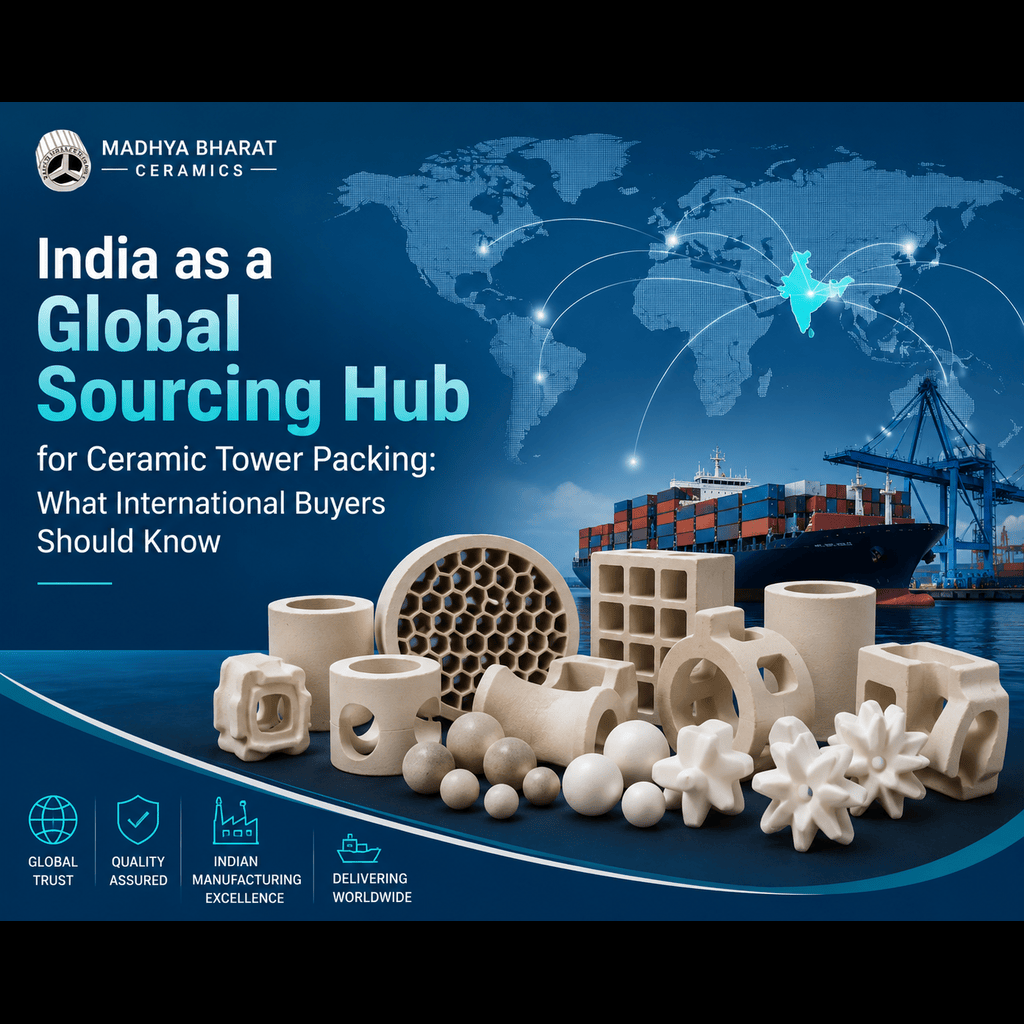
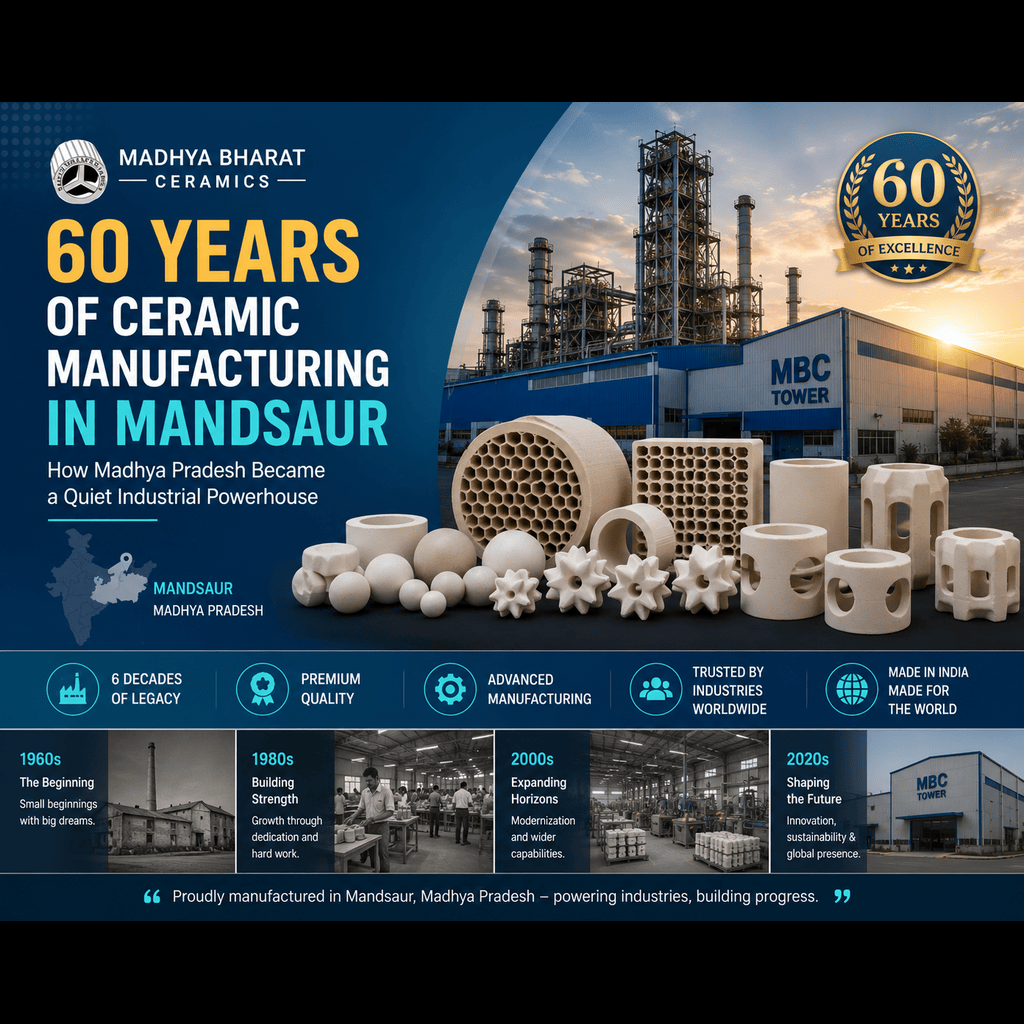
Mandsaur has built a genuine manufacturing base for industrial ceramics over decades, and buyers sourcing from a ceramic packing exporter in Mandsaur should expect this pre-dispatch process to be routine, not something they have to request specially.
At Madhya Bharat Ceramics (MBC), every export order goes through the same sequence: batch testing documented before packing begins, export-grade crating matched to the shipping route, and complete documentation prepared before the container booking is even confirmed. Our quality testing standards cover exactly what we check on every batch before it moves to packing, and if you’re still deciding which packing type and supplier fit your column in the first place, our buyer verification checklist for ceramic tower packing manufacturers walks through that earlier step.
Frequently Asked Questions
1. What documents should I ask for before a ceramic packing shipment leaves India?
At minimum, request the commercial invoice, packing list, certificate of origin if applicable, and batch-specific quality test reports. Confirm the HS code matches the product category to avoid customs delays.
2. Who is responsible for the goods if they get damaged in transit?
This depends entirely on the agreed Incoterm. Under EXW, the buyer bears risk from the factory gate. Under CIF, the supplier remains responsible until the goods reach the destination port. Confirming this before the order is placed avoids disputes later.
3. Can I request a pre-dispatch inspection if I am not physically present in India?
Yes. Most exporters can arrange photo and video documentation of the loading process, or you can engage a third-party inspection agency local to the factory to verify the shipment before it leaves.
4. How do I know if the packaging is suitable for a long sea voyage?
Ask specifically whether the packaging is rated for export and multiple handling points, not just domestic transport. Reinforced crating, internal cushioning, and moisture protection appropriate to your shipping route should all be confirmed in writing.
5. What is the biggest mistake international buyers make when importing ceramic tower packing?
Assuming verbal confirmations are enough. Quality specifications, packaging standards, and Incoterms should all be documented in the purchase order itself, not left as an understanding between two people on a call.
Final Thoughts
Getting ceramic tower packing manufactured correctly is only half the process. What happens between the factory floor and the ship’s deck determines whether that quality actually reaches your plant intact and on schedule. Confirming these five things before dispatch, test reports, packaging, documentation, Incoterms, and inspection, turns export sourcing from a gamble into a predictable process.
If you’re planning an international order and want a supplier who treats the pre-dispatch stage with the same seriousness as manufacturing itself, send us your shipment details and we’ll walk you through exactly what to expect before your container ever leaves Mandsaur.