When engineers choose distillation column packing for chemical plants, ceramic rings consistently rank as one of the top choices. According to a 2023 market report, the global industrial ceramic packing market is growing at over 5% annually, driven by demand from petrochemical and fertilizer sectors. Ceramic ring manufacturers in India play a major role in meeting this global demand, supplying high-quality tower packing media to plants across Asia, the Middle East, and Europe.
What Are Ceramic Rings and How Do They Work in Distillation?
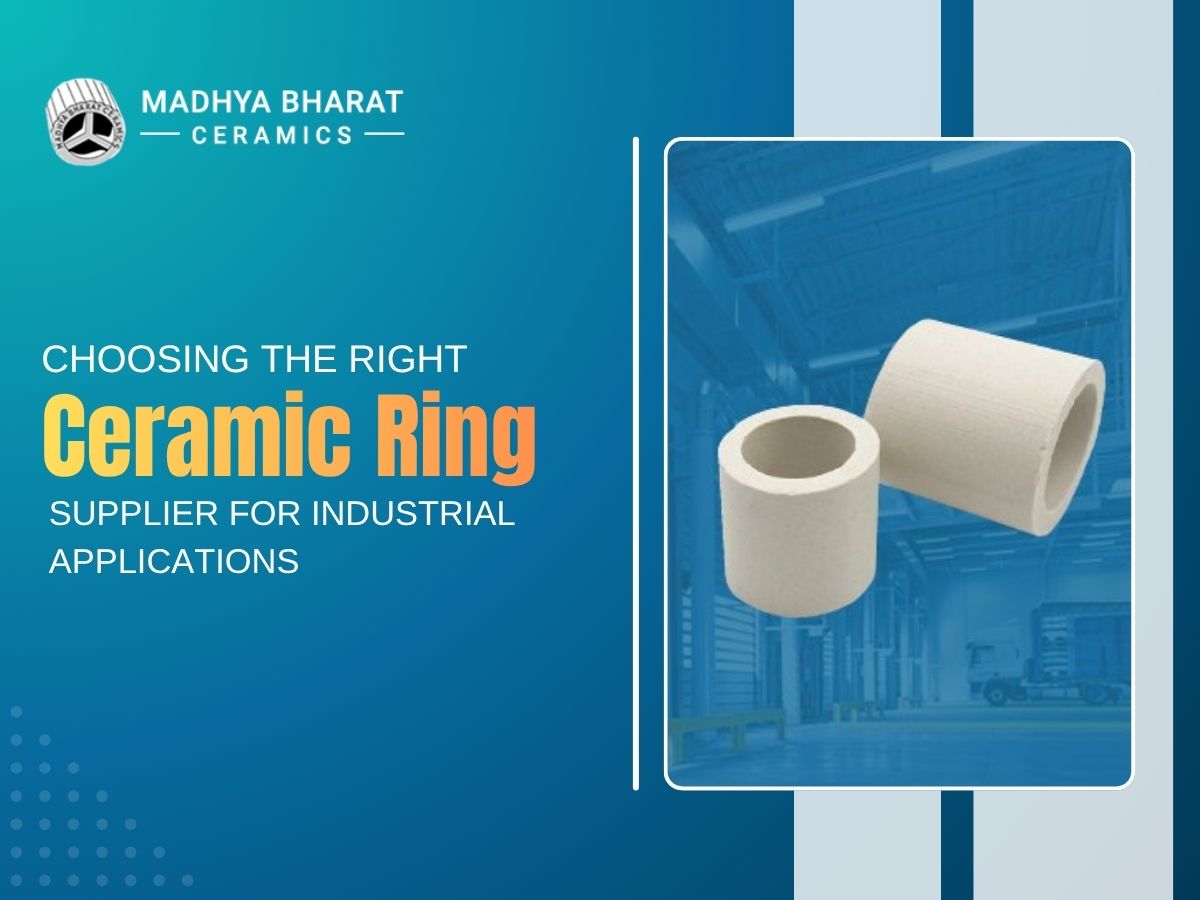
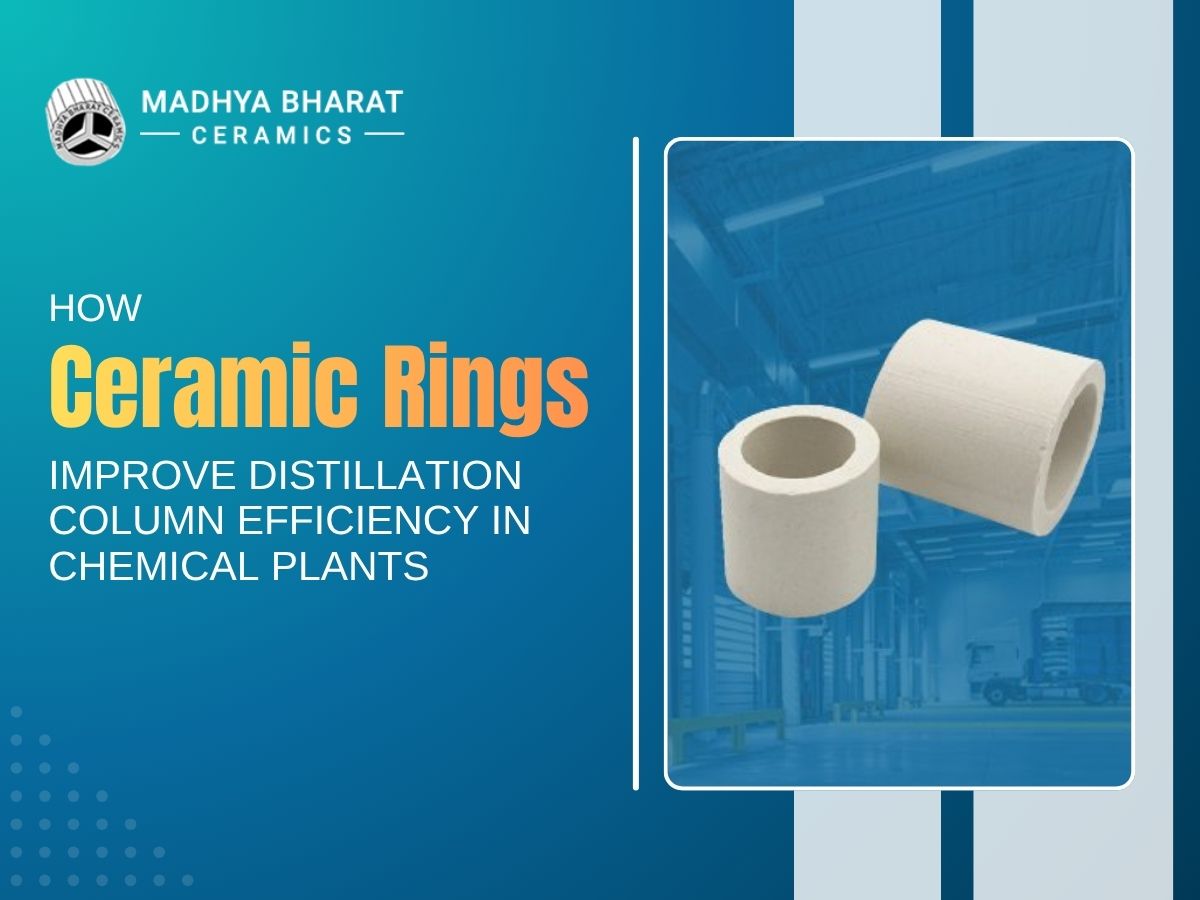
Ceramic rings are small cylindrical pieces made from inert ceramic material. They are placed randomly inside a distillation column to create a large surface area for vapor and liquid to interact. This interaction is the core of the industrial separation process that separates chemical mixtures into their individual components.
As vapor rises up through the column and liquid flows downward, the two phases make contact across the surface of the rings. The greater the contact area, the more efficient the separation. Ceramic rings are designed to maximize this contact while allowing fluid to flow with minimal resistance.
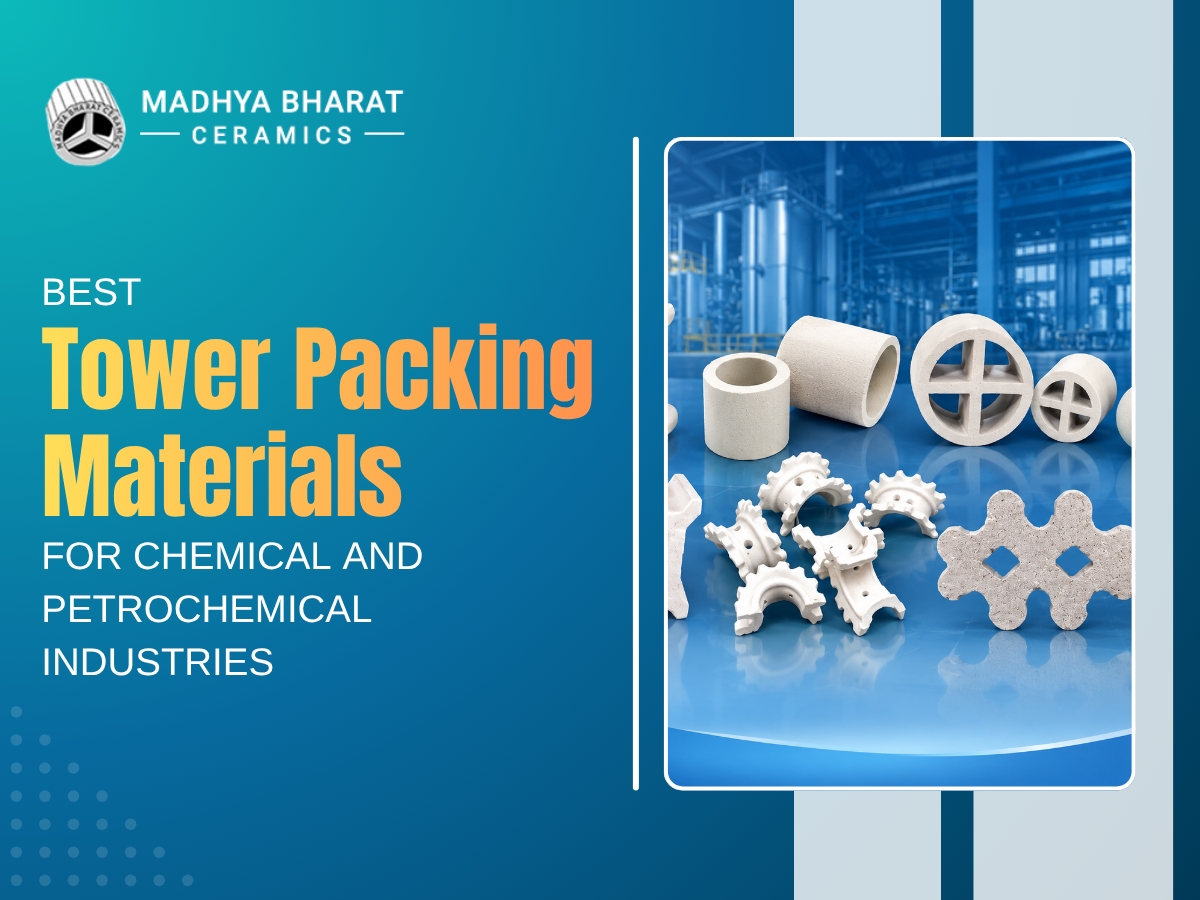
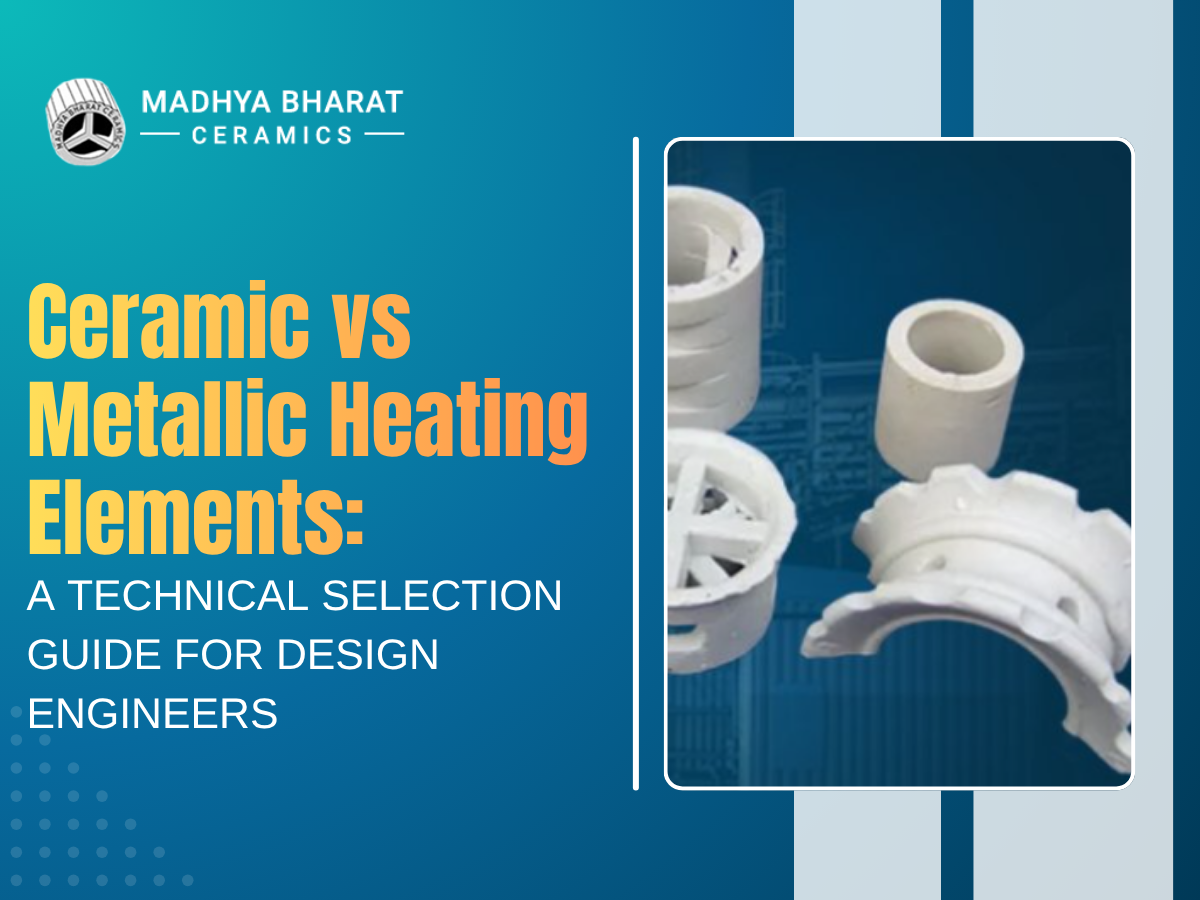
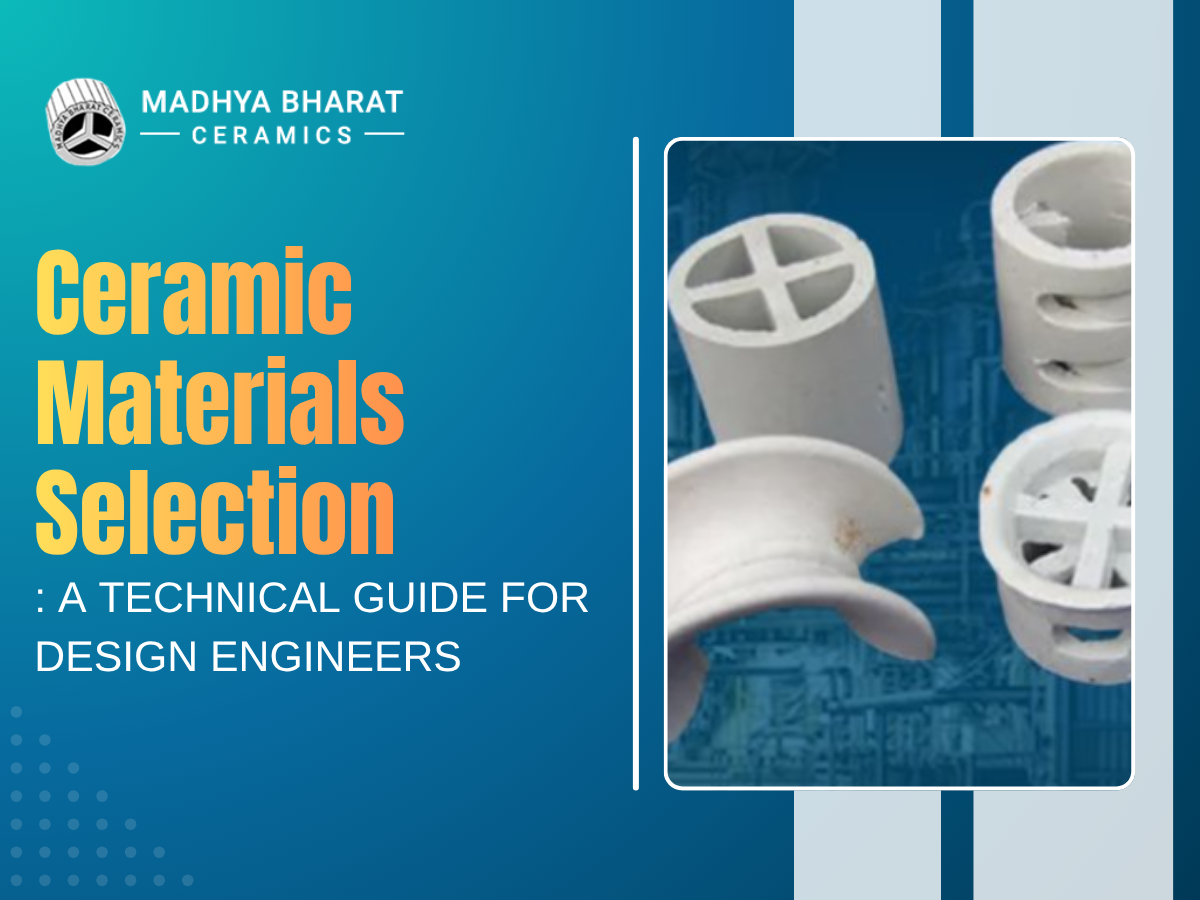
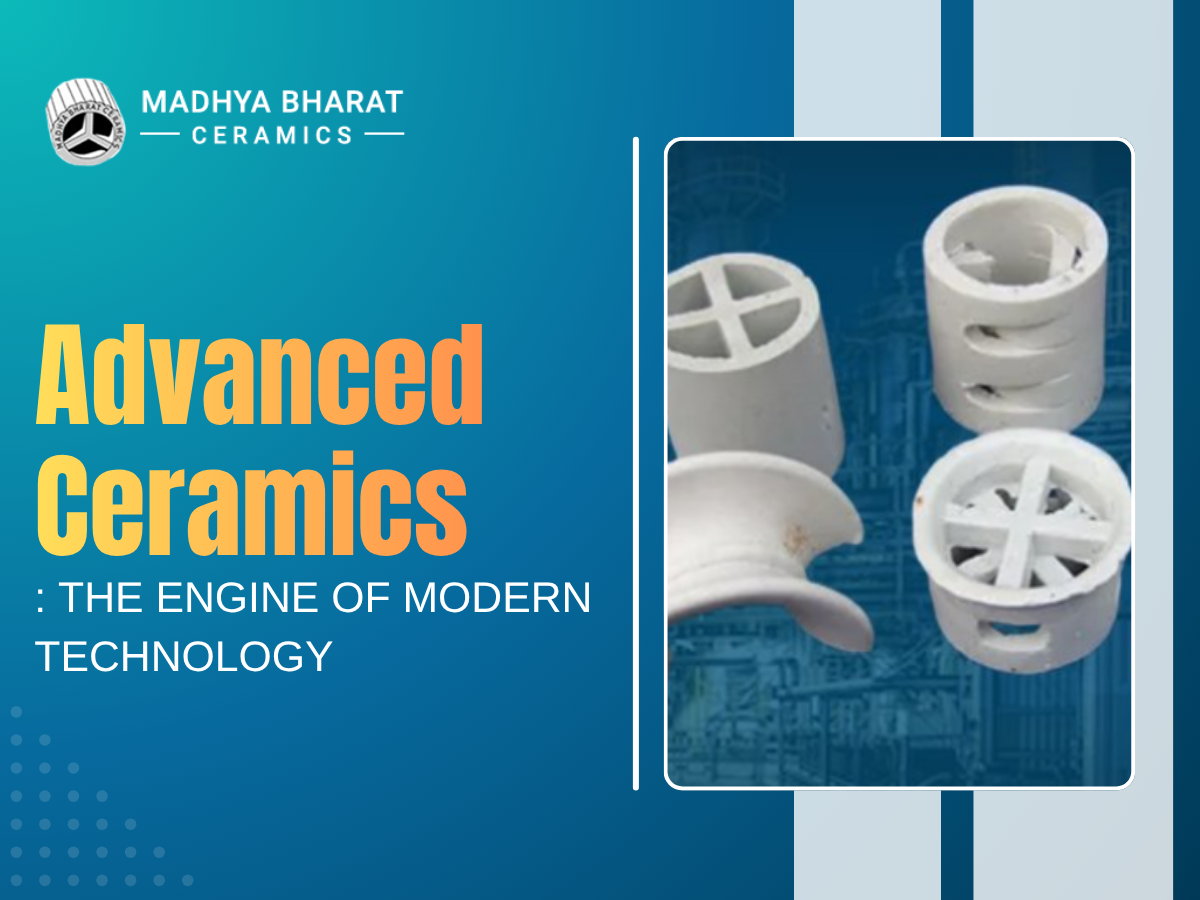
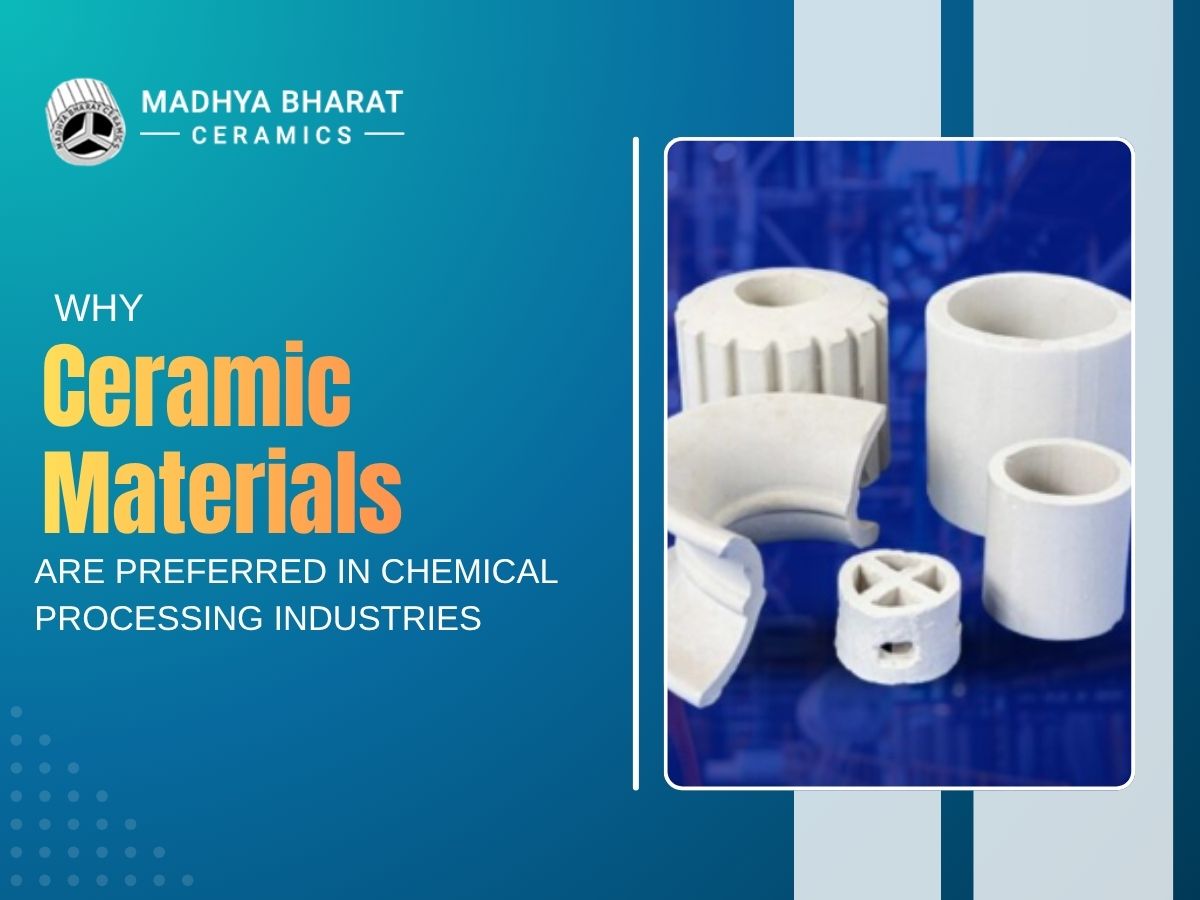
Common types of ceramic rings include:
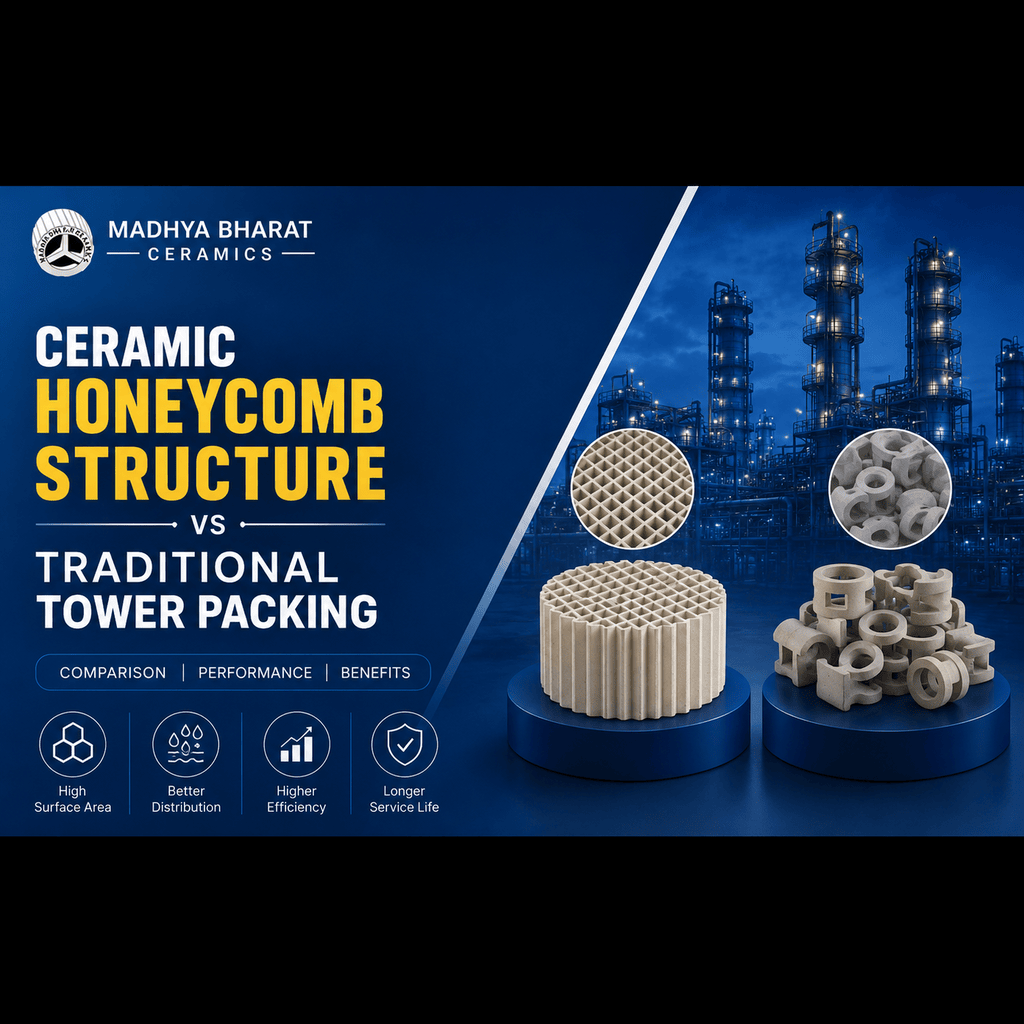
- Ceramic Raschig Rings: Simple cylindrical shape, used in older and general-purpose columns
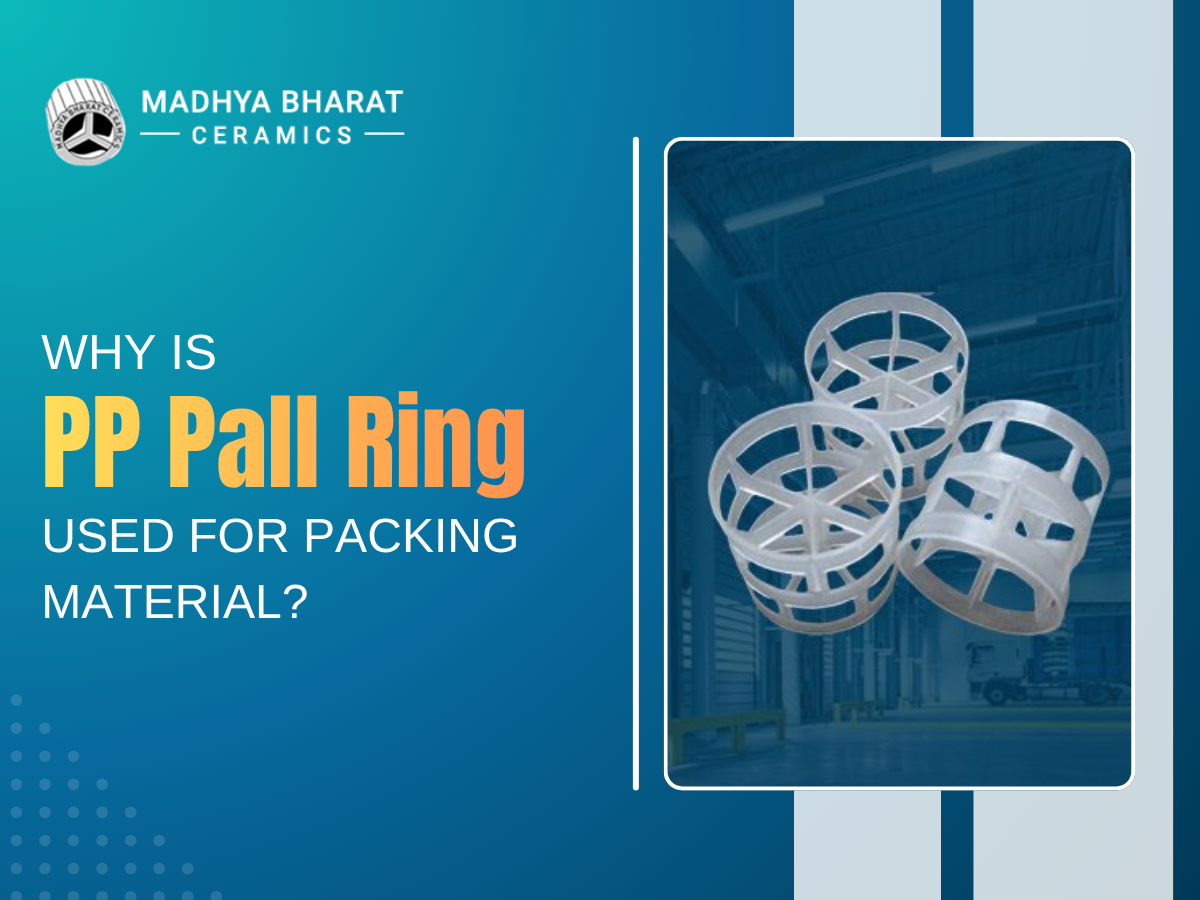
- Ceramic Pall Rings: Cylindrical with internal windows and blades, higher efficiency
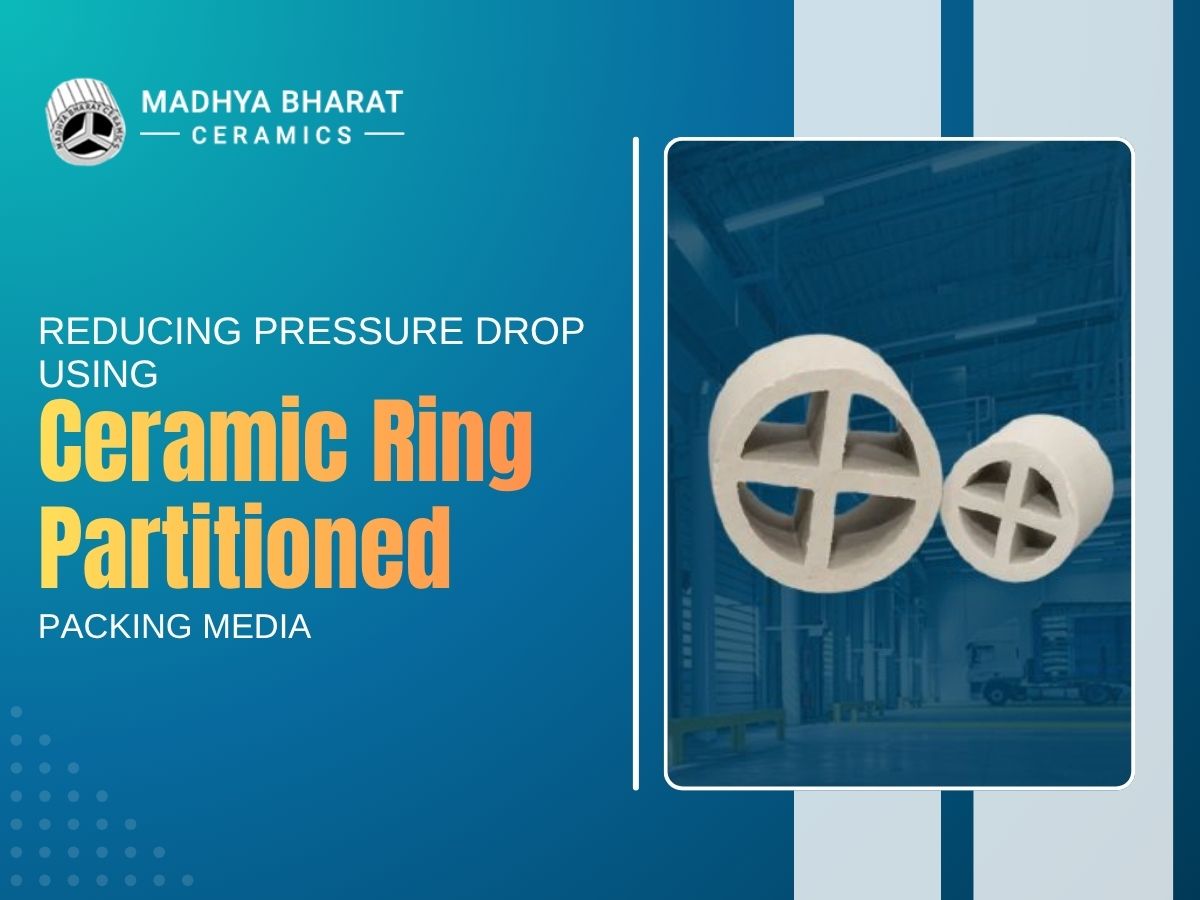
- Ceramic Cascade Mini Rings: Low-profile design for reduced pressure drop
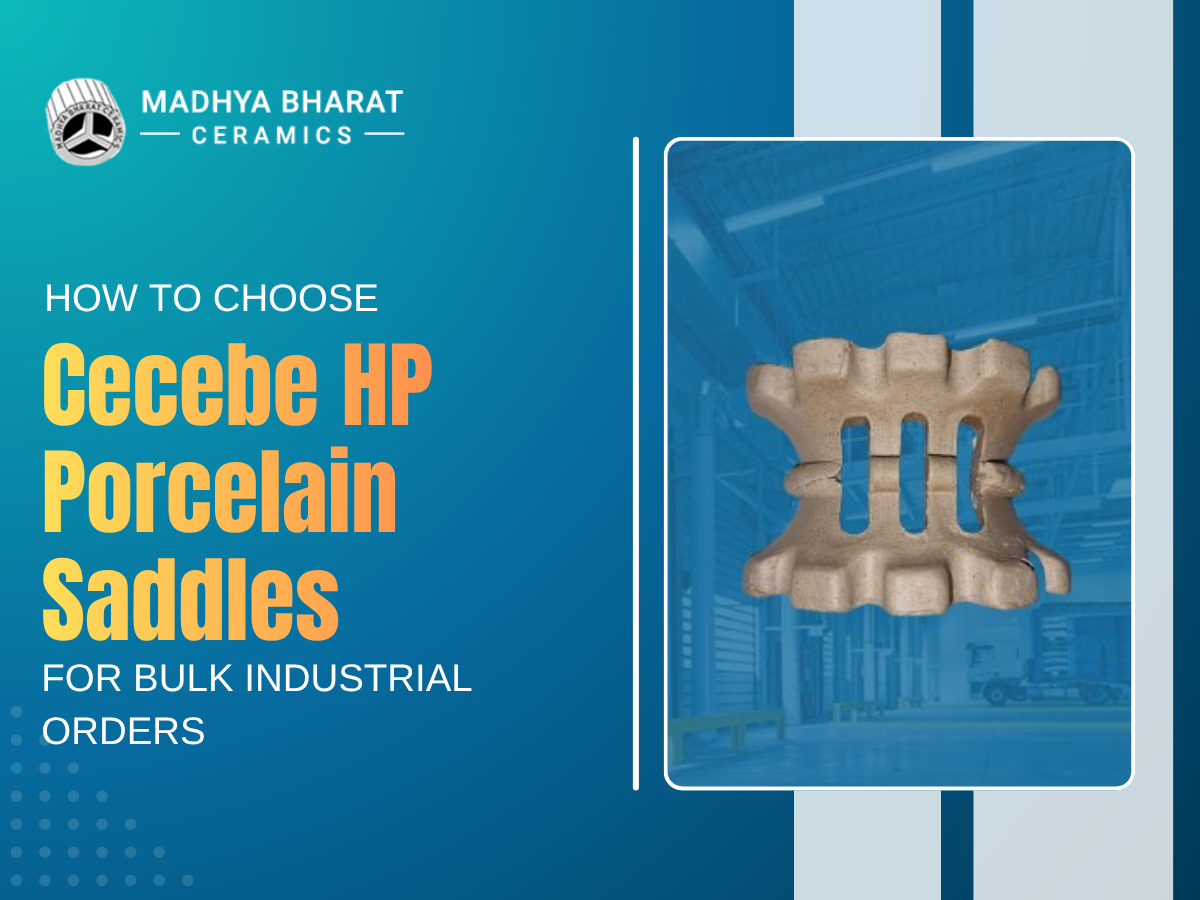
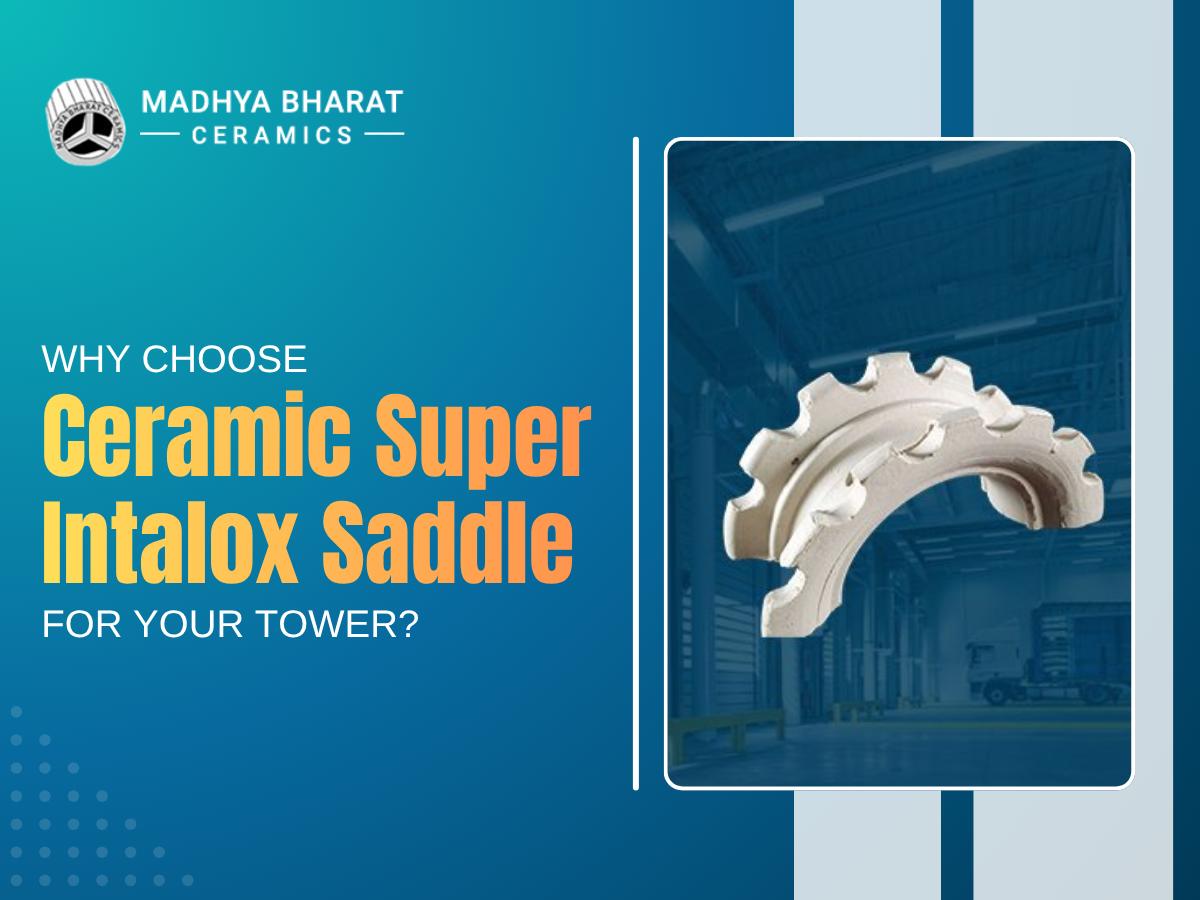
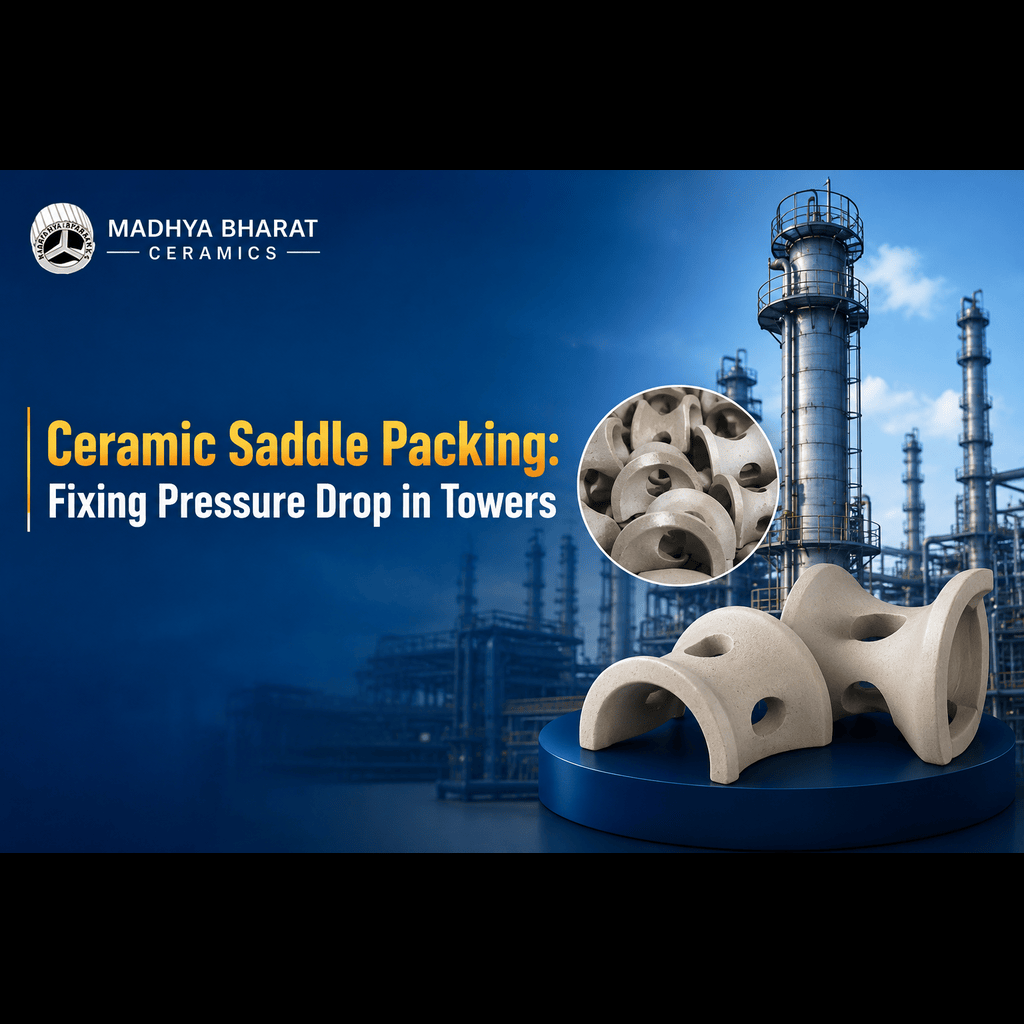
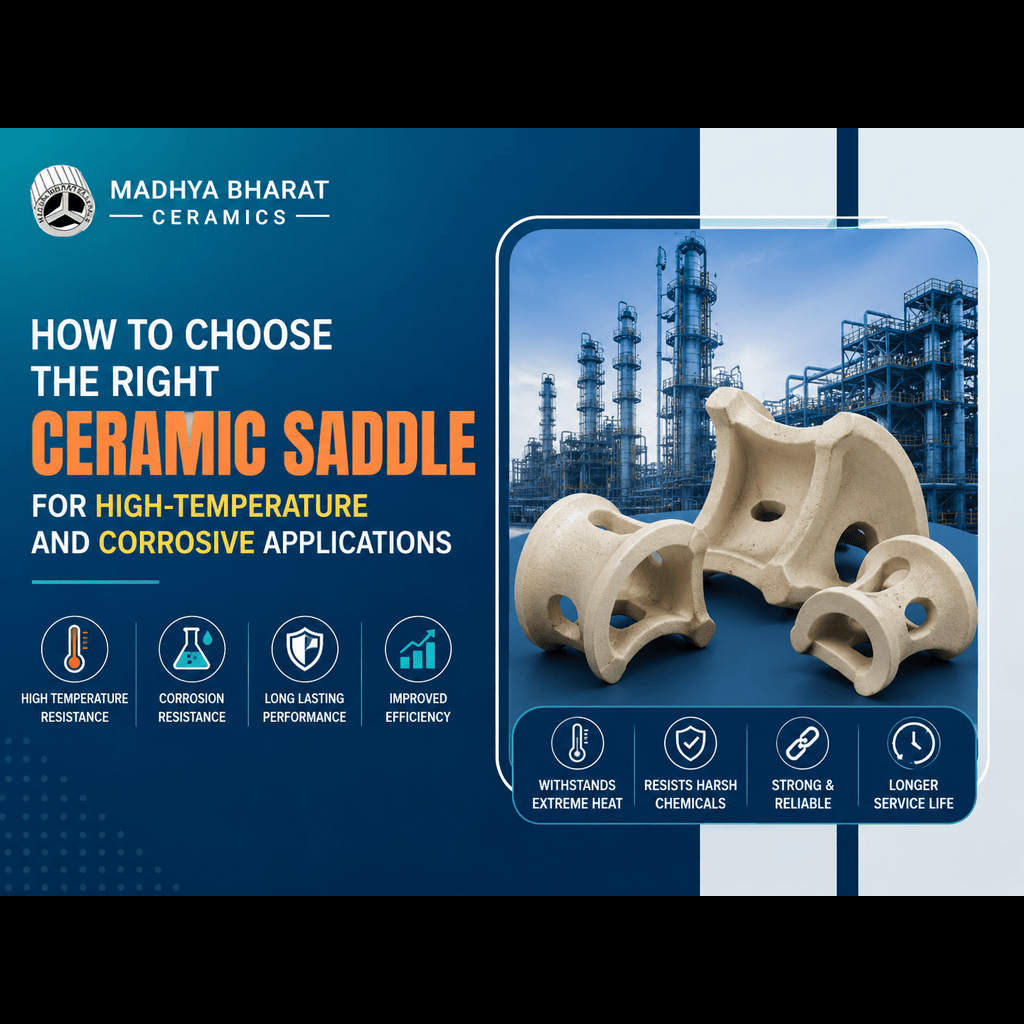
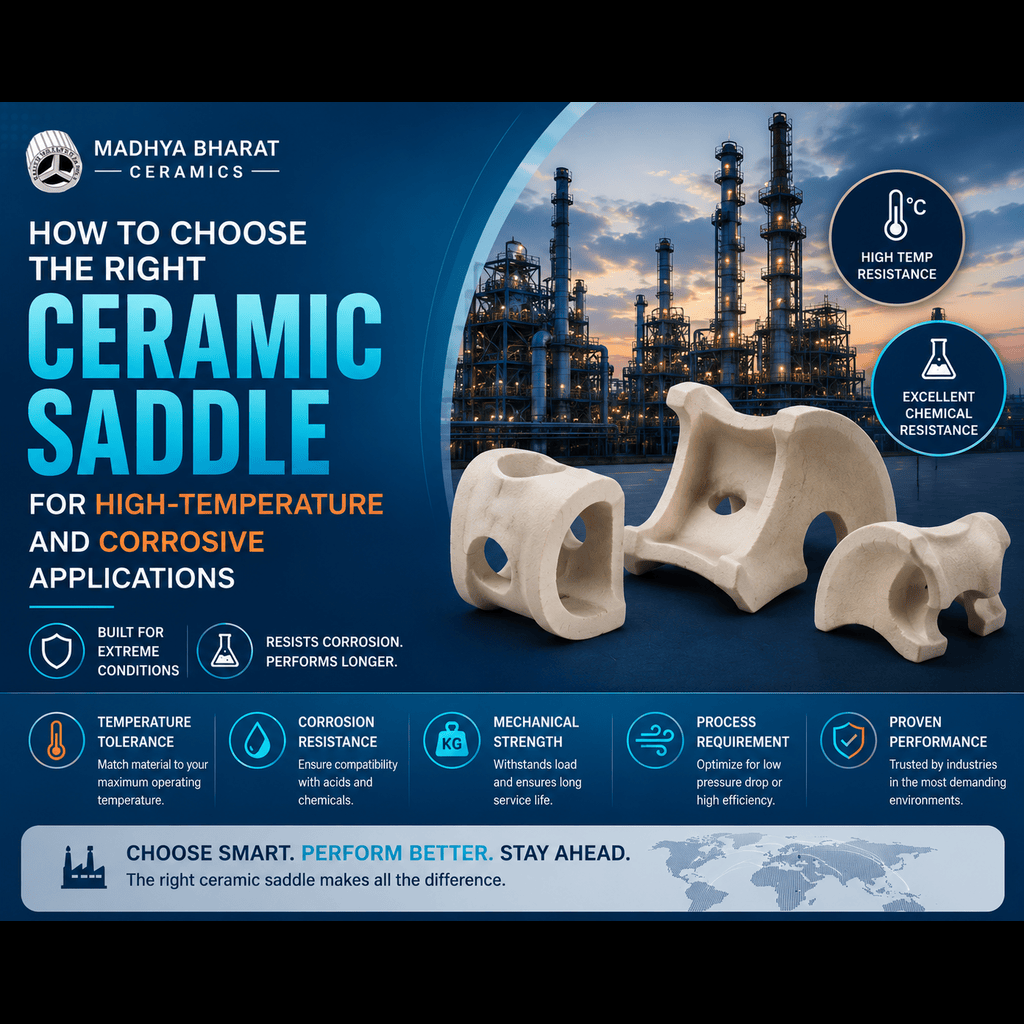
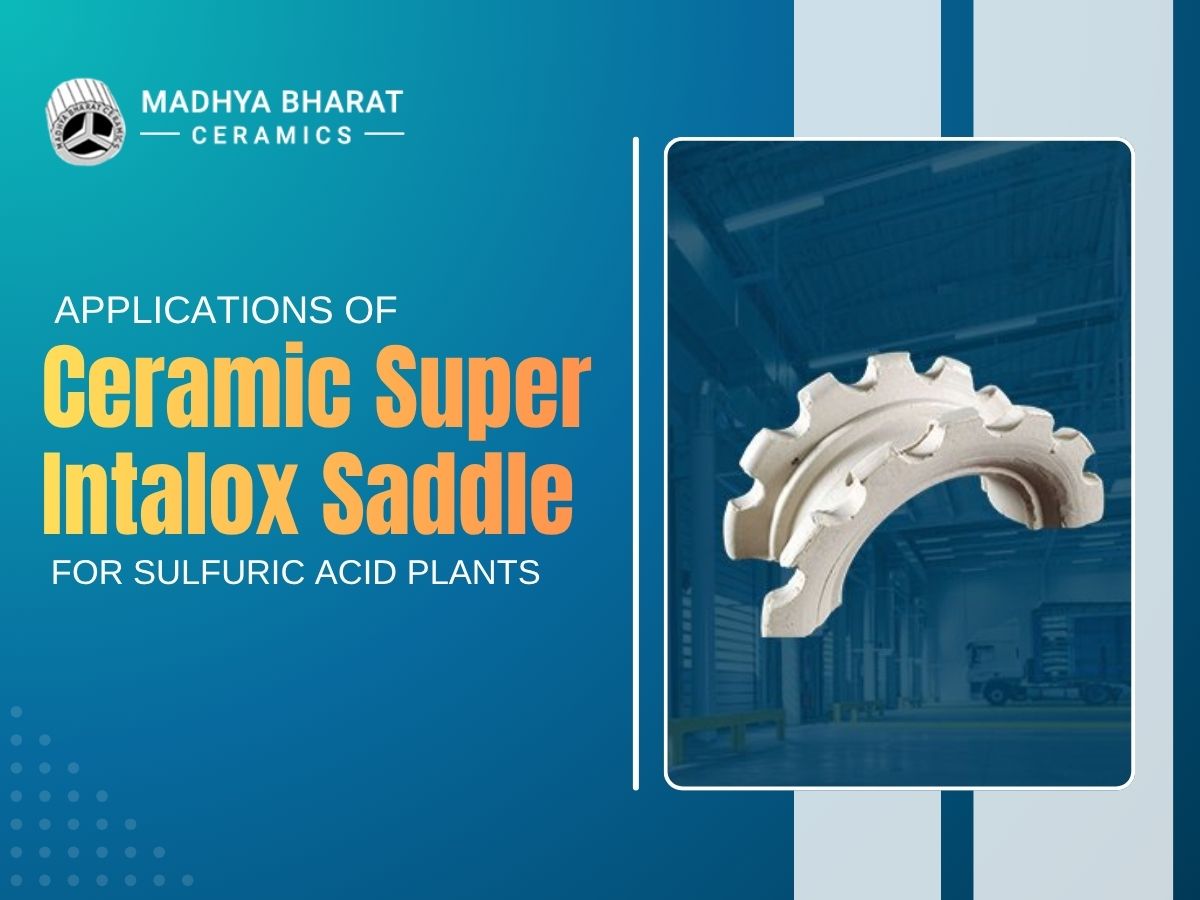
- Ceramic Saddle Rings (Intalox): Saddle-shaped for better liquid distribution
Each type offers different trade-offs between surface area, pressure drop, and cost. A good ceramic ring supplier will help you select the right type for your specific process.
Why Chemical Plants Prefer Ceramic Tower Packing Solutions
Chemical plants deal with aggressive solvents, high temperatures, and corrosive vapors. Ceramic rings handle all of these conditions far better than plastic alternatives.
Here is why ceramic is the preferred choice in many chemical plant applications:
- High temperature resistance: Ceramic rings handle temperatures from minus 50 to over 1000 degrees Celsius
- Chemical inertness: They do not react with acids, alkalis, or organic solvents
- Long service life: Properly installed ceramic packing can last over 15 years
- Hydrophilic surface: Ceramic naturally attracts and spreads liquid, improving wetting efficiency
- No contamination risk: Ceramic does not leach chemicals into the process stream
These properties make ceramic tower packing solutions ideal for processes like acid recovery, solvent stripping, alcohol distillation, and gas absorption in chemical plants.
How Ceramic Rings Improve Mass Transfer Efficiency
Mass transfer efficiency is the measure of how effectively a column moves components between the vapor and liquid phases. Higher efficiency means better separation with less energy input.
Ceramic rings improve mass transfer in three main ways:
1. Increased surface area per unit volume More surface area means more contact between vapor and liquid. A cubic meter of 25mm ceramic Pall Rings provides around 220 square meters of surface area. This density of contact points directly improves separation performance.
2. Uniform liquid distribution The geometry of ceramic rings causes liquid to spread evenly across the packing bed. Even distribution prevents dry zones where no separation occurs. This is especially critical in large-diameter columns used in petrochemical plants.
3. Low pressure drop Ceramic rings with an open structure allow gas to flow upward with minimal resistance. Lower pressure drop means the column operates at lower energy cost and puts less stress on pumps and compressors.
A well-packed column using quality ceramics from a top ceramic ring manufacturer can reduce reboiler energy consumption by 15 to 25 percent compared to a poorly packed or aged column.
Comparison Table: Ceramic Ring Types for Distillation Columns
| Ring Type | Surface Area (m²/m³) | Void Fraction | Pressure Drop | Best Application |
| Raschig Ring (25mm) | 190 | 73% | High | General absorption |
| Pall Ring (25mm) | 220 | 78% | Medium | Distillation, scrubbing |
| Cascade Mini Ring | 250 | 82% | Low | High-flow columns |
| Intalox Saddle (25mm) | 260 | 77% | Low-Medium | Acid and solvent recovery |
This table helps process engineers make quick comparisons when selecting chemical processing equipment for their specific column requirements.
Role of Ceramic Ring Manufacturers in India in Global Supply
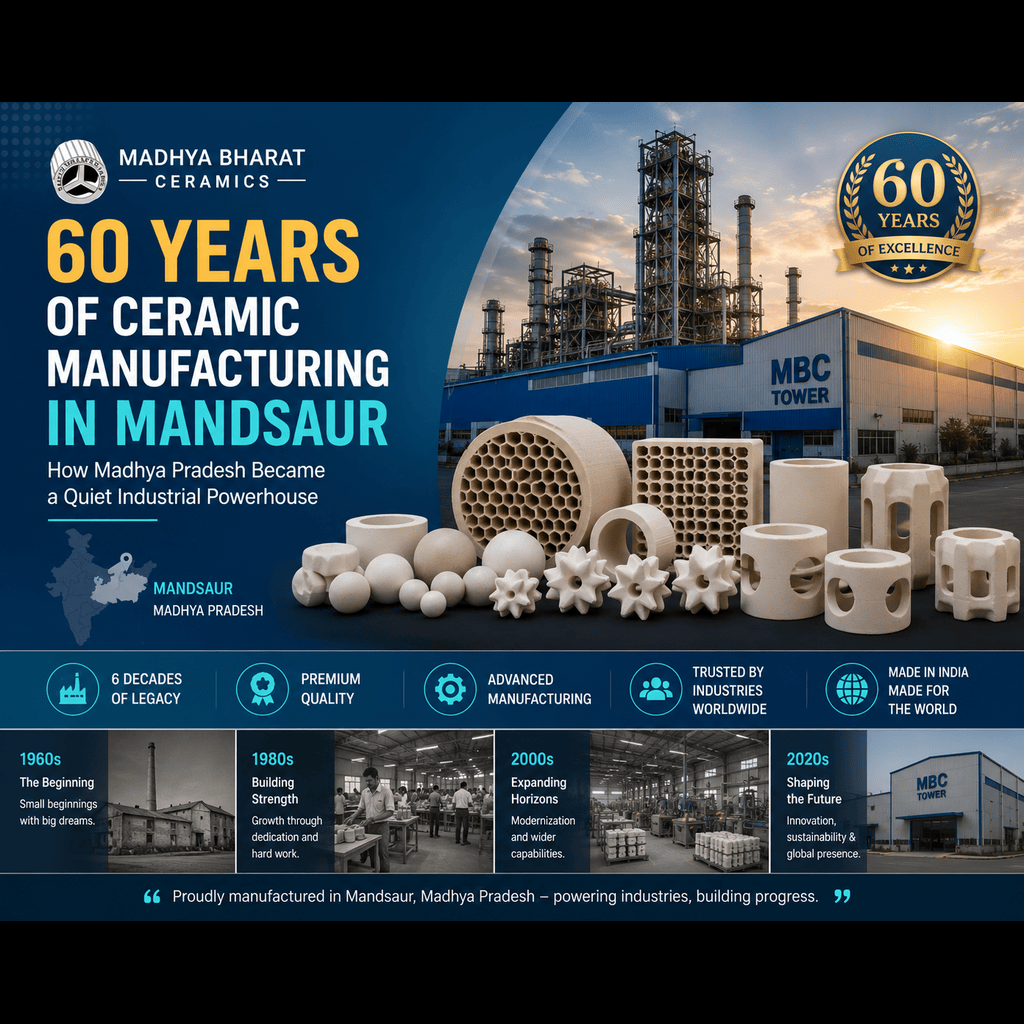
India has become a reliable source for industrial ceramic rings used in distillation and absorption applications. Manufacturers based in industrial clusters like Mandsaur, Rajkot, and Ahmedabad produce ceramic rings that meet international standards including ISO 9001 and ASTM specifications.
What makes ceramic ring manufacturers in India stand out:
- Large-scale production capacity for bulk orders
- Competitive pricing compared to European and US suppliers
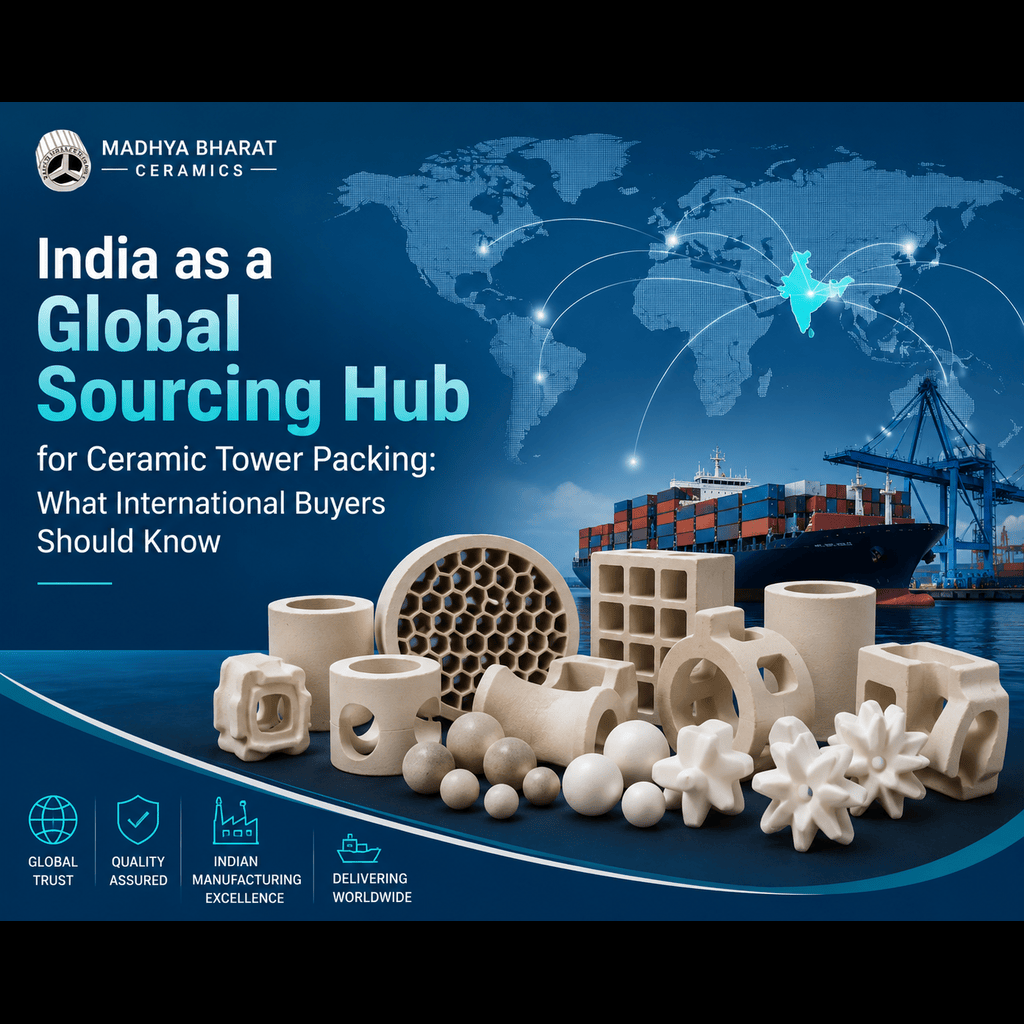
- Export experience to over 40 countries
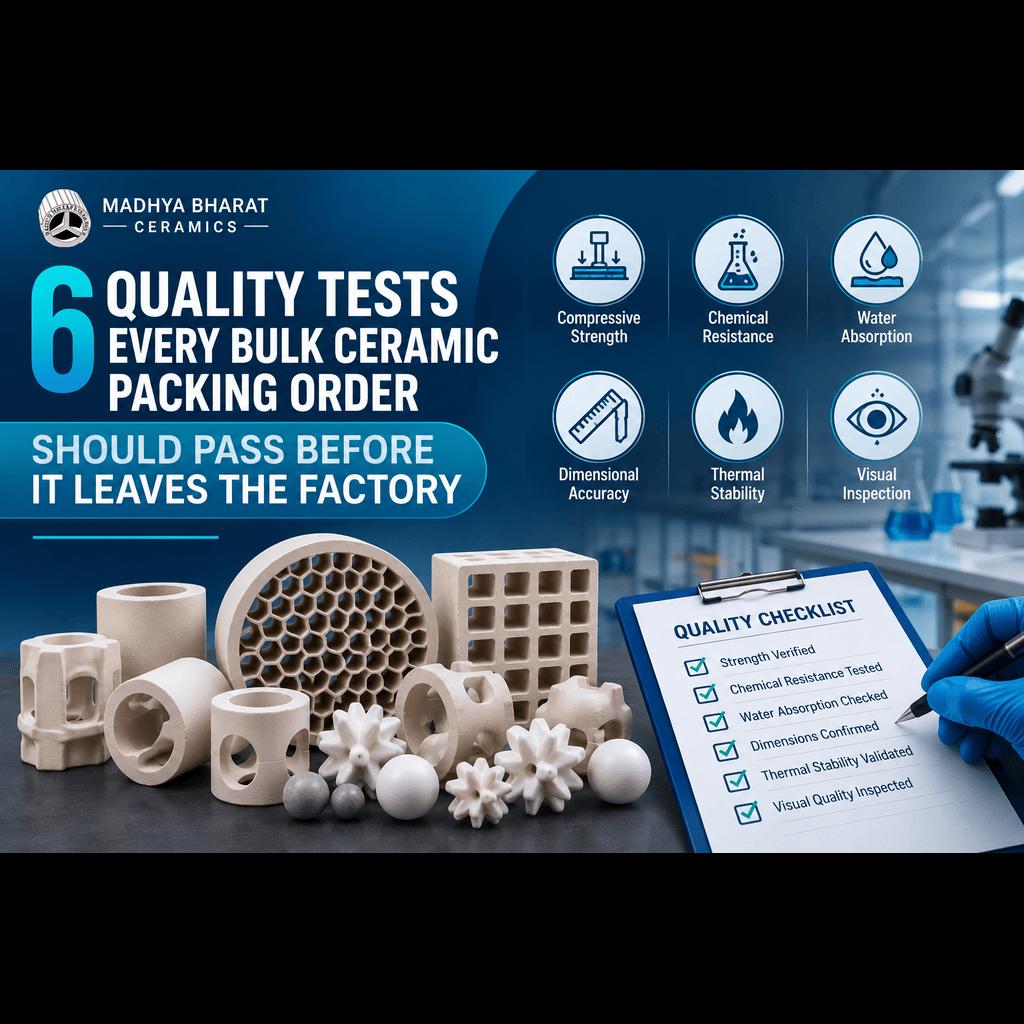
- Testing facilities for crush strength, surface area, and chemical resistance
- Custom sizing available from 6mm to 100mm diameter
A reputable ceramic ring exporter from India will also provide third-party test certificates, material safety data sheets, and packaging tailored for sea or air freight. This level of documentation is essential for buyers in regulated industries like pharmaceuticals and food-grade alcohol production.
Benefits of Ceramic Rings in Chemical Plant Distillation Columns
Let us look at the direct operational benefits plants experience after upgrading or installing ceramic packing:
- Better product purity: Improved separation means fewer impurities in the final product
- Lower operating costs: Less energy is needed when mass transfer is efficient
- Reduced column height: Efficient packing can achieve the same separation in a shorter column
- Stable performance over time: Ceramic does not degrade, swell, or warp like plastic
- Compliance with process standards: Inert ceramic meets food-grade and pharmaceutical-grade requirements
Plants that switch from random fill or aged packing to new ceramic rings often see results within the first production cycle.
Best Ceramic Ring Packing for Industrial Distillation Towers
Selecting the best ceramic ring packing for industrial distillation towers depends on several factors:
- Column diameter: Larger columns need larger rings to prevent wall effects
- Process temperature: High-temperature processes above 200 degrees Celsius require alumina or high-grade ceramic
- Pressure requirements: Vacuum distillation needs ultra-low pressure drop packing
- Liquid-to-gas ratio: High liquid flow rates benefit from saddle-type rings
- Budget: Raschig rings are lowest cost; Pall rings and saddles cost more but perform better
Consulting with a top ceramic ring manufacturer before finalizing specifications can save significant time and cost during commissioning.
Case Study: Distillation Column Upgrade at a Solvent Recovery Plant, Gujarat
A solvent recovery facility in Gujarat was running two distillation columns with aged Raschig Ring packing installed over 12 years ago. The plant was experiencing:
- Lower solvent purity (falling below 98.5% target)
- High reboiler steam consumption
- Frequent shutdowns for packing inspection
The plant partnered with a ceramic ring manufacturer in India and replaced the old packing with 25mm Ceramic Pall Rings across both columns.
Results after three months of continuous operation:
- Solvent purity improved to 99.4%, exceeding the target
- Steam consumption in reboilers dropped by 21%
- No unplanned shutdowns in the first quarter post-installation
- Payback on the packing investment achieved in under 7 months
The plant manager noted that the quality and consistency of the ceramic rings supplied by the Indian manufacturer was comparable to European alternatives at nearly 35% lower cost. This case confirms the role of ceramic rings in enhancing mass transfer efficiency in real production environments.
FAQs About ceramic rings
Q1. What are ceramic rings used for in chemical plants?
Ceramic rings are used as tower packing media inside distillation, absorption, and stripping columns. They increase vapor-liquid contact area, improving separation efficiency and reducing energy consumption in chemical processing.
Q2. Which is the best ceramic ring type for distillation?
Ceramic Pall Rings and Intalox Saddles are considered the best for distillation due to their high surface area, good liquid distribution, and low pressure drop compared to plain Raschig Rings.
Q3. How are ceramic ring manufacturers in India different from global suppliers?
Ceramic ring manufacturers in India offer ISO-certified products at lower cost, faster bulk delivery, and export-ready documentation. Many supply to Europe, the Middle East, and Southeast Asia with quality matching international standards.
Q4. What sizes do ceramic rings come in?
Ceramic rings are available from 6mm to 100mm diameter. The most common industrial sizes are 25mm, 38mm, and 50mm. Larger columns use larger rings to maintain efficiency and reduce channeling near the column wall.
Q5. How long do ceramic rings last in a distillation column?
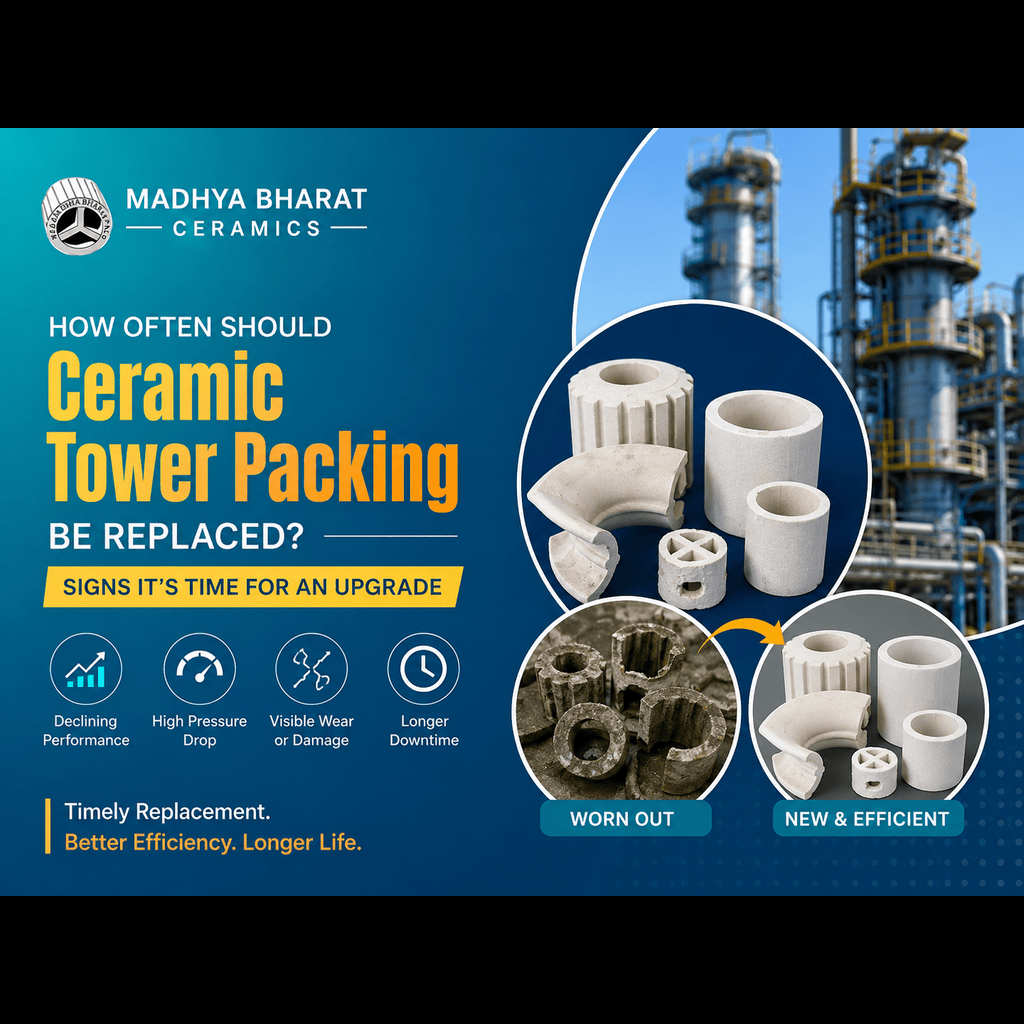
With proper handling and compatible process conditions, ceramic rings last between 10 and 15 years. High mechanical shock, thermal cycling, or incompatible chemicals can shorten their life.
Q6. Are ceramic rings chemically inert?
Yes. Standard ceramic rings are inert to most acids, alkalis, and organic solvents. For highly aggressive environments like hydrofluoric acid, special alumina-based ceramics are recommended.
Q7. Can a ceramic ring exporter in India supply custom sizes?
Yes. Most ceramic ring exporters in India offer custom sizes, shapes, and material grades. Minimum order quantities for custom production typically start at 500 kg to 1 tonne depending on the size
Q8. What is the void fraction of ceramic rings?
Void fraction ranges from 73% for Raschig Rings to over 82% for Cascade Mini Rings. Higher void fraction allows greater fluid throughput with lower pressure drop, which is important for high-capacity distillation columns
Conclusion
Ceramic rings are a proven, reliable solution for improving distillation column efficiency in chemical plants. Their ability to handle extreme temperatures, resist chemical attack, and provide high surface area for mass transfer makes them a top choice for process engineers worldwide.
Ceramic ring manufacturers in India have established strong credibility in the global market by delivering quality products at competitive prices. Whether you need standard Raschig Rings for a general absorption column or high-performance Pall Rings for a precision distillation tower, Indian suppliers have the capacity, certification, and technical knowledge to meet your requirements.
Investing in quality ceramic packing is not just a technical decision. It directly impacts your plant’s energy costs, product quality, and operational uptime. The case study from Gujarat proves that a well-planned packing upgrade can pay for itself in under a year.
If you are planning a new column installation or considering a packing upgrade, now is the right time to connect with a top ceramic ring manufacturer who can guide you through material selection, sizing, and installation support.
Call to Action
Looking for a trusted ceramic ring supplier or exporter in India? Whether you are upgrading an existing distillation column or building a new chemical plant, our team is ready to help you select the right ceramic tower packing solutions for your process.
We supply industrial ceramic rings in all standard and custom sizes, backed by quality certification and technical support. Contact us today for a free quote, product samples, or a detailed consultation with our process specialists.