Sulfuric acid is the most widely produced industrial chemical in the world. Global production exceeds 265 million tonnes per year, and virtually every sulfuric acid plant relies on packed absorption towers to produce and concentrate the acid. The packing inside these towers must survive constant exposure to hot concentrated sulfuric acid, which few materials can handle. Ceramic Super Intalox Saddles are one of the most trusted solutions for this application, and Ceramic Super Intalox Saddle in Mandsaur has become a recognized source for acid plants across India and in international markets.
What Are Ceramic Super Intalox Saddles and How Are They Different?
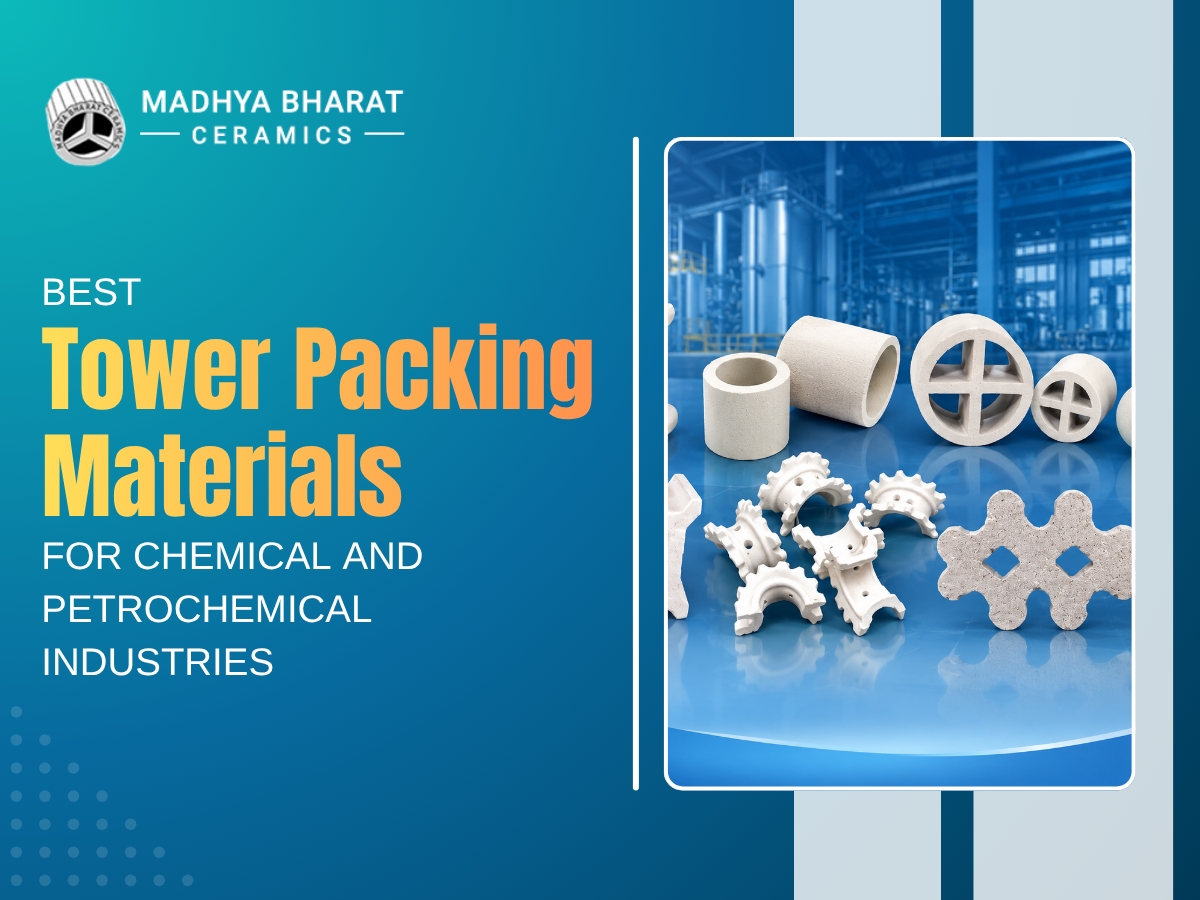
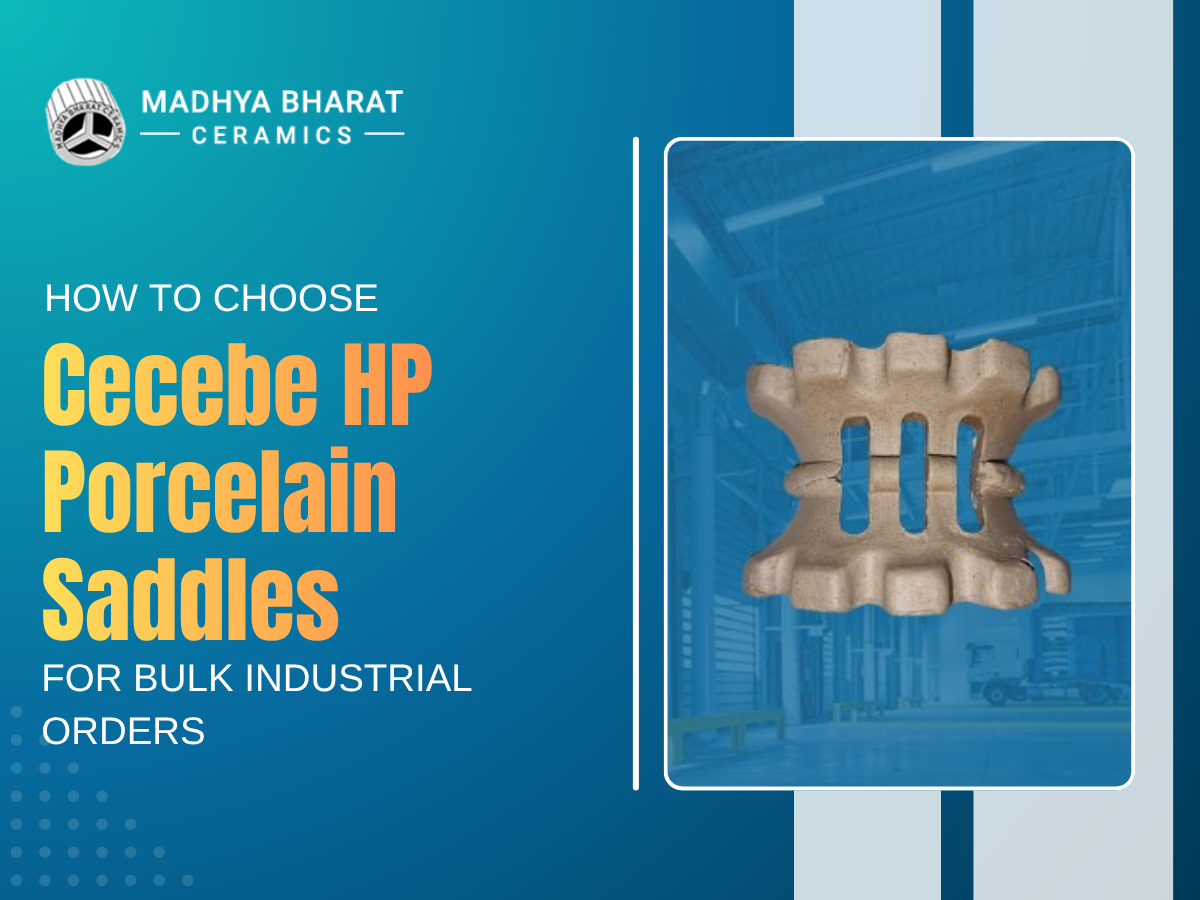
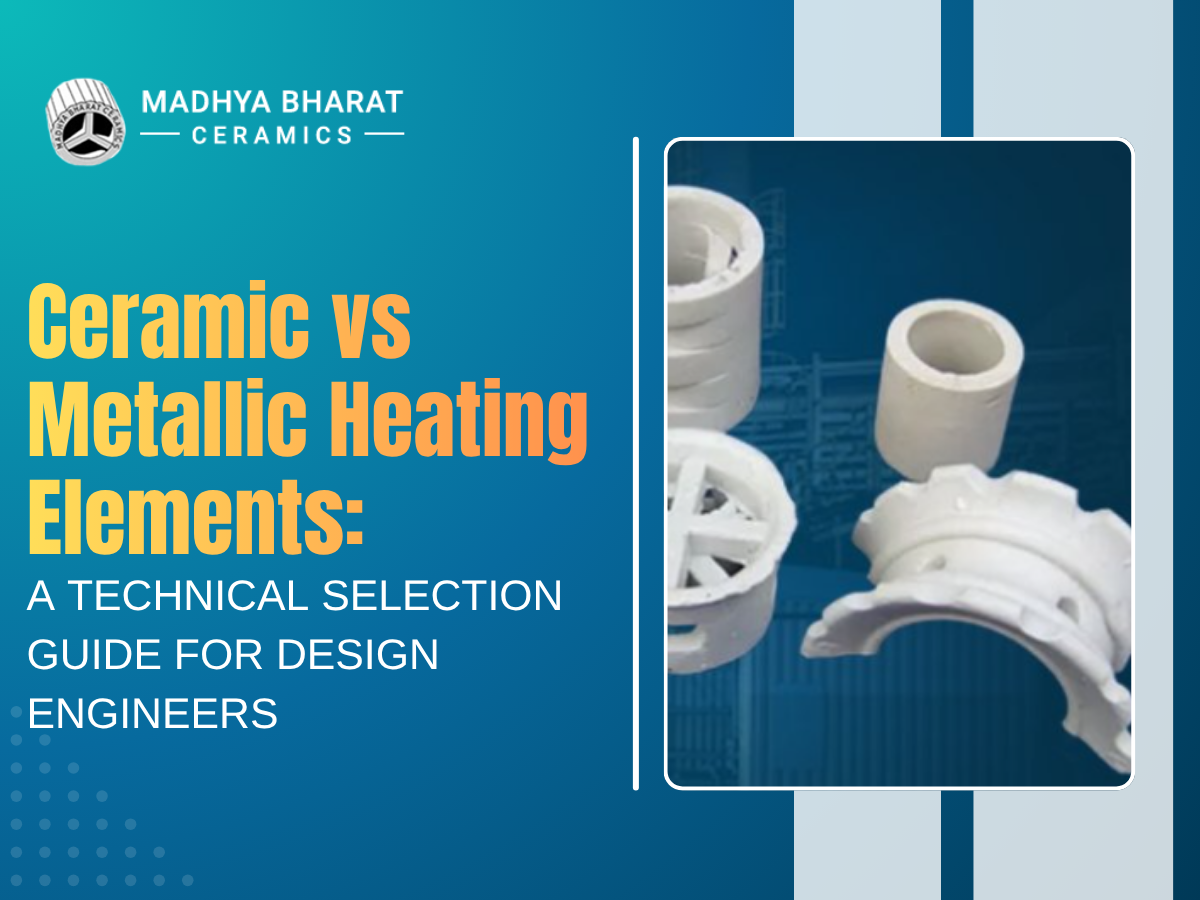
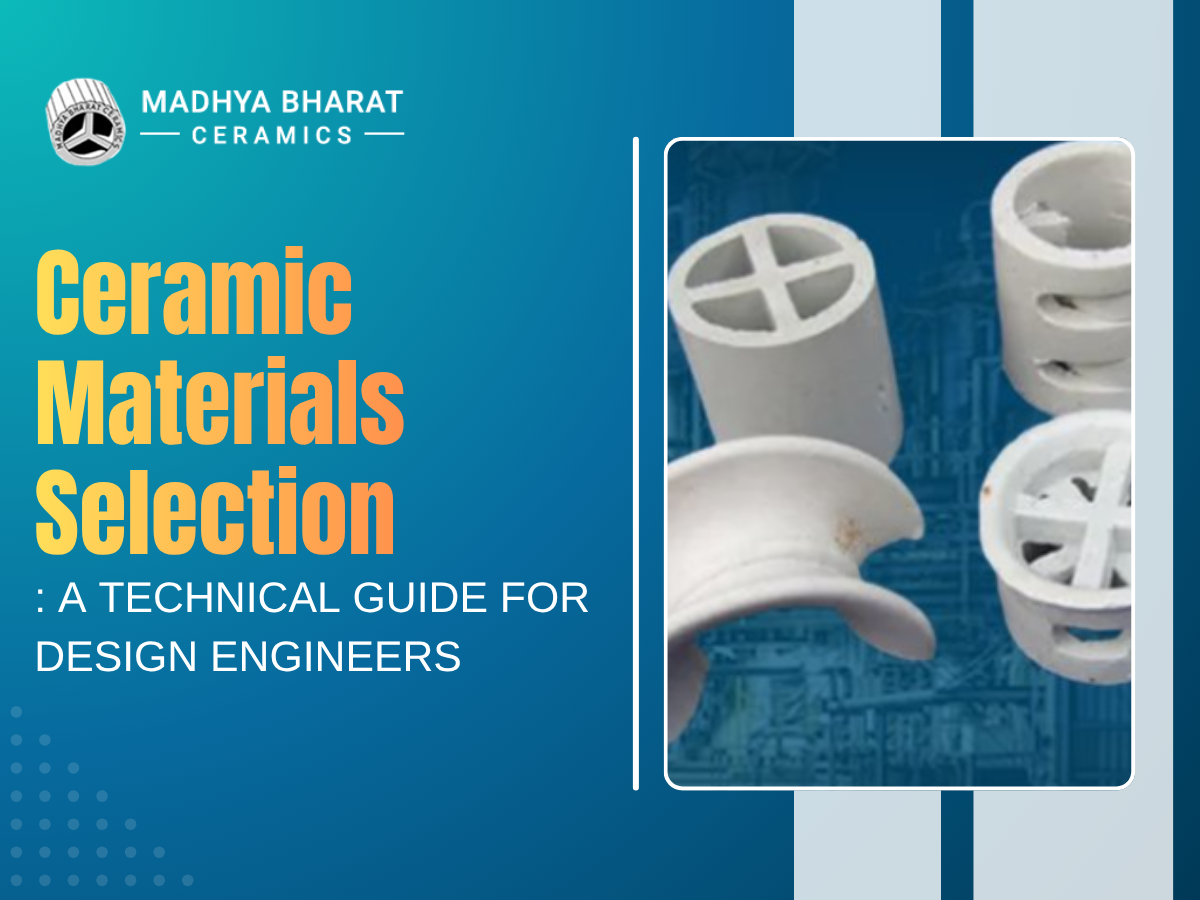
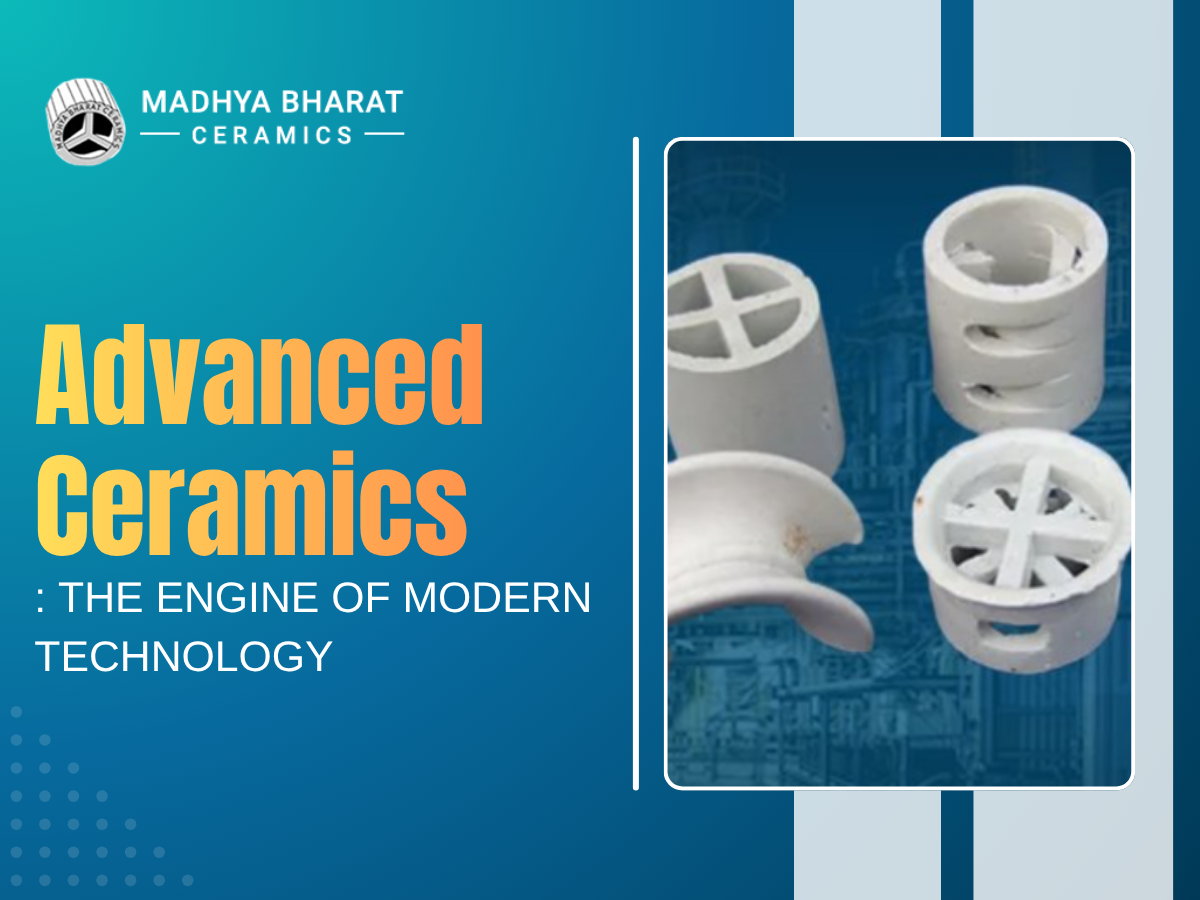
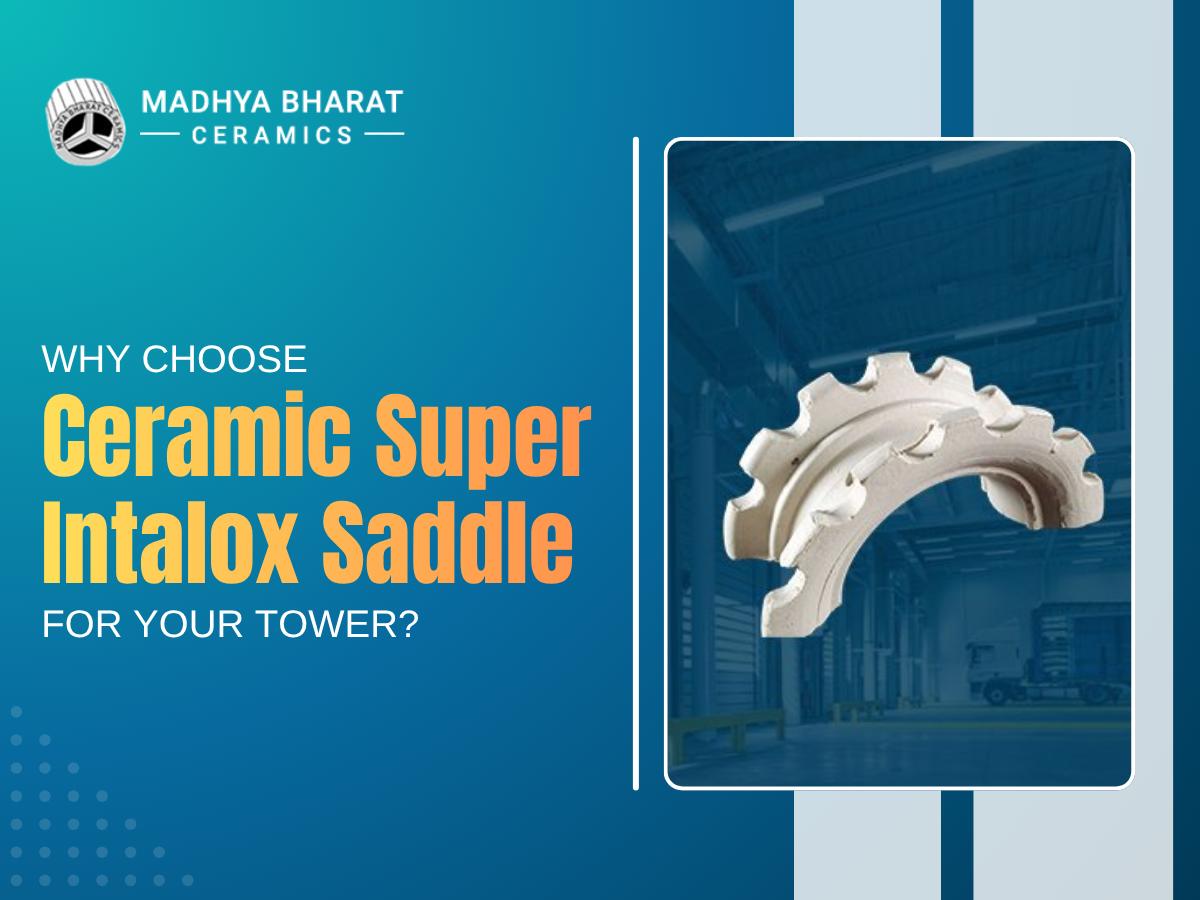
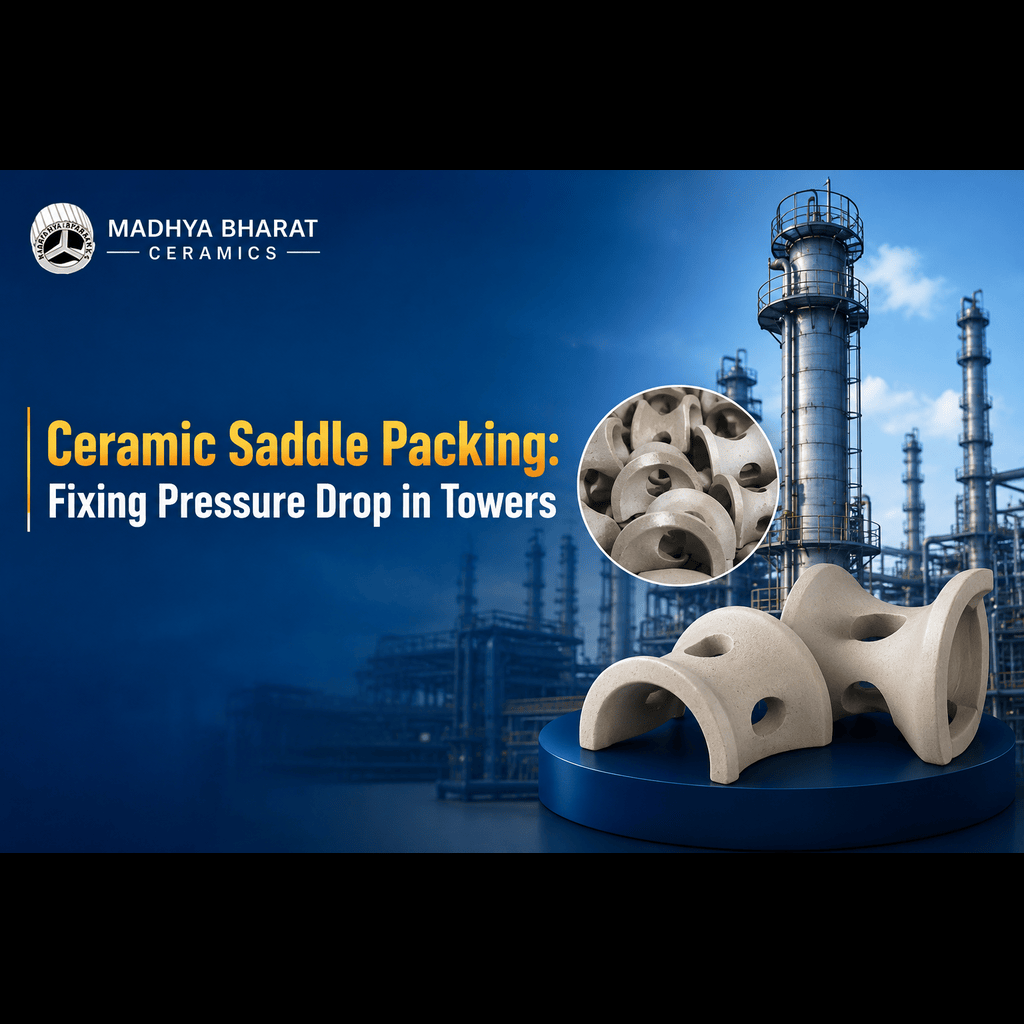
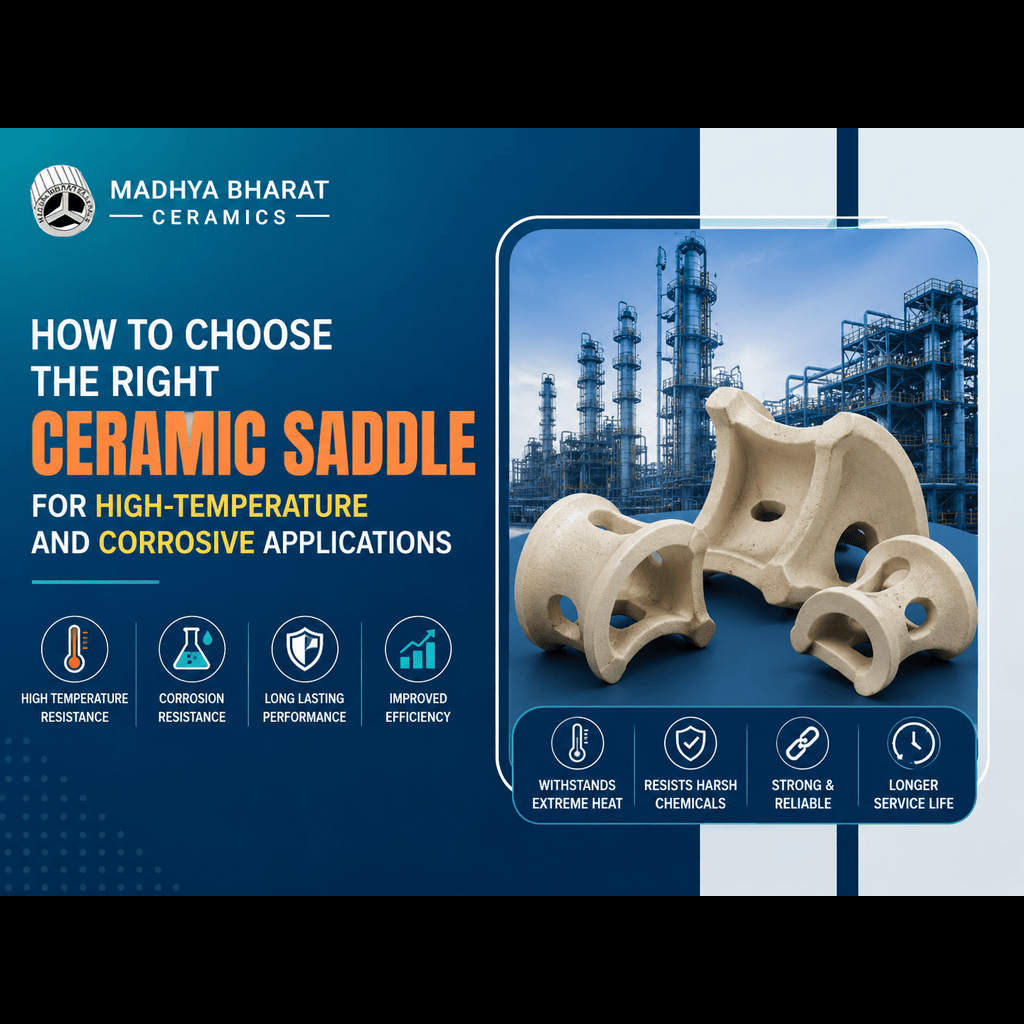
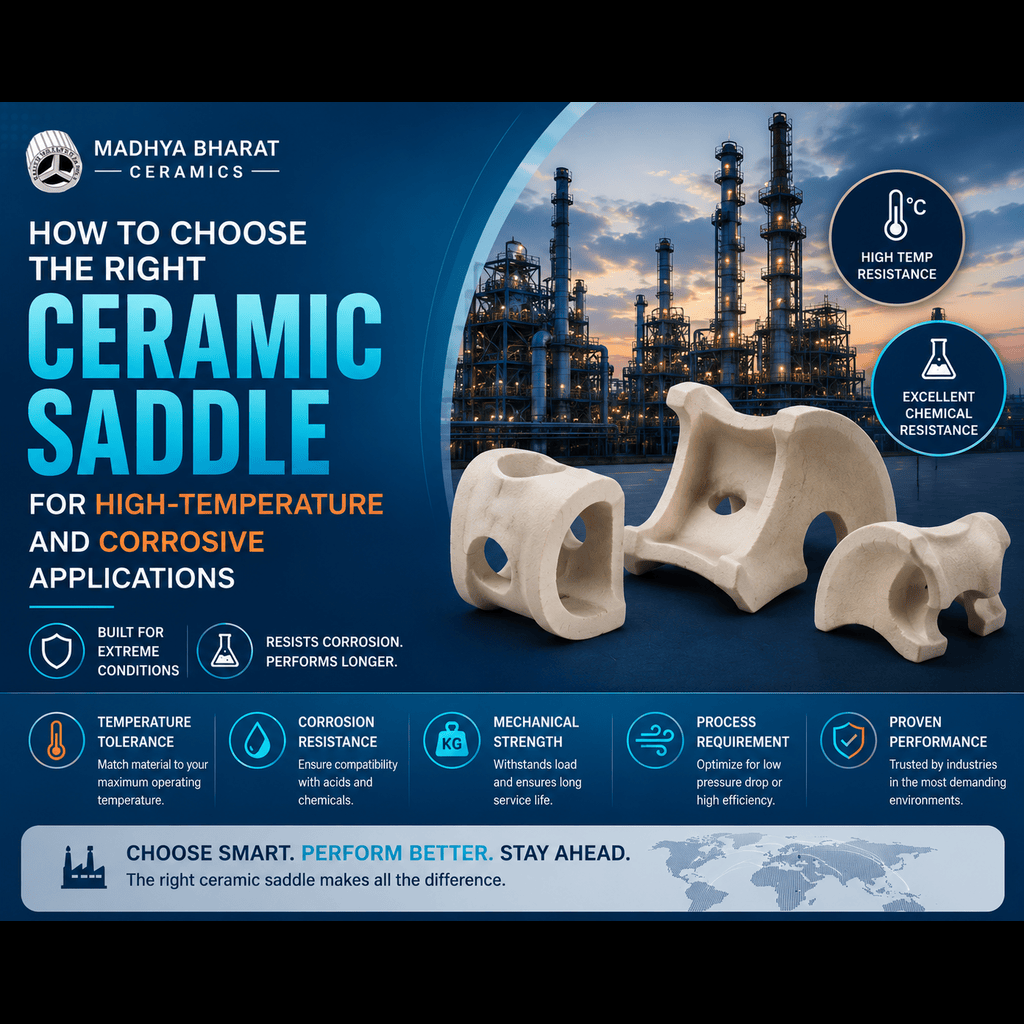
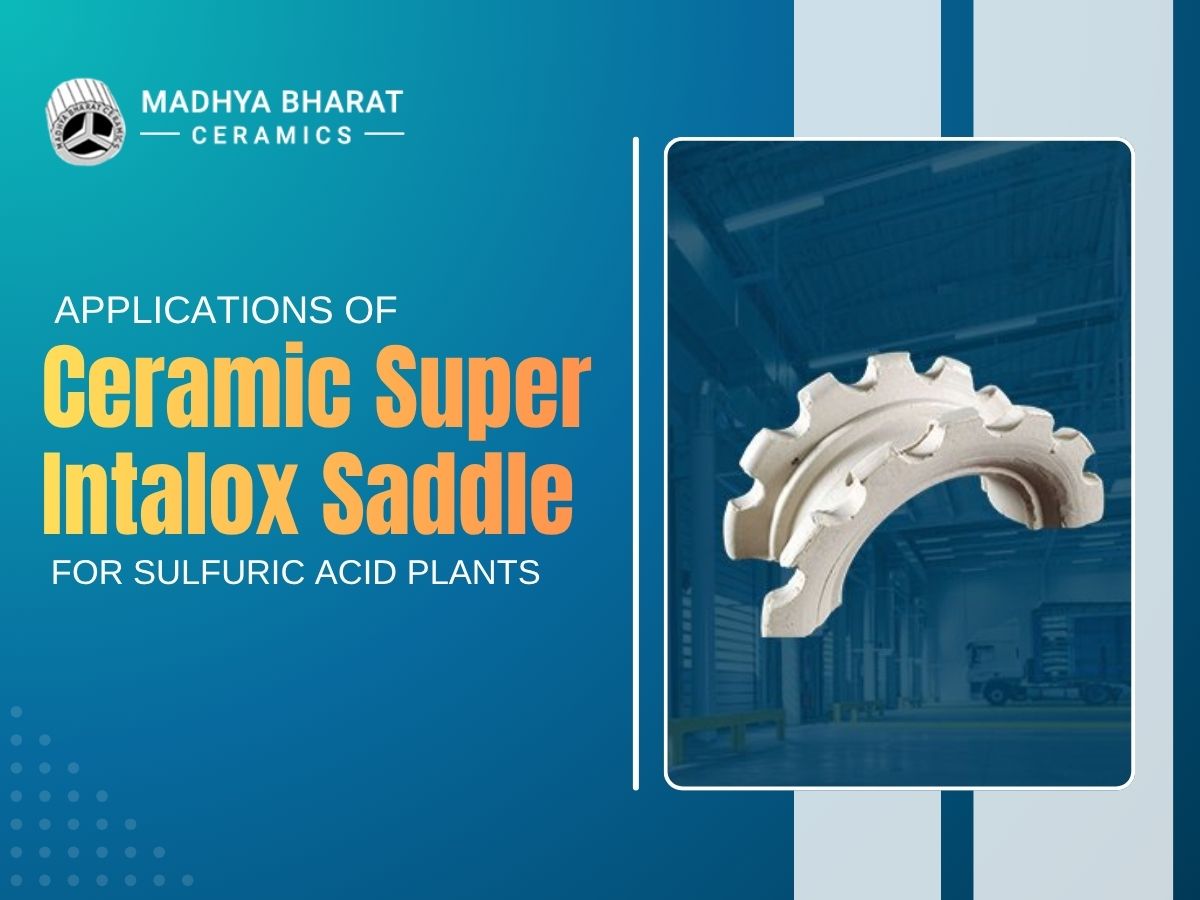
Ceramic Super Intalox Saddles are a type of random tower packing with a curved saddle shape. This shape allows multiple pieces to nest loosely without stacking flat against each other, which is a key advantage over older packing types like Raschig Rings.
The saddle geometry creates a large open surface for gas and liquid to contact while maintaining a high void fraction inside the packing bed. This combination of high surface area and high open volume is exactly what sulfuric acid absorption towers need to perform efficiently.
How Ceramic Super Intalox Saddles differ from other packing types:
- Higher surface area per cubic meter compared to Raschig Rings and plain saddles
- Lower pressure drop due to the open, non-nesting shape
- Better liquid spreading across the packing surface for improved wetting
- More consistent bed voidage, reducing channeling and dead zones
- Available in sizes from 13mm to 75mm for different column diameters and flow rates
The upgrade from Raschig Rings to Ceramic Super Intalox Saddles in absorption towers typically delivers a 20 to 35% improvement in mass transfer efficiency based on plant operating data reported by sulfuric acid producers.
Why Sulfuric Acid Plants Choose Ceramic Tower Packing Media
Sulfuric acid plants produce acid through the contact process, which involves absorbing sulfur trioxide (SO3) gas into concentrated sulfuric acid inside absorption towers. The conditions inside these towers are extremely aggressive.
Acid concentrations range from 93% to 99%. Temperatures at the top of the absorber can reach 60 to 80 degrees Celsius. The gas stream contains traces of SO3, water vapor, and other reactive compounds. In this environment, the packing material must be both chemically inert and physically robust.
Corrosion-resistant ceramic media is the natural choice because:
- Ceramic is unaffected by sulfuric acid at all commercial concentrations
- It does not corrode, dissolve, or contaminate the acid product
- High-fired ceramic withstands thermal cycling without cracking
- Ceramic maintains its shape and strength over many years of continuous service
- It meets the purity requirements of technical and battery-grade sulfuric acid production
Plastic packing cannot handle the temperatures or acid concentrations in sulfuric acid absorbers. Metal packing corrodes rapidly in concentrated acid service. Ceramic tower packing media is the only practical long-term solution.
Key Applications of Ceramic Super Intalox Saddles in Sulfuric Acid Plants
Ceramic Super Intalox Saddles are used in multiple tower positions within a sulfuric acid plant. Each application takes advantage of a different aspect of their performance.
1. Drying Tower Packing
Before SO2 gas enters the converter, it must be dried to remove moisture. The drying tower uses concentrated sulfuric acid as the drying medium. Ceramic Super Intalox Saddles packed in this tower provide the surface area needed for efficient moisture absorption while resisting the concentrated acid environment.
2. First Pass Absorption Tower
After conversion of SO2 to SO3 in the catalyst converter, the gas enters the first absorption tower. Here, SO3 is absorbed into 98 to 99% sulfuric acid. The packing must handle high SO3 concentration and exothermic heat release. Ceramic Super Intalox Saddles distribute the acid film evenly and withstand the heat generated during absorption.
3. Final Absorption Tower
Remaining SO3 from the second converter pass enters the final absorber. Efficient absorption here is critical for meeting emission standards. The gas-liquid contact enhancement properties of saddle packing ensure that SO3 absorption is complete, keeping stack emissions within regulatory limits.
4. Oleum Tower
Some plants produce oleum by absorbing SO3 into anhydrous sulfuric acid. Oleum is even more aggressive than standard sulfuric acid. Ceramic Super Intalox Saddles are one of the few packing types that tolerate oleum service reliably.
5. Mist Eliminators and Secondary Packing Beds
Secondary packing beds above the main absorber bed help capture acid mist before gas exits the tower. Smaller size Ceramic Super Intalox Saddles, typically 13mm or 25mm, are used in these beds for fine mist capture with minimal gas flow resistance.
Ceramic Super Intalox Saddles vs Other Ceramic Packing Types
| Packing Type | Surface Area (m²/m³) | Void Fraction | Pressure Drop | Acid Resistance | Best Use in H2SO4 Plants |
| Raschig Ring (25mm) | 190 | 73% | High | Good | General absorption (older plants) |
| Ceramic Pall Ring (25mm) | 220 | 78% | Medium | Good | Modern absorption towers |
| Intalox Saddle (25mm) | 255 | 77% | Low-Medium | Excellent | Drying and absorption towers |
| Super Intalox Saddle (25mm) | 280 | 79% | Low | Excellent | All tower positions in H2SO4 plants |
| Cascade Mini Ring (25mm) | 260 | 82% | Very Low | Good | High-throughput columns |
This comparison shows why Ceramic Super Intalox Saddles are the top choice for sulfuric acid applications. They offer the highest surface area among standard ceramic random packing types combined with low pressure drop and excellent acid resistance.
How Ceramic Super Intalox Saddle in Mandsaur Serves Global Acid Plants
Mandsaur in Madhya Pradesh has developed into a reliable manufacturing center for industrial ceramic saddles and other tower packing media. Ceramic Super Intalox Saddle in Mandsaur is produced using high-grade ceramic raw materials, high-temperature kiln firing, and quality control processes that meet international standards.
What buyers from global sulfuric acid plants receive when sourcing from Mandsaur:
- Consistent ceramic composition with documented acid resistance data
- Tight dimensional tolerances for predictable packing bed behavior
- Test certificates for surface area, bulk density, water absorption, and crush strength
- Available in 13mm, 25mm, 38mm, 50mm, and 75mm sizes
- Export packaging suitable for sea freight to international destinations
Ceramic Super Intalox Saddle exporters from Mandsaur supply sulfuric acid plants in the Middle East, North Africa, Southeast Asia, and South America. Indian manufacturers offer 30 to 40% cost savings compared to European suppliers while maintaining equivalent technical performance.
Benefits of Ceramic Super Intalox Saddles for Sulfuric Acid Absorption Towers
Plants that use Ceramic Super Intalox Saddles in their absorption towers consistently report the following operational benefits:
- Higher acid production rates: Better SO3 absorption means more product per unit of tower volume
- Lower SO3 tail gas emissions: Complete absorption keeps emissions within environmental limits
- Reduced acid mist carryover: Even liquid distribution reduces mist formation at the top of the absorber
- Longer packing service life: Ceramic inertness means no degradation in concentrated acid service
- Lower energy costs: Reduced pressure drop means less fan power for gas circulation
- Fewer tower shutdowns: Long-lasting packing reduces the frequency of tower inspection and repacking
These benefits directly improve both the economics and the environmental compliance of sulfuric acid plant operations.
How to Select the Right Size Ceramic Super Intalox Saddle for Your Tower
Selecting the correct packing size is as important as selecting the correct packing type. Here is a general guide:
- Towers below 300mm diameter: Use 13mm or 25mm saddles to minimize wall effects
- Towers from 300mm to 900mm diameter: Use 25mm or 38mm saddles for balanced performance
- Towers above 900mm diameter: Use 50mm or 75mm saddles to maintain efficiency at high flow rates
- Mist elimination beds: Use 13mm saddles for fine particle capture
- High-liquid-rate absorbers: Larger saddles reduce liquid backup and flooding risk
A qualified Ceramic Super Intalox Saddle supplier will review your tower data sheet and recommend the correct size and bed depth for your specific process conditions.
High-Performance Ceramic Packing Solutions for Sulfuric Acid Manufacturing
Beyond absorption towers, Ceramic Super Intalox Saddles are used in related applications within sulfuric acid manufacturing facilities:
- Tail gas scrubbers: Remove residual SO2 from plant exhaust before atmospheric release
- Acid cooler towers: Cool recirculating acid using air contact across the packing surface
- Weak acid concentration columns: Concentrate dilute sulfuric acid from secondary processes
- Effluent treatment systems: Neutralize and treat acidic wastewater before discharge
This range of applications confirms why Ceramic Super Intalox Saddle manufacturers in India supply complete packing packages for entire sulfuric acid plant projects rather than single towers.
Case Study: Absorption Tower Repacking at a Fertilizer-Grade Sulfuric Acid Plant, Andhra Pradesh
A sulfuric acid plant attached to a fertilizer manufacturing complex in Andhra Pradesh was producing 600 tonnes per day of sulfuric acid. The plant had two absorption towers packed with ceramic Raschig Rings installed during the original plant construction 16 years earlier.
Problems the plant was experiencing:
- SO3 tail gas emissions frequently exceeding CPCB limits
- High pressure drop across the absorption towers increasing fan energy consumption
- Visible packing degradation with ring breakage and fines accumulation
- Acid mist carryover causing corrosion damage in downstream equipment
The plant’s process engineering team evaluated replacement packing options and selected Ceramic Super Intalox Saddles from a Ceramic Super Intalox Saddle manufacturer in Mandsaur. Both absorption towers were repacked during a planned 10-day shutdown.
Results after 12 months of continuous operation following the repacking:
- SO3 tail gas emissions fell by 41% and consistently met CPCB standards
- Pressure drop across both towers reduced by 28%
- Fan energy consumption dropped by approximately 19%
- No packing degradation or fines accumulation observed during the first annual inspection
- Acid mist carryover eliminated, stopping further corrosion damage downstream
The plant manager reported that the repacking investment was recovered within 9 months through energy savings and reduced maintenance costs alone. The emissions compliance improvement provided additional value by removing the risk of regulatory penalties.
This case study directly demonstrates the applications of Ceramic Super Intalox Saddles in sulfuric acid plants and the real operational improvements they deliver.
FAQs Ceramic Super Intalox Saddles
Q1. What are Ceramic Super Intalox Saddles used for?
Ceramic Super Intalox Saddles are used as tower packing media in sulfuric acid absorption towers, chemical scrubbers, and distillation columns to improve gas-liquid contact, enhance mass transfer, and reduce pressure drop in industrial chemical processes.
Q2. How do Ceramic Super Intalox Saddles compare to Pall Rings?
Ceramic Super Intalox Saddles offer higher surface area and better liquid distribution than Pall Rings in most applications. In highly corrosive acid service, saddles also provide better resistance to impact and fragmentation than the windowed cylinder design of Pall Rings.
Q3. Where can I find a Ceramic Super Intalox Saddle manufacturer in India?
Reliable Ceramic Super Intalox Saddle manufacturers are based in Mandsaur in Madhya Pradesh, as well as in Morbi in Gujarat. These manufacturers supply to domestic chemical plants and export to international buyers in the Middle East, Africa, and Southeast Asia.
Q4. What sizes are Ceramic Super Intalox Saddles available in?
Standard sizes range from 13mm to 75mm. The most common sizes for sulfuric acid absorption towers are 25mm and 38mm. Size selection depends on tower diameter, gas flow rate, and required pressure drop.
Q5. How long do Ceramic Super Intalox Saddles last in sulfuric acid service?
In properly operated sulfuric acid absorption towers, Ceramic Super Intalox Saddles typically last 10 to 15 years. Correct acid temperature, concentration control, and proper installation are the main factors that determine service life.
Q6. Are Ceramic Super Intalox Saddles resistant to oleum?
Yes. High-fired ceramic saddles resist oleum as well as standard concentrated sulfuric acid. This makes them suitable for use in oleum towers and other high-concentration acid service within sulfuric acid manufacturing plants.
Q7. What is the surface area of Ceramic Super Intalox Saddles?
A 25mm Ceramic Super Intalox Saddle provides approximately 280 square meters of surface area per cubic meter of packed bed. This is significantly higher than plain Raschig Rings at 190 m²/m³ and contributes directly to better mass transfer performance.
Q8. Can Ceramic Super Intalox Saddles be exported from India?
Yes. Ceramic Super Intalox Saddle exporters in Mandsaur and other Indian manufacturing centers regularly export to sulfuric acid plants, fertilizer complexes, and chemical processing facilities in over 40 countries worldwide.
Conclusion
Ceramic Super Intalox Saddles are not just a packing option for sulfuric acid plants. They are the most technically sound choice for absorption towers that must handle concentrated acid, high temperatures, and strict emission limits simultaneously.
The case study from Andhra Pradesh proves what these saddles deliver in real production conditions. A plant that was repeatedly failing environmental compliance standards saw SO3 emissions drop by 41% after repacking with Ceramic Super Intalox Saddles from a Mandsaur manufacturer. Pressure drop fell by 28%, fan energy costs dropped by 19%, and the entire investment was recovered in under 9 months.
Ceramic Super Intalox Saddle in Mandsaur has become a trusted product source for acid plants across India and internationally because manufacturers there combine quality raw materials, consistent production standards, and export capability into a complete supply package. Buyers get internationally certified ceramic saddles at 30 to 40% lower cost than European alternatives, with full technical documentation and sizing support included.
The mass transfer optimization benefits of these saddles extend beyond sulfuric acid plants to any process involving gas absorption, scrubbing, or liquid-liquid contact in corrosive environments. Their combination of high surface area, low pressure drop, excellent acid resistance, and long service life makes them one of the most cost-effective investments a chemical plant engineer can specify.