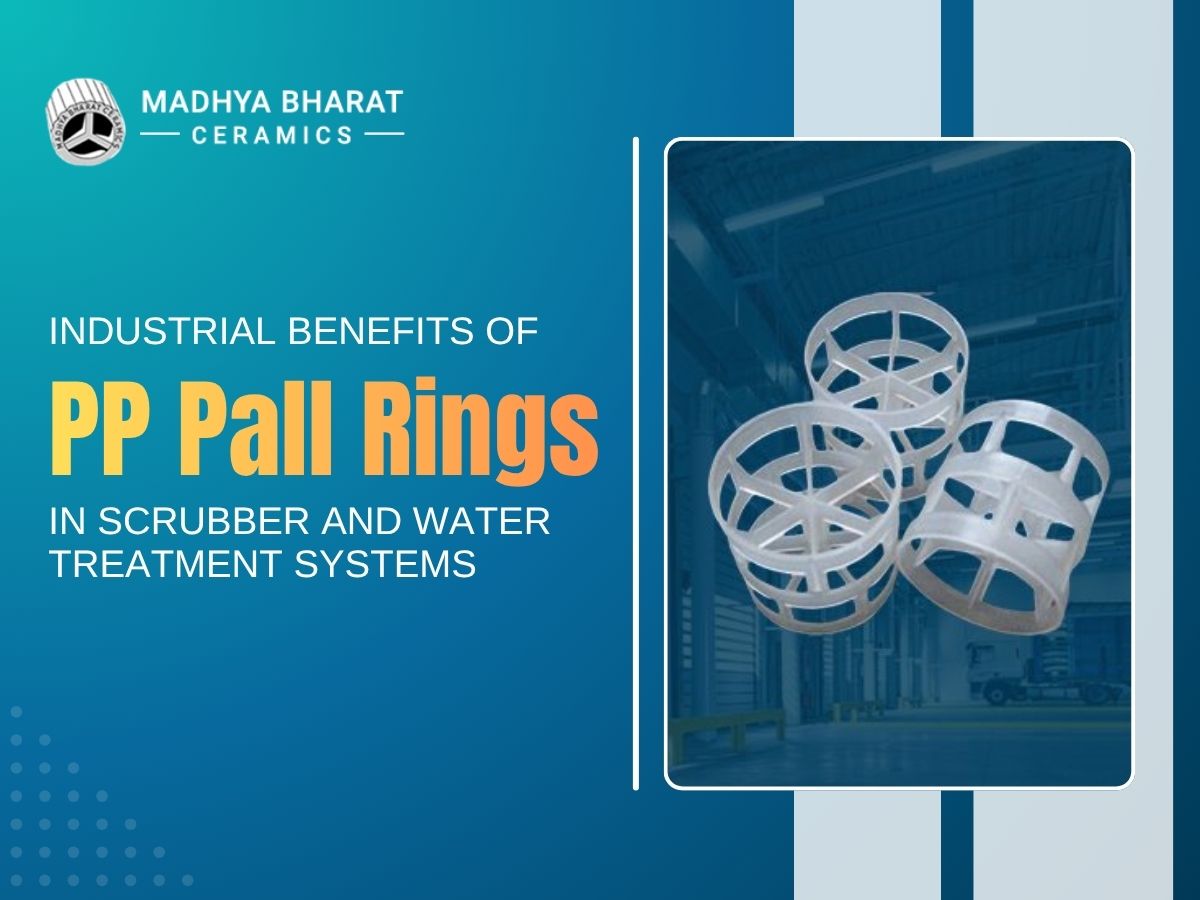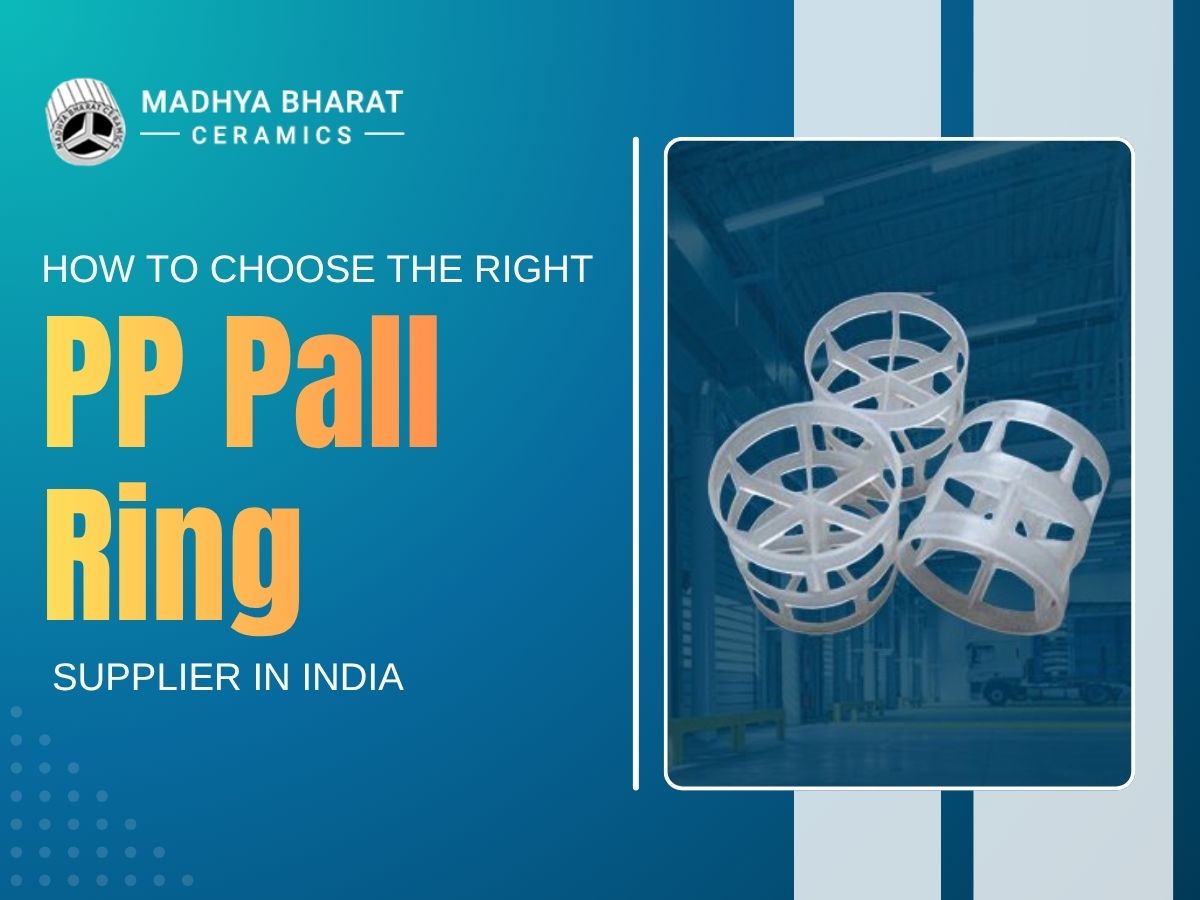
PP Pall Rings are one of the most widely used mass transfer packing materials in industrial towers today. They are made from polypropylene and are placed inside columns to create the surface area needed for gases and liquids to interact efficiently.
Fact: India’s chemical processing industry contributes over 7% to the national GDP according to the Indian Chemical Council. This sector relies heavily on tower packing solutions like PP Pall Rings for daily production. With hundreds of suppliers operating across the country, selecting the right PP Pall Ring manufacturer is a decision that directly affects your column efficiency, maintenance costs, and production uptime.
A low-quality ring made from substandard polypropylene can deform under heat, crack under mechanical load, or fail to deliver the expected surface area. Any of these failures results in reduced process efficiency and unplanned column shutdowns.
This guide gives you a clear, step-by-step approach to evaluating and selecting the best PP Pall Rings supplier for your specific industrial application.
What Are PP Pall Rings and How Do They Work in Industrial Towers?
PP Pall Rings are hollow cylindrical plastic pieces with small internal blades or fingers that point inward. These internal structures increase the effective surface area of each ring, allowing better contact between the gas rising up the column and the liquid flowing down.
This improved contact directly increases mass transfer efficiency, which means better separation, higher absorption rates, and more efficient use of energy in the process. The open structure of the ring also allows gas and liquid to pass through with minimal resistance, reducing pressure drop across the column.
PP Pall Ring Packing is used across many industrial processes:
- Gas absorption columns removing acids and pollutants from process streams
- Distillation columns separating mixtures by boiling point
- Stripping columns removing dissolved gases from liquids
- Cooling towers improving heat exchange between water and air
- Scrubber systems neutralizing harmful exhaust gases before release
The rings are available in sizes ranging from 15mm to 100mm, with the size selection depending on the column diameter and the required process performance.
8 Key Factors to Evaluate When Selecting a PP Pall Ring Manufacturer
Selecting a PP Pall Ring manufacturer is not just about finding the lowest price. You need a supplier who delivers consistent quality, technical support, and reliable delivery. Here are the eight most important factors to assess.
1. Material Quality and Certification
The polypropylene used to make the rings must be of industrial grade. Virgin polypropylene offers better mechanical properties and chemical resistance compared to recycled material. Ask your PP Pall Rings manufacturer for material certificates confirming the grade and properties of the plastic used.
2. Dimensional Accuracy and Consistency
Rings that vary in size from batch to batch create uneven packing density inside the column. This leads to channeling, where liquid finds shortcuts through the packing instead of distributing evenly. Confirm that your supplier maintains tight dimensional tolerances and conducts regular quality checks.
3. Physical Property Data
A professional PP Pall Rings supplier will provide documented data for each size, including:
- Surface area per cubic meter (m²/m³)
- Void fraction percentage
- Packing factor
- Bulk density (kg/m³)
- Compressive strength
These numbers are essential for column design calculations. A supplier who cannot provide them is not equipped to support your engineering team properly.
4. Size Range Availability
Your process may require a specific ring size. A supplier with a broad size range gives you flexibility, especially for projects with multiple column diameters. Standard sizes from PP Pall Ring manufacturers in India include 15mm, 25mm, 38mm, 50mm, 76mm, and 100mm.
5. Production Capacity and Lead Time
For large projects, confirm that the manufacturer can supply the required volume within your project schedule. Delays in packing supply can hold up entire plant commissioning timelines. Ask for production capacity data and average lead times for standard orders.
6. Technical Support
The best PP Pall Ring manufacturers offer engineering support to help you select the right size and calculate the required packing volume. This support is especially valuable for new column designs or for plants replacing older packing types.
7. Quality Management System
ISO 9001 certification indicates that the manufacturer follows documented quality management processes. This reduces the risk of receiving defective products and gives you a basis for raising quality complaints if issues arise.
8. Export Experience (If Applicable)
If you are an international buyer or need a PP Pall Ring exporter, confirm that the supplier has experience with export documentation, international shipping, and compliance with destination country import requirements.
Comparing Types of PP Pall Ring Suppliers in India
Not all Pall ring suppliers India operate at the same level. Here is a simple comparison to help you understand the different categories:
| Supplier Type | Strengths | Limitations |
| Large Scale Manufacturer | High volume capacity, consistent quality, ISO certified | Minimum order quantities may be higher |
| Small Regional Supplier | Lower MOQ, flexible terms | May lack certification and technical support |
| Trading Company | Wide product range, fast availability | Products sourced from multiple manufacturers, quality variable |
| Manufacturer-Exporter | Competitive pricing, export experience, full documentation | May require lead time for export orders |
For most industrial buyers, a PP Pall Ring manufacturer who also handles direct supply is the most reliable option. Trading companies can be useful for urgent small orders but may not provide the same quality consistency as working directly with the manufacturer.
PP Pall Ring in Mandsaur: A Trusted Manufacturing Hub
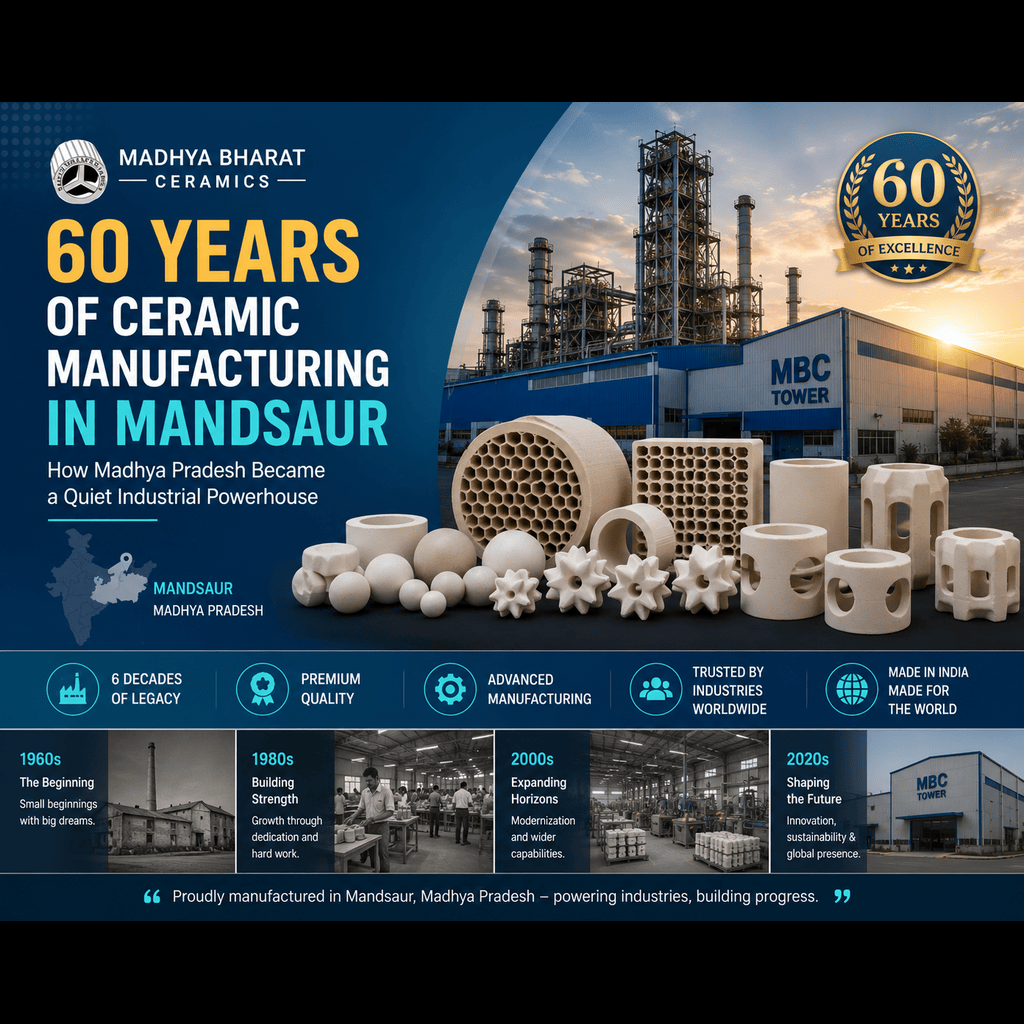
PP Pall Ring in Mandsaur refers to the industrial ceramics and plastics manufacturing activity centered in Mandsaur, Madhya Pradesh. This region has developed into a recognized hub for industrial packing materials, including PP Pall Rings.
Manufacturers in Mandsaur benefit from established supply chains for raw polypropylene, experienced production workforces, and proximity to major industrial markets in central and western India. Several manufacturers here also operate as PP Pall Ring exporters in Mandsaur, supplying to customers in the Middle East, Southeast Asia, and Africa.
Buyers from across India choose PP Pall Rings in India sourced from Mandsaur for several reasons:
- Competitive pricing due to lower regional production costs
- Availability of multiple sizes and grades from a single supplier
- Faster delivery to central and western Indian industrial clusters
- Export-ready suppliers with documentation support for international orders
When visiting or evaluating a PP Pall Ring manufacturer in Mandsaur, ask to inspect production facilities, review quality control records, and request sample products for testing before placing large orders.
Where Can I Buy Pall Rings for an Absorption Process in India?
This is one of the most commonly asked questions by plant engineers and procurement professionals. The answer depends on your specific process requirements, order volume, and timeline.
For chemical process packing components used in acid absorption, the most important requirement is chemical resistance. Standard PP Pall Rings made from virgin polypropylene are suitable for most acid absorption applications at temperatures below 100°C.
Here is a step-by-step buying process for sourcing PP Pall Rings in India:
- Step 1: Define your requirements. Know your column diameter, packing volume needed, operating temperature, and the chemicals in your process.
- Step 2: Search for PP Pall Ring manufacturers in India with ISO certification and documented physical property data.
- Step 3: Request quotations from at least two or three suppliers, including technical data sheets with each quote.
- Step 4: Compare not just price but also material grade, lead time, minimum order quantity, and after-sales support.
- Step 5: Request samples before placing a large order, especially if you are working with a new supplier.
- Step 6: Confirm delivery terms, payment conditions, and what documentation will accompany the shipment.
Following this process protects you from quality surprises and ensures you receive packing that performs as expected in your column.
High Efficiency Column Packing: How PP Pall Rings Compare to Other Options
When evaluating high efficiency column packing options, it helps to understand where PP Pall Rings fit relative to alternatives:
| Packing Type | Material | Temperature Limit | Chemical Resistance | Cost Level |
| PP Pall Ring | Polypropylene | Up to 100°C | Excellent for most chemicals | Low to Medium |
| Ceramic Pall Ring | Alumina / Porcelain | Above 1000°C | Excellent, including strong acids | Medium |
| Metal Pall Ring | Stainless Steel | Above 500°C | Good, depends on alloy | High |
| PVDF Pall Ring | PVDF Plastic | Up to 150°C | Very high, for strong oxidizers | High |
| Ceramic Raschig Ring | Alumina | Above 1000°C | Excellent | Medium |
For most standard chemical and industrial applications at moderate temperatures, PP Pall Ring Packing delivers the best balance of performance, chemical resistance, and cost. For high-temperature or highly aggressive chemical environments, ceramic or metal alternatives should be considered.
Case Study
Background: A pharmaceutical solvent recovery plant in Gujarat was sourcing PP Pall Rings from a local trading company. The plant operated a distillation column for recovering ethanol from process streams.
Challenge: After 14 months of operation, the plant noticed that column separation efficiency had dropped. A physical inspection during a maintenance shutdown revealed that many rings had deformed and some had cracked. The deformed rings had reduced the void fraction in the packed bed, causing channeling and uneven liquid distribution.
Investigation revealed that the rings supplied by the trading company were made from a recycled polypropylene blend rather than virgin grade polypropylene. The recycled material had a lower softening point and was not suitable for the operating temperature of the column.
Solution: The plant procurement team contacted a certified PP Pall Ring manufacturer directly. They requested material certificates confirming virgin polypropylene grade and physical property data for the 38mm rings required. After reviewing two supplier options, they selected a manufacturer offering ISO certification, full technical data sheets, and a production facility inspection visit.
New packing was installed during the next planned shutdown.
Results after 30 months of operation:
- Column separation efficiency returned to design specification within the first month of operation
- No deformation or cracking observed during intermediate inspection at 18 months
- Annual packing replacement cost eliminated for the monitoring period
- Ethanol recovery yield improved by approximately 8% compared to the degraded packing performance
- Plant maintenance team confirmed the new supplier’s technical support was a significant improvement over the previous trading company arrangement
Lesson: Buying PP Pall Rings through a trading company without verifying material grade and manufacturer certification is a false economy. Working directly with a qualified PP Pall Rings manufacturer who provides full documentation and technical support protects your column performance and your process investment.
Frequently Asked Questions About PP Pall Ring
Q1. What is a PP Pall Ring and what is it used for?
A PP Pall Ring is a hollow plastic ring made from polypropylene, used as random packing inside industrial towers. It creates a large surface area for gas and liquid contact, improving absorption, distillation, and stripping efficiency in chemical processing columns.
Q2. How do I choose the right size PP Pall Ring for my column?
A general guideline is to use a ring size no larger than one-eighth of the column internal diameter. The correct size also depends on gas and liquid flow rates, required separation efficiency, and acceptable pressure drop. Consult your PP Pall Ring manufacturer’s technical team for accurate sizing recommendations.
Q3. What is the difference between virgin and recycled PP Pall Rings?
Virgin polypropylene rings are made from new, unused plastic with consistent mechanical and chemical properties. Recycled PP rings may have variable properties, lower temperature resistance, and reduced chemical durability. For industrial process applications, virgin grade rings from a certified PP Pall Ring manufacturer are always recommended.
Q4. How long do PP Pall Rings last in a distillation column?
With correct material selection and careful installation, PP Pall Rings typically last 3 to 5 years or longer in standard distillation applications. Service life depends on operating temperature, chemical exposure, and mechanical handling during installation.
Q5. Can I source PP Pall Rings from a manufacturer in Mandsaur for international delivery?
Yes. Several PP Pall Ring exporters in Mandsaur supply to international markets including the Middle East, Southeast Asia, and Africa. They provide competitive pricing, export documentation, material certificates, and appropriate packaging for international shipments.
Q6. What certifications should a PP Pall Ring supplier have?
Look for ISO 9001 certification as a minimum standard. The supplier should also provide material test certificates, dimensional inspection reports, and physical property data for each product size. These documents confirm the product meets your specification before delivery.
Q7. What is the minimum order quantity for PP Pall Rings from Indian manufacturers?
Minimum order quantities vary between suppliers. Large-scale PP Pall Ring manufacturers may have higher minimums suited to bulk industrial orders. Smaller regional suppliers may accommodate smaller quantities. Confirm MOQ, lead time, and pricing together when requesting a quotation.
Q8. Are PP Pall Rings suitable for acid absorption columns?
Yes. Standard PP Pall Rings made from virgin polypropylene are chemically resistant to most acids including hydrochloric acid, sulfuric acid at moderate concentrations, and many organic acids at temperatures below 100°C. For stronger acid concentrations or higher temperatures, confirm chemical compatibility with your PP Pall Ring supplier before ordering.
Conclusion
Choosing the right PP Pall Ring supplier in India requires more than comparing prices on a product list. It means evaluating material quality, certification, technical support, production capacity, and delivery reliability as a complete package. Whether you are sourcing PP Pall Rings in India for a new column installation or replacing worn packing in an existing tower, the supplier you choose directly affects how well your process performs. PP Pall Ring manufacturers in hubs like Mandsaur offer a strong combination of quality, competitive pricing, and export capability. Taking the time to evaluate suppliers properly, request material data, and verify certifications before placing an order is the most reliable path to long-term column performance and reduced maintenance costs.