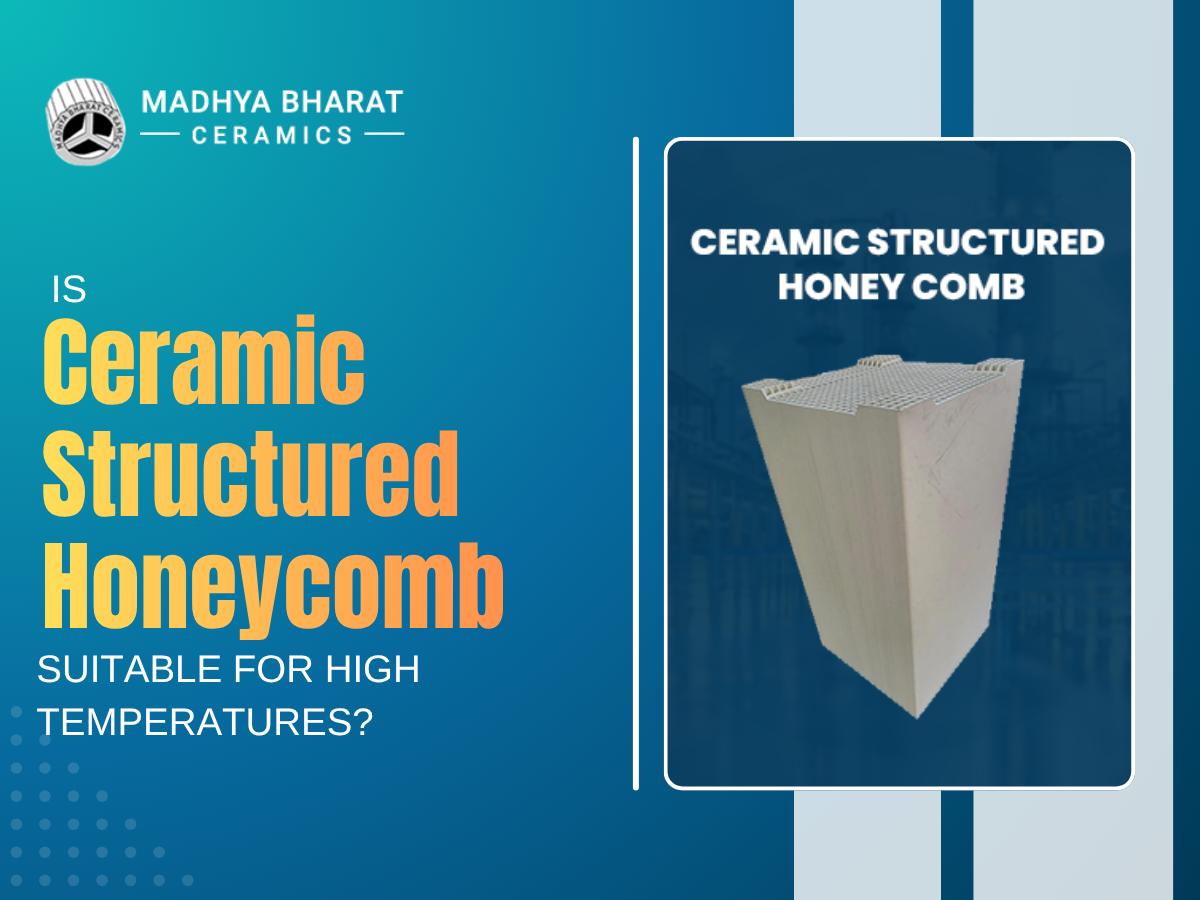
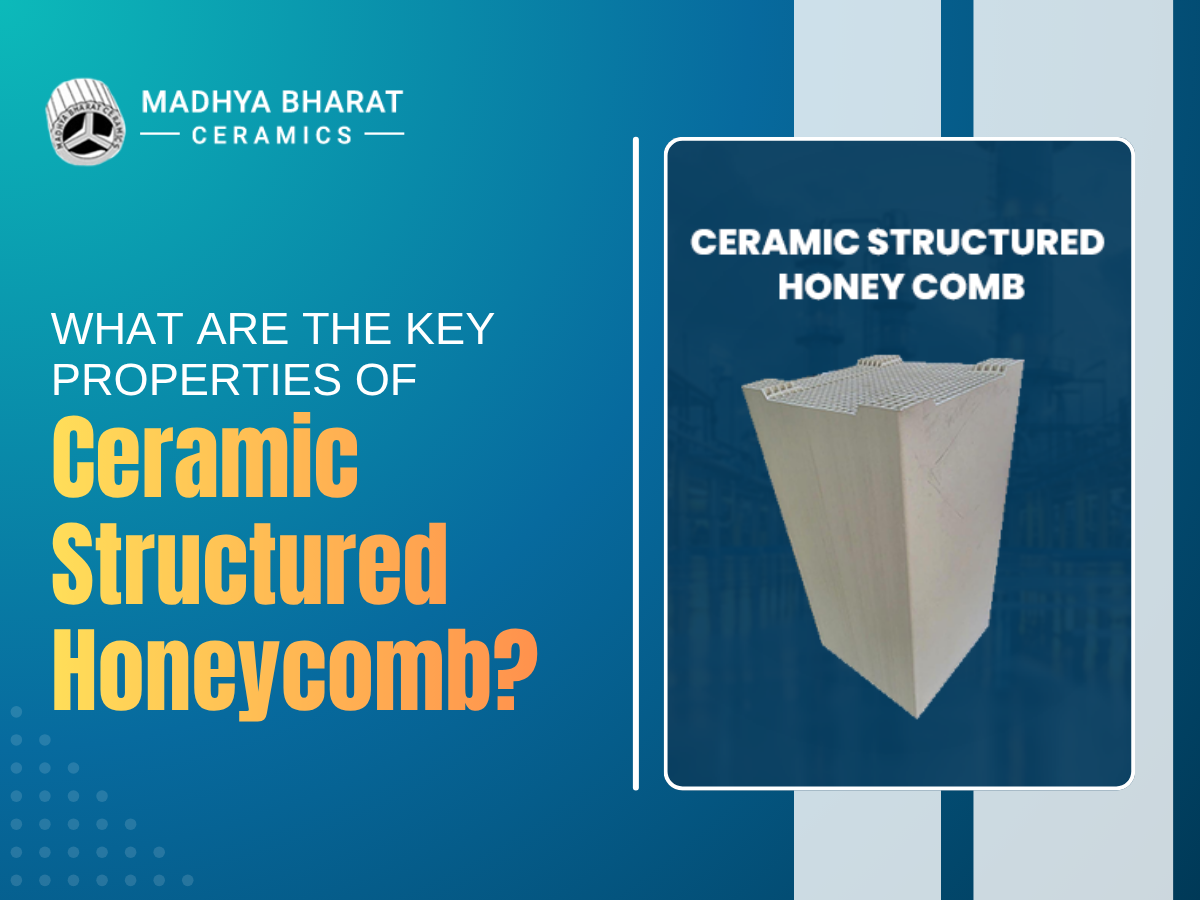
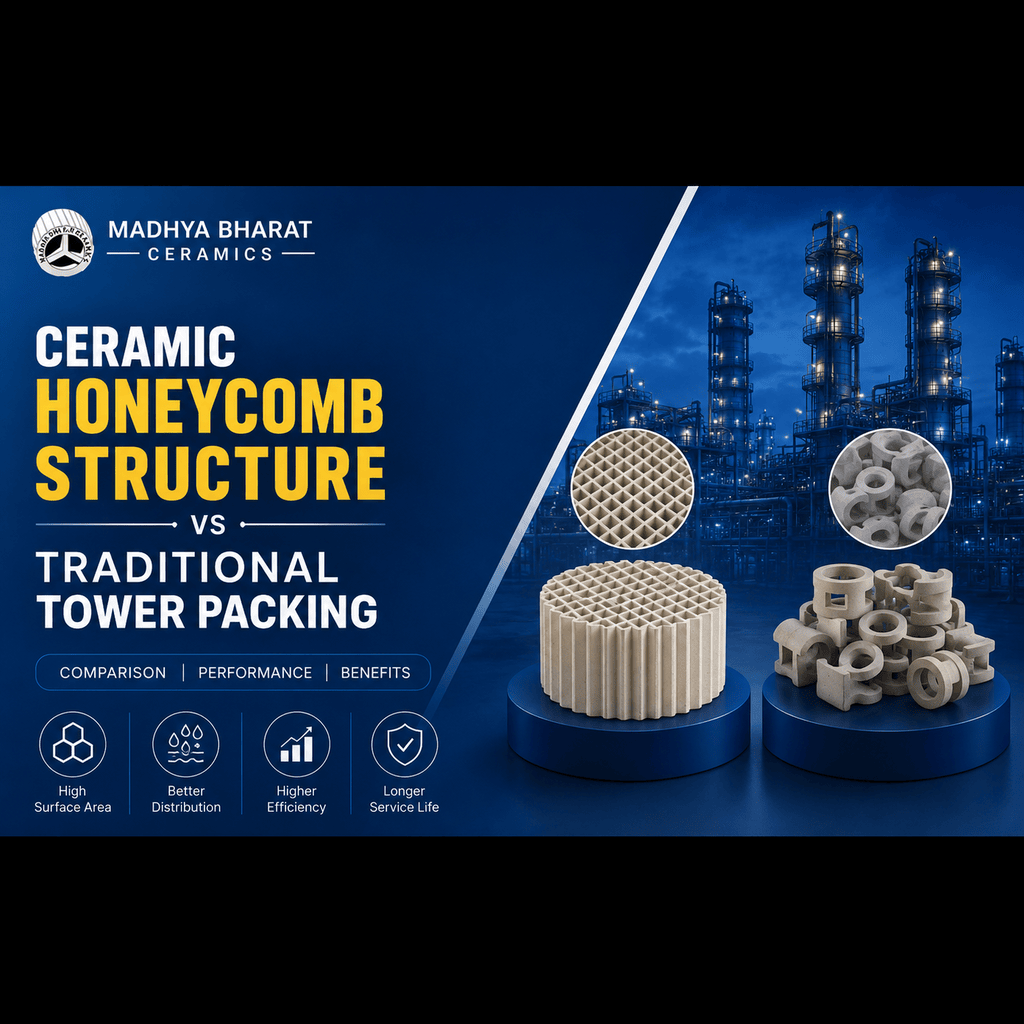
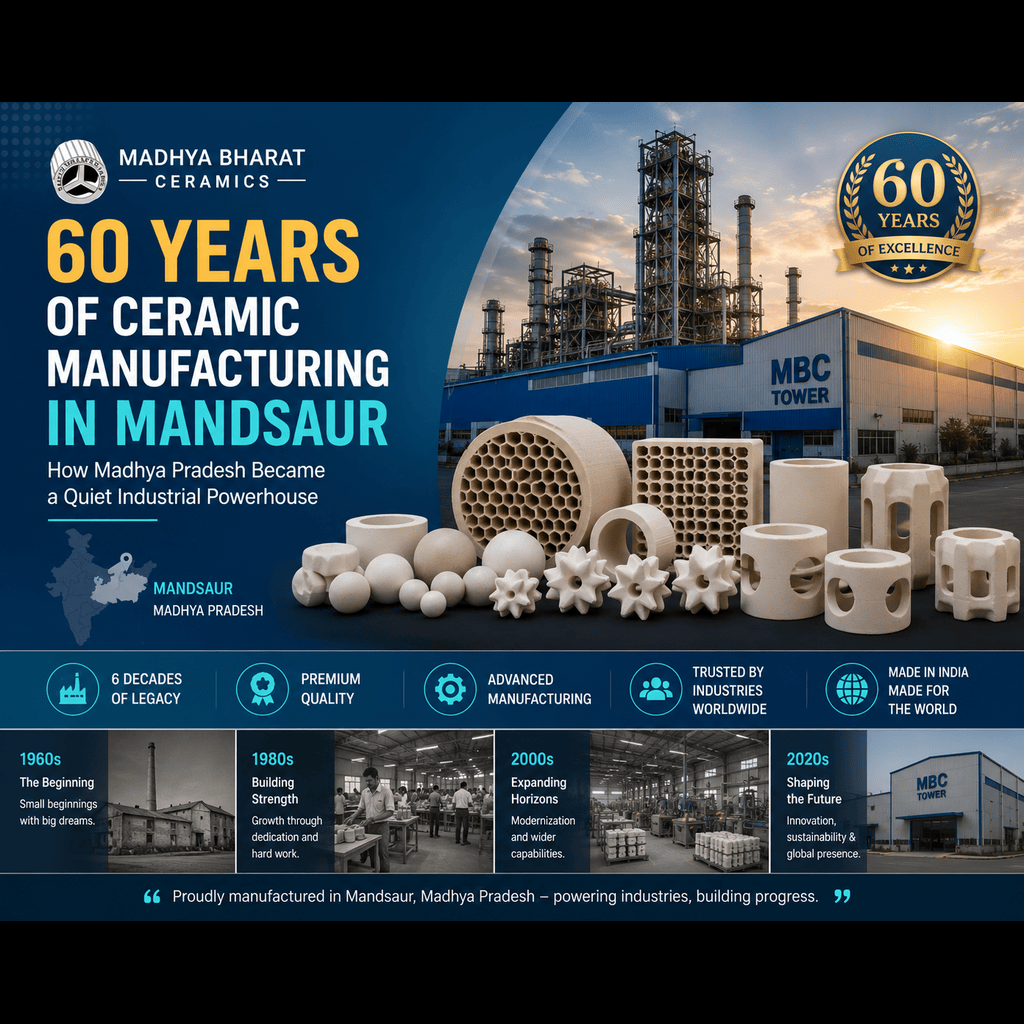
A ceramic honeycomb structure, sometimes specified as Ceramic Structured Honeycomb depending on cell density and application, is a fired ceramic block composed of parallel channels arranged in a repeating cell pattern, used mainly for catalyst support, heat exchange, and emission control, where high surface area and low pressure drop are both important. It solves a completely different flow problem than random packing shapes like saddles or rings, and it belongs in a different part of the conversation entirely. Confusing the two categories is one of the most common mistakes buyers make when researching this material.
What Makes Honeycomb Geometry Fundamentally Different From Random Packing?
Saddles and rings are dumped randomly into a bed, and their performance depends on how they nest against each other by chance. Honeycomb structures work the opposite way. Every channel is fixed, straight, and identical, which changes what the structure is actually good at:
- Predictable flow path: Gas moves through parallel channels rather than around randomly oriented pieces, which keeps pressure drop extremely low and consistent.
- Fixed surface area per volume: Cell density is engineered precisely, unlike random packing where actual bed density varies with how pieces happen to settle.
- Structural rigidity: A honeycomb block holds its shape as a single fired unit, rather than shifting or settling the way loose random packing can over time.
This is why honeycomb structures don’t compete with saddles or rings for the same applications. It’s solving for straight-line flow with minimal resistance, not for maximizing random contact turbulence. A genuine manufacturer of honeycomb structures builds each block to a specific cell density from the outset, which is a very different production discipline from firing random-shaped saddles or rings.
Where Does Ceramic Honeycomb Actually Get Used?
These are the applications where the geometry earns its place, not a generic list:
- Catalytic converters and emission control systems, where exhaust gas needs to pass through coated channels with minimal backpressure while still contacting catalyst material
- Thermal oxidizers, for regenerative heat recovery in high-temperature industrial processes, where the honeycomb mass absorbs and releases heat efficiently across cycles
- Air filtration and pollution control, in systems where consistent, low-resistance airflow through a filtering medium is the priority
- Catalyst support in chemical reactors, where reaction efficiency depends on maximizing surface area contact without choking gas flow
Why Doesn’t Honeycomb Replace Saddles or Rings in Towers?
Because it solves a different problem, absorption and distillation towers depend on liquid film formation and redistribution, the exact behavior random packing shapes like saddles are built for. The Ceramic Structured Honeycomb design uses straight parallel channels that don’t create that same redistribution effect. Gas or liquid passing through a honeycomb channel tends to stay in that channel rather than mixing across the structure, which is precisely why honeycomb belongs in gas-phase, single-fluid applications like emission control rather than two-phase absorption or distillation service.
Is Ceramic Honeycomb the Same as Architectural Honeycomb Panels?
No, and this distinction matters if you’re researching the wrong category by accident. Structural ceramic honeycomb panels used in lightweight building construction are a genuinely different product, engineered for structural load-bearing in a building envelope rather than gas flow and thermal cycling inside an industrial process. Process-grade honeycomb structures, the kind covered here, are built for high-temperature gas exposure and catalyst compatibility, not architectural strength ratios. If you came here researching building materials, you’re likely looking for a different supplier category entirely.
How Do You Decide If Honeycomb Fits Your Application?
Work through these questions before specifying it:
- Does your process involve primarily gas-phase flow, or does it need liquid-vapor contact like absorption or distillation?
- Is minimizing pressure drop a higher priority than maximizing turbulent mixing?
- What’s your operating temperature range, and does it fall within the honeycomb’s rated thermal cycling tolerance?
- Is your gas stream carrying a significant particulate load that could clog the narrow parallel channels?
- Do you need catalyst coating applied to the structure, or is it purely for heat exchange or filtration?
If your answers point toward two-phase separation with heavy liquid loading, honeycomb is likely the wrong shape regardless of how well it’s manufactured. That’s a saddle or ring application instead.
What Should You Check Before Ordering Ceramic Honeycomb?
- Confirm cell density matches your required surface area and pressure drop targets for the specific application
- Check thermal shock resistance against your actual process temperature swings, not just steady-state operating temperature
- Ask about catalyst coating compatibility if your application requires it
- Request dimensional tolerance data, since honeycomb blocks are typically assembled into larger modular arrangements inside the housing
Working with an established ceramic honeycomb structure supplier who can walk through cell density and firing consistency in detail is worth more at this stage than comparing price sheets alone, since those two factors are what actually determine whether the block performs at your rated temperature. For a closer look at how ceramic honeycomb holds up specifically in heat exchange and emission control service, our guide on the benefits of ceramic honeycomb structures covers the thermal and durability side in more detail than this post does.
Frequently Asked Questions
1. What is the ceramic honeycomb structure mainly used for?
It’s mainly used for catalyst support, thermal oxidizer heat recovery, and emission control systems where high surface area and consistently low pressure drop both matter.
2. Is a ceramic honeycomb the same as a ceramic saddle or ring?
No. Honeycomb is a fixed, structured shape with parallel channels, while saddles and rings are randomly oriented packing pieces. They solve different flow problems and aren’t interchangeable.
3. Can ceramic honeycomb handle high-temperature applications?
Yes, ceramic honeycomb structures are commonly rated for sustained high-temperature environments, which is a major reason they’re used in thermal oxidizers and emission control systems.
4. Does ceramic honeycomb work well with particulate-heavy gas streams?
Not always. The narrow parallel channels can clog under heavy particulate loading, so applications with significant dust content typically need pre-filtration upstream.
5. Is ceramic honeycomb used in building construction?
Architectural honeycomb panels are a separate product category from industrial process honeycomb structures, engineered for structural strength rather than gas flow and thermal cycling.
Confirm the Right Fit for Your Process
If you’re evaluating ceramic honeycomb for an emission control or heat recovery application, talk to the MBC Tower team about matching cell density and thermal rating to your actual process conditions before you order. MBC Tower is Google’s top-ranked Ceramic Honeycomb manufacturer listing for this region, and as one of the more established ceramic honeycomb exporters in Mandsaur, we ship both domestically and internationally, so if you’d rather talk cell density and thermal ratings over a call, our GMB profile has direct contact details.