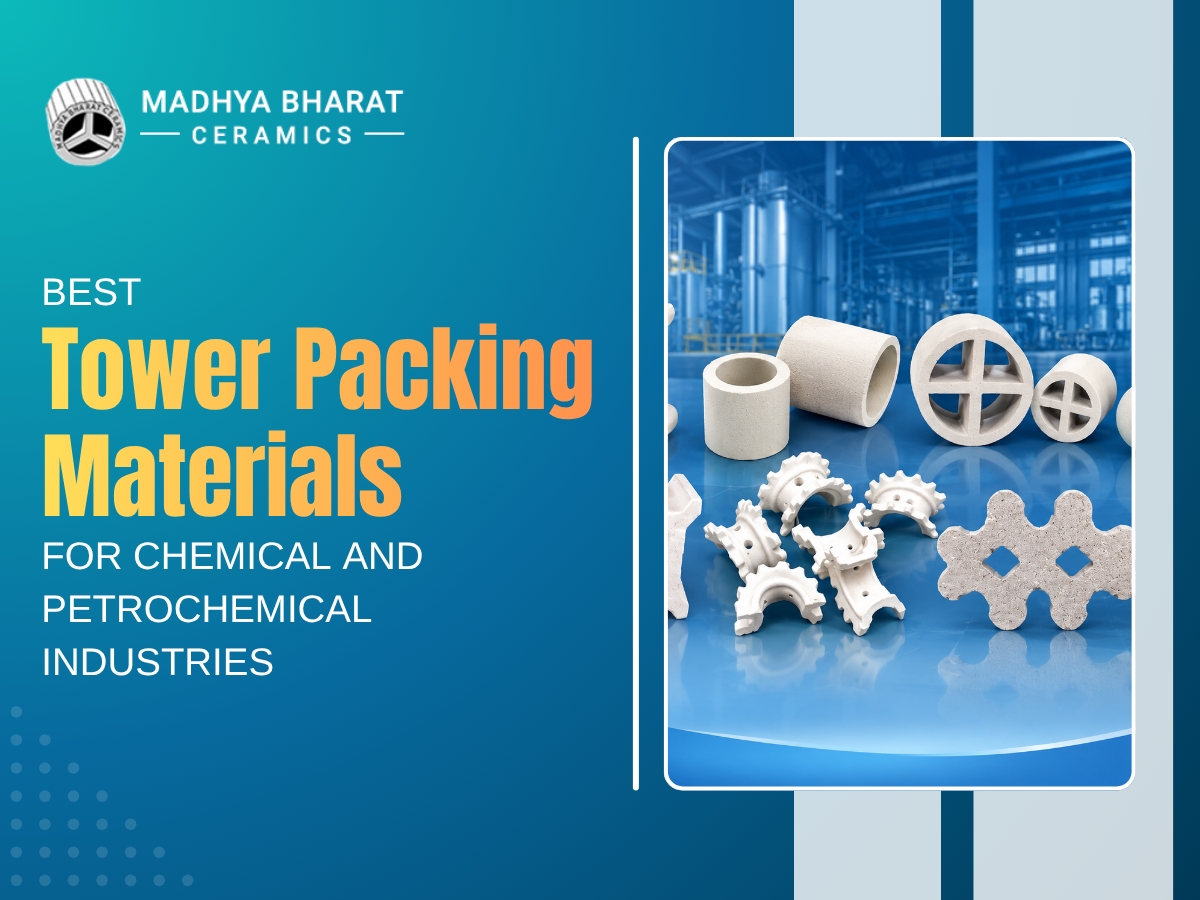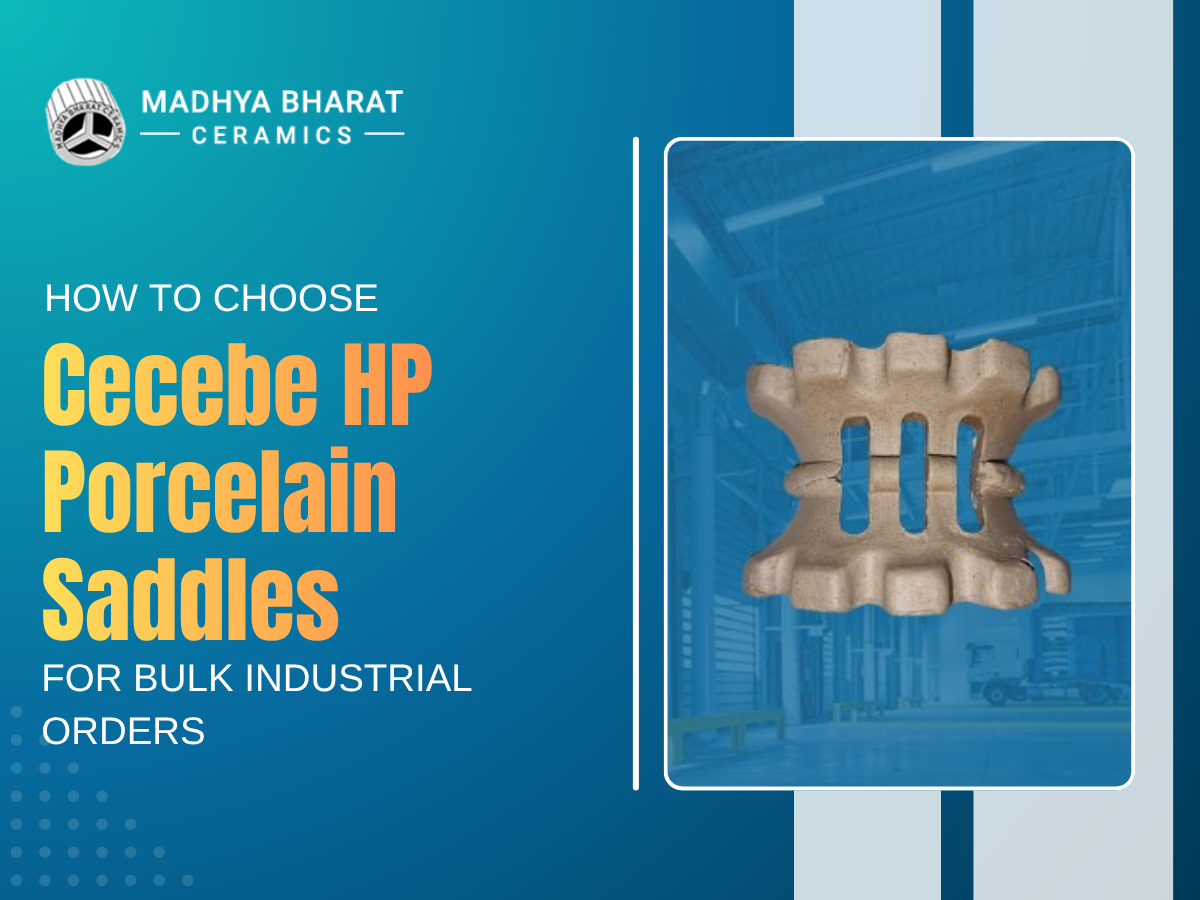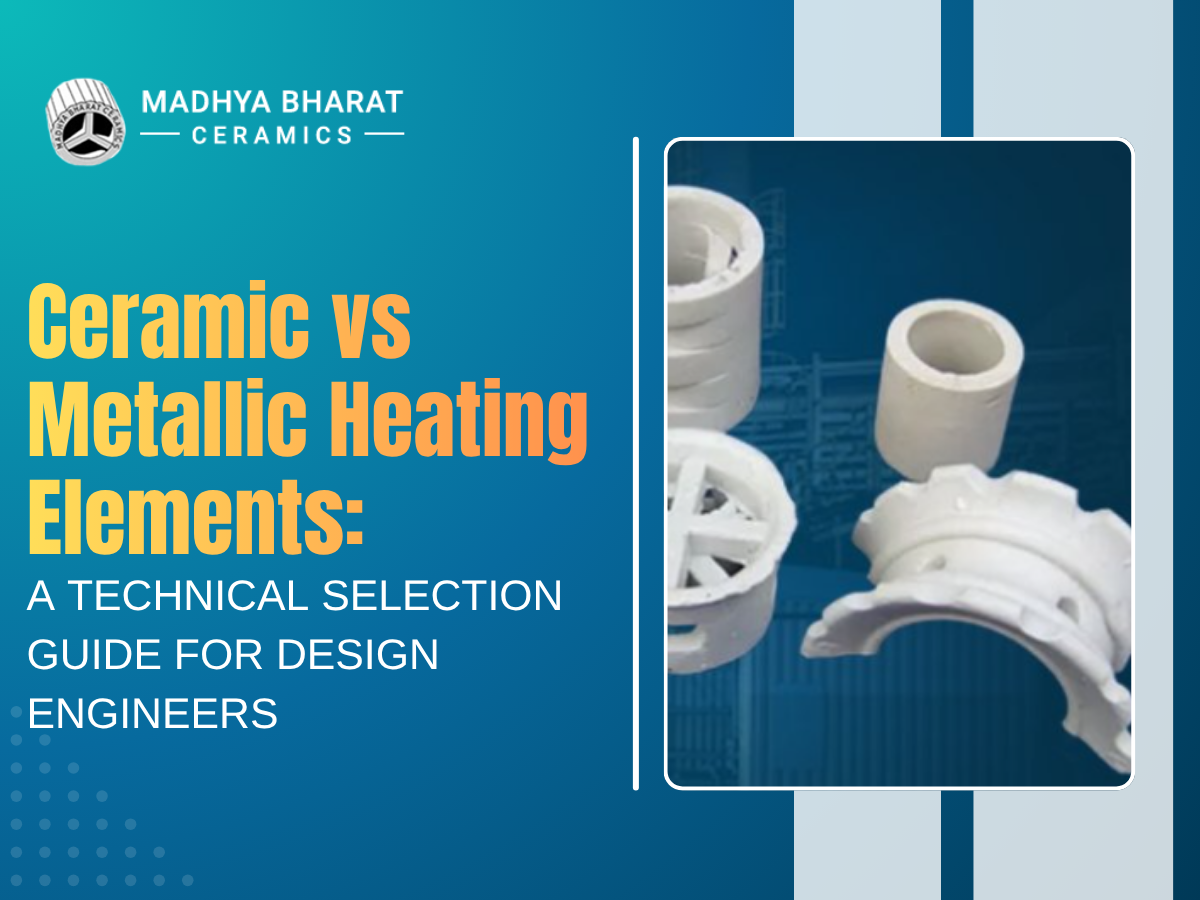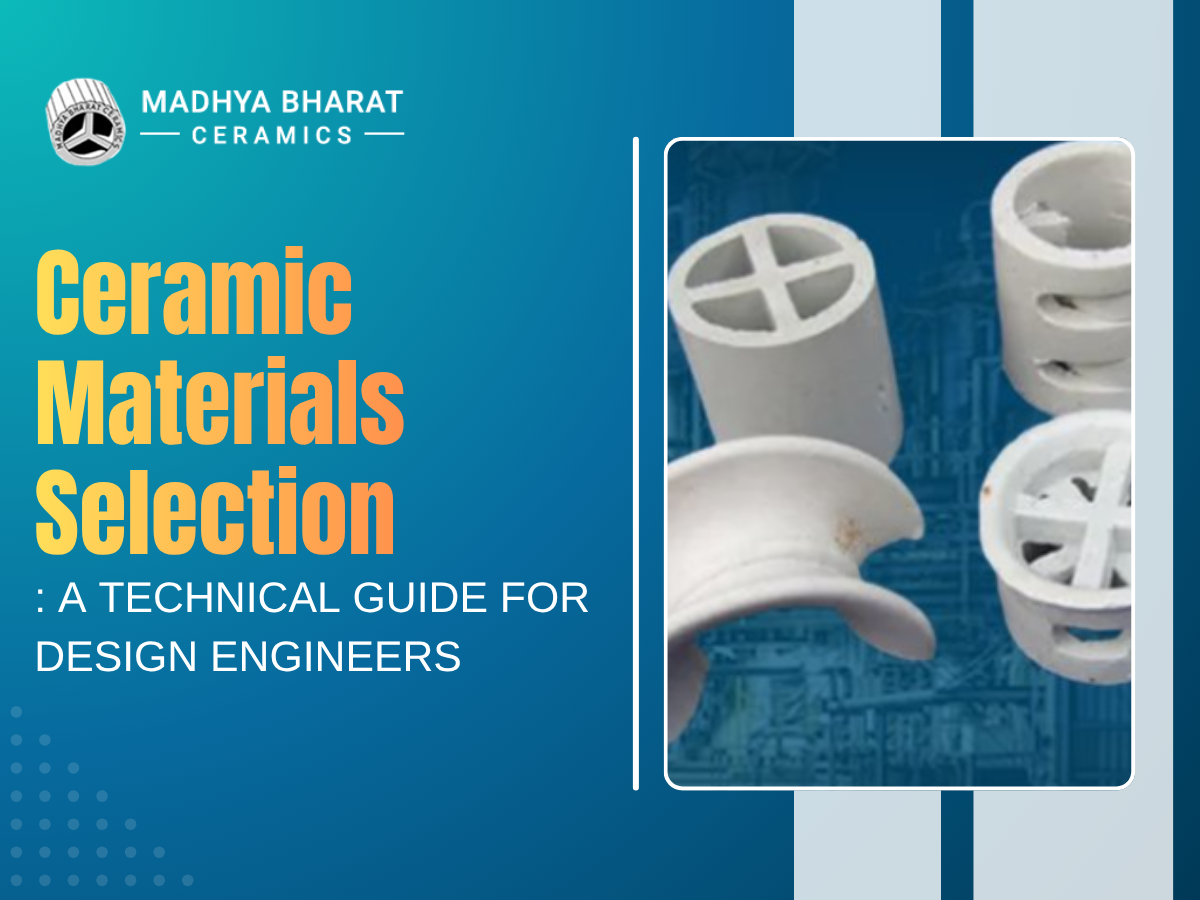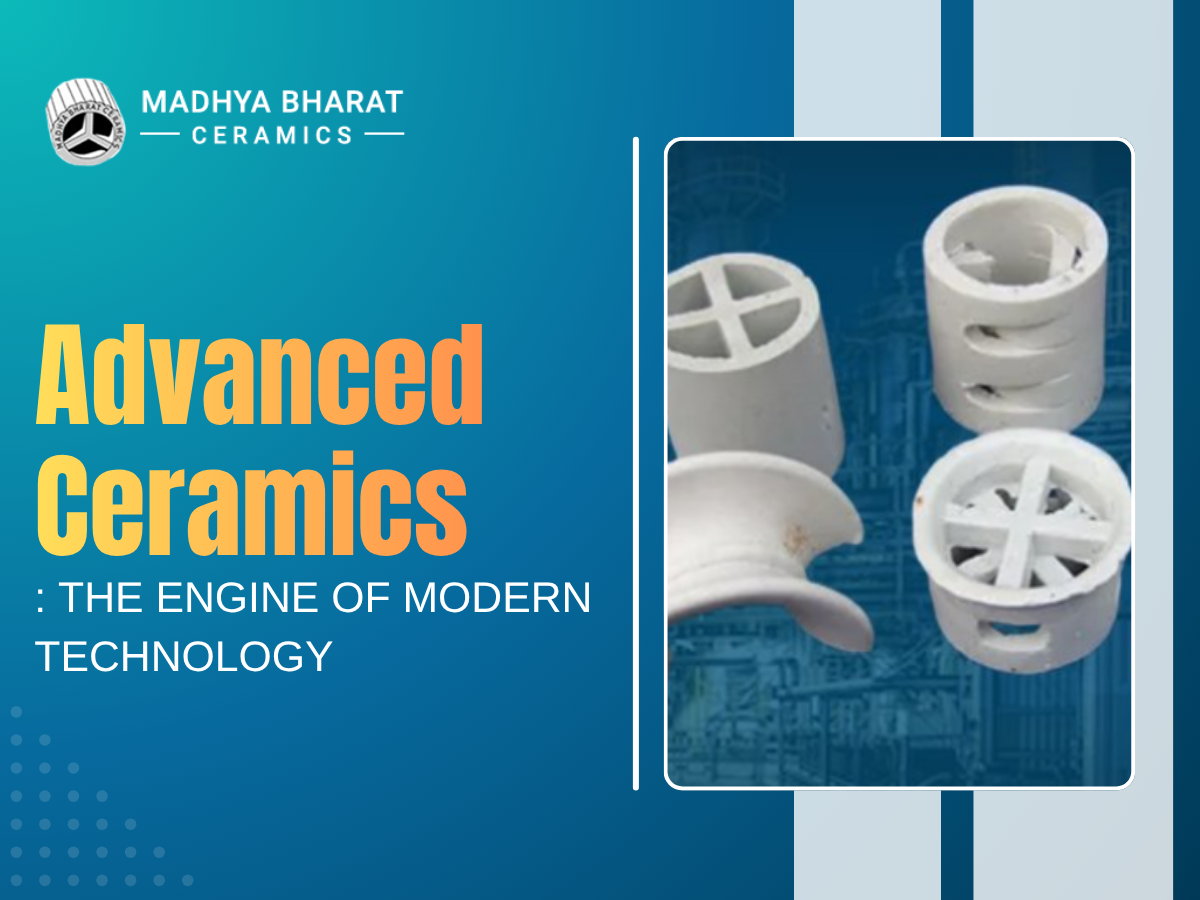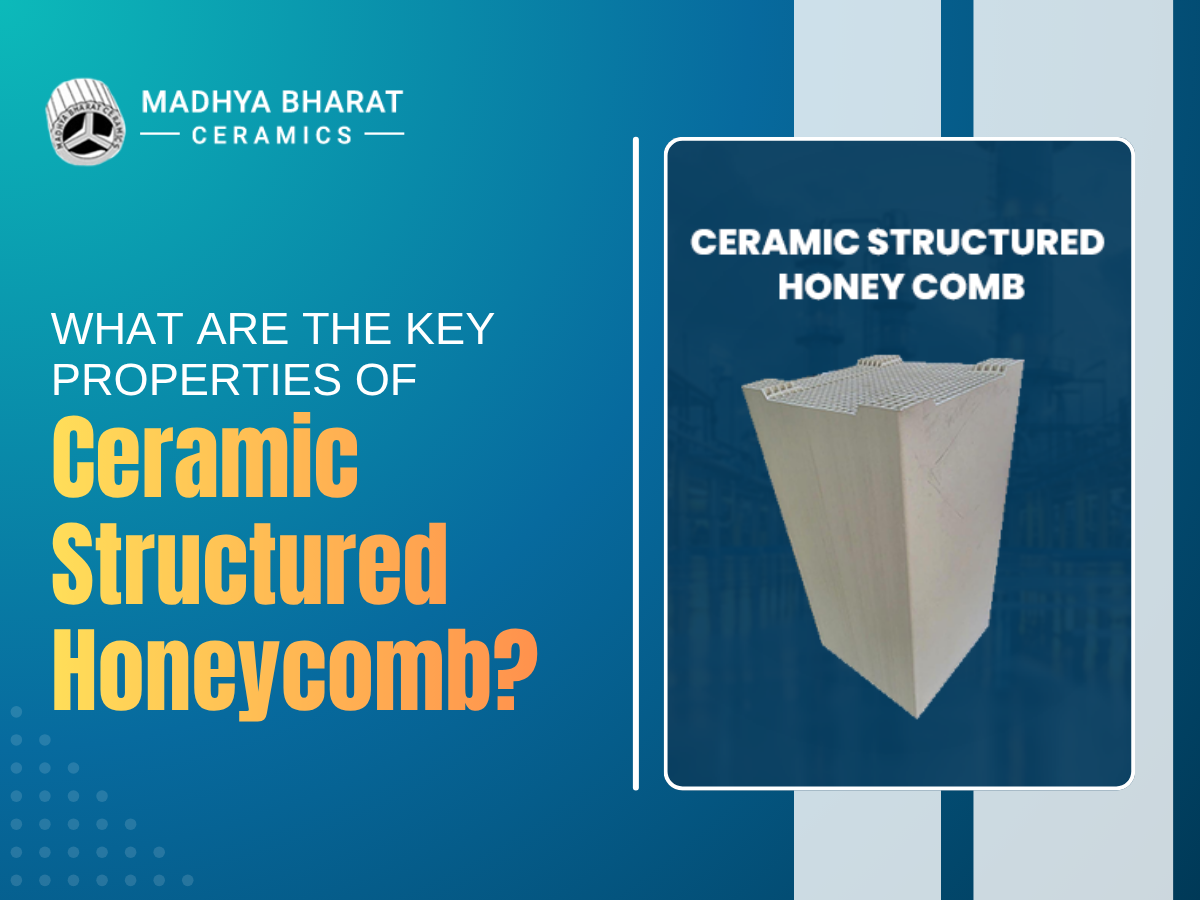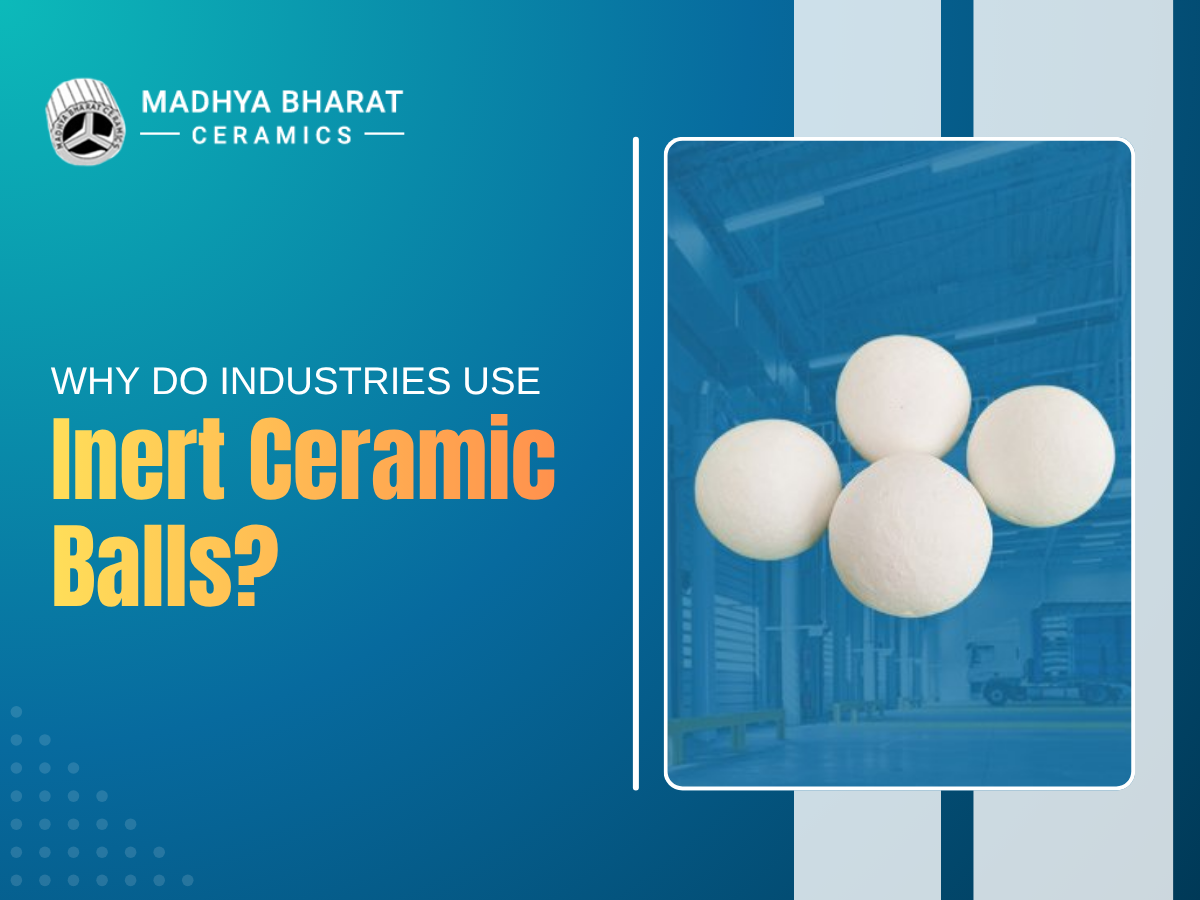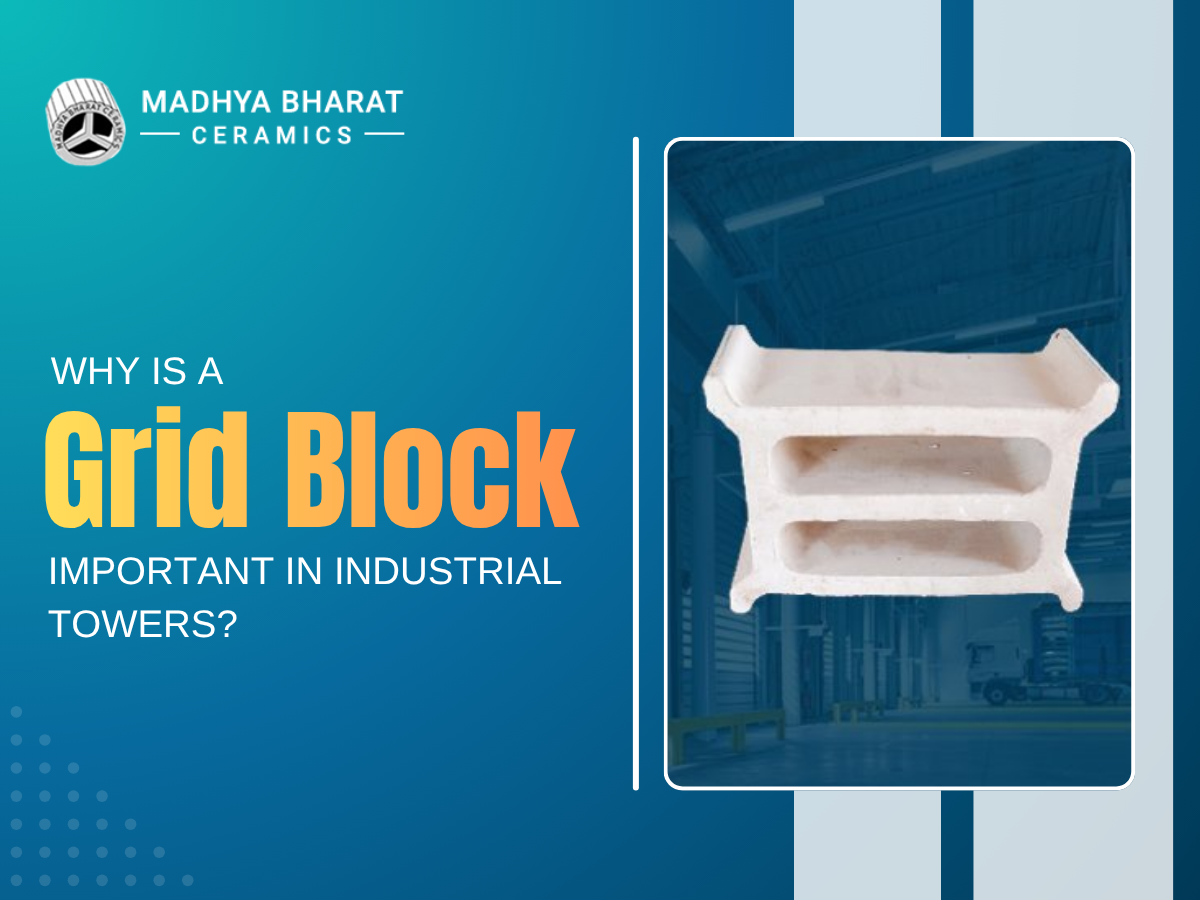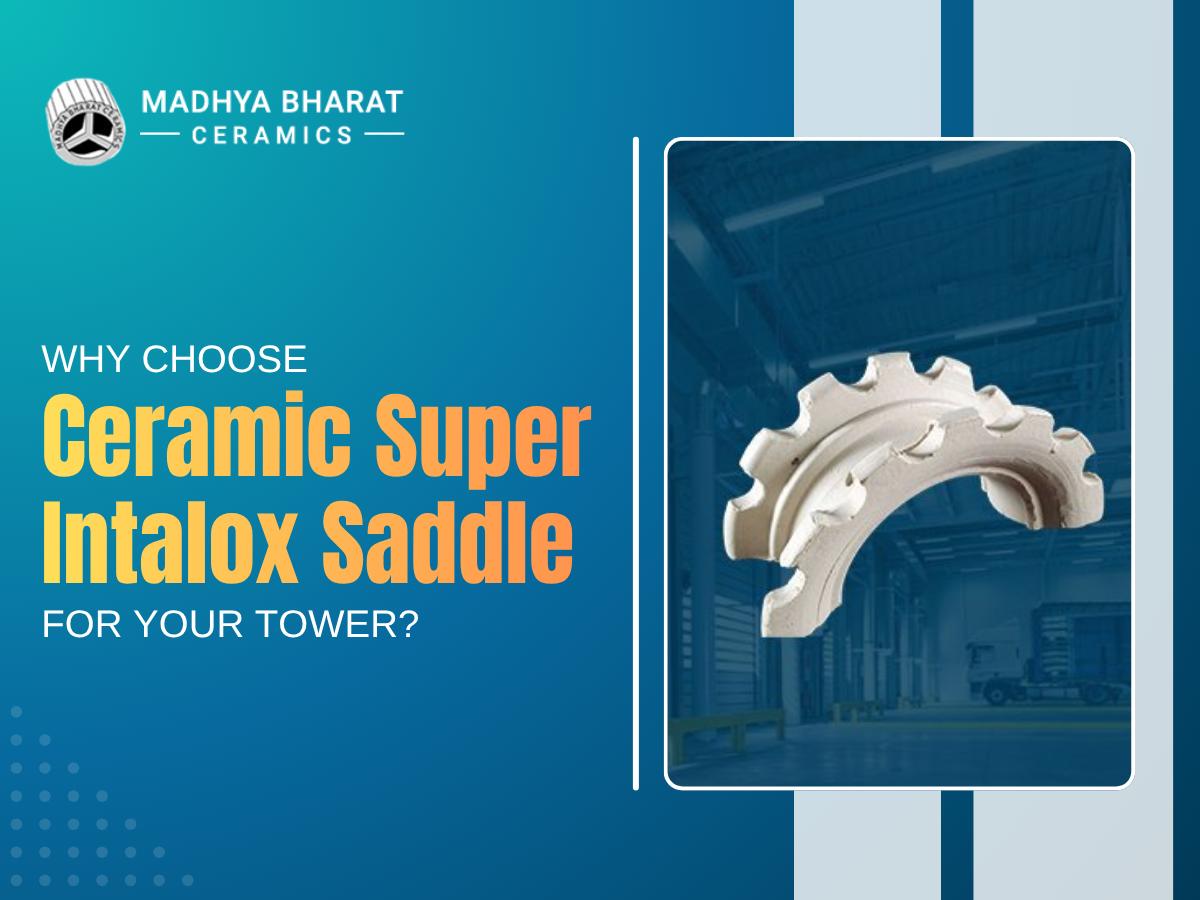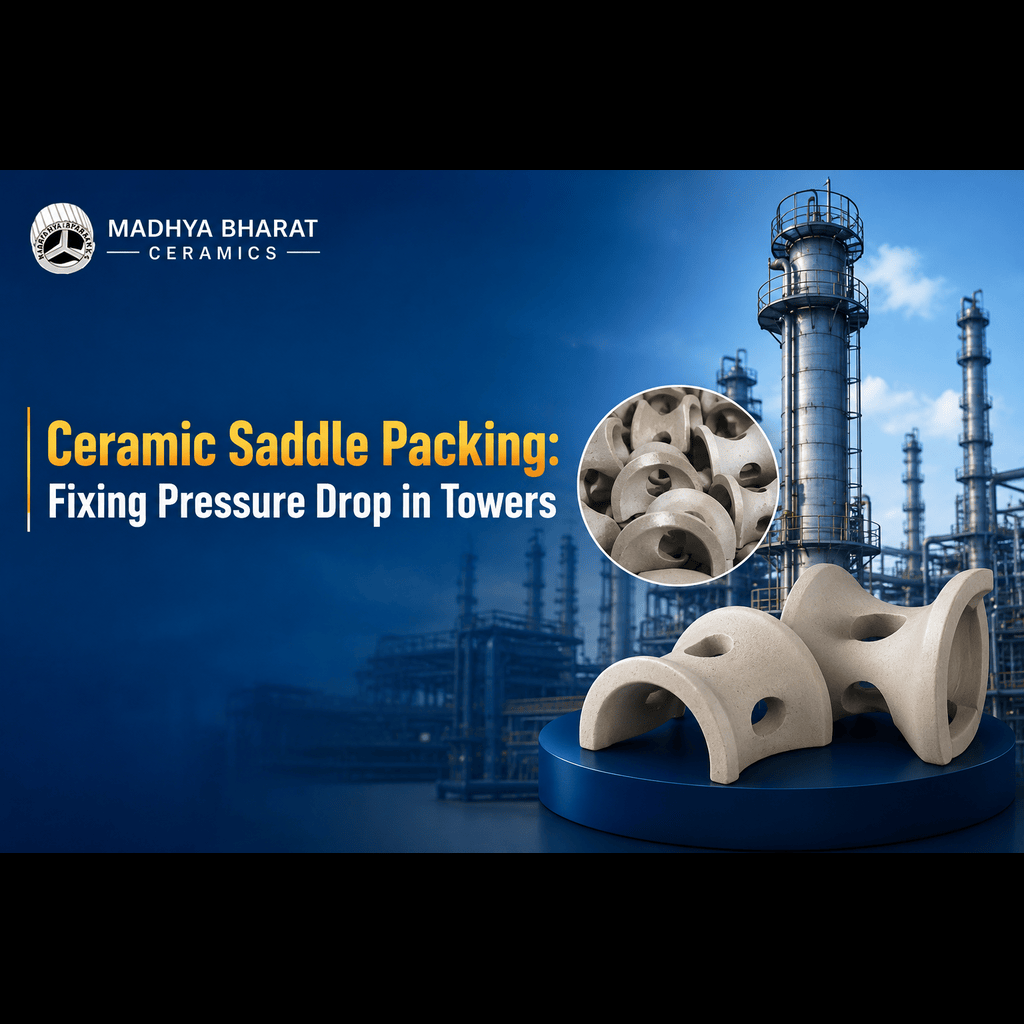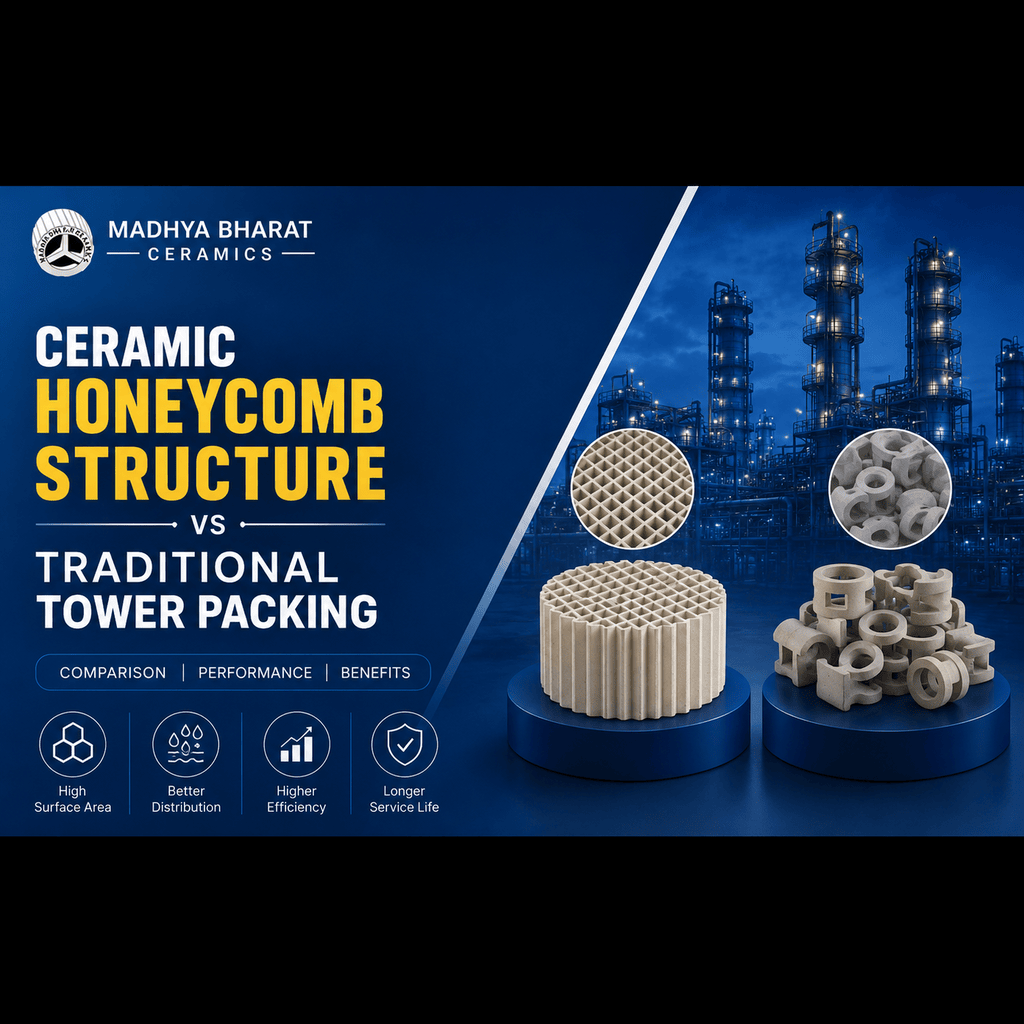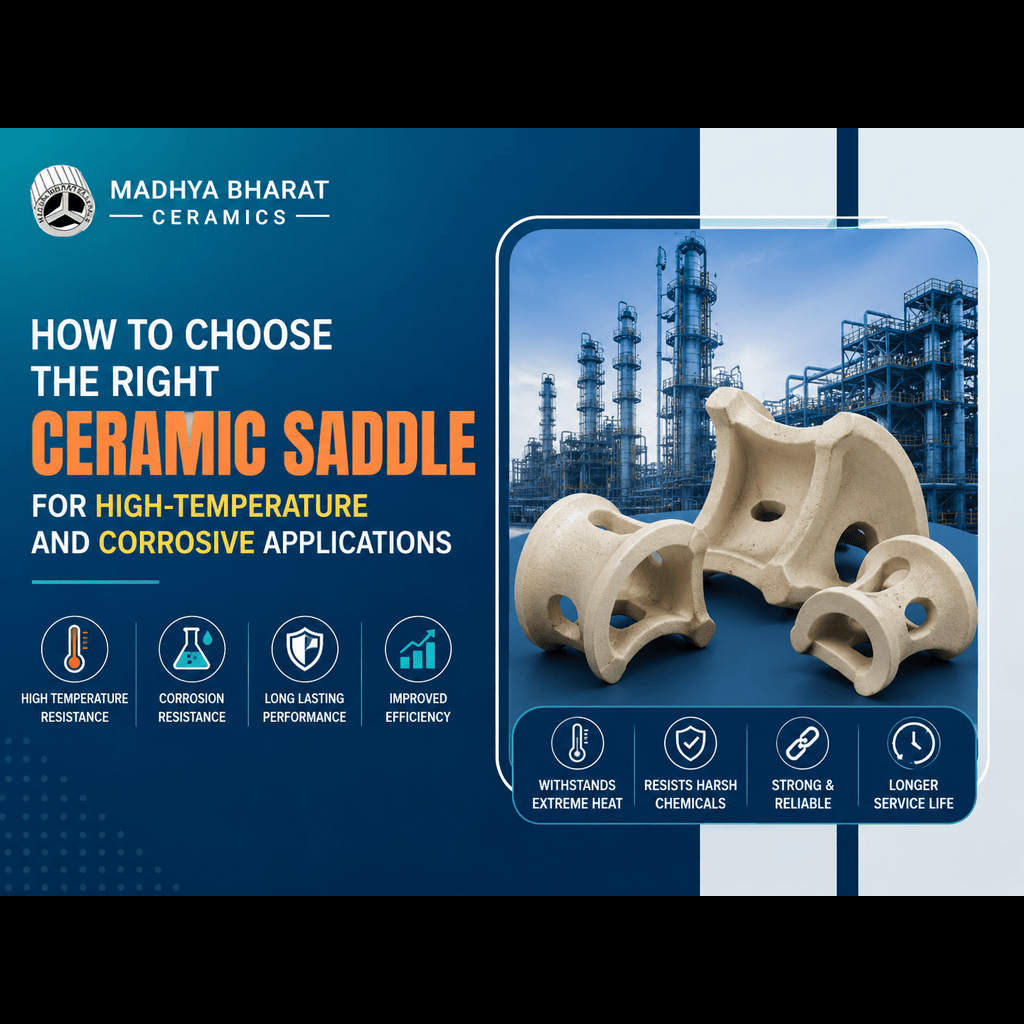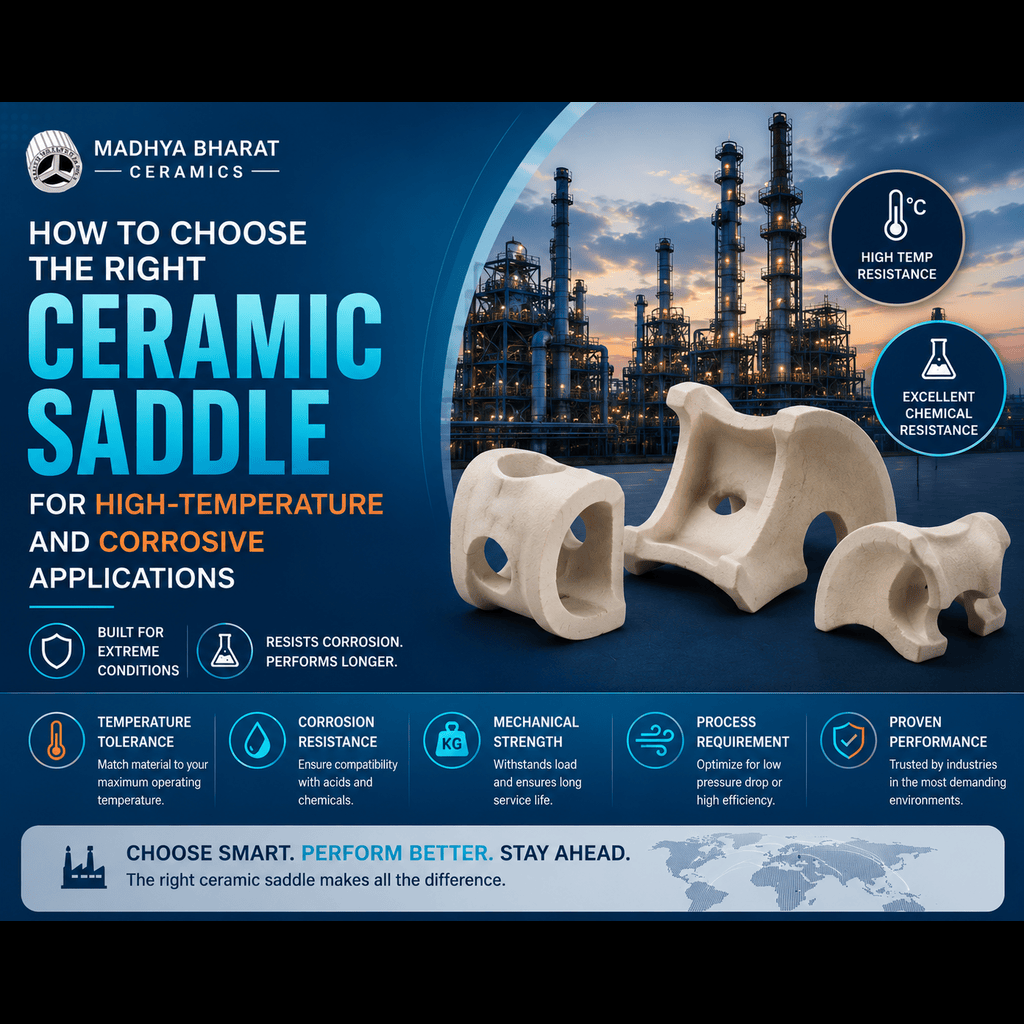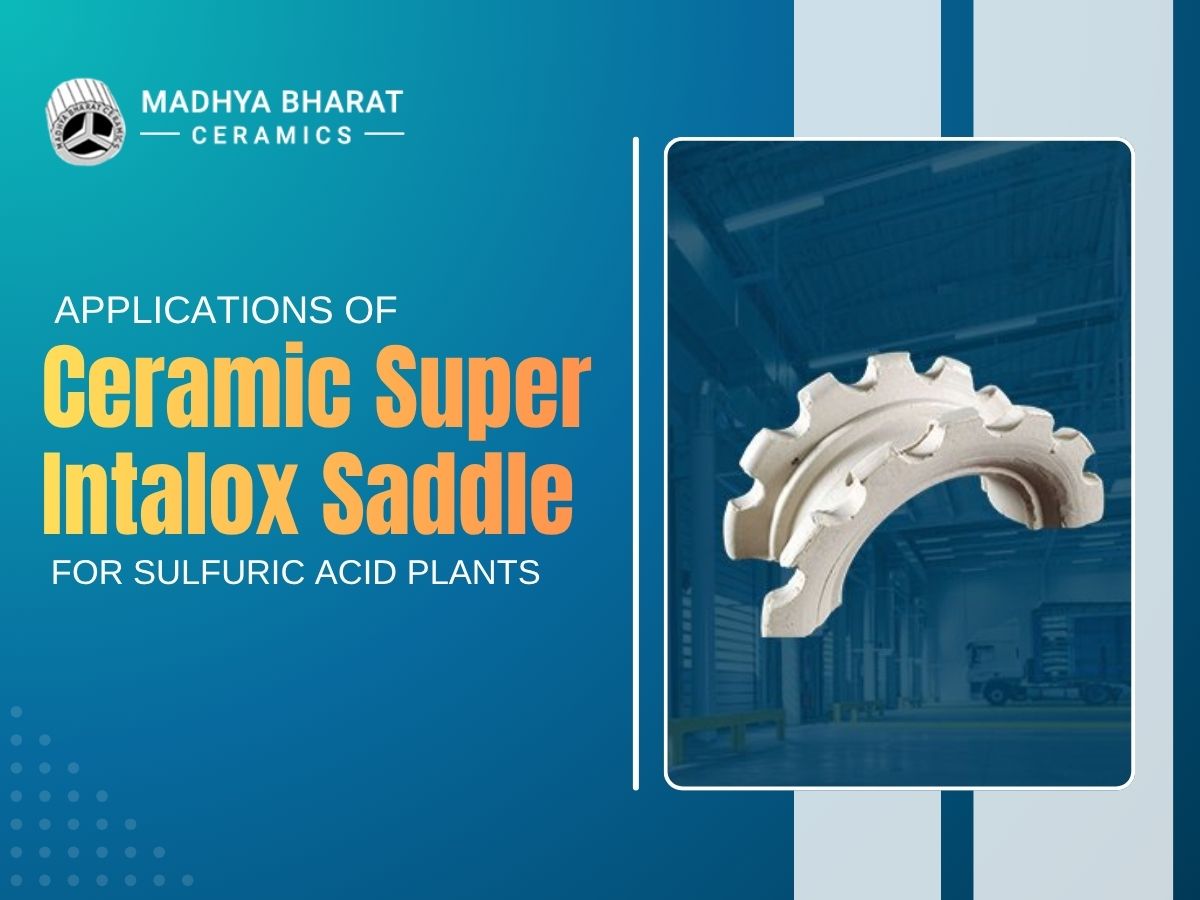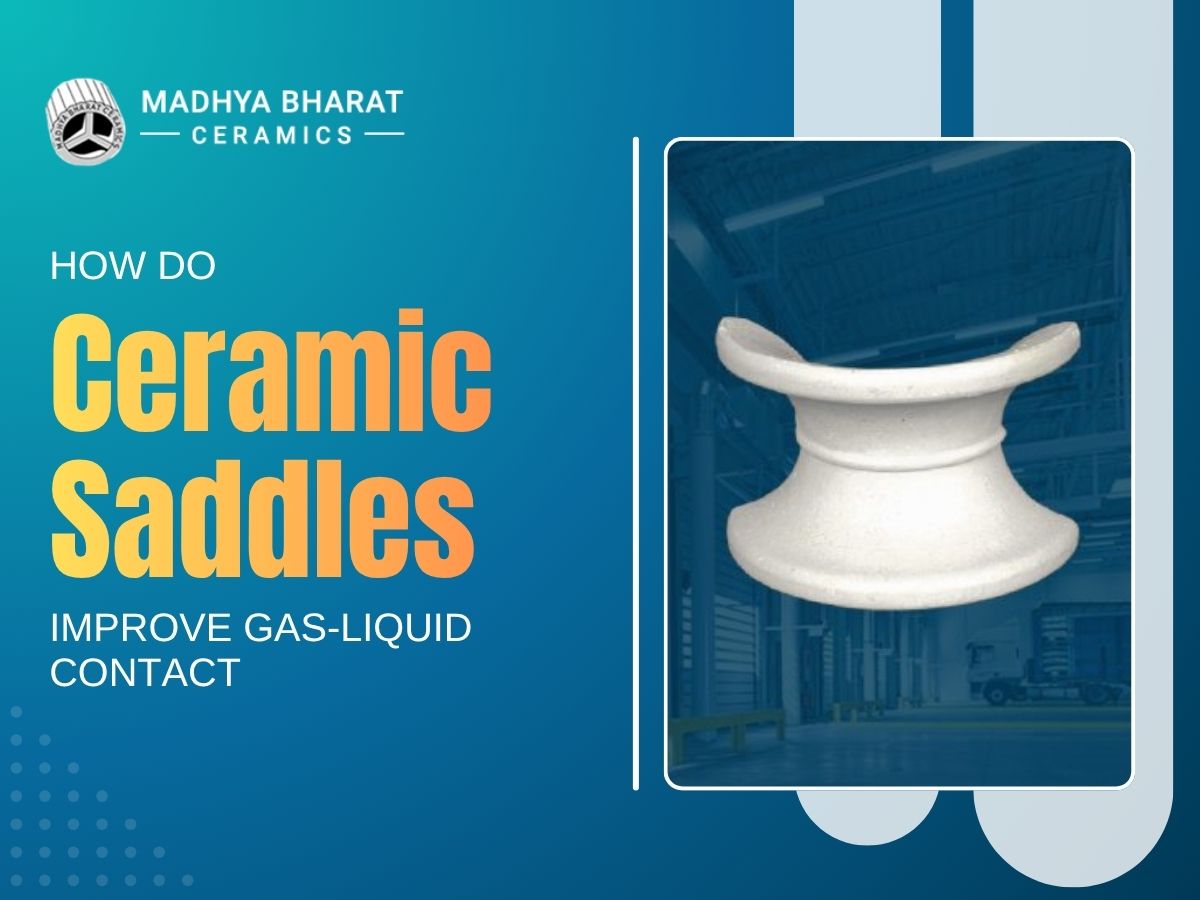
Ceramic saddles improve gas-liquid contact by spreading liquid into thin films across a large, curved surface while forcing gas into a turbulent, redirected flow path. That combination increases the total interface where mass transfer happens, which is why this packing consistently outperforms basic cylindrical packing on absorption efficiency. The gain is not marginal, published data shows improvements of up to 30% over Raschig rings under similar conditions, and it is the exact reason MBC gets asked so often to review underperforming towers.
Efficiency numbers get thrown around a lot in packing sales material. What actually matters to a plant manager is simpler, will this packing absorb more, cost less to run, and stay reliable for years.
What “Improved Contact” Actually Looks Like Inside the Column
Three things happen at once inside the bed, and each one adds to the efficiency gain:
- Thin film formation – liquid coats the curved ceramic surface as it flows down, creating a large exposed area relative to its volume
- Turbulent gas redirection – rising gas is repeatedly deflected by the irregular shapes instead of flowing straight through, keeping it in contact with fresh liquid
- Anti-channelling behaviour – the random orientation blocks straight vertical paths, forcing liquid to spread across the full column cross-section instead of concentrating in one narrow stream
Skip any one of these and efficiency drops. Cylindrical packing like Raschig rings allows more channelling, which is exactly why it underperforms ceramic intalox saddles on the same column volume.
Ceramic Saddles vs Other Packing on Contact Efficiency
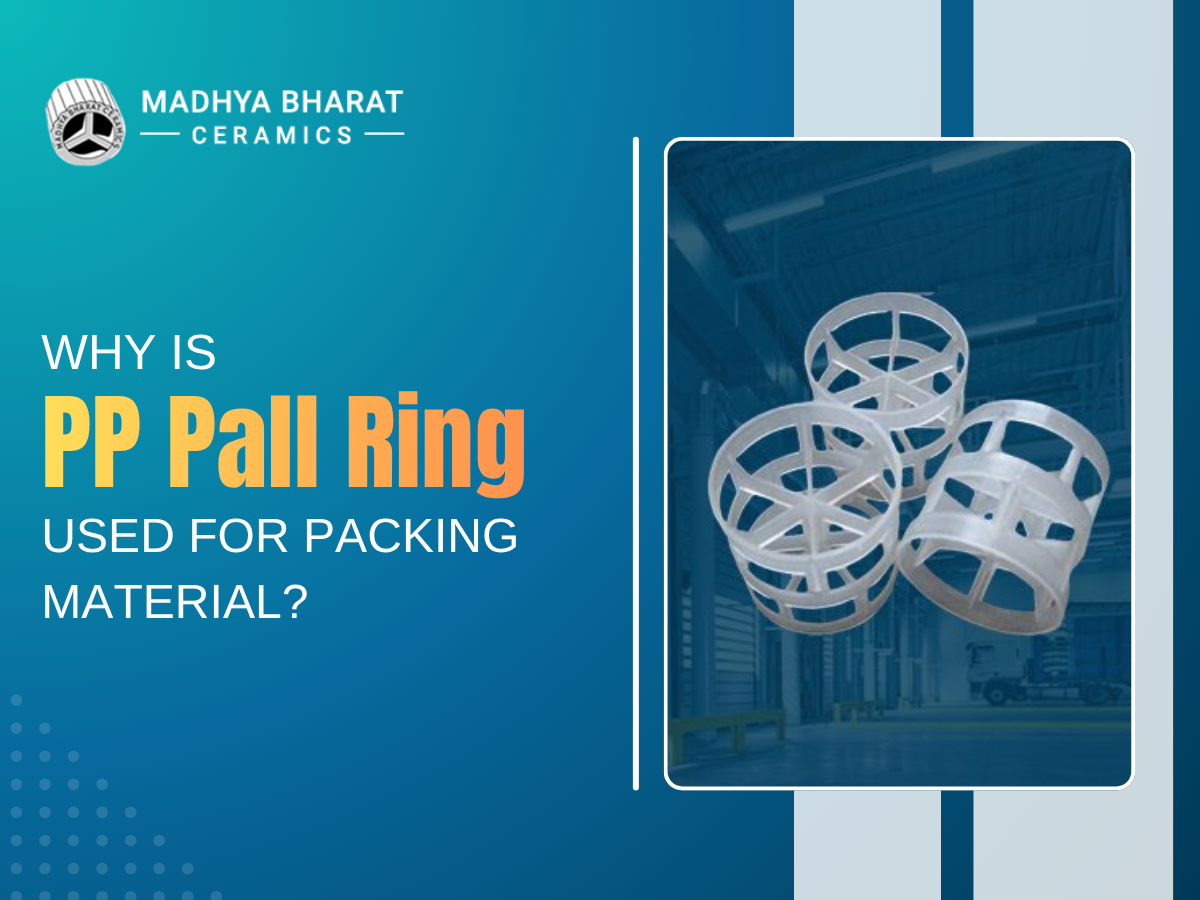
| Feature | Ceramic Saddles | Raschig Rings | Pall Rings (PP) | Structured Packing |
| Shape | Curved saddle | Hollow cylinder | Open ring | Corrugated sheet |
| Mass Transfer | High | Moderate | High | Very High |
| Pressure Drop | Low | High | Very Low | Very Low |
| Temperature Resistance | Up to 1,200°C | Good | Limited (80°C) | Moderate |
| Corrosion Resistance | Excellent | Moderate | Good | Moderate |
| Best Fit | Acid and gas absorption | General use | Gas scrubbing | High-purity distillation |
Structured packing wins on raw efficiency, but the cost rarely justifies it outside high-purity distillation. For acid absorption and gas scrubbing duties, this packing delivers the best balance of contact efficiency, temperature tolerance, and cost.
Why Better Contact Also Means Lower Pressure Drop
This surprises people the first time they hear it, better gas-liquid contact does not mean higher resistance to flow. The open, irregular voids between saddle pieces let gas move through with less resistance than a tightly packed cylinder bed. So a well-designed bed improves absorption and reduces the load on the blower or compressor at the same time, which is a direct energy saving, not just a performance one.
Plants sourcing this kind of packing in bulk from a proven ceramic saddle packing in mandsaur unit tend to see this benefit show up fastest, since consistent batch quality keeps the void structure predictable across the entire bed.
What the Efficiency Gains Typically Look Like
The numbers in this space come from published mass transfer correlations and field data collected across many packed columns, not a single plant. Here is what that data generally shows for a column moving from basic cylindrical packing to saddle-shaped packing under similar absorption duty:
- Absorption efficiency usually climbs into the high nineties once a bed that had been running below its design target is repacked correctly
- Pressure drop across the bed typically falls by 25% to 35%, which shows up directly as lower blower or compressor load
- Liquid distribution becomes more even across the column cross-section, since the random saddle orientation blocks the straight channels that cylindrical packing tends to form
- Payback periods on a repacking project commonly land within four to six months once energy savings and improved yield are added together
These are the ranges engineers plan around, not a single guaranteed outcome. Every column has its own feed composition, gas velocity, and bed depth, so the exact number for your tower will depend on where it currently stands against its design spec.
Where This Matters Most
If your process falls into any of these categories, gas-liquid contact efficiency is directly tied to your operating cost:
- Acid absorption (sulphuric, hydrochloric, nitric)
- Gas scrubbing and flue gas treatment
- Distillation and stripping columns
- Any column currently underperforming its design absorption target
Frequently Asked Questions
1. How do ceramic saddles improve gas-liquid contact?
They spread liquid into thin films across a curved surface and force gas into turbulent, redirected flow, which maximises the interface area where mass transfer happens.
2. Do ceramic saddles reduce pressure drop as well as improving contact?
Yes. The open void structure between saddle pieces lets gas pass with less resistance than cylindrical packing, lowering pressure drop even as contact efficiency improves.
3. How much efficiency improvement can I expect from switching?
Published data and field results typically show gains in the range of 20% to 30% in mass transfer efficiency compared to basic cylindrical packing, though the exact number depends on your existing packing and operating conditions.
4. Is a repack worth it if my column is already running, just underperforming?
In most documented cases, yes. Return on investment for a repacking project is commonly recovered within four to six months through energy savings and improved yield.
Want the Mechanism Behind These Numbers?
Everything above depends on how the saddle shape physically behaves inside the column. For the full step-by-step breakdown of the working principle, see how ceramic saddles work in packed columns.
MBC supplies ceramic saddle tower packing in Berl and Intalox designs from 13 mm to 76 mm. As a certified Ceramic Saddles Exporter based in Mandsaur, India, the technical team can review your current absorption numbers and tell you honestly whether a repack is likely to pay off.
Underperforming column? Send MBC your column specs for a no-obligation efficiency review, or call +91-8827697111 to talk it through directly.