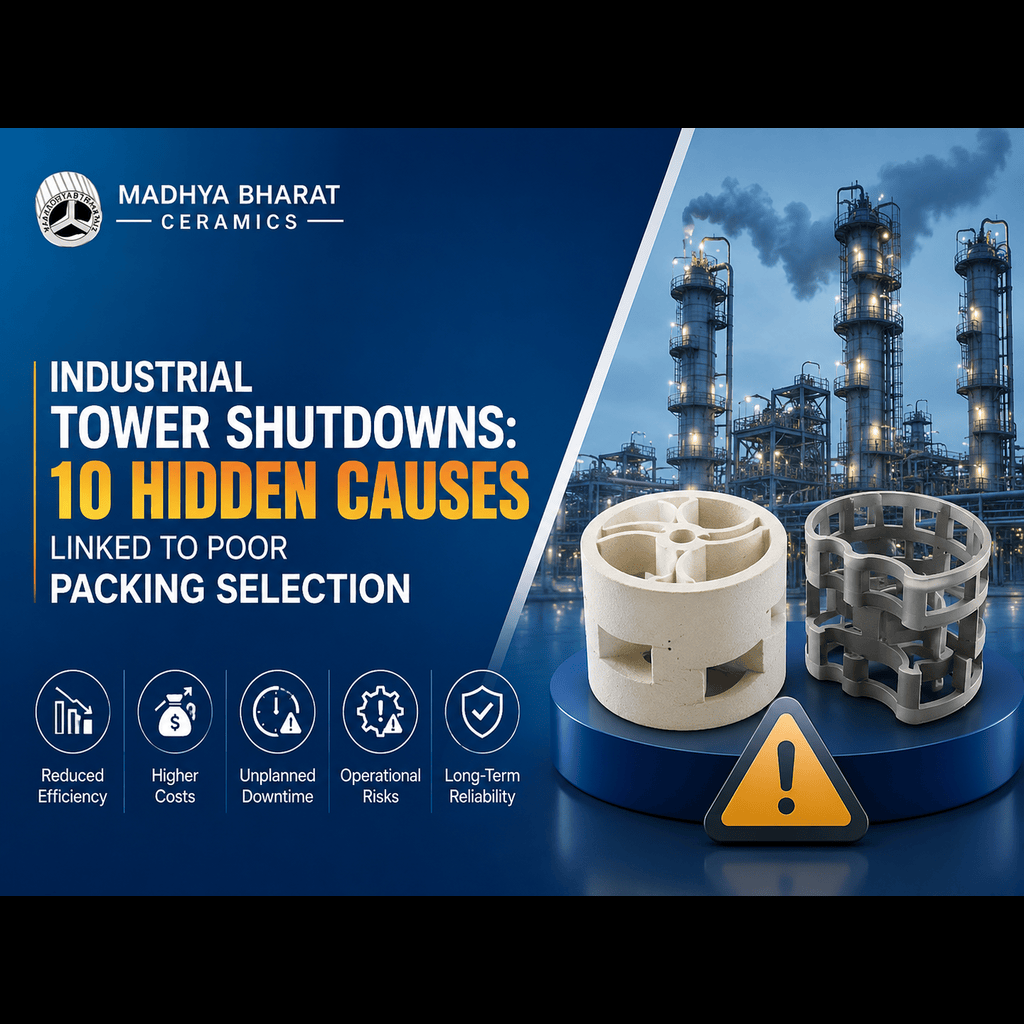
When a tower shuts down unexpectedly, most teams start by checking the obvious things: valves, instrumentation, feed quality. Packing rarely makes it to the top of that list, even though it is often the root cause. A shutdown that gets blamed on “process instability” can trace straight back to a packing choice made months or years earlier.
At Madhya Bharat Ceramics, we have walked through post-shutdown reviews with plant teams often enough to notice a pattern. The same handful of packing-related mistakes keep showing up, quietly building toward failure long before anyone notices a problem. Here are ten of the most common ones.
10 Hidden Causes of Tower Shutdowns Tied to Packing Selection
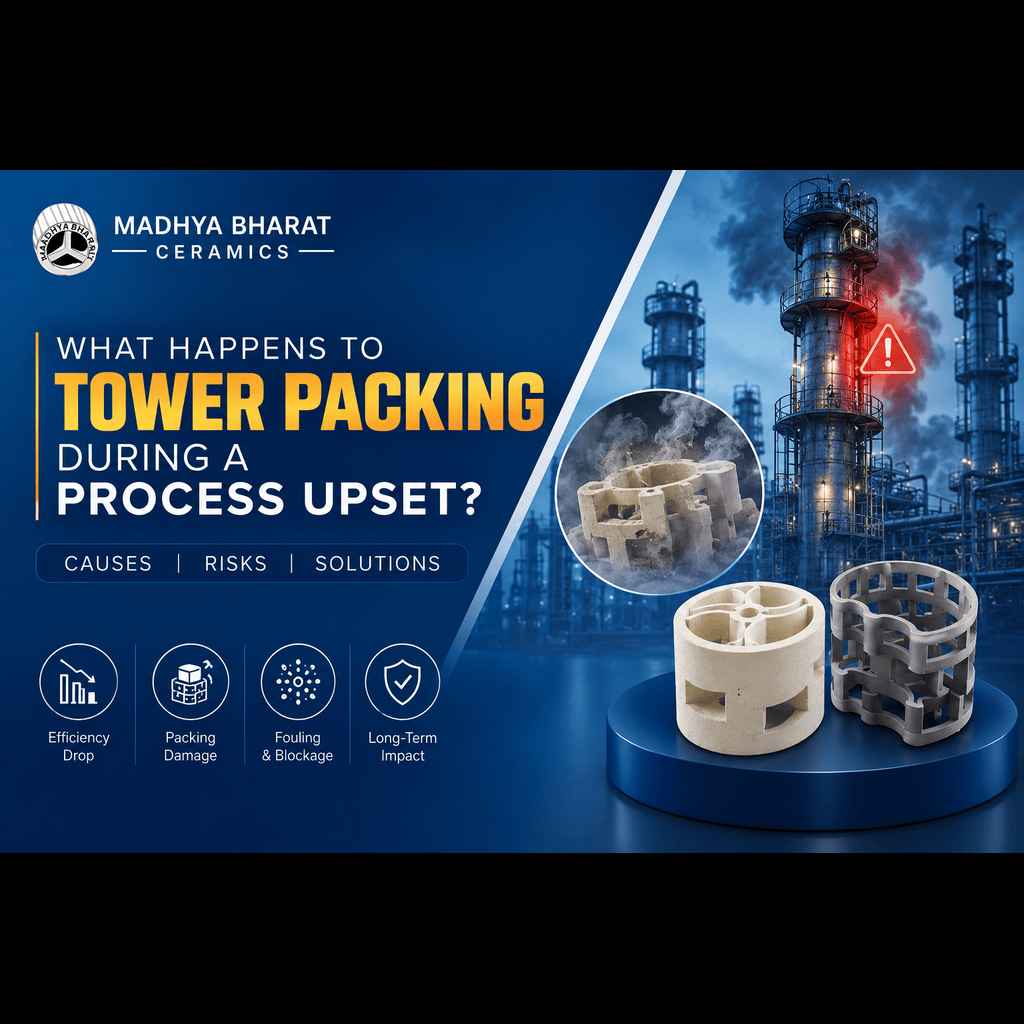
Industry surveys of column malfunctions consistently point to the same handful of root causes: flooding, channeling, foaming, and internal damage, most of which trace back to how packing was chosen, installed, or supported. Here is how each one actually plays out inside a working tower.
1. Choosing the wrong packing size for the column.
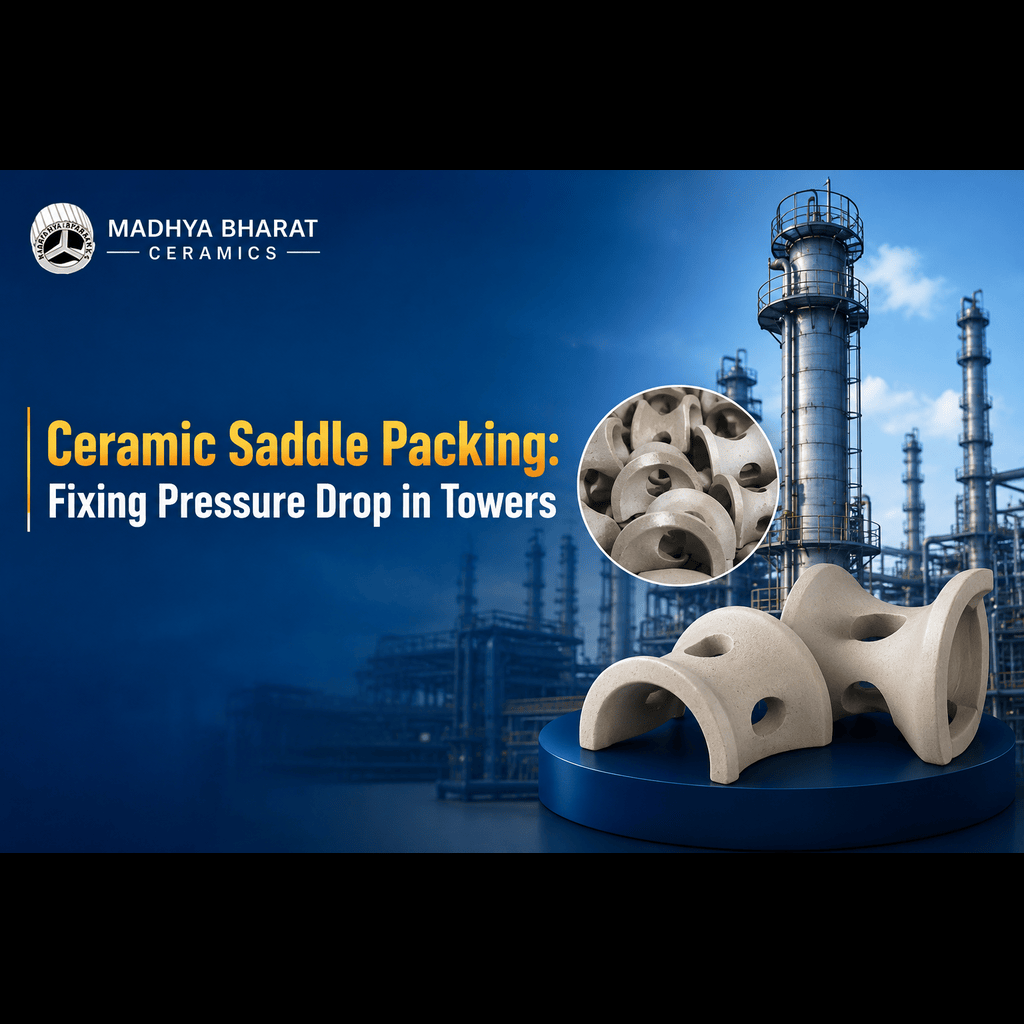
Packing size needs to match column diameter, and this ratio matters more than people expect. Oversized packing in an undersized column creates channeling, while packing that is too small for the column raises pressure drop well beyond design values. Either way, efficiency erodes long before a full shutdown happens.
2. Mismatched chemical resistance.
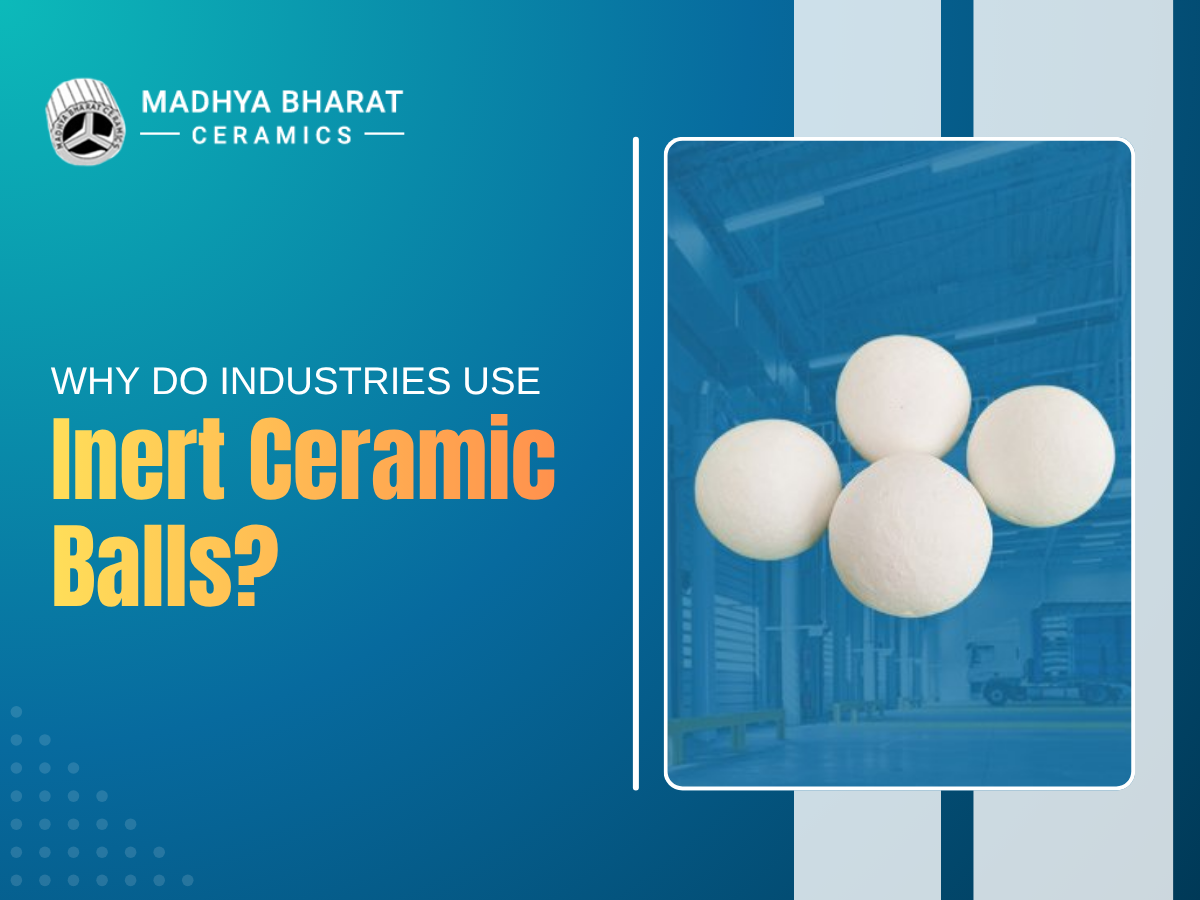
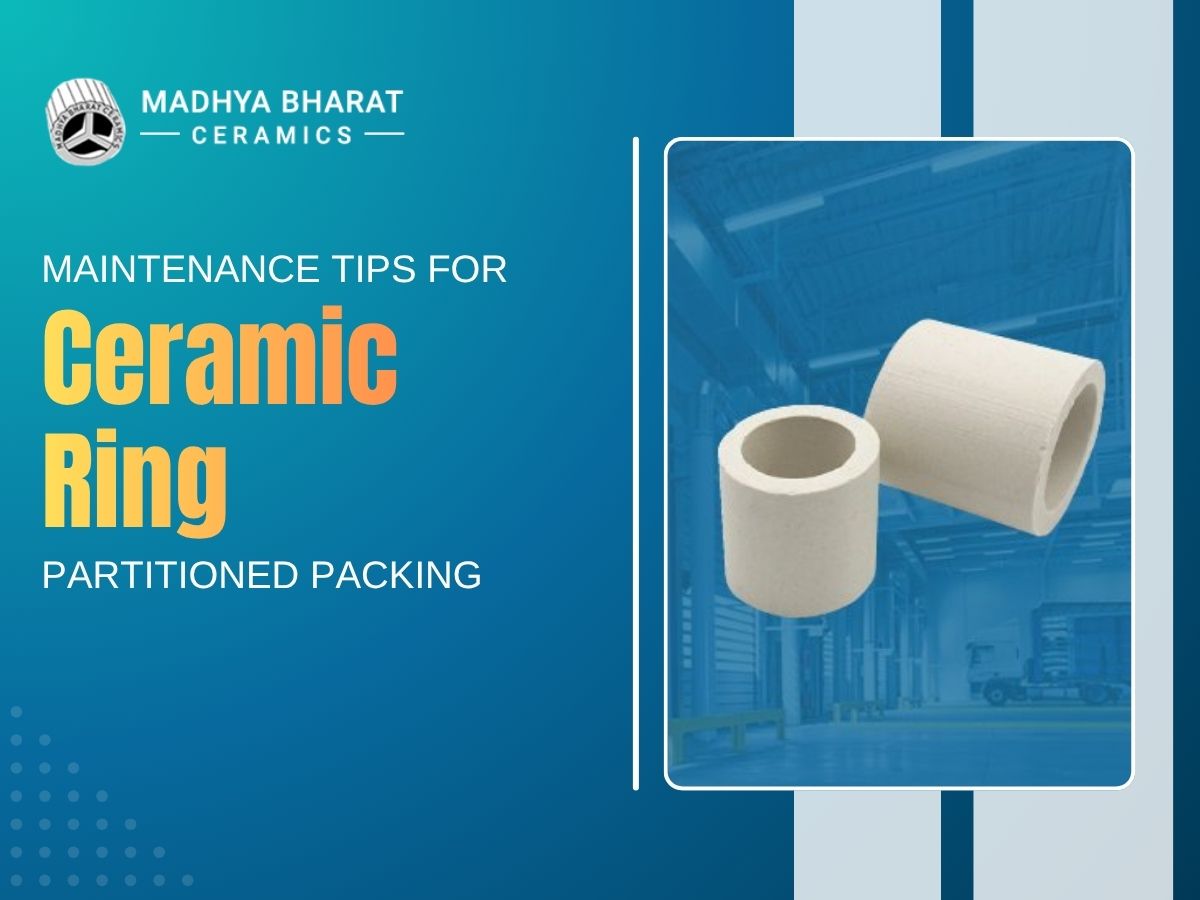
Not every packing material handles every chemical the same way. Using a general-purpose Ceramic Packing Material in a process it was never designed for, such as one involving hydrofluoric acid, leads to gradual material breakdown that eventually forces an unplanned shutdown.
3. Inconsistent piece dimensions.
A batch with uneven piece sizes packs unevenly inside the column. This creates dead zones and preferential flow paths, commonly seen as channeling in malfunction reports, which reduces gas-liquid contact and gradually pushes the tower toward unstable operation.
4. Weak crushing strength under bed load.
Packing sitting deep in a tall bed has to support real weight from everything above it. If crushing strength was not properly tested before installation, pieces fail under load, collapsing sections of the bed and disrupting flow, a failure mode documented repeatedly in post-shutdown inspections of packed columns.
5. Ignoring thermal shock resistance.
Startups, shutdowns, and process fluctuations all involve rapid temperature swings. Packing that cannot handle thermal shock cracks under this stress, and those cracks often go unnoticed until pressure drop or separation efficiency suddenly drops.
6. Inadequate support structure beneath the packing.
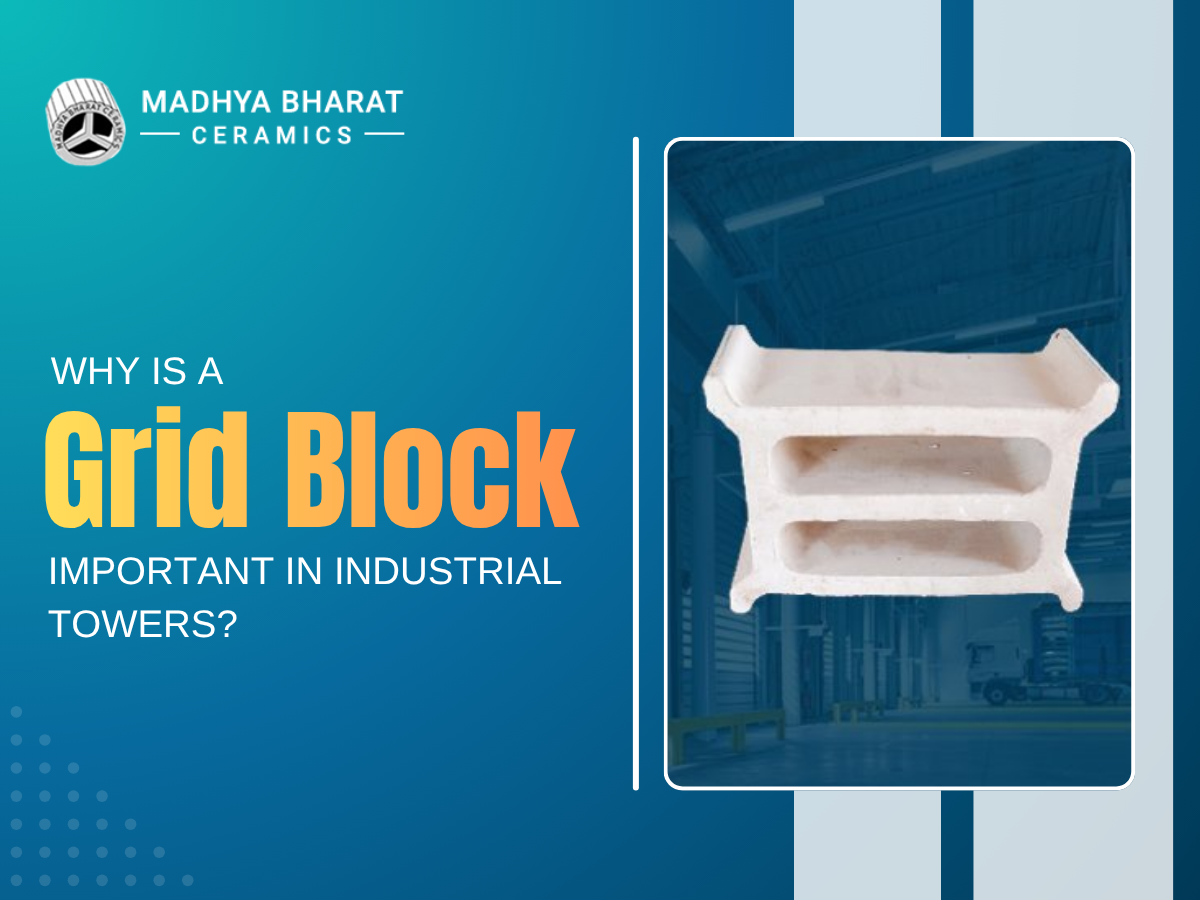
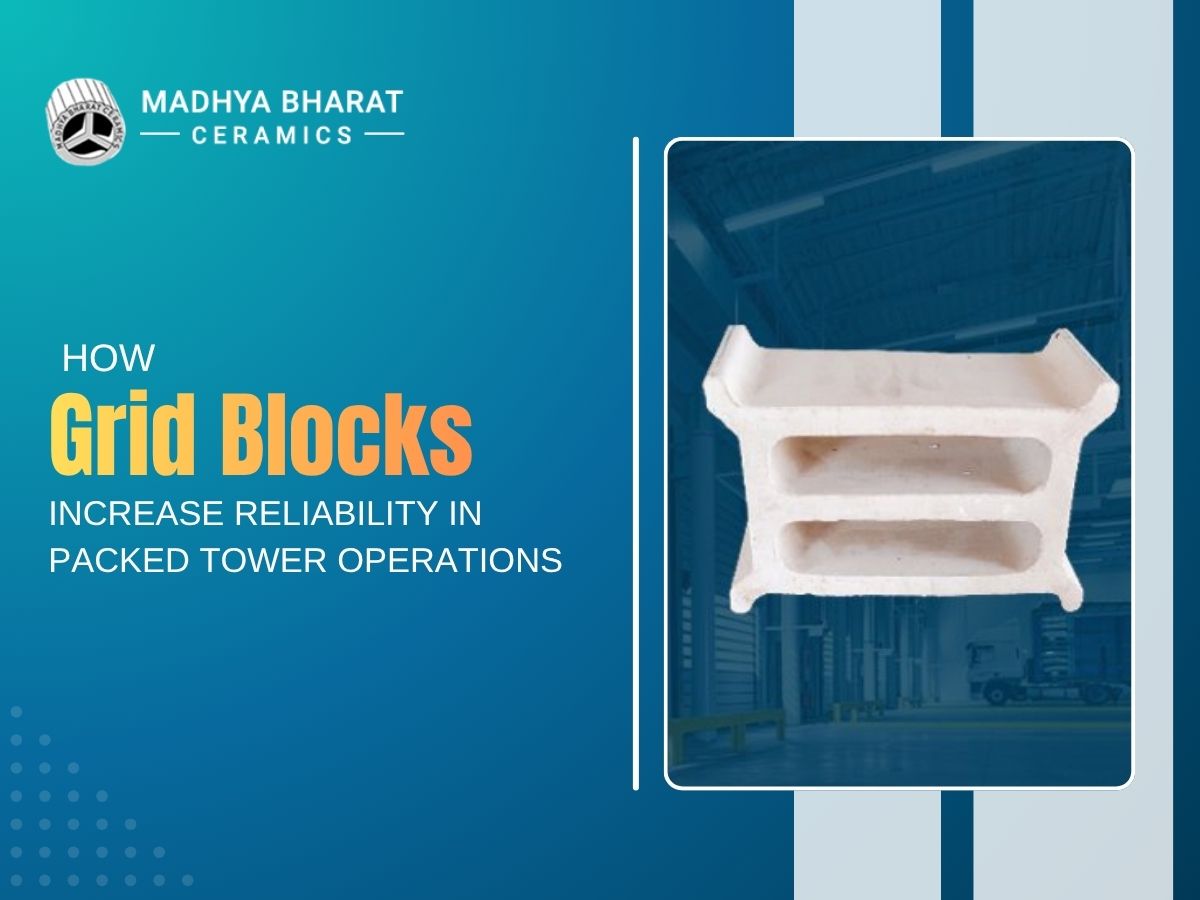
This is one of the most overlooked causes, and one that shows up often in column inspection reports where packing has shifted or jammed against internals. Even the best packing material fails if it is not properly supported from below. A weak or poorly designed Grid Block in India installation can lead to sagging, uneven load distribution, and eventual bed collapse, regardless of how good the packing above it is. Our detailed breakdown on grid block applications in chemical plant towers covers exactly why this component matters more than most people realize.
7. Skipping pre-installation quality checks.
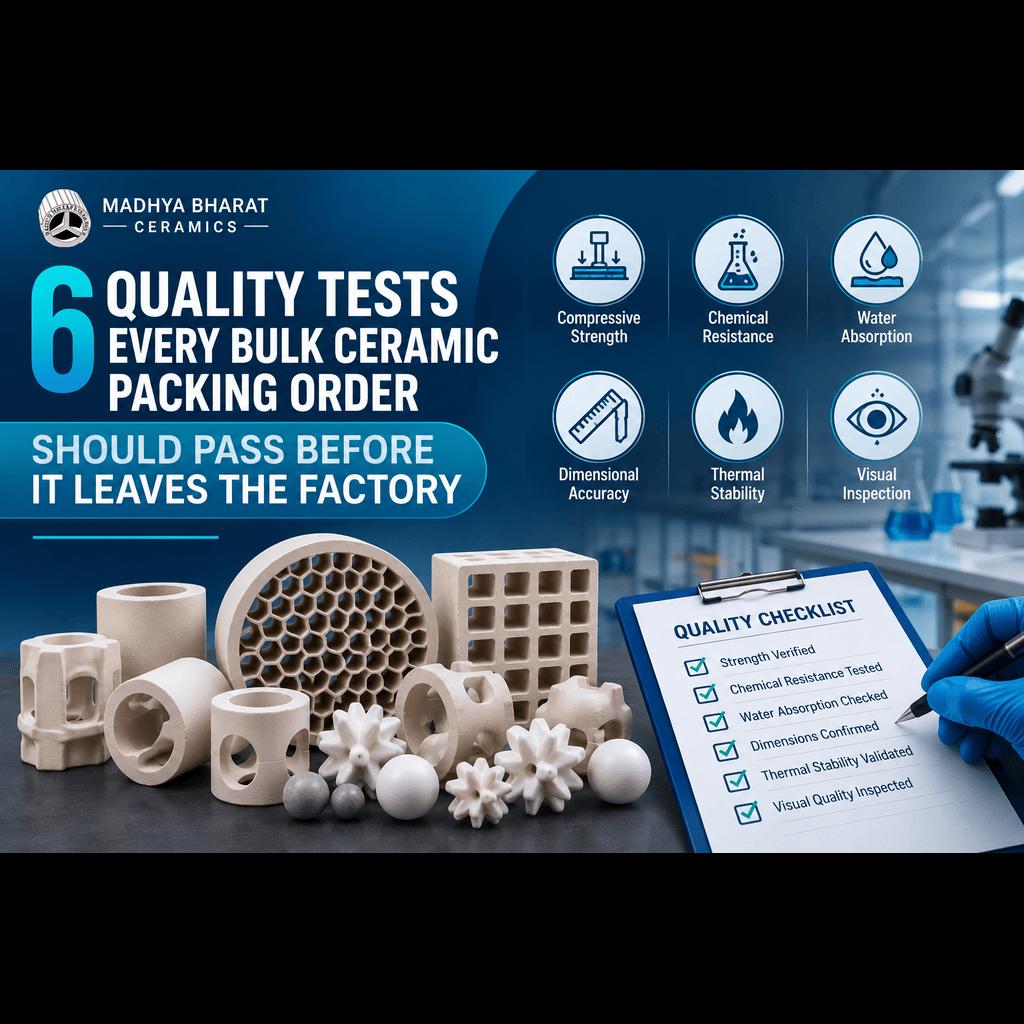
Packing that has not been properly tested for water absorption, acid resistance, and dimensional consistency carries hidden risk from day one. Problems that should have been caught before installation instead surface months later as unexplained efficiency loss.
8. Overlooking pressure drop calculations.
Every packing type has a pressure drop profile that needs to match the column’s design. Choosing packing based on cost alone, without checking how it performs at your actual flow rates, is a well-known precursor to flooding and reduced throughput.
9. Using packing not suited to the process temperature.
High-temperature processes need packing rated for those conditions. Standard packing used in a process running hotter than expected softens, warps, or breaks down structurally, none of which is obvious until the tower starts underperforming.
10. Sourcing from an unproven manufacturer.
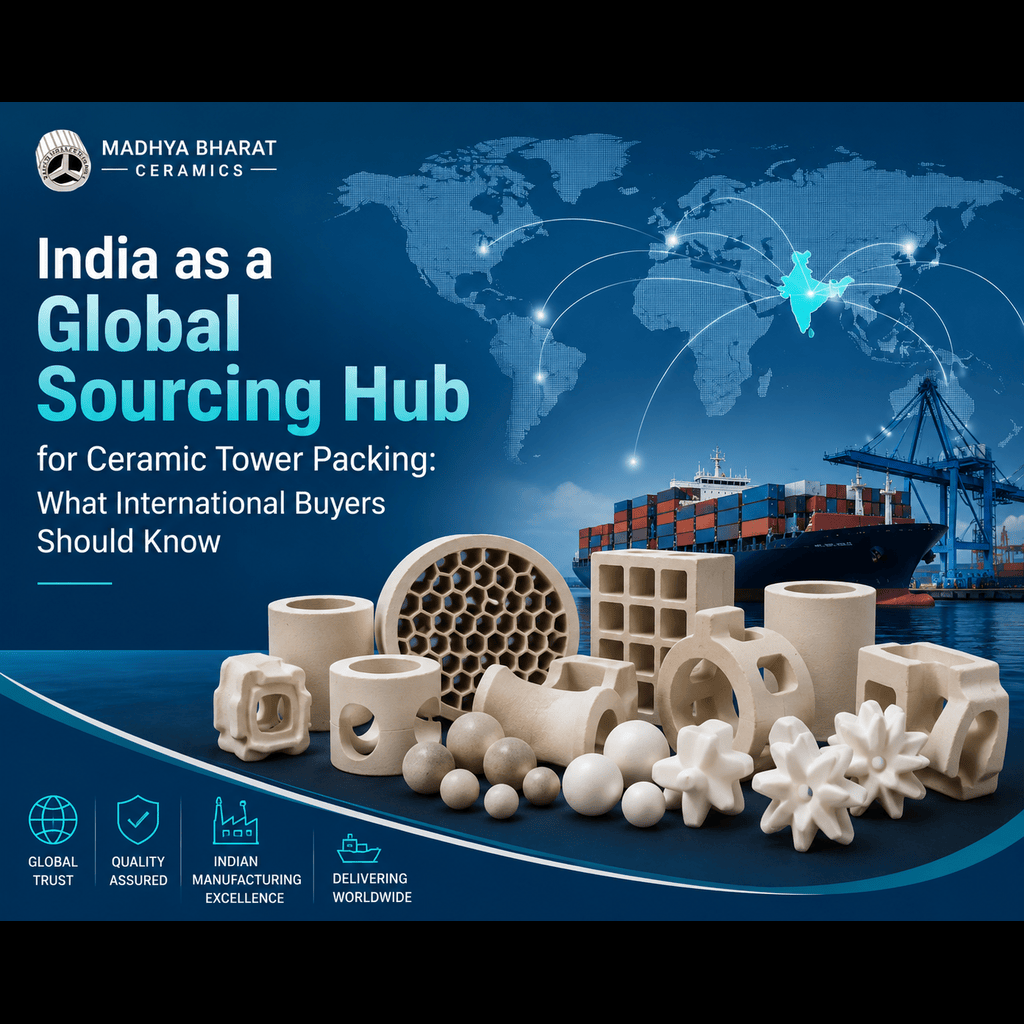
Perhaps the most preventable cause on this list. Working with an inexperienced or inconsistent Tower Packing Manufacturer means every batch carries some level of uncertainty, even if early shipments performed fine. Established manufacturers build quality control into every stage of production, which is exactly what keeps this kind of risk out of your tower in the first place.
What This Means for Your Next Order
Most tower shutdowns linked to packing problems do not occur overnight. They develop gradually, often beginning with small inefficiencies that go unnoticed until performance is significantly affected. To better understand how different packing components work together inside a tower, explore the role of grid blocks and why proper support structures are critical to long-term tower reliability.
Quick Checklist Before You Finalize Packing for Your Next Order
- Confirm packing size matches your column diameter correctly
- Check chemical resistance data against your actual process conditions
- Request crushing strength and thermal shock resistance figures
- Ask about the support structure beneath the packing bed, not just the packing itself
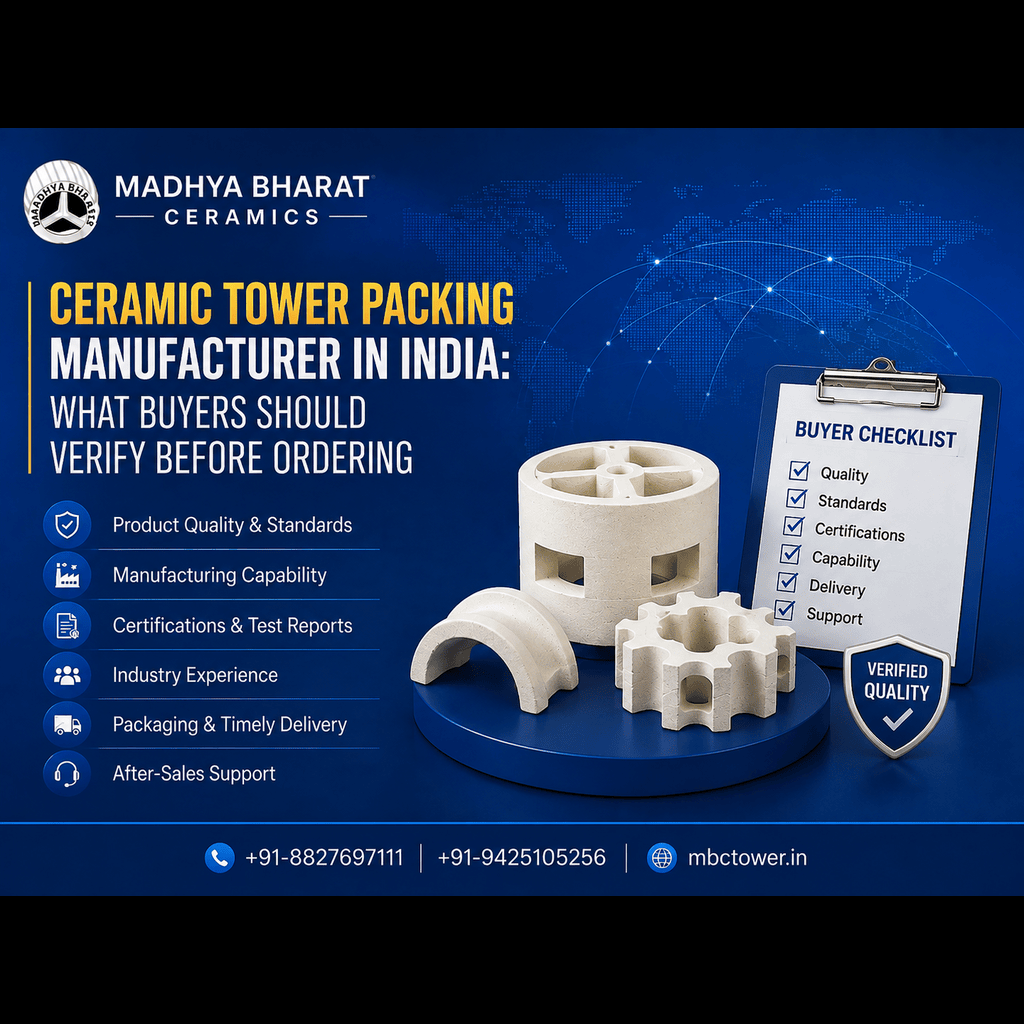
- Verify pre-dispatch quality checks, including water absorption and acid resistance testing
- Choose a manufacturer who can share test data, not just a price quote
Frequently Asked Questions
1. Can poor packing selection really cause a full tower shutdown?
Yes, issues like channeling, bed collapse, or material breakdown often start small but eventually force an unplanned shutdown if left unaddressed.
2. How often should tower packing be inspected?
Regular inspection during planned maintenance windows helps catch early signs of wear, channeling, or support structure issues before they escalate.
3. Does packing size really affect column performance?
Yes, mismatched packing size relative to column diameter can cause channeling or excessive pressure drop, both of which reduce efficiency.
4. Why does the support structure under packing matter so much?
A weak or poorly fitted support structure can cause the entire packing bed to sag or collapse, regardless of how good the packing material itself is.
5. How can I verify a packing manufacturer’s quality before ordering?
Ask for test reports on water absorption, acid resistance, and crushing strength, and request samples before committing to a bulk order.
6. Is it worth replacing the packing before it completely fails?
Yes, proactive replacement based on early warning signs is almost always cheaper than dealing with an unplanned shutdown and emergency repairs.
Ready to Rule Out Packing as a Cause of Future Shutdowns?
If your tower has been underperforming without a clear explanation, packing selection is worth a closer look before you rule it out. Get in touch with our team and we will help you review your current setup and identify what might be causing the issue.