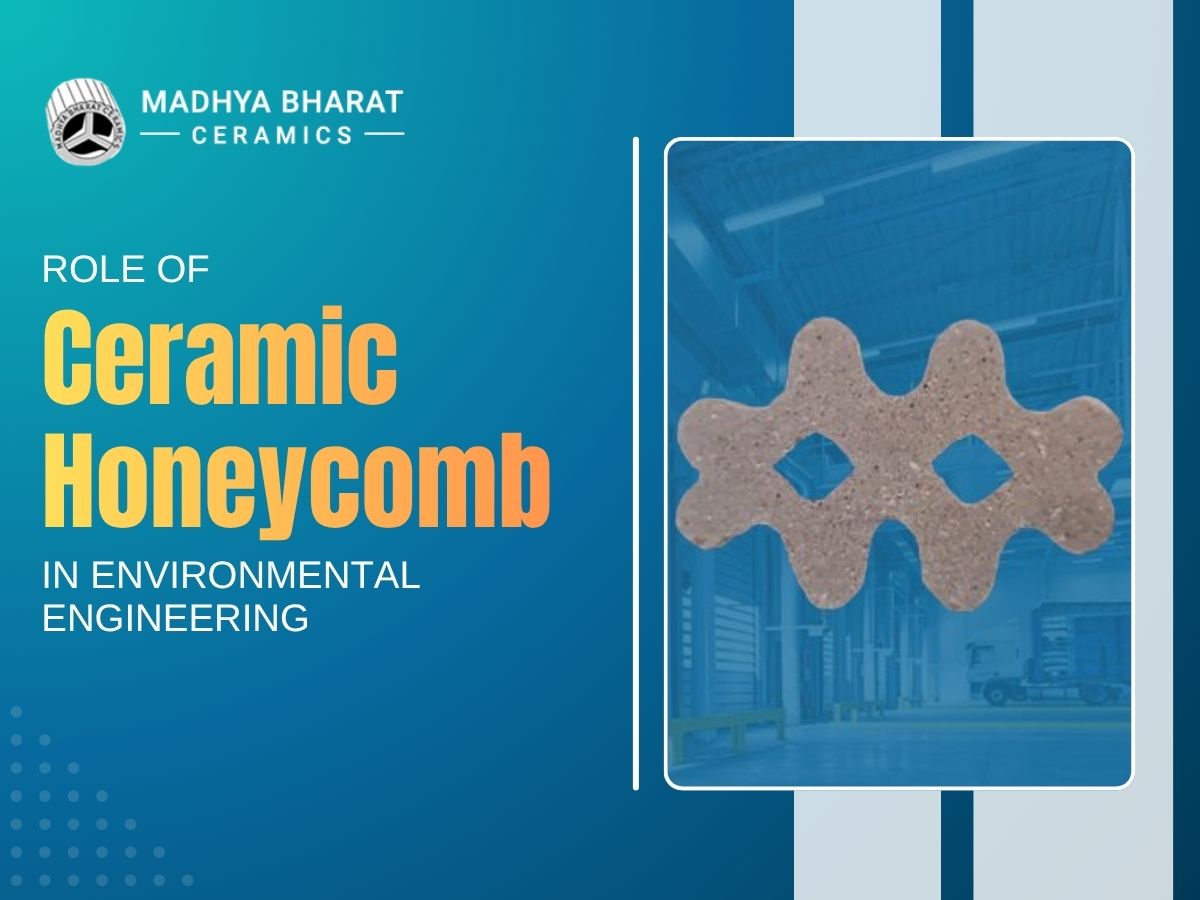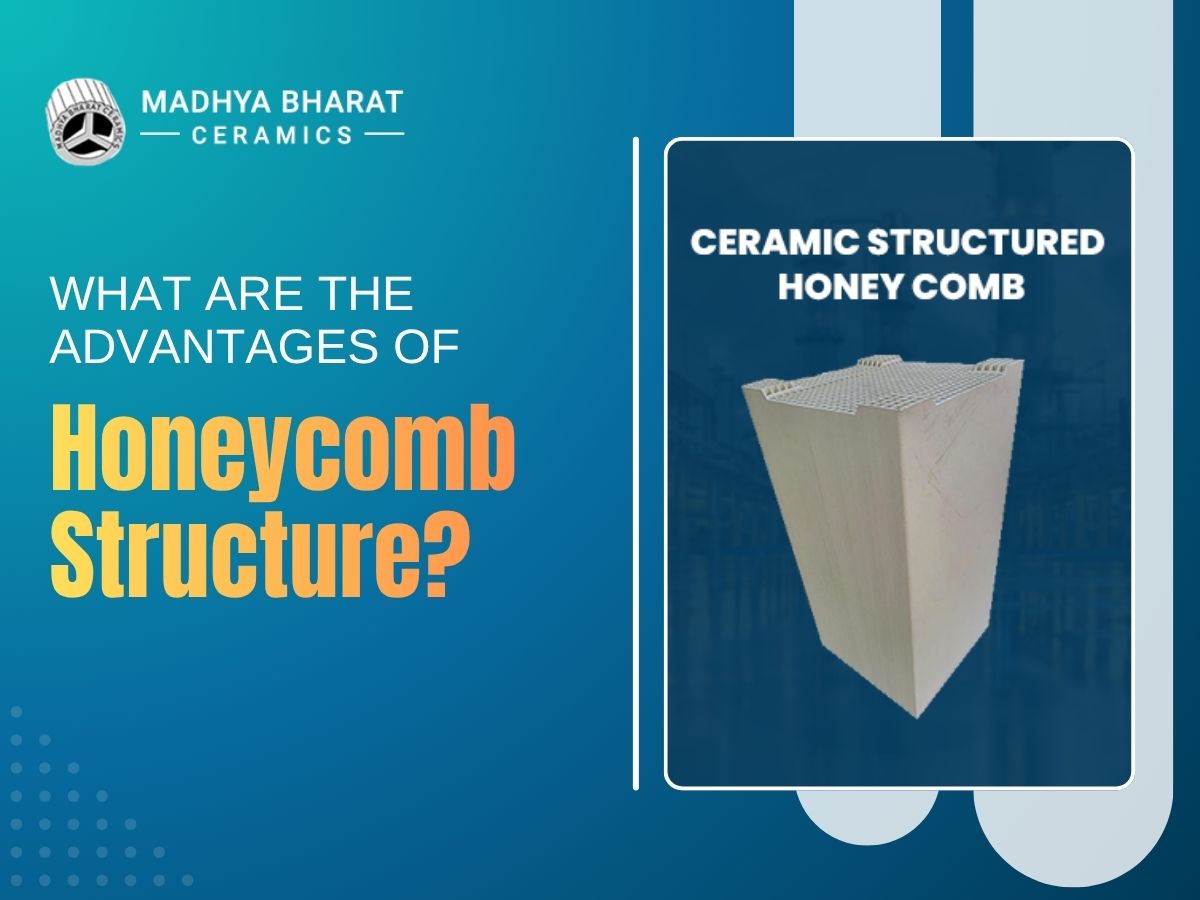
When an automotive exhaust manufacturer in Pune needed a catalyst support that could handle rapid thermal cycling, resist chemical attack, and maintain structural integrity under continuous vibration, the answer was a ceramic structured honeycomb substrate engineered specifically for their process conditions. This single application illustrates why honeycomb structures have become one of the most widely specified geometries in industrial engineering. According to materials science research published by the American Ceramic Society, honeycomb geometries deliver strength-to-weight ratios up to five times higher than solid material of equivalent cross-section. As a leading ceramic structured honeycomb manufacturer in India, MBC supplies these precision-engineered components to chemical, automotive, environmental, and thermal processing industries across domestic and international markets.
What Is a Honeycomb Structure and Why Does It Work?
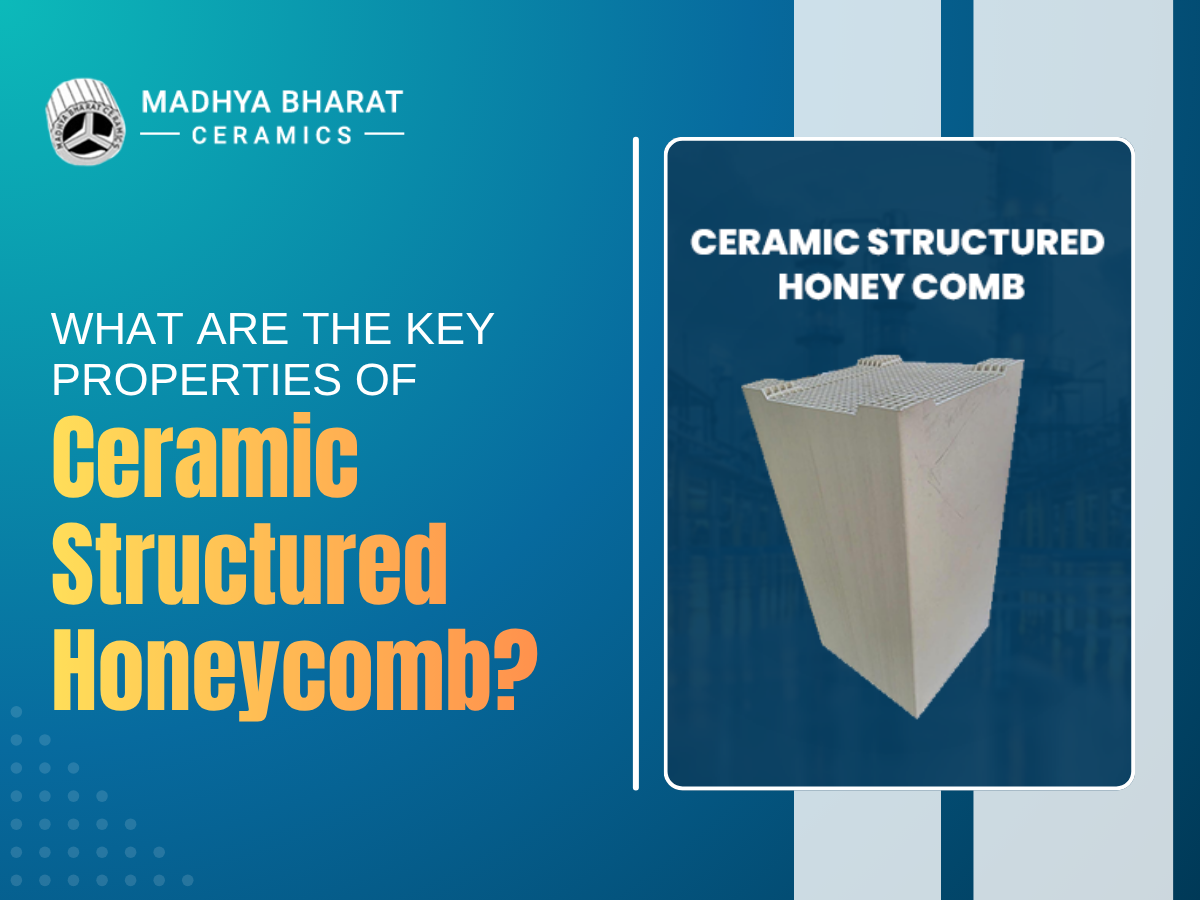
A honeycomb structure is a geometric arrangement of repeating cells, typically hexagonal, that share walls between adjacent cells. This geometry was observed and studied in natural beehive construction for centuries before engineers adapted it for industrial materials. The hexagonal cell geometry distributes applied loads evenly across all cell walls simultaneously, which is the fundamental reason for its exceptional structural efficiency in engineering.
The physics behind honeycomb strength involve two principles working together. First, the shared wall geometry means no wall bears load alone. Second, the enclosed cell spaces create resistance to both compression and lateral shear forces without requiring solid material to fill the volume. The result is a structure that is simultaneously light, strong, and thermally efficient.
Ceramic structured honeycomb takes these geometric advantages and adds the material properties of fired ceramic: thermal stability, chemical resistance, and dimensional precision across temperature cycles that would deform metal or degrade polymer honeycomb alternatives.
Advantage 1: High Strength-to-Weight Ratio
The most cited advantage of honeycomb design in engineering literature is its exceptional high strength-to-weight ratio. This property is not incidental. It is a direct mathematical consequence of the geometry.
In a hexagonal honeycomb structure, approximately 90 to 95% of the total volume is open space. The remaining 5 to 10% of material, arranged as cell walls, carries all the structural load. This concentration of material at maximum geometric efficiency produces compressive and flexural strength values that would require far more material to achieve in a solid or foam structure.
Practical implications of high strength-to-weight ratio in ceramic honeycomb:
- Catalyst support substrates in automotive catalytic converters can be made thin enough to reduce vehicle weight without compromising catalytic surface area
- Heat exchanger cores using ceramic honeycomb structure provide maximum thermal contact area with minimum material mass
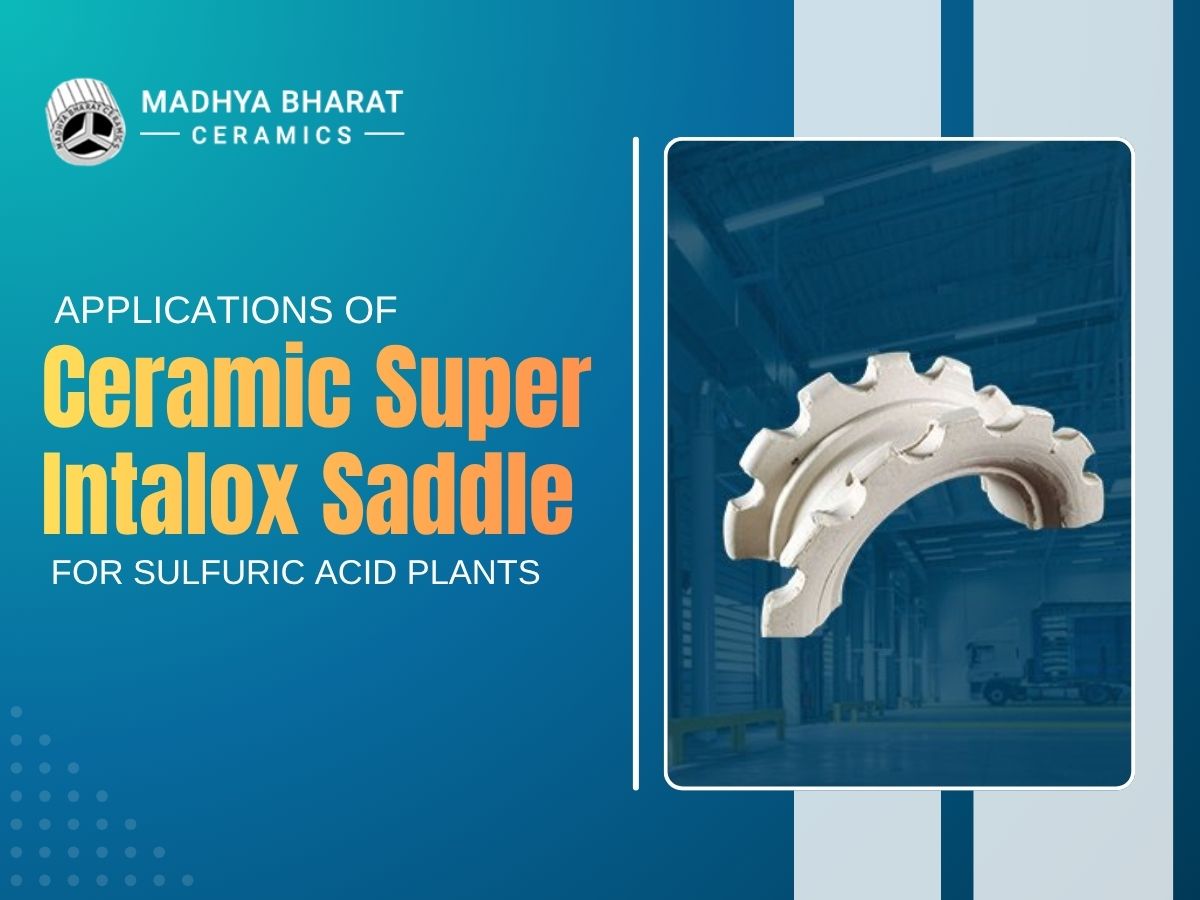
- Tower packing applications benefit from lower bed weight, reducing structural loading on column internals
- Transport and installation of ceramic structured honeycomb modules is easier and safer than equivalent solid ceramic components
Advantage 2: Exceptional Thermal Insulation Properties
Thermal insulation properties of honeycomb structures arise from the same geometric principle that creates their mechanical strength. The enclosed air or gas pockets within each cell act as thermal barriers, slowing heat transfer through the structure by conduction.
In ceramic honeycomb applications, this thermal insulation effect is compounded by the low thermal conductivity of the ceramic material itself. The combination of cell geometry and ceramic material properties produces a structure that can maintain large temperature differentials across its thickness with minimal heat loss.
Thermal performance data for ceramic honeycomb structures:
| Property | Ceramic Honeycomb | Solid Ceramic | Metal Honeycomb | Polymer Foam |
| Maximum operating temperature | 1200 to 1600 degrees C | 1400 degrees C | 400 to 800 degrees C | 80 to 180 degrees C |
| Thermal conductivity | Low to moderate | Moderate to high | High | Very low |
| Thermal shock resistance | Good to excellent | Good | Excellent | Poor |
| Insulation efficiency | High | Moderate | Low | Very high |
| Chemical resistance | Excellent | Excellent | Poor to moderate | Variable |
Industrial applications that specifically benefit from thermal insulation properties of ceramic honeycomb include regenerative thermal oxidizers, kiln furniture systems, high-temperature heat exchangers, and catalytic combustion reactors.
Advantage 3: Superior Energy Absorption Capability
Energy absorption capability is the third major advantage of honeycomb geometry and the one that makes it indispensable in impact protection, acoustic control, and vibration damping applications.
When a honeycomb structure is subjected to impact loading, the individual cell walls buckle progressively rather than failing catastrophically. This progressive buckling absorbs the kinetic energy of the impact across a controlled deformation zone, converting it to heat and deformation work rather than allowing it to transmit as a shock wave through the structure.
Applications where energy absorption is the primary selection criterion:
- Automotive crash barriers and energy-absorbing bumper cores
- Aerospace structural panels where bird strike and impact resistance is required
- Industrial packaging for fragile equipment and precision instruments
- Acoustic damping panels in high-noise industrial environments where ceramic honeycomb provides simultaneous sound absorption and thermal stability
The energy absorption efficiency of honeycomb structures increases with cell wall slenderness ratio. This means that honeycomb design can be tuned for specific impact energy levels by adjusting cell size, wall thickness, and material grade during manufacture.
Advantage 4: Maximum Surface Area in Minimum Volume
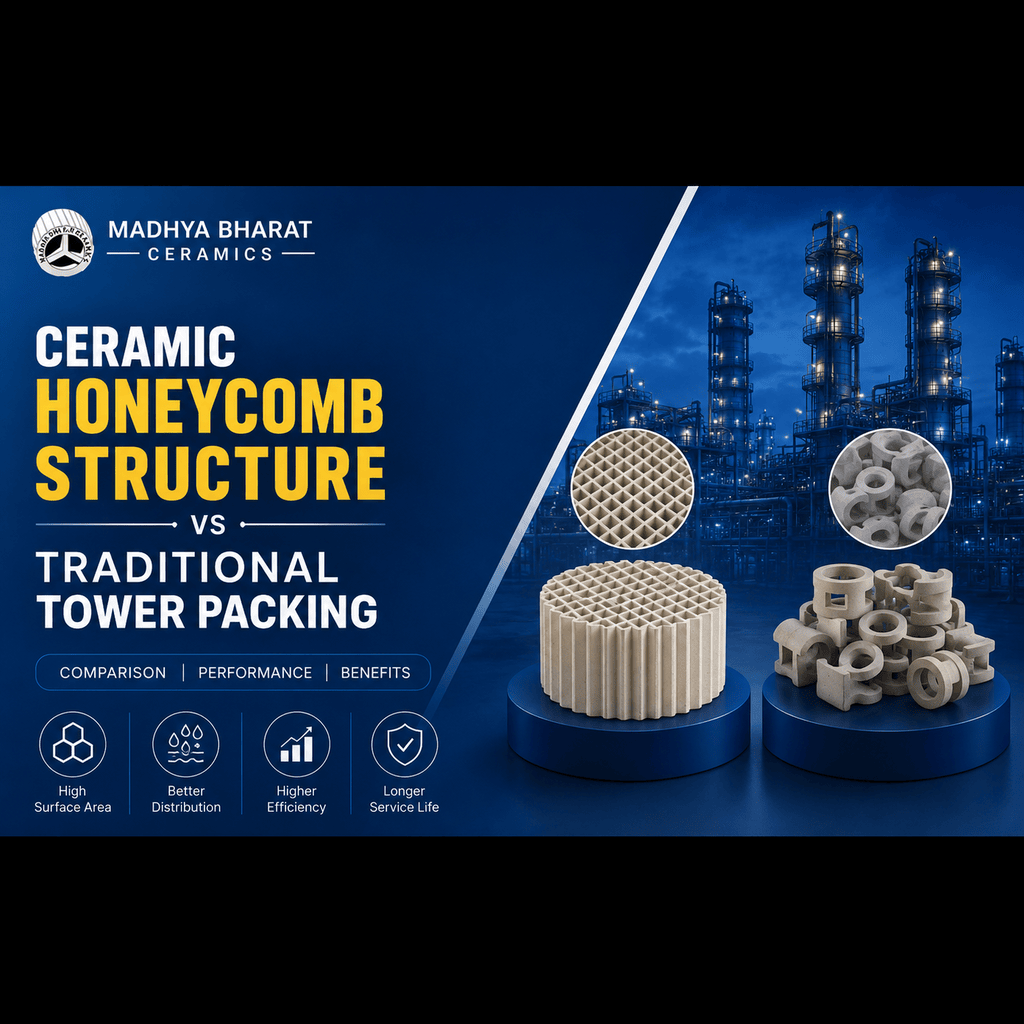
One of the most industrially valuable advantages of honeycomb structures is the extraordinarily high surface area they provide within a compact geometric envelope. For catalytic and chemical process applications, surface area directly determines reaction efficiency, and ceramic honeycomb substrates are specifically engineered to maximize this parameter.
Surface area comparison for common industrial packing and substrate geometries:
| Structure Type | Geometric Surface Area | Open Frontal Area | Pressure Drop | Thermal Mass |
| Ceramic honeycomb (400 cpsi) | 2700 square metres per cubic metre | 75 to 80% | Very low | Moderate |
| Ceramic honeycomb (200 cpsi) | 1900 square metres per cubic metre | 80 to 85% | Very low | Low |
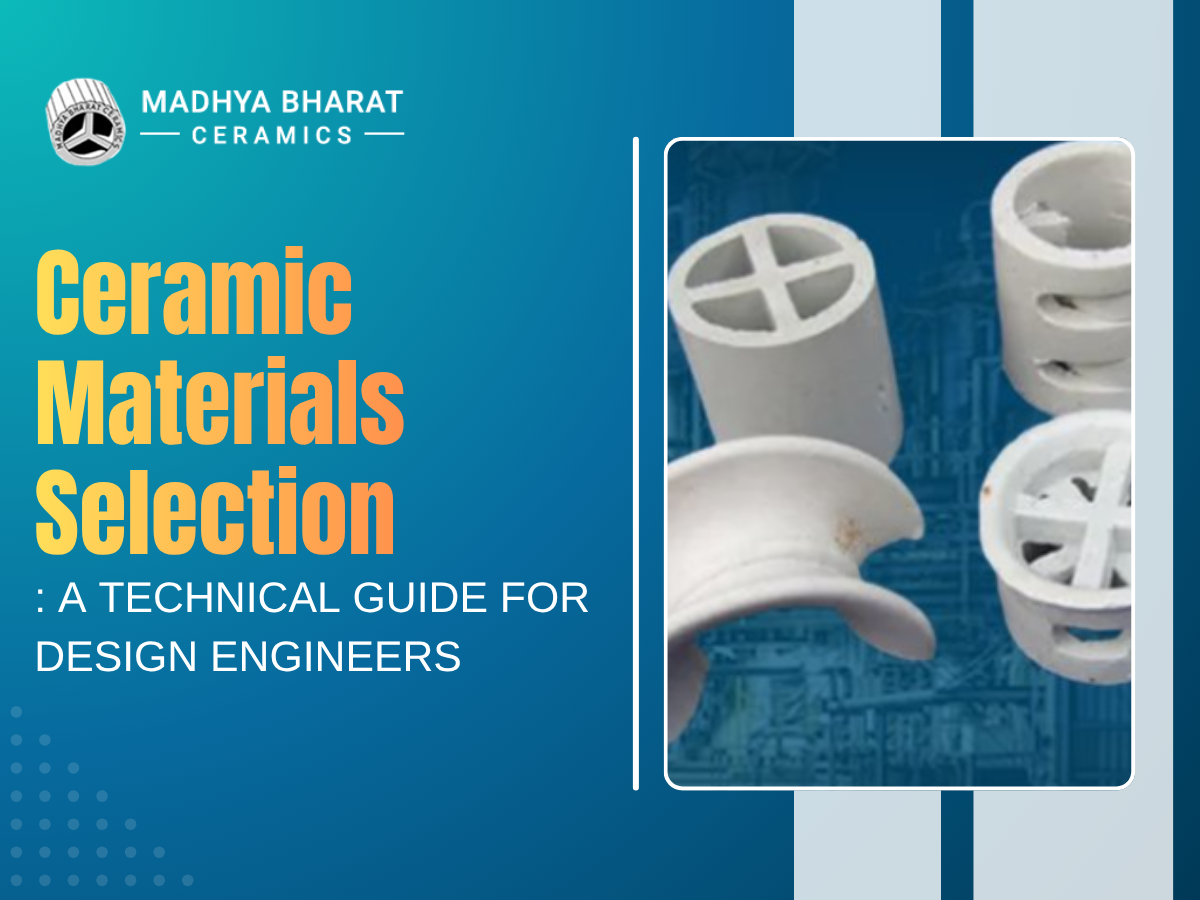
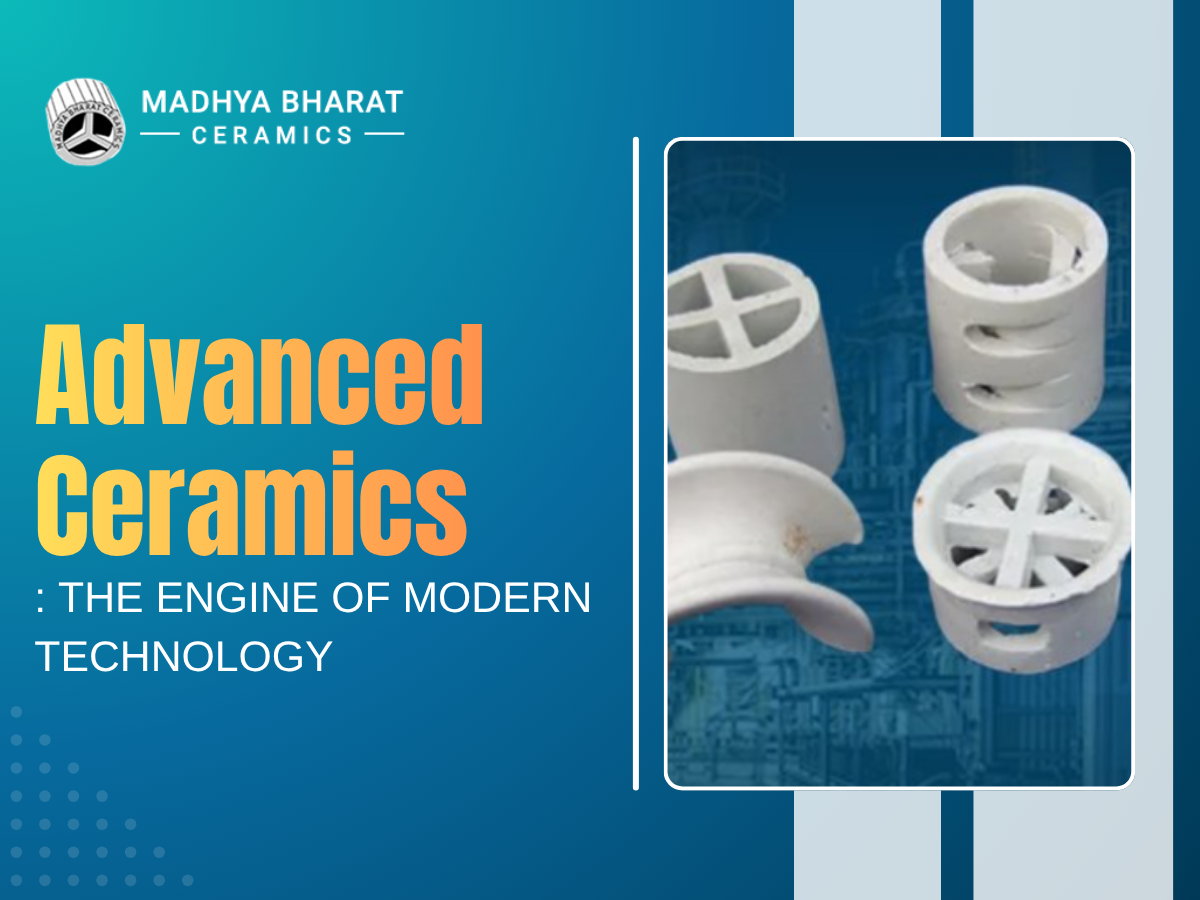
| Ceramic Raschig rings | 200 to 300 square metres per cubic metre | 60 to 70% | Moderate | High |
| Ceramic saddle packing | 250 to 350 square metres per cubic metre | 65 to 75% | Moderate | High |
| Structured metal packing | 250 to 500 square metres per cubic metre | 95 to 99% | Very low | Low |
The data shows that ceramic structured honeycomb provides surface area values 5 to 10 times higher than conventional random packing geometries, while maintaining low pressure drop due to the straight, unobstructed flow channels through the honeycomb cells.
Advantage 5: Chemical Resistance and Dimensional Stability
Ceramic honeycomb structure combines the geometric advantages of honeycomb design with the chemical inertness that ceramic materials inherently provide. This combination makes ceramic structured honeycomb the preferred substrate in chemically aggressive process environments where metal or polymer honeycomb would degrade rapidly.
Chemical resistance profile of ceramic honeycomb:
- Resistant to all mineral acids including sulfuric, hydrochloric, nitric, and phosphoric acid
- Resistant to most organic acids and solvents
- Resistant to oxidizing atmospheres including chlorine and ozone at elevated temperatures
- Unaffected by hydrocarbon streams in petroleum refining and petrochemical applications
- Resistant to steam and condensate at all operating temperatures within the ceramic’s thermal range
Dimensional stability is equally important in precision applications. Ceramic honeycomb maintains its cell geometry and channel dimensions within tight tolerances across thousands of thermal cycles. This consistency ensures that pressure drop, flow distribution, and catalytic performance remain predictable throughout the service life of the component.
Where Is Honeycomb Structure Used? Industrial Applications
Understanding where honeycomb structure is used provides practical context for its advantages. The range of applications is broader than most engineers initially expect.
Primary industrial applications of ceramic structured honeycomb:
- Catalytic converters: Automotive and industrial exhaust treatment using honeycomb substrates coated with platinum, palladium, and rhodium catalysts
- Regenerative thermal oxidizers (RTOs): Ceramic honeycomb heat exchange media stores and releases thermal energy to achieve over 95% heat recovery efficiency
- SCR systems: Selective catalytic reduction of nitrogen oxides in power plant and industrial boiler flue gas streams
- Heat exchangers: Compact ceramic honeycomb heat exchanger cores for high-temperature gas-to-gas heat recovery
- Kiln furniture: Structural honeycomb supports for ceramic firing processes requiring lightweight, high-temperature components
- Air filtration: Ceramic honeycomb filters for particulate removal from high-temperature industrial gas streams
- Aerospace structures: Lightweight structural panels using ceramic or composite honeycomb cores in airframe and thermal protection applications
Why Ceramic Structured Honeycomb in Mandsaur and India?
Ceramic structured honeycomb in Mandsaur and across India benefits from the country’s established ceramic manufacturing infrastructure, domestic raw material availability, and a growing base of technically skilled manufacturing engineers. Ceramic structured honeycomb suppliers in India export to automotive manufacturers, chemical plants, and environmental engineering contractors across Asia, Europe, and North America.
Advantages of Honeycomb Structure vs. Alternative Designs
Advantages of ceramic honeycomb structure in industrial applications become clearest when compared directly against competing design approaches for the same engineering function.
| Performance Criterion | Ceramic Honeycomb | Random Ceramic Packing | Foam Ceramic | Structured Metal |
| Strength-to-weight ratio | Excellent | Moderate | Good | Excellent |
| Surface area per volume | Very high | Moderate | High | High |
| Pressure drop | Very low | Moderate to high | Low | Very low |
| Temperature resistance | Up to 1600 degrees C | Up to 1400 degrees C | Up to 1200 degrees C | Up to 800 degrees C |
| Chemical resistance | Excellent | Excellent | Good | Poor to moderate |
| Dimensional precision | Excellent | Poor | Moderate | Excellent |
| Flow distribution uniformity | Excellent | Poor | Good | Good |
| Manufacturing scalability | High | High | Moderate | Moderate |
The data confirms that ceramic honeycomb design advantages are most pronounced in applications combining high temperature, chemical exposure, low pressure drop requirements, and high surface area demand simultaneously.
Case Study
A petrochemical facility in Gujarat was operating a regenerative thermal oxidizer for volatile organic compound destruction with standard random ceramic saddle packing as the heat exchange media. After two years of operation, the facility reported the following problems:
- Heat recovery efficiency had declined from 92% at startup to 78%, increasing fuel consumption significantly
- Pressure drop across the heat exchange beds had increased by 35%, requiring additional fan power
- Ceramic packing replacement was required every 18 months due to attrition and settling
Solution: The facility engineering team, in consultation with MBC as their ceramic structured honeycomb supplier, replaced the random packing beds with 200 CPSI ceramic structured honeycomb modules of equivalent bed volume.
Performance comparison after 24 months of operation:
| Parameter | Random Ceramic Packing | Ceramic Structured Honeycomb |
| Heat recovery efficiency | Declined to 78% | Stable at 95% |
| Pressure drop vs. design | 35% above design | Within 2% of design |
| Fuel consumption | Increased 18% above baseline | Reduced 12% below baseline |
| Replacement frequency | Every 18 months | No replacement required at 24 months |
| Annual operating cost impact | Significant increase | Reduced by approximately 28% |
| Mechanical integrity at 24 months | Significant attrition | No measurable degradation |
Facility operations manager’s assessment: “The switch to ceramic honeycomb structure changed our RTO economics completely. We recovered the capital cost of the module replacement within 14 months through fuel savings alone. The pressure drop stability has been remarkable.”
FAQ’s About Honeycomb Structure Advantages
Q1. What are the main advantages of honeycomb structure in engineering?
Honeycomb structures provide high strength-to-weight ratio, excellent thermal insulation, superior surface area, and outstanding energy absorption capability.
Q2. Why is ceramic honeycomb used in industrial applications?
Ceramic honeycomb combines geometric efficiency with thermal stability, chemical resistance, and dimensional precision for demanding industrial process conditions.
Q3. What is the strength-to-weight ratio advantage of honeycomb structures?
Honeycomb geometry achieves up to five times higher strength-to-weight ratio than solid material of equivalent cross-section.
Q4. How does honeycomb structure improve thermal insulation?
Enclosed air cells within honeycomb geometry slow heat transfer by conduction, significantly improving insulation efficiency across the structure.
Q5. Where is ceramic structured honeycomb commonly used industrially?
Ceramic honeycomb is used in catalytic converters, regenerative thermal oxidizers, SCR systems, heat exchangers, and kiln furniture applications.
Q6. What temperature can ceramic honeycomb structures withstand?
High-alumina ceramic honeycomb structures withstand continuous operating temperatures between 1200 and 1600 degrees Celsius depending on composition.
Q7. How does honeycomb structure reduce pressure drop in process systems?
Straight, unobstructed honeycomb channels allow gas to flow with minimal turbulence, producing very low pressure drop across the bed.
Q8. Why choose ceramic structured honeycomb suppliers from India?
Indian manufacturers offer certified quality, competitive pricing, large-volume supply capability, and export experience across global industrial markets.
Conclusion
Honeycomb structures deliver a uniquely complete combination of mechanical strength, thermal performance, chemical resistance, and surface area efficiency that no alternative geometry matches across all performance criteria simultaneously. The advantages of ceramic honeycomb design are not theoretical. They are demonstrated in operating industrial facilities worldwide across automotive, chemical, environmental, and aerospace applications every day. Choosing a certified ceramic structured honeycomb manufacturer in India with proven engineering capability, documented quality systems, and application-specific design expertise is the foundation of every successful honeycomb structure installation, from specification through to long-term operational performance