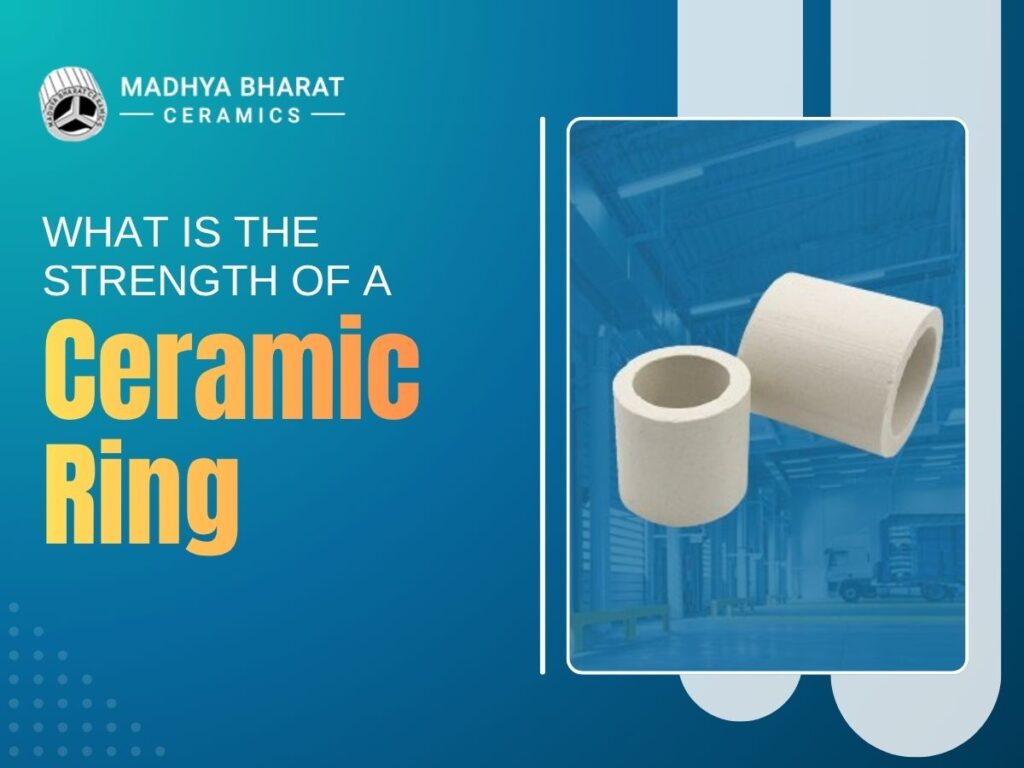
When a chemical plant in Gujarat needed tower packing that could withstand temperatures above 1000 degrees Celsius and continuous acid exposure without structural failure, the solution was high-alumina ceramic rings sourced from specialized ceramic ring manufacturers in India. This real-world demand reflects a broader industrial truth: ceramic rings are among the most mechanically and thermally resilient packing materials available in process engineering today. According to published materials science data, high-quality industrial ceramic rings achieve compressive strength values between 60 and 120 megapascals, making them significantly stronger under load than plastic or metal alternatives in high-temperature, high-corrosion environments. Understanding what gives ceramic rings their strength is essential for engineers, procurement specialists, and plant managers selecting the right packing for their specific process conditions.
What Makes Ceramic Rings Structurally Strong?
The mechanical strength of ceramics derives from the atomic bonding structure of the material itself. Unlike metals, which deform plastically under stress, ceramics fail through brittle fracture. This means that within their load tolerance, ceramic rings maintain their shape and dimensions with exceptional precision even under continuous mechanical stress.
The primary structural strength factors in ceramic ring packing materials are:
- Alumina (Al2O3) content: Higher alumina percentage directly increases both compressive strength and thermal stability. Standard industrial ceramic rings contain 15 to 30% alumina, while high-performance rings contain 90 to 99% alumina
- Firing temperature during manufacture: Rings fired at higher kiln temperatures develop denser, more tightly bonded microstructures with fewer internal voids
- Wall thickness and geometry: The Raschig ring, saddle ring, and structured ring geometries each distribute compressive load differently, affecting the effective strength per unit of packing volume
- Raw material purity: Impurities in the ceramic body reduce strength by creating stress concentration points within the microstructure
The combination of these factors explains why the compressive strength of ceramic rings varies significantly between manufacturers and product grades, making material specification a critical procurement decision.
What Is the Compressive Strength of Ceramic Rings in Industrial Use?
Compressive strength is the most important mechanical property for tower packing applications. It determines how much load a ceramic ring can bear before fracturing, which directly affects packing bed integrity, column pressure drop stability, and maintenance frequency.
Published compressive strength data for common ceramic tower packing types:
| Ceramic Ring Type | Alumina Content | Compressive Strength | Max Operating Temp | Chemical Resistance |
| Standard Raschig Ring | 15 to 20% | 60 to 75 MPa | 800 degrees C | Good |
| High Alumina Raschig Ring | 90 to 95% | 100 to 120 MPa | 1400 degrees C | Excellent |
| Ceramic Pall Ring | 20 to 30% | 55 to 80 MPa | 900 degrees C | Good |
| Ceramic Saddle Ring | 20 to 25% | 50 to 70 MPa | 850 degrees C | Good |
| High Purity Alumina Ring | 99% | 120 to 150 MPa | 1600 degrees C | Superior |
| Ceramic Intalox Saddle | 22 to 28% | 60 to 85 MPa | 900 degrees C | Good |
These values represent industry benchmarks. Actual compressive strength varies by manufacturer based on raw material sourcing, milling consistency, and kiln control precision. Reputable ceramic ring manufacturers provide certified test data with each product batch to confirm compliance with specified strength parameters.
How Strong Are Ceramic Rings in High Temperature Environments?
Thermal resistance of ceramic packing is one of the defining advantages of ceramic rings over competing packing materials. While plastic packing begins to deform at temperatures above 120 degrees Celsius and metal packing is susceptible to corrosion and oxidation at elevated temperatures, ceramic rings maintain their structural integrity across a far wider operational range.
The thermal strength of ceramic rings in industrial applications is supported by three material properties:
Thermal shock resistance: High-quality ceramic rings can withstand rapid temperature changes without cracking. This is particularly important in processes involving steam injection, quench cooling, or cyclical thermal loading. Rings with lower thermal expansion coefficients are specifically selected for these applications.
Creep resistance: Unlike metals, which can slowly deform under sustained load at elevated temperature (creep), ceramics maintain their dimensional stability indefinitely at temperatures well below their melting point. This means a ceramic packing bed installed correctly maintains its void fraction and pressure drop characteristics for years of continuous operation.
Refractoriness: High-alumina ceramic rings used in thermal oxidizers, catalytic reactors, and heat recovery systems operate continuously at temperatures between 900 and 1400 degrees Celsius. No plastic or standard metal packing material can function in this range.
Chemical Durability: Why Ceramic Rings Resist Corrosion
Chemical durability of ceramic materials is the second primary reason ceramic rings are specified for demanding industrial processes. Chemical plants, refineries, acid production facilities, and pharmaceutical manufacturers all require packing that will not degrade, leach contaminants, or react with process streams.
Ceramic rings resist the following chemical environments:
- All inorganic acids including sulfuric acid, hydrochloric acid, nitric acid, and phosphoric acid at virtually all concentrations
- Most organic acids and organic solvents
- Alkali solutions at moderate concentrations (with the exception of hydrofluoric acid and concentrated alkali at high temperature, which attack silicate-based ceramics)
- Oxidizing agents including chlorine, bromine, and hydrogen peroxide
- High-temperature steam and combustion gases
Factors affecting chemical resistance in ceramic rings:
- Higher alumina content increases resistance to both acidic and alkaline attack
- Dense, low-porosity microstructures resist chemical penetration more effectively than porous bodies
- Glaze coatings on some ceramic rings provide an additional barrier layer for specific chemical applications
This combination of acid resistance, alkali tolerance, and thermal stability explains why ceramic packing materials remain the preferred choice for sulfuric acid towers, chlorine scrubbers, nitric acid absorption columns, and solvent recovery systems worldwide.
Strength Comparison: Ceramic Rings vs Plastic Packing
Understanding how ceramic rings compare to plastic and metal alternatives helps engineers make the right specification decision for each process column.
Strength comparison between ceramic rings and plastic packing:
| Property | Ceramic Rings | Plastic Packing | Metal Packing |
| Compressive strength | 60 to 150 MPa | 5 to 20 MPa | 30 to 80 MPa |
| Maximum operating temperature | 800 to 1600 degrees C | 80 to 180 degrees C | 400 to 800 degrees C |
| Acid resistance | Excellent | Good to Excellent | Poor to Good |
| Alkali resistance | Good | Excellent | Poor |
| Oxidation resistance | Excellent | Variable | Poor to Good |
| Density | High | Low | High |
| Cost per unit | Moderate | Low | High |
| Lifespan in harsh conditions | 10 to 20 years | 3 to 7 years | 5 to 15 years |
The data shows that ceramic tower packing provides unmatched performance in high-temperature and strongly acidic environments, while plastic packing is preferred in lower-temperature, strongly alkaline, or weight-sensitive applications. Metal packing occupies a niche in moderate-temperature, high-mechanical-load applications where ceramic brittleness is a concern.
Factors Affecting the Strength of Ceramic Ring Packing Materials
Not all ceramic rings of the same nominal size and material grade perform identically. Several production and handling variables affect the final load-bearing capacity of ceramic rings delivered to an industrial site.
Manufacturing factors:
- Raw material consistency: Variation in clay, alumina, and silica particle size distribution affects green body density before firing and final sintered strength
- Mixing and forming process: Extrusion, dry pressing, and slip casting produce rings with different internal microstructures and strength distributions
- Kiln temperature control: Temperature variations within the kiln during firing create strength gradients across a single batch
- Quality control testing: Reputable ceramic ring manufacturers perform batch compressive strength testing, dimensional verification, and water absorption testing before dispatch
Handling and installation factors:
- Dropping ceramic rings during loading damages edges and creates micro-cracks that reduce effective strength by 15 to 30%
- Hydraulic hammer effects from liquid surges in operating columns can fracture rings with pre-existing micro-cracks
- Thermal shock during initial column startup, if temperature ramp rates are too rapid, can create internal stresses that reduce long-term strength
Specifying rings from certified ceramic ring manufacturers in India with documented quality management systems significantly reduces the risk of substandard material reaching the column.
Why Indian Ceramic Ring Manufacturers Lead in Quality and Supply
India has become one of the world’s most important sources of industrial ceramic packing, with ceramic ring manufacturers in India supplying process industries across Southeast Asia, the Middle East, Europe, and North America. This position reflects several competitive advantages:
- Access to high-quality raw materials including bauxite, china clay, and silica from domestic mineral deposits
- Established ceramic manufacturing clusters in Gujarat, Rajasthan, and Andhra Pradesh with decades of production expertise
- Competitive manufacturing costs that allow Indian ceramic ring exporters to supply international markets at price points below European and North American manufacturers
- Growing adoption of ISO 9001 and international quality standards among leading Indian producers
- Rapid scale-up capability to fulfill large-volume orders for major industrial projects
Leading ceramic ring suppliers from India export to petroleum refineries, chemical processing plants, fertilizer manufacturers, water treatment facilities, and environmental control systems globally. The combination of material quality, production scale, and competitive pricing positions Indian manufacturers as preferred suppliers for both standard and high-specification ceramic packing requirements.
The Purpose of Ceramic Rings: Benefits and Applications
Understanding the purpose of ceramic rings: benefits and applications clarifies why these materials remain irreplaceable in specific process engineering contexts despite the development of advanced plastic and structured metal packings.
Primary industrial applications:
- Distillation columns: Petroleum refining, chemical separation, and alcohol distillation all use ceramic packing in high-temperature sections
- Absorption towers: Acid gas scrubbing, ammonia absorption, and carbon dioxide capture systems use ceramic rings for chemical resistance
- Stripping columns: Steam stripping of organics from wastewater uses ceramic packing for combined thermal and chemical resistance
- Thermal oxidizers: Ceramic rings serve as heat storage and distribution media in regenerative thermal oxidizers
- Catalytic reactors: Inert ceramic rings are used as bed supports and flow distributors in fixed-bed catalytic processes
Key benefits of ceramic rings in these applications:
- Consistent void fraction and surface area across the full operating life of the column
- No contamination of process streams from material degradation or leaching
- Compatibility with cleaning-in-place procedures using acid or alkali wash cycles
- Dimensional stability that maintains designed pressure drop and mass transfer performance
Case Study
A sulfuric acid manufacturer in Maharashtra was experiencing rapid degradation of their absorption tower packing. The previous supplier had provided standard ceramic Raschig rings with 18% alumina content. After 14 months of operation, compressive strength testing of removed packing showed a strength reduction of over 40% from the original specification, and the packing bed had settled by approximately 12%, increasing pressure drop and reducing absorption efficiency.
Problem identified: Low alumina content rings were insufficient for the combined thermal and chemical stress of continuous sulfuric acid absorption at operating temperatures between 180 and 220 degrees Celsius.
Solution: The plant engineering team specified high-alumina ceramic Raschig rings with 90% alumina content from a certified ceramic ring manufacturer in India with documented batch testing and ISO 9001 quality management certification.
Results after 18 months of operation with upgraded ceramic rings:
| Parameter | Previous Rings (18% Alumina) | Upgraded Rings (90% Alumina) |
| Compressive strength after 18 months | Reduced by 40% | Reduced by less than 5% |
| Packing bed settlement | 12% over 14 months | Less than 1% over 18 months |
| Pressure drop increase | 18% above design | Within 3% of design |
| Absorption efficiency | Declining | Stable at design specification |
| Replacement frequency | Every 14 months | Projected 8 to 10 year lifespan |
| Annual packing replacement cost | High | Reduced by approximately 70% |
Plant engineering manager’s assessment: “Specifying higher alumina content rings from a manufacturer who could provide batch test certification completely changed our maintenance economics. The upfront cost difference was recovered within the first operating year through reduced replacement frequency and improved process efficiency.”
Frequently Asked Questions: Ceramic Ring Strength
Q1. What is the compressive strength of ceramic rings in industrial use?
Industrial ceramic rings achieve compressive strength between 60 and 150 MPa depending on alumina content and manufacturing quality.
Q2. How strong are ceramic rings compared to plastic packing in tower systems?
Ceramic rings are 3 to 10 times stronger than plastic packing and operate at temperatures plastic cannot withstand.
Q3. What factors affect the strength of ceramic ring packing materials?
Alumina content, firing temperature, raw material purity, wall geometry, and manufacturing quality control all directly affect ceramic ring strength.
Q4. Why do ceramic rings have high mechanical and thermal strength?
Ceramic atomic bonding structure, dense sintered microstructure, and high alumina content combine to produce superior mechanical and thermal performance.
Q5. How long do ceramic rings last in industrial column applications?
High-quality ceramic rings in suitable applications last 10 to 20 years, significantly longer than plastic or metal alternatives.
Q6. What temperature can ceramic rings withstand during continuous operation?
Standard ceramic rings withstand up to 800 degrees Celsius. High-alumina rings operate continuously at 1400 degrees Celsius or above.
Q7. Are ceramic ring manufacturers in India internationally certified?
Leading Indian manufacturers hold ISO 9001 certification and supply to international standards including ASTM and DIN specifications.
Q8. What is the best ceramic ring type for acid absorption tower applications?
High-alumina Raschig rings or ceramic Pall rings with 90 to 99% alumina content are recommended for acid absorption service.
Conclusion
Ceramic rings deliver a combination of compressive strength, thermal resistance, and chemical durability that no plastic or metal packing material can match across the full range of demanding industrial process conditions. The strength of a ceramic ring is not a single fixed value but a carefully engineered property determined by alumina content, manufacturing precision, and quality control discipline. Selecting rings from reputable ceramic ring manufacturers in India with certified strength data and documented quality management systems ensures that the packing installed in your column performs to specification for its full intended service life, protecting both process efficiency and capital investment.