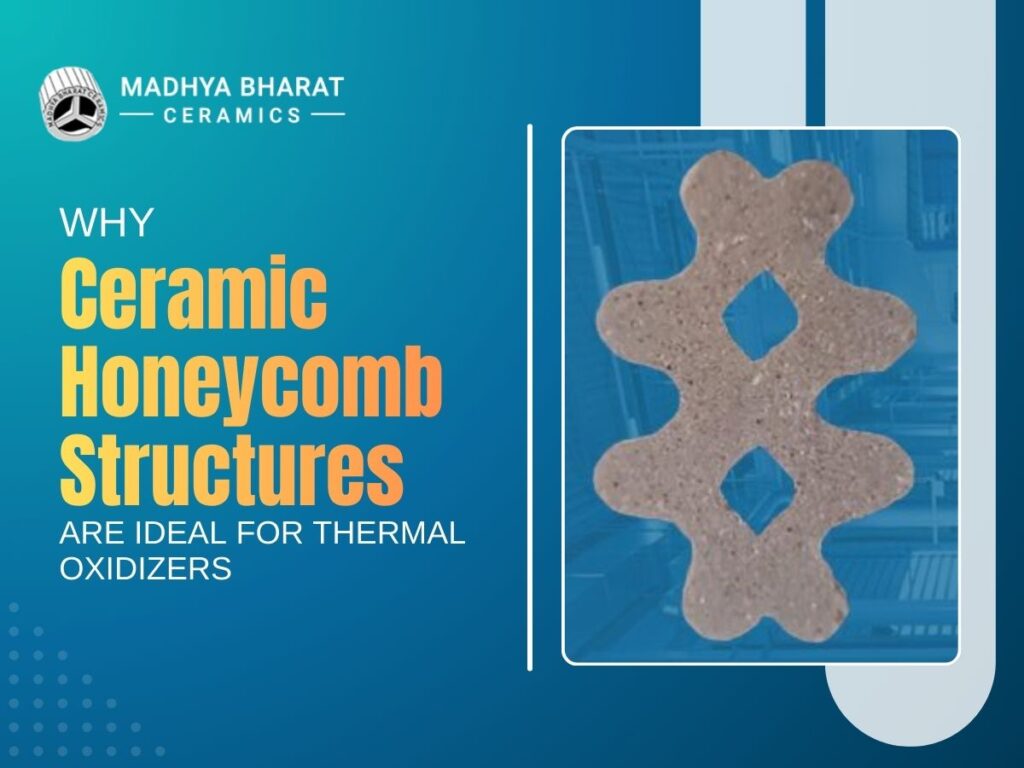
Industrial plants release gases during production. Many of these gases contain pollutants that must be treated before release into the environment. Thermal oxidizers are widely used systems that burn harmful gases at high temperatures. These systems require materials that can store and transfer heat efficiently.
This is where Ceramic Honeycomb Structures in Mandsaur become very important. These materials are designed with a honeycomb pattern that allows gases to flow smoothly while storing heat inside the structure. Because of this design, they help thermal oxidizers operate efficiently and reduce energy consumption.
The honeycomb structure provides a large surface area. This improves heat exchange inside the system and supports the operation of thermal oxidizer media used in many industries.
How Ceramic Honeycomb Structure Works in Thermal Oxidizer Systems
A ceramic honeycomb structure is designed with many small channels that run through the material. These channels allow hot gases to pass through while transferring heat to the ceramic walls.
This process helps store heat inside the structure. When cooler gases enter the system later, the stored heat warms them quickly. This heat exchange process improves the overall efficiency of the oxidizer.
Because of this design, the material works as regenerative thermal oxidizer material that supports continuous heat recovery.
Important working features include:
- High surface area for heat transfer
- Uniform gas flow through honeycomb channels
- Efficient heat storage and release
- Stable structure under high temperatures
- Reduced energy consumption in oxidizer systems
Another advantage is the ability of these materials to function as industrial air pollution control media. They support the removal of harmful gases while maintaining stable heat recovery.
These benefits explain why ceramic honeycomb structures are used in thermal oxidizers across many industries.
Benefits of Ceramic Honeycomb Structures in Mandsaur for Heat Recovery
Efficient heat recovery is one of the main goals of thermal oxidizer systems. When heat is reused instead of wasted, industrial plants can reduce fuel consumption and operational costs.
Ceramic Honeycomb Structures in Mandsaur are widely used because they act as heat recovery ceramic media inside regenerative oxidizers.
Their honeycomb pattern allows large volumes of air to move through the structure while capturing heat from exhaust gases.
Key advantages include:
- High thermal storage capacity
- Efficient heat transfer between gas streams
- Strong resistance to thermal shock
- Long service life in industrial conditions
- Improved efficiency of thermal oxidizer operations
These benefits help improve the performance of high temperature ceramic heat exchanger systems used in pollution control technologies.
Because the material can withstand extreme temperatures, it is often considered the best ceramic honeycomb structure for regenerative thermal oxidizer heat recovery.
Role of Ceramic Honeycomb Structure Manufacturer in Industrial Quality
The quality of thermal oxidizer systems depends heavily on the materials used inside them. A reliable ceramic honeycomb structure manufacturer plays an important role in maintaining this quality.
Manufacturers focus on producing ceramic structures with precise channel designs and strong mechanical strength.
This ensures that the material performs well during long industrial operations.
Important manufacturing factors include:
- High purity ceramic raw materials
- Uniform honeycomb channel design
- Strong mechanical durability
- Resistance to chemical corrosion
- Ability to handle high temperatures
Industries often search for a ceramic honeycomb structure manufacturer for thermal oxidizer systems because proper manufacturing improves system reliability.
High quality manufacturing also ensures the material functions effectively as thermal oxidizer media.
Importance of Ceramic Honeycomb Structure Supplier in Industrial Operations
Industrial plants depend on a reliable ceramic honeycomb structure supplier to maintain their pollution control systems.
Suppliers ensure that industries receive the correct honeycomb structure size, shape, and specifications required for thermal oxidizer units.
A dependable supplier helps industries maintain continuous operation of their air treatment systems.
Key responsibilities include:
- Providing different honeycomb sizes for oxidizer chambers
- Supporting maintenance and replacement needs
- Offering technical guidance for installation
- Ensuring consistent product availability
- Delivering materials that meet industrial standards
A good supplier also helps industries choose high temperature ceramic honeycomb structure for industrial air treatment applications.
This support helps ensure that thermal oxidizer systems operate efficiently.
Global Demand for Ceramic Honeycomb Exporters in Mandsaur
Environmental regulations across the world are becoming stricter. Because of this, industries must install efficient pollution control systems.
This has increased demand for ceramic honeycomb exporters in Mandsaur who supply materials used in regenerative thermal oxidizers.
Exporters help distribute ceramic honeycomb products to international markets.
Key roles include:
- Supporting global pollution control projects
- Ensuring product quality for international standards
- Managing safe packaging and logistics
- Delivering materials for large industrial installations
- Maintaining consistent supply for global industries
These exporters play an important role in expanding the use of ceramic honeycomb structure for thermal oxidizers worldwide.
Applications of Ceramic Honeycomb in Industrial Air Pollution Control
Modern industries must control emissions to meet environmental regulations. Ceramic Honeycomb materials are widely used in systems designed to treat industrial exhaust gases.
Their strong heat resistance and efficient airflow design make them ideal for air pollution control systems.
Common industrial applications include:
- Regenerative thermal oxidizers
- Industrial gas purification systems
- Chemical processing exhaust treatment
- Petrochemical emission control units
- Industrial heat recovery systems
In these applications, honeycomb ceramics act as industrial air pollution control media that improve energy efficiency and reduce environmental impact.
They also function as a high temperature ceramic heat exchanger, helping transfer heat between different gas streams.
These applications highlight the benefits of ceramic honeycomb structure in regenerative thermal oxidizers used in modern industries.
FAQ’s About Ceramic Honeycomb Structures
1. What is thermal oxidizer media?
Thermal oxidizer media are materials used inside oxidizers to store heat and improve energy efficiency.
2. How does regenerative thermal oxidizer material work?
It captures heat from exhaust gases and transfers it to incoming gases to reduce fuel consumption.
3. What industries use ceramic honeycomb structures?
Chemical plants, petrochemical industries, and manufacturing facilities commonly use them.
4. What are the advantages of ceramic honeycomb structures?
They provide heat resistance, efficient airflow, and long operational life.
5. Can ceramic honeycomb improve energy efficiency?
Yes. Their heat recovery ability reduces the energy required to operate oxidizers.
6. What is heat recovery ceramic media?
It is a ceramic material that stores heat from hot gases and reuses it in industrial systems.
7. How long do ceramic honeycomb structures last?
High quality honeycomb structures can operate for many years in industrial conditions.
8. Why are honeycomb shapes used in industrial ceramics?
The honeycomb design provides high surface area and efficient airflow for heat exchange.
Conclusion
Ceramic Honeycomb Structures in Mandsaur have become an essential component in modern thermal oxidizer systems. Their honeycomb design allows efficient heat storage and heat transfer, which improves the overall efficiency of industrial air pollution control systems.
Industries rely on these materials because they can withstand high temperatures and harsh operating environments. Their ability to act as heat recovery ceramic media helps reduce fuel consumption and operating costs in regenerative thermal oxidizers.
Another important advantage is their long service life. Once installed, these structures can operate for many years without losing performance. This makes them a reliable solution for industries that require stable and efficient pollution control systems.
Because of these benefits, ceramic honeycomb structure for thermal oxidizers continues to be widely used in industrial air treatment applications across the world.