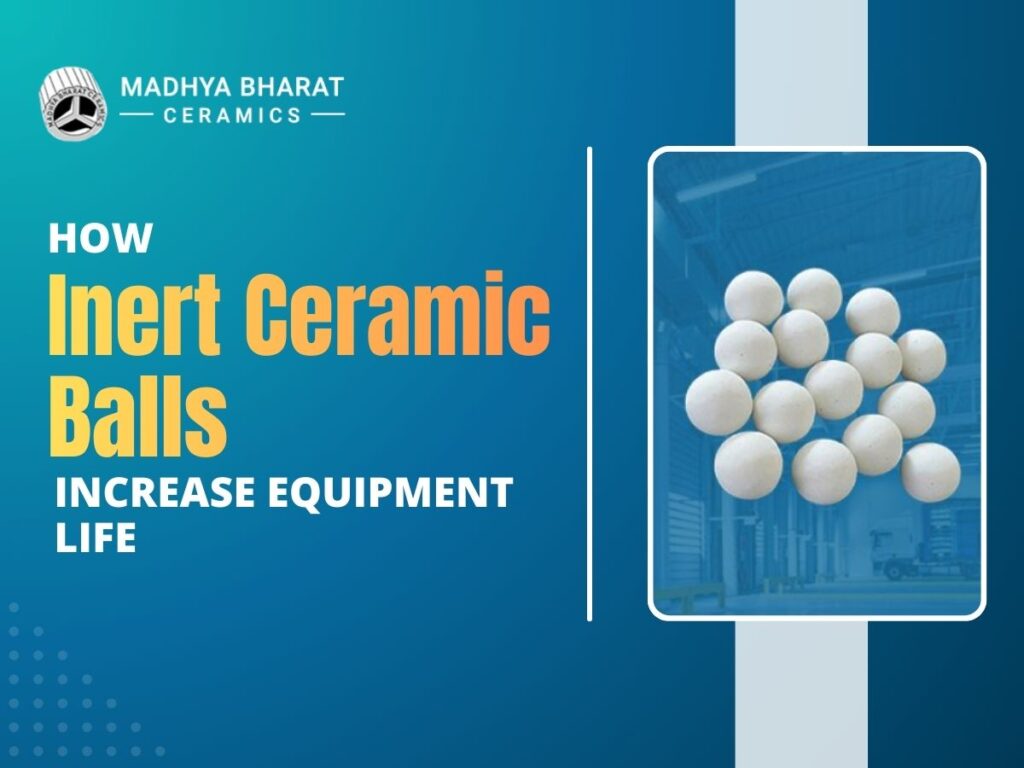
A major petrochemical refinery in Vadodara faced recurring catalyst degradation problems in their hydrocracker unit, resulting in unplanned shutdowns every 18 months instead of the expected 36-month cycle. After comprehensive analysis, engineers identified the root cause: inadequate catalyst bed support allowing uneven distribution and mechanical stress. They replaced existing support media with high-quality Inert Ceramic Balls and achieved remarkable results: catalyst life extended to 42 months, pressure drop reduced by 25%, and maintenance costs decreased by 40% over three years.
This case study demonstrates the critical role these specialized ceramic spheres play in protecting expensive catalysts, extending equipment operational life, and reducing total cost of ownership across chemical processing industries. Understanding their function and benefits helps facility managers and process engineers make informed decisions that significantly impact plant economics.
Inert Ceramic Balls serve as essential support and protective media in reactors, distillation columns, and various chemical processing equipment. Their unique combination of mechanical strength, thermal stability, and chemical resistance makes them indispensable for maximizing equipment performance and longevity.
Understanding Inert Ceramic Ball Technology
Catalyst support media balls are precision-manufactured spheres produced from high-purity alumina or other ceramic materials through specialized firing processes. The manufacturing involves careful raw material selection, precise forming techniques, and controlled high-temperature sintering that develops the desired physical and chemical properties.
The resulting products exhibit exceptional hardness, dimensional stability, and resistance to virtually all chemical environments encountered in industrial processing. Unlike metallic or polymeric alternatives, ceramic materials maintain their structural integrity under extreme conditions of temperature, pressure, and chemical exposure.
Catalyst support balls for reactors typically range from 3mm to 75mm diameter depending on application requirements. Size selection influences factors including pressure drop, void fraction, mechanical strength, and support effectiveness for catalyst or packing materials above.
Manufacturing quality significantly impacts performance and longevity. Premium-grade products feature uniform density, minimal porosity, precise sphericity, and consistent dimensional tolerances ensuring predictable performance and extended service life.
Key Mechanisms for Equipment Life Extension
1. Protecting Catalyst Investment
Catalysts represent one of the highest-value components in chemical processing facilities, with costs ranging from thousands to millions of dollars depending on reactor size and catalyst type. Tower support ceramic spheres protect this investment by providing stable mechanical support preventing crushing, attrition, or settling that degrades catalyst performance.
The spherical geometry distributes loads uniformly across the catalyst bed, eliminating stress concentration points that cause premature catalyst breakdown. This uniform load distribution becomes particularly critical in tall reactors where cumulative weight creates substantial compressive forces on lower bed sections.
Benefits for catalyst protection:
- Prevents mechanical crushing of expensive catalyst particles
- Maintains consistent bed porosity and permeability
- Eliminates fines generation from catalyst attrition
- Supports uniform flow distribution across bed cross-section
- Extends catalyst replacement intervals by 30-50%
Proper support layer design using graduated ball sizes creates transition zones preventing catalyst migration into support layers. This configuration maintains bed integrity throughout extended operating cycles, maximizing catalyst utilization and return on investment.
2. Ensuring Uniform Flow Distribution
Flow distribution profoundly affects equipment performance, efficiency, and longevity. Poor distribution creates channeling, hotspots, and uneven catalyst utilization that reduce conversion efficiency and accelerate localized degradation.
Inert packing for reactors promotes uniform radial and axial flow distribution through carefully engineered void structures. The random packing arrangement creates tortuous flow paths that mix and redistribute fluids, eliminating preferential flow channels that cause operational problems.
Computational fluid dynamics studies confirm that properly designed ceramic ball support layers achieve distribution uniformity within 5-10% across reactor cross-sections. This uniformity prevents localized overheating, ensures consistent residence time distribution, and maximizes overall process efficiency.
3. Thermal Stress Management
Temperature variations and thermal cycling impose significant mechanical stresses on process equipment and internal components. Ceramic materials’ low thermal expansion coefficient minimizes dimensional changes during heating and cooling cycles, reducing stress on vessel internals and preventing damage to supported materials.
Acid proof ceramic balls withstand rapid temperature fluctuations without cracking or structural failure. The material’s inherent thermal shock resistance exceeds that of most metals or plastics, providing reliable performance in applications involving startup/shutdown cycles or process upsets.
High-temperature stability extends to continuous operation at temperatures exceeding 1000°C in specialized applications. This capability enables their use in reformers, crackers, and other high-severity processes where alternative materials would fail rapidly.
Material Properties Driving Equipment Longevity
1. Chemical Resistance and Inertness
The term “inert” specifically denotes chemical non-reactivity across virtually all industrial process environments. Chemical resistant inert ceramic balls maintain structural integrity and surface characteristics when exposed to strong acids, caustic solutions, organic solvents, oxidizing agents, and reducing atmospheres.
This comprehensive chemical resistance prevents corrosion-related failures common with metallic components. Unlike steel balls that corrode in acidic or chloride environments, ceramic spheres provide decades of reliable service without degradation, contamination, or performance decline.
Material inertness eliminates concerns about catalytic side reactions or product contamination from support media. This characteristic proves essential in pharmaceutical, food-grade, and specialty chemical applications where purity requirements are stringent.
2. Mechanical Strength and Abrasion Resistance
Crushing strength represents a critical specification for support media, particularly in applications with significant bed depth or operating pressure. High alumina inert ceramic balls supplier products typically exhibit crushing strengths ranging from 2000N to 10,000N depending on size and composition.
This exceptional strength prevents mechanical failure under operating loads, maintaining bed integrity and preventing catalyst contamination with broken support media. The strength remains consistent throughout the material’s service life, unlike some plastics that degrade mechanically over time.
Abrasion resistance matters in applications involving particle movement or fluid velocities that could erode softer materials. Ceramic hardness exceeding 7 on the Mohs scale ensures minimal wear even in demanding service conditions with suspended solids or high-velocity flows.
3. Thermal Conductivity and Heat Distribution
Ceramic materials exhibit moderate thermal conductivity beneficial for managing exothermic or endothermic reactions. The support layer facilitates heat distribution across the catalyst bed, preventing hotspot formation that accelerates catalyst deactivation and equipment degradation.
In applications requiring heating or cooling, the ceramic mass provides thermal buffering that stabilizes bed temperatures during process fluctuations. This thermal stability contributes to consistent process performance and reduces thermal stress on reactor vessels and internal components.
The heat capacity of ceramic materials helps manage reaction exotherms, absorbing heat during transient conditions and releasing it gradually. This dampening effect on temperature spikes protects both catalyst and reactor integrity during operational upsets or changes in feed composition.
Applications Across Industrial Equipment
1. Catalyst Bed Support in Fixed Bed Reactors
Inert ceramic balls for catalyst bed applications constitute the most widespread use in chemical and petrochemical industries. These support layers appear in hydrotreaters, reformers, isomerization reactors, and numerous other catalytic processes essential to modern manufacturing.
Proper support layer design involves multiple graduated layers transitioning from large spheres at the bottom through progressively smaller sizes approaching catalyst particle dimensions. This gradation prevents catalyst migration while maintaining adequate void space for fluid distribution.
The American Petroleum Institute recommends specific support layer configurations in API RP 686 for catalyst loading in fixed bed reactors. Following these guidelines using quality ceramic balls significantly extends catalyst and reactor service life according to industry experience documented by major refining companies.
2. Tower Internals and Distillation Applications
Inert ceramic balls for distillation column applications provide support for structured or random packing materials used in separation processes. The ceramic spheres create stable support platforms preventing packing collapse while allowing vapor and liquid passage.
Hold-down applications use ceramic balls to prevent packing movement or fluidization under high vapor velocities. The balls’ weight and interlocking characteristics maintain packing stability without restricting vapor flow or creating excessive pressure drop.
Liquid distribution enhancement represents another tower application where ceramic balls in distribution trays or chimney trays improve performance. The spheres create flow resistance that promotes uniform liquid spreading across tower cross-sections.
3. Regenerative Thermal Oxidizers and Environmental Systems
Thermal oxidizers treating volatile organic compound emissions utilize ceramic media for heat recovery and reaction support. Tower packing support media in these systems must withstand thermal cycling between ambient and 800-1000°C multiple times daily.
The ceramic spheres’ thermal mass stores combustion heat during oxidation cycles and transfers it to incoming contaminated air streams, significantly reducing auxiliary fuel consumption. This heat recovery capability makes thermal oxidizers economically viable for continuous emission control.
Regenerative systems switch flow paths periodically, subjecting ceramic media to rapid temperature changes and mechanical stresses from switching valves. Quality ceramic balls endure these conditions for 5-10 years before requiring replacement, far exceeding alternative materials.
4. Specialty Applications in Emerging Industries
Emerging applications in bioprocess engineering, carbon capture systems, and advanced manufacturing processes increasingly specify ceramic support media. The material’s combination of inertness, strength, and thermal stability meets requirements that alternative materials cannot satisfy.
Pharmaceutical and biotechnology applications demand materials meeting regulatory standards for cleanliness, chemical compatibility, and validation. Ceramic balls manufactured under quality systems with appropriate documentation support these regulated industry requirements.
Selection Criteria and Sizing Guidelines
1. Determining Optimal Ball Size
Inert ceramic balls for reactor tower sizing follows established engineering principles balancing mechanical support, pressure drop, and flow distribution requirements. General guidelines suggest the support ball diameter should be 2-3 times the supported catalyst or packing diameter.
Sizing considerations include:
- Reactor or column diameter relative to ball size
- Operating pressure drop limitations
- Mechanical crushing strength requirements
- Flow distribution uniformity objectives
- Accessibility for loading and unloading operations
Smaller balls provide better distribution and support for fine catalysts but create higher pressure drop and potential plugging risks. Larger balls reduce pressure drop but may allow catalyst penetration or create distribution problems in small-diameter vessels.
Multiple-layer support beds using graduated sizes optimize these competing factors. A typical configuration might use 25mm balls at the bottom, transitioning through 13mm and 6mm layers before reaching the catalyst bed.
2. Material Grade Selection
Inert Ceramic Balls manufacturer in India suppliers offer various alumina content grades ranging from 17-23% (porcelain) through 92-99% high-alumina formulations. Higher alumina content generally provides greater strength, chemical resistance, and temperature capability at increased cost.
Standard alumina content around 23-30% serves most applications effectively at economical pricing. High-alumina grades become necessary for extreme temperature applications above 900°C or highly aggressive chemical environments requiring maximum resistance.
Specialty formulations incorporating zirconia, titania, or other oxides provide enhanced properties for specific applications. Consult with technical experts to identify optimal material grades balancing performance requirements against economic considerations.
3. Quality Standards and Specifications
Reputable bulk inert ceramic balls exporter companies provide detailed specifications documenting critical parameters including alumina content, bulk density, crushing strength, acid resistance, and dimensional tolerances. Verify these specifications through certificates of analysis for each production lot.
International standards including ASTM C373 for water absorption, ASTM C649 for alumina content, and ISO 3290 for dimensional tolerances provide objective quality benchmarks. Request test data demonstrating compliance with relevant standards.
Visual inspection upon receipt verifies absence of cracks, chips, or significant dimensional variations indicating manufacturing quality issues. Reject batches showing excessive defects to prevent operational problems and premature failures.
Economic Benefits and Return on Investment
1. Extended Equipment Operating Cycles
The primary economic benefit involves extending time between catalyst replacements and associated shutdowns. Each shutdown incurs direct costs for catalyst replacement, labor, inspection, and testing plus opportunity costs from lost production.
Inert ceramic balls in Mandsaur manufacturing facilities serving central Indian chemical industries report customer case studies documenting 30-60% extensions in catalyst cycle lengths after upgrading support media quality. These extensions translate directly into millions of rupees in avoided costs for large processing facilities.
Reduced shutdown frequency also improves production planning reliability and market responsiveness. Facilities operating on extended cycles can schedule maintenance during low-demand periods rather than emergency shutdowns during peak production seasons.
2. Maintenance Cost Reduction
Quality support media reduces various maintenance costs beyond catalyst replacement. Prevention of catalyst fines generation eliminates downstream fouling problems in heat exchangers, separators, and other equipment requiring costly cleaning or replacement.
Improved flow distribution reduces localized corrosion and erosion extending vessel life and reducing inspection requirements. Uniform temperature profiles prevent thermal stress damage to reactor internals and shell components.
Industrial ceramic packing solutions minimize labor costs during turnarounds through easier catalyst loading and unloading. Ceramic balls’ mechanical stability prevents bed disruption during these operations unlike some alternative materials that compact or shift unpredictably.
3. Energy Efficiency Improvements
Optimized support layer design minimizing pressure drop reduces compressor, blower, or pump energy consumption throughout the equipment’s operating cycle. For continuous processes, these energy savings accumulate significantly over multi-year operating periods.
Better flow distribution improves reaction efficiency, increasing conversion per pass and reducing recycle requirements. Higher conversion efficiency translates directly into reduced feed costs and energy consumption per unit of product.
Thermal management benefits from ceramic support media reduce heating or cooling utility requirements in processes involving heat exchange. These utility savings contribute to overall economic advantages beyond direct maintenance cost reductions.
Installation and Best Practices
1. Proper Loading Techniques
Correct installation ensures that inert ceramic balls for catalyst support perform as designed throughout their service life. Begin with clean, inspected vessels free from debris or damage that could compromise support layer integrity.
Loading procedure recommendations:
- Install balls gradually to prevent impact damage
- Maintain level surfaces during loading process
- Use sock loading methods for tall reactors preventing segregation
- Verify layer heights and transitions between sizes
- Document loading procedures for future reference
Avoid dropping balls from excessive heights causing breakage and creating fines that could migrate into catalyst beds. Professional loading services utilizing specialized equipment ensure consistent quality installations for critical applications.
2. Inspection and Monitoring
Periodic inspection during planned shutdowns verifies support layer condition and identifies potential problems before they cause failures. Visual examination reveals surface erosion, breakage, or displacement indicating operational issues requiring correction.
Pressure drop monitoring during operation provides early warning of support layer problems. Gradual increases suggest fines accumulation or compaction, while sudden changes indicate mechanical damage or flow path changes requiring investigation.
Sample retrieval and analysis during turnarounds documents support media condition and remaining service life. This data supports evidence-based decisions on replacement timing rather than arbitrary schedules potentially wasting serviceable media or risking premature failures.
Sourcing Quality Inert Ceramic Balls
1. Selecting Reliable Manufacturers
The Indian market offers numerous Inert Ceramic Balls exporters particularly in industrial regions like Mandsaur where specialized ceramic manufacturing has developed. Evaluate potential suppliers based on manufacturing capabilities, quality certifications, and technical support services.
ISO 9001 certification indicates established quality management systems essential for consistent product quality. Additional certifications demonstrating environmental responsibility and workplace safety reflect overall organizational competence and reliability.
Request facility visits observing manufacturing processes, quality control procedures, and testing capabilities. Direct observation provides confidence in supplier capabilities impossible to obtain through documentation alone.
2. Understanding Pricing and Value
Inert ceramic balls price in India varies based on alumina content, size, quantity, and manufacturer capabilities. Request detailed quotations specifying material composition, physical properties, and quality standards to enable meaningful comparisons.
The lowest price rarely represents optimal value when considering performance, reliability, and service life. Evaluate total cost of ownership including purchase price, installation costs, expected service life, and impact on supported catalyst or equipment.
Buy inert ceramic balls online options provide convenience but require careful verification of product specifications and supplier credibility. Established relationships with wholesale inert ceramic balls supplier companies offering consistent quality and technical support generally deliver better long-term value.
FAQ’s About Inert Ceramic Balls
1. How do inert ceramic balls help increase equipment life?
They protect catalysts from crushing, ensure uniform flow distribution, prevent thermal damage, resist chemical attack, and maintain bed integrity.
2. Why are inert ceramic balls used in industrial machinery?
Their chemical inertness, high strength, thermal stability, and flow distribution properties protect expensive catalysts and optimize process performance.
3. What properties of ceramic balls improve durability?
High crushing strength, chemical resistance, thermal stability, abrasion resistance, and dimensional stability under operating conditions ensure extended service life.
4. lCan inert ceramic balls reduce wear and tear in equipment?
Yes, by providing stable catalyst support, preventing fines generation, ensuring uniform flow, and eliminating hotspots that accelerate equipment degradation.
Do ceramic balls resist corrosion and high temperatures?
Ceramic materials resist virtually all chemicals and maintain integrity at temperatures exceeding 1000°C in specialized applications.
Where are inert ceramic balls commonly used in equipment?
Fixed bed reactors, distillation columns, thermal oxidizers, scrubbers, and various chemical processing vessels requiring catalyst or packing support.
How do ceramic balls compare to steel balls for longevity?
Ceramics offer superior chemical resistance, higher temperature capability, and longer service life in corrosive environments where steel corrodes rapidly.
Conclusion: Strategic Investment in Equipment Longevity
Inert ceramic balls in India represent a proven, cost-effective solution for extending equipment life and optimizing process performance across chemical, petrochemical, and environmental industries. The combination of mechanical strength, chemical resistance, and thermal stability makes them essential components in modern processing facilities.
Successful implementation requires careful attention to material selection, proper sizing, quality sourcing, and correct installation practices. Working with experienced manufacturers ensures access to quality products and technical support necessary for optimal results.
The continuing evolution of ceramic materials and manufacturing technologies promises further improvements in performance and application range. Facilities investing in quality support media today position themselves for improved economics and competitive advantages tomorrow.