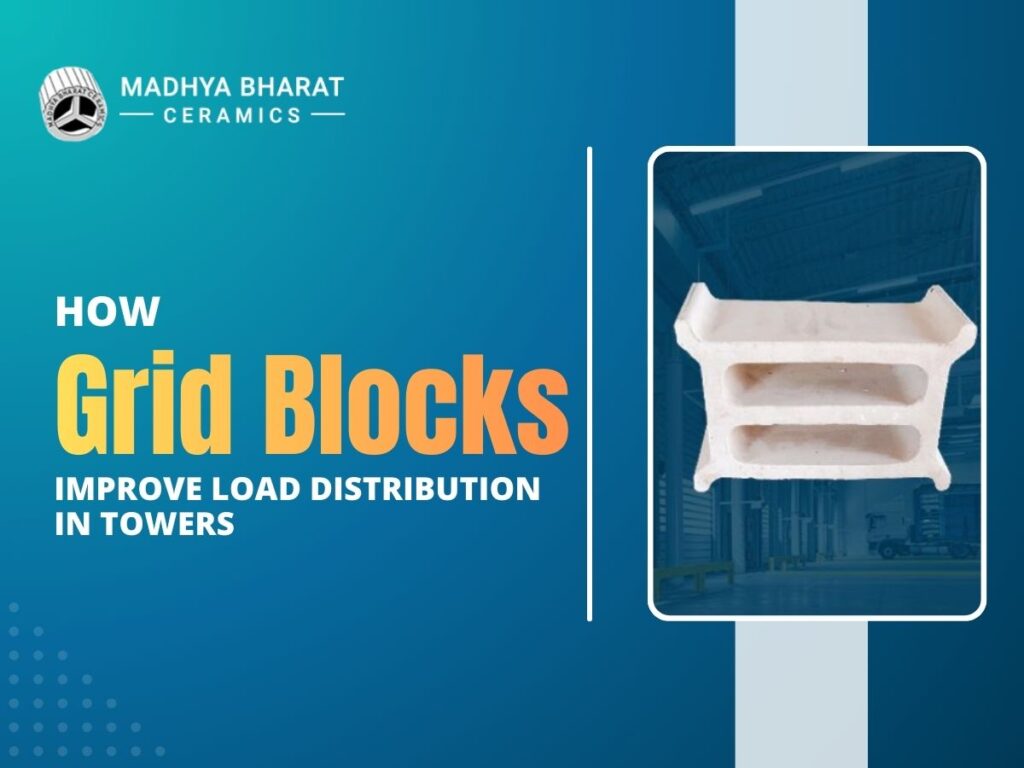
A chemical processing plant in Chennai experienced catastrophic packing collapse in their 4-meter diameter absorption tower, causing $2 million in damage and three weeks of unplanned downtime. Investigation revealed that traditional beam-type supports had failed under uneven load distribution from heavy ceramic packing. After reconstruction, engineers installed high-quality Grid Blocks as the primary support system and achieved outstanding results: perfect load distribution across the entire tower cross-section, zero packing settlement over 4 years of operation, and pressure drop reduced by 18% compared to the previous configuration.
This real-world case illustrates why Grid Blocks have become the preferred choice for supporting heavy packing materials in distillation columns, absorption towers, and scrubber systems. Their unique design distributes loads uniformly while maintaining optimal fluid flow characteristics essential for efficient mass transfer operations.
Understanding how these specialized support structures function and their critical role in tower performance helps process engineers, maintenance managers, and facility operators make informed decisions that protect equipment investments and ensure reliable long-term operation.
Understanding Grid Block Technology and Design
Ceramic grid block support systems consist of precision-manufactured interlocking blocks that create a rigid, self-supporting platform across the entire tower cross-section. Unlike beam-and-plate configurations or simple support rings, these modular systems distribute loads through multiple contact points eliminating stress concentrations.
The engineering principle involves transforming concentrated loads from packing weight into distributed forces across the tower shell. Each block connects to adjacent blocks through carefully designed interlocking features creating a unified structural grid that acts as a single load-bearing platform.
Structured column support blocks typically feature open apertures ranging from 25-100mm allowing unrestricted vapor and liquid passage while providing mechanical support for packing materials above. The open area percentage typically ranges from 60-85% ensuring minimal flow restriction and pressure drop.
Manufacturing these components from advanced ceramics provides exceptional strength, chemical resistance, and thermal stability. The material selection proves critical for applications involving corrosive chemicals, high temperatures, or thermal cycling that would destroy metallic or polymeric alternatives.
Key Mechanisms for Superior Load Distribution
1. Uniform Stress Distribution Across Tower Cross-Section
Traditional support systems using radial beams create point loads where beams attach to the tower shell, generating stress concentrations that can damage vessel walls or cause support failure. High load bearing ceramic grids eliminate this problem through distributed contact with the tower wall around the entire circumference.
The interlocking grid structure creates hundreds of load paths distributing packing weight uniformly. This redundancy provides fail-safe characteristics where localized damage to individual blocks doesn’t compromise overall structural integrity.
Benefits of uniform load distribution:
- Eliminates stress concentration at tower shell attachments
- Prevents shell deformation from point loading
- Reduces risk of support structure failure
- Enables thinner tower shell designs reducing capital costs
- Extends vessel service life through reduced fatigue stresses
Finite element analysis confirms that properly designed grid block systems maintain stress levels below 20% of tower shell yield strength compared to 60-80% for beam-type supports under equivalent loading conditions.
2. Self-Supporting Architecture
The interlocking design creates self-supporting structures requiring no welded attachments to tower shells. This feature simplifies installation, eliminates welding-related quality concerns, and prevents the thermal stress and corrosion issues associated with weld penetrations.
High strength refractory grid blocks lock together through mechanical interlocking preventing individual block movement or displacement during operation. The compressive forces from packing weight actually strengthen the assembly creating increasingly rigid structures under load.
This self-supporting characteristic enables installation in non-circular vessels, retrofits into existing towers without shell modifications, and replacement during maintenance without specialized welding equipment or certified welders.
3. Packing Weight Management
Heavy ceramic or metallic packing materials generate substantial loads in tall towers. A 10-meter bed of ceramic saddles or rings can impose forces exceeding 50 kN/m² requiring robust support structures preventing deflection or failure.
High compressive strength ceramic blocks withstand these loads without deformation or crushing. Typical compressive strengths range from 50-150 MPa depending on material composition and manufacturing process, providing safety factors of 5-10 under normal operating conditions.
The distributed load-bearing capability allows supporting deeper packing beds than alternative support systems. This flexibility enables process optimization through increased packing height without concerns about support structure limitations.
Material Properties Enabling Reliable Performance
1. Exceptional Compressive Strength
The primary structural requirement for tower support grids involves withstanding compressive loads from packing materials without crushing or deformation. Advanced ceramic formulations achieve compressive strengths exceeding 100 MPa, far surpassing requirements for typical industrial applications.
This strength remains consistent throughout the material’s service life unlike some polymers that creep under sustained loading. The ceramic microstructure developed during high-temperature firing creates strong ionic and covalent bonds resistant to mechanical degradation.
Quality ceramic grid block manufacturer companies conduct batch testing verifying minimum strength specifications. Request crushing test certificates documenting actual strength values for supplied materials ensuring compliance with design requirements.
2. Chemical Resistance and Corrosion Immunity
Unlike metallic supports susceptible to corrosion from acids, caustic solutions, or chloride environments, ceramic materials exhibit universal chemical resistance. Corrosion resistant grid blocks maintain structural integrity and surface characteristics when exposed to virtually any industrial chemical.
This corrosion immunity eliminates concerns about structural degradation over time, material contamination of process streams, or premature replacement due to chemical attack. The inert nature proves essential in pharmaceutical, food processing, and specialty chemical applications requiring absolute purity.
Acid resistance testing per ASTM C267 demonstrates less than 0.1% weight loss after extended exposure to concentrated acids, confirming the material’s exceptional resistance to chemical attack.
3. Thermal Stability and Shock Resistance
Thermal shock resistant blocks withstand rapid temperature changes without cracking or structural failure. This capability proves critical in processes involving startup/shutdown cycles, process upsets, or emergency cooling scenarios.
The low thermal expansion coefficient of ceramic materials minimizes dimensional changes during temperature variations. This stability prevents the binding, warping, or mechanical interference problems that plague metallic support systems experiencing thermal cycling.
Temperature resistance extends to continuous operation at 1000°C in specialized high-temperature applications including reformers, crackers, and thermal treatment systems. Most chemical processing applications operate well below these limits providing substantial safety margins.
Applications in Industrial Tower Systems
1. Distillation Column Support Applications
Durable ceramic grid blocks packing for distillation and gas treatment plants provides essential support for structured or random packing in separation columns. The open grid design allows vapor passage while supporting packing weight preventing collapse or settling.
Multiple support layers may be required in tall columns to prevent excessive packing compression. Strategic placement of intermediate support grids at 3-5 meter intervals maintains packing integrity throughout the entire bed height.
The Chemical Engineers’ Handbook by Perry recommends ceramic grid supports for applications involving corrosive services, high temperatures, or heavy packing materials where metallic supports would fail prematurely.
2. Absorption and Scrubber Tower Applications
High strength ceramic grid blocks supplier for scrubber and absorption towers provides support systems for pollution control and gas treatment applications. These systems often involve highly corrosive environments with acidic scrubbing liquids that rapidly attack metallic components.
The combination of chemical resistance and mechanical strength makes ceramic grids the optimal choice for these demanding services. Installation case studies from environmental engineering firms document 10-15 year service life in scrubber applications where stainless steel supports required replacement every 3-5 years.
Flow distribution benefits from the uniform open area across grid block assemblies. The consistent aperture spacing creates more uniform vapor distribution compared to beam-style supports with variable spacing between structural members.
3. Reactor and Catalyst Bed Support
Fixed bed catalytic reactors utilize grid blocks for supporting catalyst beds while allowing reactant and product flow. The uniform load distribution prevents catalyst crushing while the open structure minimizes pressure drop and flow maldistribution.
Ceramic grid block manufacturer in India for tower packing applications suppliers provide custom-designed grid systems matching specific reactor geometries and loading requirements. This customization ensures optimal performance for diverse reactor configurations.
Temperature management in exothermic reactions benefits from the grid structure’s ability to conduct heat away from catalyst beds. The ceramic thermal conductivity provides moderate heat transfer preventing hotspot formation without excessive heat loss.
4. Gas Treatment and Environmental Systems
Flue gas desulfurization systems, NOx reduction towers, and other environmental applications require robust support structures resisting both chemical attack and thermal cycling. Bulk ceramic grid block exporter for industrial mass transfer systems products meet these demanding requirements reliably.
The dimensional stability under thermal cycling prevents the binding and mechanical problems that cause operational issues in systems experiencing frequent temperature variations. This reliability reduces maintenance requirements and extends equipment service life.
Design Considerations and Selection Criteria
1. Determining Proper Grid Block Configuration
Proper grid block selection involves evaluating multiple factors including tower diameter, packing type and depth, operating conditions, and economic considerations. Grid block suppliers in Mandsaur technical teams provide engineering support for application-specific design optimization.
Critical design parameters:
- Tower internal diameter and geometric constraints
- Total packing weight requiring support
- Operating temperature and thermal cycling frequency
- Chemical environment and corrosion potential
- Required open area for vapor/liquid flow
- Installation access and procedures
Computational analysis tools predict load distribution, stress levels, and structural adequacy for proposed configurations. These analyses ensure designs meet safety requirements with appropriate safety factors under normal and upset operating conditions.
2. Open Area and Pressure Drop Optimization
The aperture size and open area percentage directly impact pressure drop and flow distribution characteristics. Larger openings reduce pressure drop but may allow smaller packing particles to fall through, while smaller apertures provide better support but increase flow resistance.
Low pressure drop tower packing applications require grid designs maximizing open area while maintaining structural integrity. Typical designs achieve 70-85% open area providing excellent flow characteristics with minimal pressure drop penalty.
According to research published by the American Institute of Chemical Engineers, optimized grid supports contribute less than 2-3% of total column pressure drop compared to 8-15% for poorly designed beam-style supports.
3. Material Grade Selection
Ceramic grid block exporter suppliers offer various material formulations optimized for specific operating conditions. Standard alumina-based ceramics serve most applications effectively, while specialized compositions provide enhanced properties for extreme conditions.
High-alumina content (>92%) formulations offer maximum strength and temperature resistance for the most demanding applications. Standard formulations with 30-60% alumina content provide excellent performance at lower cost for typical chemical processing conditions.
Consult material compatibility charts and technical data sheets when selecting materials for specific chemical environments. While ceramic materials resist most chemicals, some exotic compounds or extreme conditions may require specialized formulations.
4. Sizing and Configuration Guidelines
Grid Block sizing follows established engineering practices balancing structural requirements against flow considerations. Standard block sizes range from 150mm to 300mm square with apertures from 25mm to 100mm depending on application.
Tower diameter influences block size selection since larger towers accommodate bigger blocks more efficiently. Small-diameter towers below 1 meter may use custom-sized blocks optimizing fit and installation efficiency.
Multiple layer configurations using different aperture sizes create graduated support systems. Large apertures at the bottom transition to smaller sizes approaching packing dimensions, preventing packing migration while maintaining flow efficiency.
Installation and Best Practices
1. Proper Installation Procedures
Correct installation ensures Grid Blocks in India perform as designed throughout their service life. Begin with clean tower internals and verify shell roundness within acceptable tolerances preventing gaps or uneven support.
Installation procedure steps:
- Verify tower dimensions and support ring levelness
- Plan block layout minimizing cut pieces and gaps
- Install peripheral blocks first establishing reference
- Work inward completing each circular row before proceeding
- Verify interlock engagement and level alignment
- Apply liquid gasket materials if sealing required
Professional installation services utilizing experienced technicians ensure consistent quality particularly for large or critical installations. The investment in proper installation prevents operational problems and premature failures.
2. Quality Verification and Inspection
Visual inspection during installation identifies defective blocks before they compromise structural integrity. Examine blocks for cracks, chips, or dimensional irregularities indicating manufacturing defects or shipping damage.
Buying ceramic grid blocks online convenience must not compromise quality verification. Establish receiving inspection protocols including sample dimensional checks, visual examination, and documentation review before accepting deliveries.
Third-party testing of random samples verifies manufacturer quality claims. Independent testing provides objective validation of compressive strength, chemical resistance, and dimensional tolerances specified in purchase orders.
3. Maintenance and Service Life
Durable structured packing media support systems require minimal maintenance but benefit from periodic inspection during planned shutdowns. Visual examination reveals potential issues including block displacement, cracking, or chemical attack before they cause failures.
Service life typically exceeds 10-15 years in most chemical processing applications. Replacement becomes necessary only when visual inspection reveals significant degradation or when process modifications require different configurations.
Document inspection findings and maintain photographic records tracking conditions over time. This historical data supports evidence-based replacement decisions rather than arbitrary schedules potentially wasting serviceable equipment.
Economic Benefits and Return on Investment
1. Reduced Pressure Drop and Energy Savings
The optimized open area design minimizes pressure drop compared to traditional support systems. This reduction translates directly into lower compressor, blower, or fan energy consumption throughout the equipment’s operating life.
For continuous processes, energy savings from reduced pressure drop can recover the grid block investment within 1-2 years. These ongoing savings continue accumulating throughout the 10-15 year service life creating substantial economic benefits.
A study by the University of Texas at Austin documented 12-18% energy savings in absorption towers after replacing beam supports with optimized grid blocks, validating the economic advantages of superior support system design.
2. Extended Equipment Service Life
Proper load distribution prevents tower shell damage and fatigue failures extending vessel service life. The elimination of welded attachments prevents corrosion at weld penetrations that often initiate shell degradation.
Grid block price in India represents a minor fraction of tower construction or replacement costs. The investment in quality support systems protects the much larger capital investment in tower vessels and packing materials.
Reduced maintenance requirements from corrosion-resistant ceramic materials lower lifecycle costs compared to metallic supports requiring periodic replacement. The total cost of ownership strongly favors ceramic grid systems for most industrial applications.
3. Operational Reliability and Uptime
Equipment failures from inadequate support systems cause costly unplanned shutdowns with associated production losses and emergency repair expenses. Quality grid block systems virtually eliminate these failure risks through robust, reliable design.
The case study from Chennai referenced in this article’s introduction demonstrates the enormous costs of support system failures. Preventing such incidents through proper support design provides insurance value far exceeding the initial equipment investment.
Sourcing Quality Grid Blocks
1. Selecting Reliable Manufacturers
The Indian market offers numerous ceramic grid block manufacturer options, particularly in industrial regions like Mandsaur where specialized ceramic manufacturing has developed. Evaluate potential suppliers based on manufacturing capabilities, quality systems, and technical support.
ISO 9001 certification indicates established quality management systems essential for consistent product quality. Request facility tours observing manufacturing processes, quality control procedures, and testing capabilities when evaluating potential suppliers.
Customer references from similar applications provide valuable insights into product performance and supplier reliability. Contact existing users directly discussing their experiences with product quality, technical support, and long-term performance.
2. Understanding Pricing and Value
Wholesale ceramic grid block supplier pricing varies based on material composition, size, complexity, quantity, and manufacturer capabilities. Request detailed quotations specifying material properties, dimensional tolerances, and quality standards enabling meaningful comparisons.
The lowest price rarely represents optimal value considering performance, reliability, and service life. Evaluate total cost of ownership including purchase price, installation costs, expected service life, and impact on tower performance and efficiency.
Established relationships with reputable suppliers offering consistent quality and responsive technical support deliver better long-term value than transactional purchasing approaches prioritizing minimum initial cost.
FAQ’s About Grid Blocks
1. What are grid blocks used for in packed towers?
Grid blocks provide structural support for packing materials, distribute loads uniformly across tower cross-sections, and maintain flow passages for vapors and liquids.
2. How do grid blocks improve load distribution in towers?
Their interlocking design creates multiple load paths distributing packing weight uniformly, eliminating stress concentrations that damage tower shells or supports.
3. Why are ceramic grid blocks preferred for heavy packing support?
Ceramic materials offer exceptional compressive strength, universal chemical resistance, thermal stability, and long service life superior to metallic or plastic alternatives.
4. Do grid blocks reduce pressure drop in columns?
Yes, optimized grid designs with 70-85% open area minimize pressure drop, reducing energy consumption compared to traditional beam-style supports.
4. Can grid blocks increase tower stability and lifespan?
Yes, uniform load distribution prevents shell damage, corrosion resistance eliminates degradation, and robust design prevents support failures extending tower service life.
5. How do I choose the right grid block size for my tower?
Based on tower diameter, packing type and weight, operating conditions; consult manufacturer engineers for application-specific design calculations and recommendations.
6. Are grid blocks resistant to heat and chemical corrosion?
Ceramic grid blocks resist virtually all chemicals and withstand continuous temperatures up to 1000°C with excellent thermal shock resistance.
Conclusion: Engineering Excellence in Tower Support Systems
Grid Blocks represent proven, reliable solutions for supporting packing materials in distillation, absorption, and reaction towers across chemical processing industries. The combination of uniform load distribution, chemical resistance, and thermal stability makes them essential components in modern processing facilities.
Successful implementation requires careful attention to material selection, proper sizing, quality sourcing, and correct installation practices. Working with experienced manufacturers ensures access to quality products and engineering support necessary for optimal results.
The continuing advancement of ceramic materials and manufacturing technologies promises further improvements in performance and application range. Facilities investing in quality support systems today position themselves for improved reliability and competitive advantages throughout their equipment’s service life.