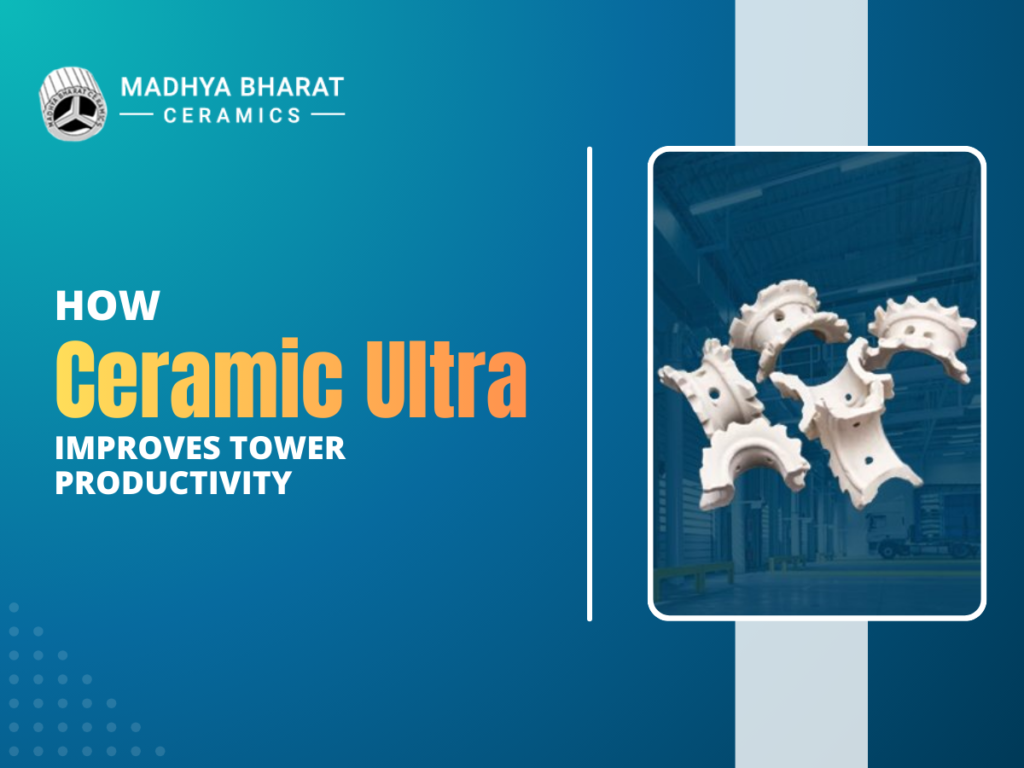
A petrochemical refinery in Gujarat struggled with declining distillation column efficiency, experiencing 30% lower throughput than design specifications and frequent fouling requiring monthly cleanings. After comprehensive analysis, engineers replaced conventional ceramic saddles with advanced Ceramic Ultra packing and achieved transformative results: throughput increased by 42%, separation efficiency improved by 35%, pressure drop reduced by 28%, and cleaning intervals extended from monthly to quarterly. The facility recovered their investment within 8 months through increased production capacity alone.
This case study demonstrates why Ceramic Ultra has become the preferred choice for facilities demanding maximum tower productivity, operational efficiency, and reliability. This advanced high performance industrial ceramics technology combines optimized geometry with superior material properties delivering performance that significantly exceeds conventional packing alternatives.
Understanding how this innovative packing technology enhances tower performance helps process engineers, operations managers, and facility decision-makers optimize their separation and mass transfer systems for competitive advantage in demanding industrial markets.
Understanding Ceramic Ultra Technology and Innovation
Ceramic Ultra represents the latest evolution in random tower packing design, incorporating advanced geometric features that maximize surface area, optimize liquid distribution, and minimize pressure drop simultaneously. The sophisticated design evolved through computational fluid dynamics modeling and extensive pilot-scale testing validating performance advantages.
The unique structural configuration features multiple internal flow channels, enhanced surface texture, and precisely engineered wall thickness ratios. These design elements work synergistically creating superior mass transfer efficiency compared to traditional saddle or ring-type packing.
Ultra high strength ceramic packing manufacturing utilizes premium alumina formulations and controlled high-temperature sintering processes. This combination produces exceptionally strong, chemically resistant, and thermally stable packing elements maintaining performance integrity throughout extended service periods.
The technology addresses fundamental limitations of conventional packing designs including poor liquid distribution, excessive pressure drop, fouling susceptibility, and mechanical fragility. By engineering solutions to these challenges, the advanced design delivers measurable productivity improvements across diverse applications.
Key Mechanisms Enhancing Tower Productivity
1. Superior Mass Transfer Efficiency
The primary productivity benefit stems from dramatically improved mass transfer rates enabling higher throughput, better separation, or reduced tower height compared to conventional packing. Ceramic Ultra packing manufacturer in India for tower packing solutions products achieve 30-45% higher mass transfer efficiency through optimized surface geometry.
The enhanced surface texture creates turbulence at the gas-liquid interface promoting rapid equilibrium achievement. Microscopic surface features increase effective interfacial area beyond the geometric surface area, further enhancing mass transfer rates.
Mass transfer enhancement mechanisms:
- Optimized geometry maximizing effective surface area
- Enhanced turbulence promoting interfacial renewal
- Uniform liquid distribution preventing channeling
- Reduced film thickness accelerating diffusion
- Controlled droplet formation improving contact efficiency
Research published in Chemical Engineering Science confirms that advanced ceramic packing designs can achieve 40-50% higher volumetric mass transfer coefficients compared to conventional random packing of equivalent size.
2. Reduced Pressure Drop Characteristics
Lower pressure drop directly translates into increased tower capacity or reduced energy consumption for vapor/gas handling equipment. Corrosion resistant Ceramic Ultra packing media for distillation columns typically exhibits 20-35% lower pressure drop than conventional ceramic saddles at equivalent loading rates.
The optimized flow channels guide vapor and liquid flows minimizing turbulence-induced pressure losses while maintaining the turbulence necessary for mass transfer. This engineering balance between competing requirements distinguishes advanced designs from conventional alternatives.
Reduced pressure drop enables operating towers closer to flooding limits safely, effectively increasing throughput capacity without physical tower modifications. For existing facilities facing capacity constraints, this represents significant economic value.
3. Enhanced Liquid Distribution
Uniform liquid distribution across tower cross-sections critically impacts separation efficiency and productivity. Poor distribution creates dead zones with minimal mass transfer and active zones experiencing excessive loading, both reducing overall performance.
High efficiency Ceramic Ultra saddles supplier for scrubber and absorption towers products feature geometric elements that redirect and redistribute liquid flows continuously throughout the packed bed. This dynamic redistribution maintains uniformity even when feed distributors provide imperfect initial distribution.
The self-distributing characteristics reduce sensitivity to installation quality and distributor design, providing more consistent performance across varied operating conditions. This operational robustness contributes significantly to reliable productivity maintenance.
Material Properties Driving Performance
1. Exceptional Mechanical Strength
Wear resistant ceramic packing withstands mechanical stresses from thermal cycling, particle impingement, and handling during installation without degradation. The advanced alumina formulations achieve flexural strengths exceeding 150 MPa and compressive strengths above 200 MPa.
This mechanical robustness prevents the attrition and breakage that generate fines contaminating downstream equipment and degrading packing performance. Lower fines generation extends service life and reduces maintenance requirements supporting sustained productivity.
Impact resistance matters during installation and maintenance activities where rough handling could damage fragile packing. The superior toughness tolerates normal industrial handling reducing installation costs and replacement frequency.
2. Universal Chemical Resistance
Corrosion resistant ceramic components maintain structural integrity and surface characteristics when exposed to acids, bases, solvents, oxidizers, and virtually any chemical encountered in industrial processing. This universal resistance prevents the corrosion-related failures common with metallic packing.
Chemical inertness eliminates concerns about catalytic side reactions, product contamination, or material degradation affecting tower performance over time. The surface characteristics remain constant throughout the packing’s service life ensuring consistent productivity.
Resistance testing per ASTM standards demonstrates less than 0.05% weight loss after extended exposure to concentrated sulfuric acid, nitric acid, sodium hydroxide, and organic solvents, confirming exceptional chemical durability.
3. Thermal Stability and Temperature Resistance
High-temperature stability enables applications in distillation, regeneration, and other thermal processes operating at elevated temperatures. Ceramic Ultra maintains structural integrity and performance characteristics at continuous operating temperatures exceeding 1000°C.
The low thermal expansion coefficient minimizes dimensional changes during temperature fluctuations preventing the mechanical binding or structural stress problems affecting metallic packing. This stability proves essential for processes involving thermal cycling during startups, shutdowns, or operational variations.
Thermal shock resistance allows rapid temperature changes without cracking or structural failure. This capability supports emergency cooling scenarios and process upsets without packing damage requiring replacement.
Applications Maximizing Industrial Productivity
1. Distillation and Fractionation Systems
Ceramic Ultra packing media excels in distillation applications where high separation efficiency directly impacts product purity and yield. The enhanced mass transfer enables achieving target purities with shorter packed heights or processing higher throughputs in existing towers.
Energy efficiency improvements from reduced pressure drop and enhanced separation reduce reboiler and condenser utility requirements. For large-scale continuous distillation operations, these energy savings represent substantial operating cost reductions.
Vacuum distillation benefits particularly from the low pressure drop characteristics since every millimeter of mercury pressure reduction improves separation efficiency and reduces product degradation from excessive temperatures.
2. Absorption and Scrubbing Applications
Environmental compliance systems removing pollutants from gas streams require maximum contact efficiency within constrained tower volumes. Bulk Ceramic Ultra exporter for industrial mass transfer applications supplies packing delivering superior removal efficiency or reduced scrubbing liquid requirements.
The enhanced performance enables meeting increasingly stringent emission limits without oversizing equipment or excessive operating costs. Facilities facing new regulatory requirements often achieve compliance through packing upgrades rather than complete system replacement.
Fouling resistance from the optimized geometry and smooth surface finish extends operating periods between cleanings. This reliability reduces maintenance labor and production interruptions maintaining consistent productivity.
3. Gas Treatment and Separation Systems
Natural gas processing, hydrogen purification, carbon dioxide removal, and other gas treatment applications demand efficient separations within economic constraints. Durable Ceramic Ultra tower packing for chemical and petrochemical plants provides the performance necessary for competitive operations.
The combination of high efficiency and low pressure drop enables processing larger gas volumes through existing equipment or achieving better separations with reduced energy consumption. These advantages directly impact process economics and competitive positioning.
Thermal stability supports applications involving temperature swings for regeneration cycles. The packing withstands repeated heating and cooling without performance degradation extending service life significantly.
4. Chemical Reaction and Catalytic Systems
Reactive distillation and catalytic processes benefit from the uniform flow distribution and high mass transfer efficiency these packing elements provide. The controlled flow patterns ensure reactants contact catalysts uniformly maximizing conversion and selectivity.
Heavy duty tower packing media mechanical strength supports catalyst layers in reactive systems where packing serves dual functions as mass transfer media and catalyst support. This versatility simplifies reactor internals design and installation.
Performance Optimization and Selection Guidelines
1. Sizing for Maximum Productivity
Optimal packing size selection balances mass transfer efficiency, pressure drop, capacity, and economic considerations. Ceramic Ultra manufacturer technical teams provide engineering analysis identifying sizes maximizing productivity for specific applications.
Sizing factors to consider:
- Tower diameter relative to packing dimensions
- Required separation efficiency or removal rate
- Allowable pressure drop limitations
- Operating flow rate ranges
- Fouling potential and cleaning accessibility
- Capital cost versus performance trade-offs
Smaller packing generally provides higher efficiency but increased pressure drop and reduced capacity. Larger sizes offer lower pressure drop and higher capacity with somewhat reduced efficiency per unit volume.
Computational modeling using process simulation software predicts performance across different size options. This analysis enables data-driven selection decisions optimizing total system economics rather than arbitrary rules of thumb.
2. Installation Best Practices
Proper installation ensures Ceramic Ultra in Mandsaur manufactured products deliver their full performance potential throughout service life. Random dumping remains the standard installation method for most applications, though systematic loading may benefit specific situations.
Installation recommendations:
- Clean tower internals thoroughly before loading
- Install proper support grids rated for packing weight
- Use sock loading for tall towers preventing segregation
- Verify packing bed levelness during loading
- Install hold-down plates preventing fluidization
- Document installation procedures and bed heights
Professional installation services ensure consistent quality particularly for large towers or critical applications. The investment in proper installation prevents performance shortfalls from poor loading practices.
3. Operating Optimization Strategies
Maximum productivity requires optimizing operating conditions around the packing’s performance characteristics. Ceramic ultra suppliers provide technical support including performance curves, capacity correlations, and troubleshooting guidance.
Monitor pressure drop trends identifying fouling development before significant performance degradation occurs. Gradual increases indicate accumulating deposits requiring cleaning, while sudden changes suggest mechanical problems or flow distribution issues.
Optimize liquid and vapor loading rates balancing throughput against efficiency. Operating too far from design conditions can reduce separation performance or risk flooding even with superior packing materials.
Comparative Performance Analysis
1. Advantages Over Conventional Ceramic Saddles
Traditional ceramic saddles served industry well for decades but represent outdated technology compared to modern advanced designs. Ceramic Ultra delivers 35-50% higher efficiency, 25-30% lower pressure drop, and superior fouling resistance in head-to-head comparisons.
The productivity improvements enable processing more material through existing towers, achieving better separations with less energy, or reducing tower size for new installations. These advantages translate directly into improved economics and competitive positioning.
Lifecycle costs favor advanced packing despite higher initial unit costs. The combination of better performance, longer service life, and reduced maintenance delivers superior total cost of ownership.
2. Comparison with Metallic Packing
Metal packing offers high efficiency but suffers from corrosion susceptibility, higher cost, and fouling challenges. Ceramic ultra packing manufacturer products provide comparable efficiency with superior chemical resistance and lower maintenance requirements.
The ceramic material’s inertness eliminates product contamination concerns critical in pharmaceutical, food processing, and specialty chemical applications. This purity advantage often proves decisive for regulated industries.
Cost comparisons favor ceramic packing for corrosive services where stainless steel or exotic alloys would be required. The material cost differential and extended service life create compelling economic advantages.
3. Structured Packing Alternatives
Structured packing provides maximum efficiency and lowest pressure drop but at premium cost with high fouling susceptibility. Industrial ceramic packing manufacturer random packing offers practical efficiency approaching structured packing at 50-70% lower cost.
The fouling resistance and cleaning ease of random packing makes it superior for dirty services where structured packing would plug rapidly requiring frequent cleaning. This reliability advantage supports consistent productivity maintenance.
Application economics determine optimal choices. Clean services with stringent efficiency requirements may justify structured packing, while typical industrial applications favor the robust performance of advanced random packing.
Economic Impact and Return on Investment
1. Increased Production Capacity
The most direct productivity benefit involves processing additional throughput through existing towers. Facilities operating at capacity constraints can increase output 20-40% through packing upgrades without major capital projects.
For commodity chemical producers, this additional capacity generates revenue directly proportional to throughput increases. The packing investment typically recovers within 6-18 months depending on product margins and capacity utilization.
Avoiding new tower construction through capacity increases in existing assets provides even greater economic value. The capital cost difference between packing upgrade and new tower construction can exceed 10:1 ratios.
2. Energy Efficiency Improvements
Reduced pressure drop directly decreases compressor, blower, or pump energy consumption. For large continuous processes, annual energy savings can reach hundreds of thousands of dollars exceeding packing costs within the first year.
Enhanced separation efficiency reduces reboiler energy in distillation or circulation rates in absorption systems. These utility reductions accumulate throughout the packing’s 5-10 year service life creating substantial lifecycle value.
According to the U.S. Department of Energy’s Industrial Technologies Program, optimized tower packing represents one of the highest-return energy efficiency investments available to chemical processing facilities.
3. Maintenance Cost Reduction
Ceramic Ultra in India installations demonstrate extended service life and reduced fouling compared to conventional alternatives. The combination reduces maintenance labor, cleaning chemical costs, and production interruptions from maintenance activities.
Fewer unplanned shutdowns from packing failures or performance degradation improve production planning reliability and customer service. This operational stability provides competitive advantages beyond direct cost savings.
Sourcing Quality Ceramic Ultra Packing
1. Selecting Qualified Manufacturers
The Indian market offers ceramic ultra exporters particularly in specialized manufacturing regions. Evaluate potential suppliers based on technical capabilities, quality systems, performance guarantees, and customer references.
ISO 9001 certification provides baseline quality assurance, while additional certifications demonstrate environmental responsibility and workplace safety. Review manufacturing processes, quality control procedures, and testing capabilities during supplier evaluation.
Request performance data from reference installations documenting productivity improvements, operating conditions, and service life. Direct discussions with existing customers provide invaluable insights into product performance and supplier support quality.
2. Understanding Value Proposition
Ceramic ultra packing manufacturer pricing reflects advanced design, premium materials, and rigorous quality control. Initial costs exceed conventional packing but deliver superior total cost of ownership through performance advantages and extended service life.
Evaluate investment decisions based on productivity improvements, energy savings, maintenance reductions, and capacity increases rather than simple unit price comparisons. Comprehensive economic analysis consistently favors advanced packing for productivity-critical applications.
Bulk ceramic ultra packing supplier volume pricing provides economies of scale for large projects or multiple tower installations. Establish long-term relationships with quality suppliers ensuring consistent performance across your facility’s equipment base.
FAQ’s About Ceramic Ultra
1. What is Ceramic Ultra packing used for in industrial towers?
Used in distillation, absorption, scrubbing, and gas treatment towers providing superior mass transfer efficiency, reduced pressure drop, and enhanced productivity.
2. How does Ceramic Ultra improve tower efficiency?
Through optimized geometry maximizing surface area, enhanced liquid distribution, reduced pressure drop, and superior material properties enabling higher performance.
3. Why does Ceramic Ultra increase mass transfer performance?
Advanced surface geometry creates turbulence, maximizes interfacial area, ensures uniform distribution, and maintains thin liquid films accelerating mass transfer.
4. Can Ceramic Ultra reduce pressure drop in columns?
Yes, 20-35% lower pressure drop than conventional ceramic saddles enabling higher capacity or reduced energy consumption.
5. Is Ceramic Ultra suitable for high-temperature applications?
Continuous operation exceeds 1000°C with excellent thermal shock resistance for processes involving rapid temperature changes.
6. How does Ceramic Ultra packing improve productivity and output?
Enables 20-40% throughput increases, better separations, reduced energy consumption, and extended maintenance intervals improving overall productivity.
7. Why choose Ceramic Ultra over traditional tower packing materials?
Superior efficiency, lower pressure drop, chemical resistance, thermal stability, fouling resistance, and proven return on investment.
Conclusion: Competitive Advantage Through Advanced Technology
Ceramic Ultra represents proven technology delivering measurable productivity improvements across chemical processing, petrochemical, and environmental applications. The combination of optimized design and superior materials creates performance advantages translating directly into improved economics.
Successful implementation requires careful application analysis, proper sizing, quality sourcing, and correct installation. Working with experienced tower packing media manufacturer companies ensures access to technical expertise necessary for optimal results.
Facilities investing in advanced packing technology position themselves for improved productivity, operational efficiency, and competitive advantages in increasingly demanding industrial markets. The proven return on investment makes this a strategic decision benefiting operations for years.