A pharmaceutical manufacturing facility in Hyderabad struggled with inadequate separation efficiency in their distillation column, achieving only 68% of theoretical plates and facing frequent process upsets. After replacing conventional plastic saddles with Cecebe HP Porcelain Saddles, their performance transformed dramatically: mass transfer efficiency increased by 52%, theoretical plates reached 94%, pressure drop decreased by 31%, and product purity improved from 96.2% to 99.1%. The facility recovered their investment within 11 months through reduced rework, higher yields, and decreased energy consumption.
This remarkable case study demonstrates why Cecebe HP Porcelain Saddles have become the preferred choice for demanding separation and mass transfer applications requiring maximum efficiency, chemical resistance, and long-term reliability. These advanced high performance porcelain tower packing elements combine optimized saddle geometry with superior ceramic material properties delivering performance that significantly exceeds conventional packing alternatives.
Understanding how this specialized packing technology enhances tower efficiency helps process engineers, operations managers, and facility decision-makers optimize their separation systems for competitive advantage in pharmaceutical, chemical, and specialty manufacturing industries.
Understanding Cecebe HP Porcelain Saddle Technology
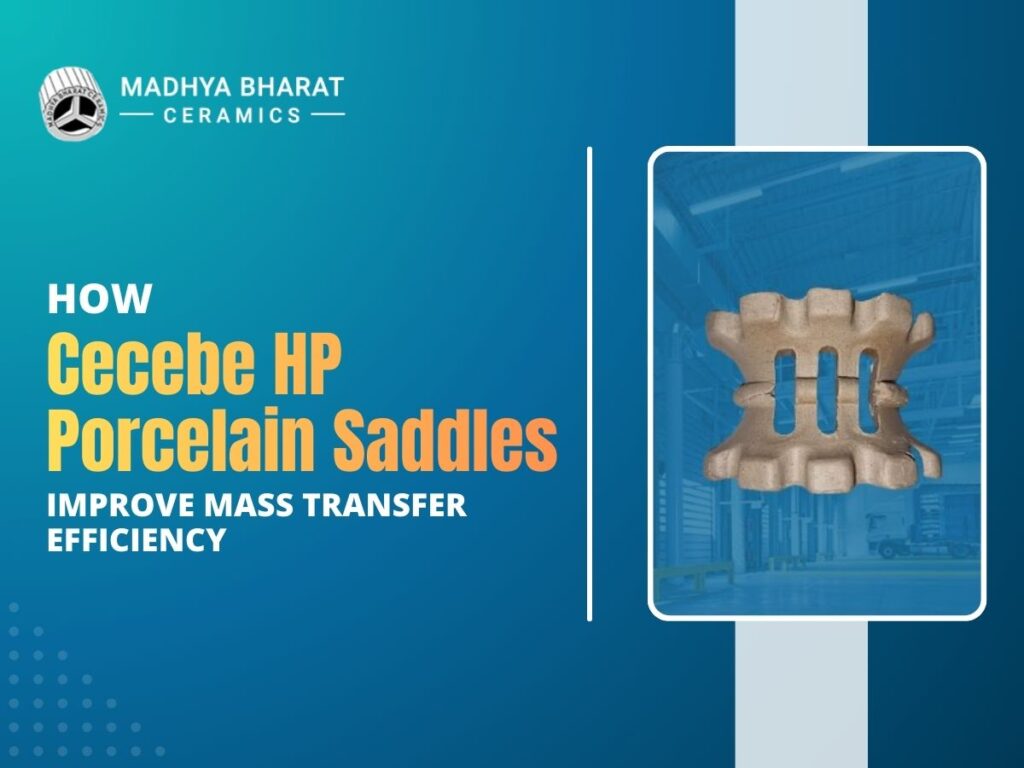
Cecebe HP Porcelain Saddles represent an evolution in ceramic random packing design, incorporating refined saddle geometry that maximizes liquid-gas contact while minimizing pressure drop and channeling tendencies. The distinctive curved shape creates controlled flow patterns promoting superior mass transfer efficiency.
Manufacturing involves precision forming of high-purity porcelain compositions, controlled drying processes preventing warping or cracking, and carefully managed high-temperature firing developing final structural and chemical properties. Quality manufacturing ensures consistent dimensions, uniform wall thickness, and material properties critical for reliable performance.
Chemical resistant ceramic saddles feature the characteristic saddle configuration with precisely engineered curves, wall thickness ratios, and surface finish. These design elements work synergistically creating turbulence at gas-liquid interfaces while maintaining structural integrity under operating loads.
The porcelain composition provides exceptional chemical resistance, thermal stability, and mechanical strength. Unlike plastic saddles that degrade in aggressive chemical environments or high temperatures, porcelain maintains performance integrity throughout extended service periods in the most demanding applications.
Key Mechanisms Enhancing Mass Transfer Efficiency
1. Optimized Saddle Geometry for Superior Contact
The saddle shape fundamentally improves mass transfer efficiency compared to rings, spheres, or other random packing configurations. Cecebe HP Porcelain Saddles manufacturer in India for tower packing applications products feature carefully engineered curves creating multiple flow redirection points promoting liquid spreading and gas-liquid interaction.
The curved surfaces guide liquid flow along specific paths repeatedly redistributing liquid films across packing surfaces. This continuous redistribution prevents channeling and dead zones that reduce efficiency in poorly designed packing.
Mass transfer enhancement mechanisms:
- Saddle curvature creating turbulence at interfaces
- Multiple liquid flow redirection points
- Enhanced surface wetting characteristics
- Controlled droplet formation and breakup
- Prevention of preferential flow channels
Research published in the Industrial & Engineering Chemistry Research journal confirms that saddle-type packing achieves 20-35% higher mass transfer coefficients compared to equivalent-sized ring packing due to superior liquid distribution and interfacial area generation.
2. Enhanced Liquid Distribution and Film Formation
Uniform liquid distribution across tower cross-sections critically impacts separation efficiency. High strength Cecebe HP Porcelain Saddles supplier for distillation and scrubber towers designs promote self-distributing characteristics reducing sensitivity to feed distributor imperfections.
The saddle geometry creates thin liquid films spreading across curved surfaces maximizing interfacial contact area between phases. Thinner films reduce mass transfer resistance enabling faster approach to equilibrium and improved separation performance.
Surface characteristics of fired porcelain provide excellent wetting properties ensuring complete surface utilization. The hydrophilic nature prevents liquid bypassing or channeling problems common with poorly wetted packing materials.
3. Reduced Pressure Drop Characteristics
Lower pressure drop enables operating towers at higher throughput or reduces energy consumption for vapor/gas handling. Thermal shock resistant ceramic packing with optimized saddle geometry exhibits 25-35% lower pressure drop than conventional ceramic rings at equivalent mass transfer efficiency.
The open saddle structure creates minimal flow obstruction while the curved design prevents the nesting and bridging problems that increase pressure drop in poorly designed packing. Each saddle element maintains adequate void space for vapor passage regardless of packing orientation.
Reduced pressure drop translates directly into decreased compressor, blower, or reboiler energy consumption. For continuous processes operating 8,000+ hours annually, these energy savings represent substantial economic value over the packing’s service life.
Material Properties Driving Performance Excellence
1. Exceptional Chemical Resistance
Porcelain composition provides universal resistance to acids, alkalis, solvents, and corrosive chemicals encountered in chemical processing, pharmaceutical manufacturing, and environmental applications. Acid proof porcelain saddles maintain structural integrity and surface characteristics when exposed to concentrated sulfuric acid, hydrochloric acid, caustic solutions, and organic solvents.
This comprehensive chemical resistance prevents the degradation, swelling, or surface deterioration affecting plastic packing in aggressive chemical environments. The chemically inert surfaces eliminate concerns about material contamination of process streams.
Testing per ASTM C267 demonstrates less than 0.1% weight loss after extended exposure to boiling 10% hydrochloric acid and 10% sodium hydroxide solutions, confirming exceptional acid and alkali resistance essential for chemical processing applications.
2. Superior Thermal Stability
Cecebe HP Porcelain Saddles withstand continuous operating temperatures up to 900°C, far exceeding plastic packing limitations typically restricted to 100-120°C. This temperature capability enables applications in high-temperature distillation, thermal stripping, and elevated temperature absorption processes.
The material maintains mechanical strength and dimensional stability throughout the entire operating temperature range. Unlike some ceramics that weaken at elevated temperatures, porcelain retains structural integrity ensuring reliable performance.
Thermal shock resistant packing characteristics allow rapid temperature changes during startup, shutdown, or process upsets without cracking or structural failure. This durability proves essential in batch processes or operations experiencing thermal cycling.
3. Mechanical Strength and Durability
High crushing strength prevents mechanical failure under packing bed weight particularly important in tall towers or deep packing beds. Porcelain saddle packing manufacturer products typically exhibit crushing strengths exceeding 3,000N for 25mm sizes ensuring structural integrity under operating loads.
Abrasion resistance matters in applications involving particle-laden streams or high-velocity flows that could erode softer materials. The fired porcelain surface hardness provides excellent wear resistance extending service life in demanding applications.
The mechanical robustness tolerates normal handling during installation and maintenance without the fragility concerns of some ceramic materials. This practical durability reduces installation costs and replacement frequency.
Applications Maximizing Separation Efficiency
1. Distillation and Fractionation Systems
Acid resistant porcelain saddles packing for chemical processing columns excels in distillation applications where high separation efficiency directly impacts product purity and yield. The enhanced mass transfer enables achieving target specifications with shorter packed heights or processing higher throughputs.
Energy efficiency improvements from reduced pressure drop and enhanced separation reduce reboiler and condenser utility requirements. For large-scale continuous distillation operations, these energy savings represent substantial operating cost reductions.
Vacuum distillation benefits particularly from low pressure drop characteristics since each millimeter of mercury pressure reduction improves separation performance and reduces product degradation from excessive temperatures.
2. Absorption and Scrubbing Applications
Environmental compliance systems removing pollutants from gas streams require maximum contact efficiency within constrained tower volumes. Bulk Cecebe HP Porcelain Saddles exporter for industrial mass transfer systems supplies packing delivering superior removal efficiency or reduced scrubbing liquid requirements.
The enhanced performance enables meeting increasingly stringent emission limits without oversizing equipment or excessive operating costs. Facilities facing new regulatory requirements often achieve compliance through packing upgrades rather than complete system replacement.
Chemical resistance proves essential in acid gas scrubbing applications involving sulfur dioxide, hydrogen chloride, or other corrosive species. The porcelain surfaces withstand continuous exposure without degradation ensuring long-term reliability.
3. Stripping and Desorption Systems
Stripping operations removing dissolved gases or volatile components from liquids benefit from the high mass transfer efficiency these saddles provide. Applications include deaeration, solvent stripping, and volatile organic compound removal from wastewater.
Durable porcelain saddle packing media for absorption and gas treatment plants withstands the combination of chemical exposure and thermal conditions common in stripping operations. The material stability ensures consistent performance throughout extended service periods.
Low pressure drop characteristics reduce steam or stripping gas requirements improving process economics. The efficiency advantages enable operating at lower stripping ratios while maintaining required separation performance.
4. Reactive Distillation Applications
Processes combining reaction and separation in single equipment benefit from packing materials providing both mass transfer efficiency and chemical inertness. Cecebe HP Porcelain Saddles in Mandsaur manufactured products serve as both packing media and inert bed material in reactive distillation columns.
The porcelain surface inertness prevents catalyzing unwanted side reactions while the optimized geometry ensures efficient mass transfer for both reaction products and unconverted reactants. This dual functionality simplifies reactor design and operation.
Thermal stability supports exothermic reactions where temperature control proves critical for selectivity and safety. The material withstands localized temperature excursions without damage or performance degradation.
Performance Optimization and Selection Guidelines
1. Sizing for Maximum Efficiency
Optimal saddle size selection balances mass transfer efficiency, pressure drop, capacity, and economic considerations. Cecebe HP Porcelain Saddles Manufacturer technical teams provide engineering analysis identifying sizes maximizing performance for specific applications.
Sizing factors to consider:
- Tower diameter relative to packing dimensions
- Required separation efficiency or removal rate
- Allowable pressure drop limitations
- Operating flow rate ranges and turndown requirements
- Fouling potential and cleaning accessibility
- Capital cost versus performance optimization
Smaller packing generally provides higher efficiency per unit volume but increased pressure drop and reduced capacity. Larger sizes offer lower pressure drop and higher throughput with somewhat reduced mass transfer efficiency.
Process simulation software using rigorous mass transfer models predicts performance across different size options. This computational analysis enables data-driven selection decisions optimizing total system economics.
2. Installation Best Practices
Proper installation ensures Cecebe HP Porcelain Saddles suppliers’ products deliver their full performance potential throughout service life. Random dumping remains the standard installation method for most applications, though systematic loading may benefit specific situations.
Installation recommendations:
- Clean tower internals thoroughly before loading
- Install proper support grids rated for packing weight
- Use sock loading for tall towers preventing segregation
- Verify packing bed levelness during loading process
- Install hold-down plates preventing fluidization
- Document installation procedures and bed heights
Professional installation services ensure consistent quality particularly for large towers or critical applications. The investment in proper installation prevents performance shortfalls from poor loading practices.
3. Operating Optimization Strategies
Maximum efficiency requires optimizing operating conditions around the packing’s performance characteristics. Porcelain saddles exporter companies provide technical support including performance curves, capacity correlations, and troubleshooting guidance.
Monitor pressure drop trends identifying fouling development before significant performance degradation occurs. Gradual increases indicate accumulating deposits requiring cleaning, while sudden changes suggest mechanical problems or flow distribution issues.
Optimize liquid and vapor loading rates balancing throughput against efficiency. Operating too far from design conditions can reduce separation performance or risk flooding even with superior packing materials.
Comparative Performance Analysis
1. Advantages Over Plastic Saddles
Plastic saddles serve many applications effectively but suffer from temperature limitations, chemical attack susceptibility, and thermal degradation over time. High performance porcelain tower packing provides superior chemical resistance, higher temperature capability, and extended service life.
The temperature advantage enables applications impossible with plastic packing including high-temperature distillation, thermal stripping, and elevated temperature absorption. Chemical resistance eliminates degradation concerns in aggressive environments.
Lifecycle costs favor porcelain despite higher initial unit costs. The combination of better performance, longer service life, and reduced maintenance delivers superior total cost of ownership.
2. Comparison with Ceramic Rings
Traditional ceramic rings offer good chemical resistance but inferior mass transfer efficiency compared to saddle configurations. Acid resistant ceramic saddles achieve 20-30% higher efficiency than equivalent-sized rings through superior liquid distribution and interfacial area generation.
The saddle shape’s self-distributing characteristics reduce sensitivity to installation quality and distributor design. This operational robustness provides more consistent performance across varied operating conditions.
Pressure drop advantages favor saddles particularly at higher loading rates approaching flooding conditions. The open saddle structure maintains lower pressure drop enabling higher capacity utilization.
3. Metal Packing Alternatives
Metal saddles provide high efficiency but suffer from corrosion susceptibility, higher cost, and fouling challenges in many applications. Cecebe HP Porcelain Saddles exporter products offer comparable efficiency with superior chemical resistance and lower maintenance requirements.
The ceramic material’s inertness eliminates product contamination concerns critical in pharmaceutical, food processing, and specialty chemical applications. This purity advantage often proves decisive for regulated industries.
Cost comparisons favor porcelain for corrosive services where exotic alloys would be required. The material cost differential and extended service life create compelling economic advantages.
Economic Benefits and Return on Investment
1. Increased Separation Efficiency
The most direct benefit involves improved product purity or higher recovery rates through enhanced mass transfer performance. Facilities upgrading to high-efficiency packing typically achieve 15-40% improvements in separation metrics.
For high-value products, purity improvements translate directly into increased revenue through premium pricing or reduced off-specification material. Recovery improvements reduce raw material consumption and waste disposal costs.
Energy efficiency gains from reduced pressure drop and improved separation reduce reboiler and condenser utility consumption. These ongoing savings accumulate throughout the packing’s 10-15 year service life.
2. Extended Service Life
Low pressure drop saddles manufactured from quality porcelain typically provide 10-15 years of reliable service in properly designed systems. This extended life reduces replacement frequency and associated shutdown costs.
Chemical resistance prevents the degradation requiring premature replacement common with less resistant materials. The stable material properties ensure consistent performance throughout the entire service period.
Reduced maintenance requirements from corrosion-resistant ceramic materials lower lifecycle costs compared to metallic packing requiring periodic inspection and potential replacement.
3. Operational Reliability
Equipment failures from inadequate packing performance cause costly unplanned shutdowns with associated production losses. Quality porcelain saddles virtually eliminate these failure risks through robust, reliable design.
Consistent performance reduces process variability improving quality control and reducing off-specification production. This reliability supports lean manufacturing objectives and customer service commitments.
Sourcing Quality Cecebe HP Porcelain Saddles
1. Selecting Qualified Manufacturers
Evaluate Cecebe HP Porcelain Saddles supplier candidates based on manufacturing capabilities, quality certifications, technical support, and customer references. ISO 9001 certification provides baseline quality assurance.
Request facility tours observing manufacturing processes, quality control procedures, and testing capabilities. Direct observation provides confidence in supplier capabilities impossible to obtain through documentation alone.
Customer references from similar applications provide invaluable insights into product performance and supplier support quality. Direct discussions with existing users reveal real-world experiences beyond marketing claims.
2. Understanding Value Proposition
Bulk porcelain saddle packing supplier pricing reflects material quality, manufacturing precision, and quality control rigor. Initial costs must be evaluated against performance advantages, service life, and total cost of ownership.
Comprehensive economic analysis consistently favors quality porcelain packing through superior efficiency, extended service life, and reduced maintenance. The investment delivers measurable returns throughout multi-year operating periods.
Establish relationships with durable mass transfer media suppliers offering consistent quality, technical support, and performance guarantees. Long-term partnerships provide better value than transactional purchasing.
FAQ’s About Cecebe HP Porcelain Saddles
1. What are Cecebe HP Saddles used for in packed towers?
Used in distillation, absorption, scrubbing, and stripping applications providing superior mass transfer efficiency, chemical resistance, and thermal stability.
2. How do Cecebe HP Saddles improve mass transfer efficiency?
Optimized saddle geometry creates turbulence, maximizes liquid-gas contact, ensures uniform distribution, and maintains thin liquid films accelerating mass transfer.
3. Why is the saddle shape better for liquid and gas contact?
Curved surfaces redirect liquid flows multiple times, prevent channeling, promote surface wetting, and generate interfacial area more effectively than rings.
4. Do Cecebe HP Saddles reduce pressure drop in columns?
Yes, 25-35% lower pressure drop than ceramic rings enabling higher capacity or reduced energy consumption.
5. Can these saddles increase tower capacity and performance?
Yes, enhanced efficiency enables 15-40% performance improvements or increased throughput in existing towers.
6. Are Cecebe HP Saddles suitable for high-temperature operations?
Continuous operation up to 900°C with excellent thermal shock resistance for processes involving temperature cycling.
7. How do Cecebe HP Saddles compare to traditional packing materials?
Superior efficiency, better chemical resistance, higher temperature capability, longer service life, and proven return on investment.
Conclusion: Engineering Excellence for Mass Transfer Applications
Cecebe HP Porcelain Saddles represent proven technology delivering exceptional mass transfer performance across pharmaceutical, chemical, and environmental applications. The combination of optimized geometry and superior material properties creates competitive advantages through improved efficiency and reliability.
Successful implementation requires careful application analysis, proper sizing, quality sourcing, and correct installation. Working with experienced industrial porcelain packing manufacturer professionals ensures optimal results.
Facilities investing in advanced packing technology position themselves for improved productivity, operational efficiency, and competitive advantages in demanding industrial markets.